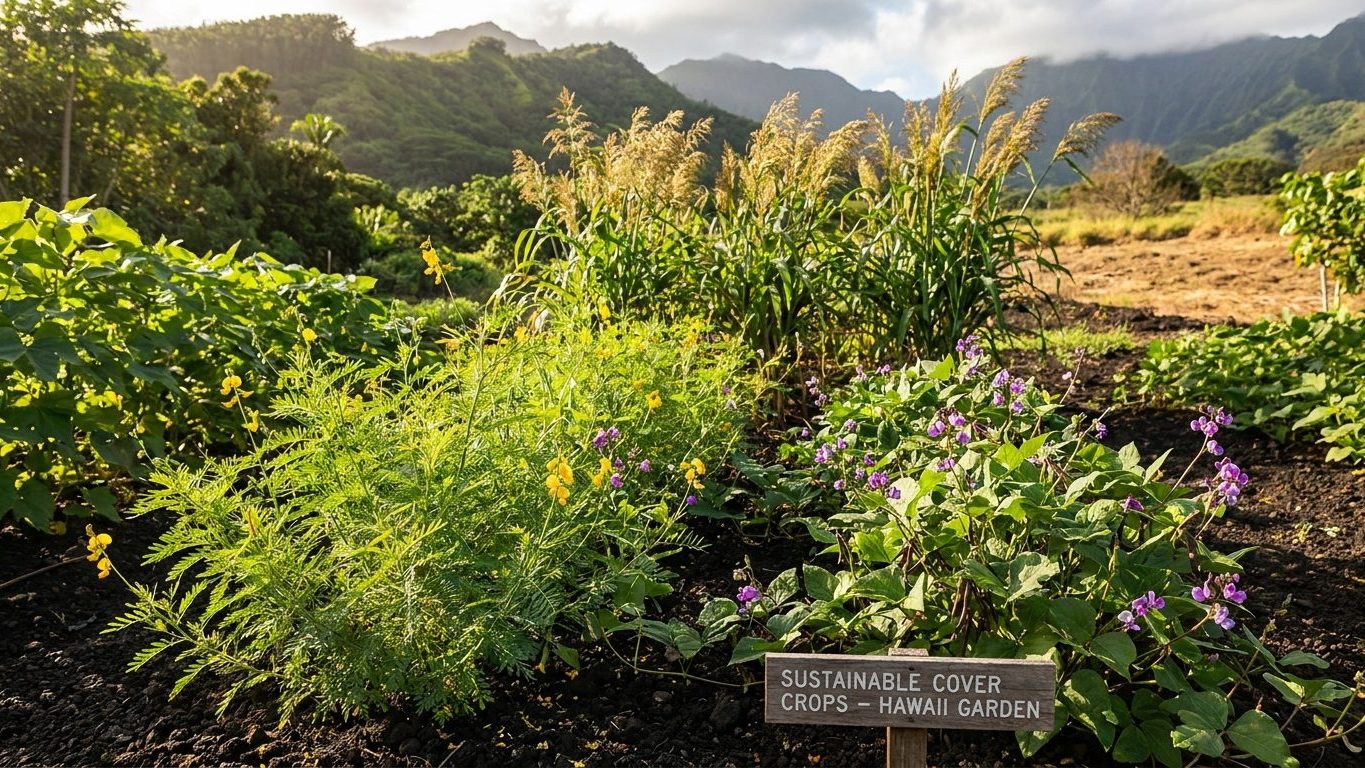

Cereal rye and winter wheat are the safest bets for Nebraska cover crops because they survive the state’s coldest winters without fail, while legumes like hairy vetch and brassicas like tillage radish work well but need to be matched to your zone and your planting window. There’s no single “best” crop for the whole state.
The short answer for Nebraska
Start with the numbers, because they decide the shortlist. Nebraska’s reference station shows a last spring frost between April 12 and April 23, and a first fall frost between October 15 and October 26. That gives a freeze-free window somewhere between roughly 175 and 197 days, depending on where in that range your county falls. The coldest month’s average daily minimum sits at 15.2°F, and the state spans USDA hardiness zones 4a to 5b. Those three numbers, not personal preference, are what should drive the choice.
For a cover crop meant to survive winter and resume growth in spring, cereal rye is the workhorse across nearly the entire state. It shrugs off temperatures well below the 15.2°F coldest-month average and keeps growing at soil temperatures other grains give up on. Winter wheat and triticale sit close behind, offering similar cold tolerance with slightly less aggressive spring regrowth, which some growers prefer if they need earlier field access.
If nitrogen fixation is the goal, hairy vetch is the standard legume choice, but its reliability tracks the zone map closely. In the milder 5b pockets in the southeast, it overwinters consistently. Further north and west, where winters push closer to zone 4a, vetch stands become patchier and less predictable.
For a cover crop you intend to kill with winter rather than terminate with a tool, brassicas like tillage radish or mustard make sense precisely because the state’s cold is reliable enough to do the killing for you. A coldest-month minimum of 15.2°F is more than enough to reliably terminate radish, which simplifies spring planting.
Summer-only covers, buckwheat, cowpeas, sorghum-sudangrass, fit inside the frost-free window once it opens in mid-to-late April and need to finish before the first fall frost arrives in mid-to-late October. Given the 175 to 197 day window, most of these species have enough time to establish, produce biomass, and get terminated before cold shuts them down. The margin is tighter in the shorter end of that range, so timing matters more than it would in a longer-season state.
What will not work here
Some cover crops fail in Nebraska for reasons that have nothing to do with skill and everything to do with the numbers above. Crimson clover and subterranean clover are the clearest examples. Both are marketed as winter cover legumes, and both can perform reasonably well in warmer states. In Nebraska’s zone 4a stretches, where extreme minimum temperatures regularly drop well past what these species tolerate, and where snow cover can’t be counted on to insulate the crown, they winterkill unpredictably. A stand that looks fine in November can be dead by March, with no consistent pattern from field to field.
Annual ryegrass sits in similar territory. It’s occasionally sold as an overwintering cover, but its cold tolerance is inconsistent enough that in the colder half of the state it either dies out in a way that wastes the seed cost, or survives just enough to become a spring weed problem in fields planted to something else. Neither outcome is what a grower is paying for.
Tender summer legumes and grasses planted too early are another predictable failure. Anything seeded before the local last frost date, which runs April 12 to April 23 at the reference station and later than that away from it, risks a frost kill before the plant has even established a root system. This isn’t a matter of the crop being wrong for Nebraska; it’s a matter of the calendar being ignored.
High-water-demand covers are the third failure point, and this one is about summer, not winter. Nebraska summers, particularly west of the Missouri River, run hot and dry for long stretches. A cover crop that needs weekly irrigation to establish or to avoid stress, common advice for some clover and brassica mixes bred for wetter climates, simply doesn’t get that water in a rain-fed Nebraska field. The plant doesn’t die outright most years, but it stalls, produces a fraction of the biomass promised on the seed bag, and fails to suppress weeds the way it’s supposed to.
None of these are edge cases. They’re the direct, predictable result of planting a crop bred for a milder or wetter climate into a state that is neither.
What changes across Nebraska
Nebraska is not one climate. The state’s hardiness zones run from 4a to 5b, a spread wide enough that a cover crop mix that works reliably in the southeast corner can underperform or fail outright in the panhandle. That’s not a small gap; it’s roughly the difference between winters that regularly test a plant’s absolute cold tolerance and winters that are merely cold.
A reader farming or gardening in the northern and western parts of the state should lean harder toward the most cold-tolerant options on this page, cereal rye above hairy vetch, winter wheat above crimson clover, and should treat any legume overwintering claim with more skepticism than a reader in the southeast would need to. The same logic applies to elevation: higher ground anywhere in the state tends to run colder than the valley floors the reference station numbers describe, so a field a few hundred feet higher than the nearest weather station can behave like it’s a half-zone colder than the map suggests.
Timing shifts too. The last frost window (April 12 to April 23) and first fall frost window (October 15 to October 26) are reference-city figures. Rural and elevated ground typically sees frost linger later in spring and arrive earlier in fall, sometimes by one to two weeks. That compresses the usable window for summer covers like buckwheat or cowpeas in the colder parts of the state even further than the statewide range already suggests.
There’s no single answer here, and a page that gave you one would be doing you a disservice. The honest version is: know roughly which end of the 4a-5b spread you’re on, and shift your choices toward hardiness the further north or higher you are. The USDA Plant Hardiness Zone Map is the tool for pinning that down for your own location, not a paragraph on a state-level page.
Where to check this for your own county
This page describes Nebraska. It does not describe your county, and that distinction matters more with cover crops than with almost anything else, because winter survival and season length both shift meaningfully across a state this size. The authority to check is the University of Nebraska-Lincoln Extension, at extension.unl.edu.
Two things are worth pulling from that site specifically. First, the local planting calendar for your county or region, which will reflect the actual frost dates and soil temperature patterns near you rather than the reference-station figures used here. Second, any variety trial data for cover crops grown in your part of the state. Extension programs routinely test how specific rye, vetch, or brassica varieties perform under local conditions, and that trial data is a far better guide to what will actually establish and survive on your ground than a statewide generalization.
A county-level recommendation from your extension office will beat this page every time, because it’s built from data collected closer to your actual field. This page exists to give you the reasoning and the range, cold tolerance by species, frost windows, the zone spread, so that when you read a county recommendation, you understand why it differs from a recommendation written for the other end of the state. Think of this as the framework and the extension office as the fine print for your specific coordinates.
Checking this against your own garden
Every date and temperature figure on this page is an average built from decades of weather station data. Your own field or garden will tell you something more current and more local, if you know what to watch for.
The first thing worth checking is soil workability in spring, not the calendar. If the ground is still cold and heavy underfoot, or clumps rather than crumbles when you turn it, a spring-planted cover like oats or field peas will sit and sulk regardless of what the frost-date range says. Waiting a few extra days for soil that breaks apart easily is usually worth more than hitting a date on paper.
Second, watch how your fall-planted cereal rye or vetch comes through winter. Green tissue at the crown by late winter means your microclimate is milder than the statewide coldest-month figure would suggest, and it’s worth trying a slightly less hardy legume next season. A stand that’s brown and dead at the crown, especially in a year without much snow cover, is a sign your ground runs colder than the reference numbers and that you should stick to the hardiest species going forward.
Third, pay attention to when your first real fall frost blackens the leaves on any tender summer cover still in the ground, buckwheat or cowpeas especially. That date, tracked over a season or two, will tell you more about your actual growing window than the October 15 to October 26 range ever will, because it’s measured exactly where you farm.