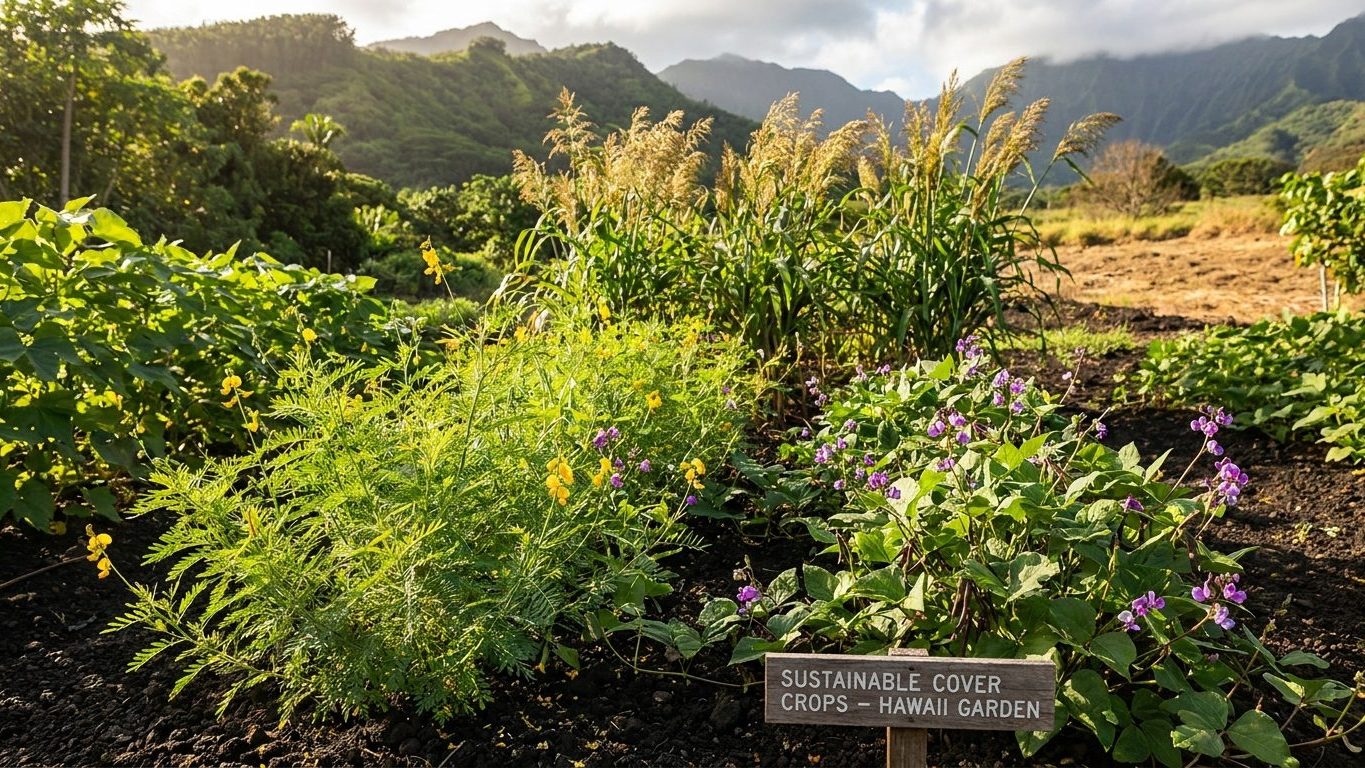

The best Cover Crops for Newfoundland and Labrador are the ones built for a short, cool season and a hard winter: fall-sown cereal rye for overwintering nitrogen and erosion control, and oats or field peas as fast, frost-tolerant fillers between cash crops. Anything that needs a long, hot summer or tender winter survival is fighting the climate, not working with it.
The short answer for Newfoundland and Labrador
Start with the two numbers that actually decide this: a mean last spring frost of May 30 and a mean first fall frost of October 17, both drawn from the ST JOHN’S A station. Count the days between those two dates and you get roughly 139 days of average frost-free growing time. That sounds workable, but a mean date is not a promise. In half the years on record, frost arrives later in spring or earlier in fall than these dates, which means a cautious grower should plan around something closer to 110 to 120 usable days, not the full 139.
The second number that matters is the mean daily minimum of the coldest month: 16.4°F. That figure is not a record low, it is the average nightly floor across the coldest weeks of winter, and it is the number that separates a cover crop that survives here from one that quietly dies under the snow. It is why the province’s reliable choices lean toward species proven across cold Canadian winters rather than the tender legumes and warm-season mixes that dominate cover crop advice written for milder places.
Decision by type
Given that season length and that winter floor, the choice sorts itself by type rather than by brand or blend:
- Fall-sown cereal rye is the standby for overwintering cover: it germinates in cool soil, keeps growing after most other plants have shut down, and comes through winters far colder than 16.4°F without difficulty.
- Oats sown in late summer act as a scheduled winterkill cover: they grow fast in the shoulder season, then die back on their own once hard frost sets in, leaving residue without needing to be terminated by hand.
- Field peas, sown alongside oats or alone, add nitrogen and tolerate a cool, damp spring better than most legumes bred for warmer regions.
None of these need a long hot stretch to perform. That is the whole point: they are matched to a growing season that averages barely over four months and a winter that punishes anything less hardy.
What will not work here
Buckwheat is the classic cover crop mismatch for this province. It is often sold as the fast, easy option, and it can be in warmer regions, but it needs genuinely warm soil to germinate well and is killed outright by the first light frost. With a mean last spring frost of May 30, soil temperatures here are still catching up going into June, which delays buckwheat’s start, and with a mean first fall frost of October 17, there is little margin left before it is cut down before it has done much good.
Warm-season options such as sorghum-sudangrass, cowpea, and sunn hemp belong to a different climate entirely. They are built for long, hot summers with reliable heat accumulation, and Newfoundland and Labrador’s frost-free window, averaging around 139 days and often shorter, simply does not deliver the sustained warmth these crops need to bulk up. Planting them here usually means thin, stunted growth followed by an early death from cold, not the thick biomass they are chosen for elsewhere.
Slow starters and marginal survivors
Bulky brassicas like tillage radish are popular for breaking up soil compaction, but they need weeks of steady growth to size up their taproots. Sown after a main crop is harvested, there is often too little time left before the October 17 mean frost date for them to do their job, especially in a year where fall frost arrives earlier than average, which happens about half the time by definition.
Tender overwintering legumes such as crimson clover are the other trap. They are marketed as reliable winter cover in many regions, but a mean daily minimum of 16.4°F in the coldest month puts their survival in serious doubt here. A grower who plants crimson clover expecting a living winter cover may instead find bare, dead ground by spring, with none of the nitrogen benefit they were counting on.
What changes across Newfoundland and Labrador
The hardiness zone figure available for this province, 6a in the Canadian system, applies specifically to the reference city used for that reading, not to the province as a whole. The Canadian zone system is built from seven climate variables rather than the single figure the USDA system uses, and Natural Resources Canada is explicit that the two scales cannot be converted into each other, so this number should never be read as a USDA equivalent or lined up against ratings from a different country’s cover crop guide.
Newfoundland and Labrador covers a genuinely large stretch of climate, from the Avalon Peninsula and the island’s east coast through the west coast and Codroy Valley, up through interior highlands, and north into Labrador. A province this size does not have one answer. Coastal areas near St. John’s tend to run milder and damper than interior districts, which see colder nights and a shorter practical season. Labrador is colder again, with a growing season that closes earlier and opens later than anything the St. John’s-based frost dates on this page describe.
What to shift, and where to check it
A grower farther north or at higher elevation than the reference station should expect to shift a cover crop’s sowing window earlier in late summer, choose the fastest-maturing option within each type described above, and lean even harder toward the most winter-hardy species, since a colder coldest-month minimum than 16.4°F is likely in those districts. Rather than guessing at a specific zone from this article, the accurate way to place any one garden is the interactive map at Natural Resources Canada’s Plant Hardiness Site, which lets a reader check their own location directly instead of relying on a single reference city’s number.
Where to check this for your own county
This page gives the province-wide picture, built from one weather station and one hardiness reference point. A regional recommendation from Newfoundland and Labrador’s own Department of Fisheries, Forestry and Agriculture will beat anything written at this scale, because it accounts for local soil, local frost pockets, and results from actual trial plots rather than a single station’s climate normals.
The place to check that is the Newfoundland and Labrador Department of Fisheries, Forestry and Agriculture‘s own site. Once there, a grower should be looking for two specific things: a planting calendar or seeding guide adapted to their own agricultural district (the Avalon, the west coast, and Labrador do not share a planting calendar even though they share a province), and any variety trial results or extension bulletins naming cover crop species tested locally rather than simply recommended in general. Provincial agriculture offices often publish exactly this kind of district-specific guidance separately from their general resources, and it is worth asking directly if it is not obvious on the website.
Treat this article as the starting framework, the reasoning behind why cereal rye, oats, and field peas make sense given the province’s frost dates and winter cold, not as the final word for one particular farm or garden. A district office that has actually trialled these crops on local soil has information this page cannot offer.
Checking this against your own garden
No station reading replaces what a grower can feel and see in their own soil. Three simple checks matter more than any calendar date on this page.
Soil warmth by feel is the first. Legume seed and inoculant activity depend on soil that is no longer cold and wet to the touch, and that point can arrive well before or after May 30 depending on drainage, slope, and how much sun a particular plot gets. A garden on a south-facing slope may be workable weeks ahead of the provincial mean; a low, shaded plot may lag behind it.
The second is how quickly a newly sown cover crop pushes its first true leaves. Fast, even emergence signals a microclimate running close to or ahead of the St. John’s mean season; slow, patchy emergence suggests a colder, slower site than the reference station describes, and a grower should shorten their expectations for how much growth is possible before fall frost arrives.
The third is the first sign of cold damage on tender plants elsewhere in the same garden, blackened basil or squash leaves being the clearest signal. That moment marks the real local first fall frost, and it is often weeks earlier or later than October 17 depending on whether a garden sits in a low frost pocket or a sheltered, elevated spot. Whichever it is, that observed date, not the mean printed here, is the one to plan next year’s cover crop termination and reseeding around.