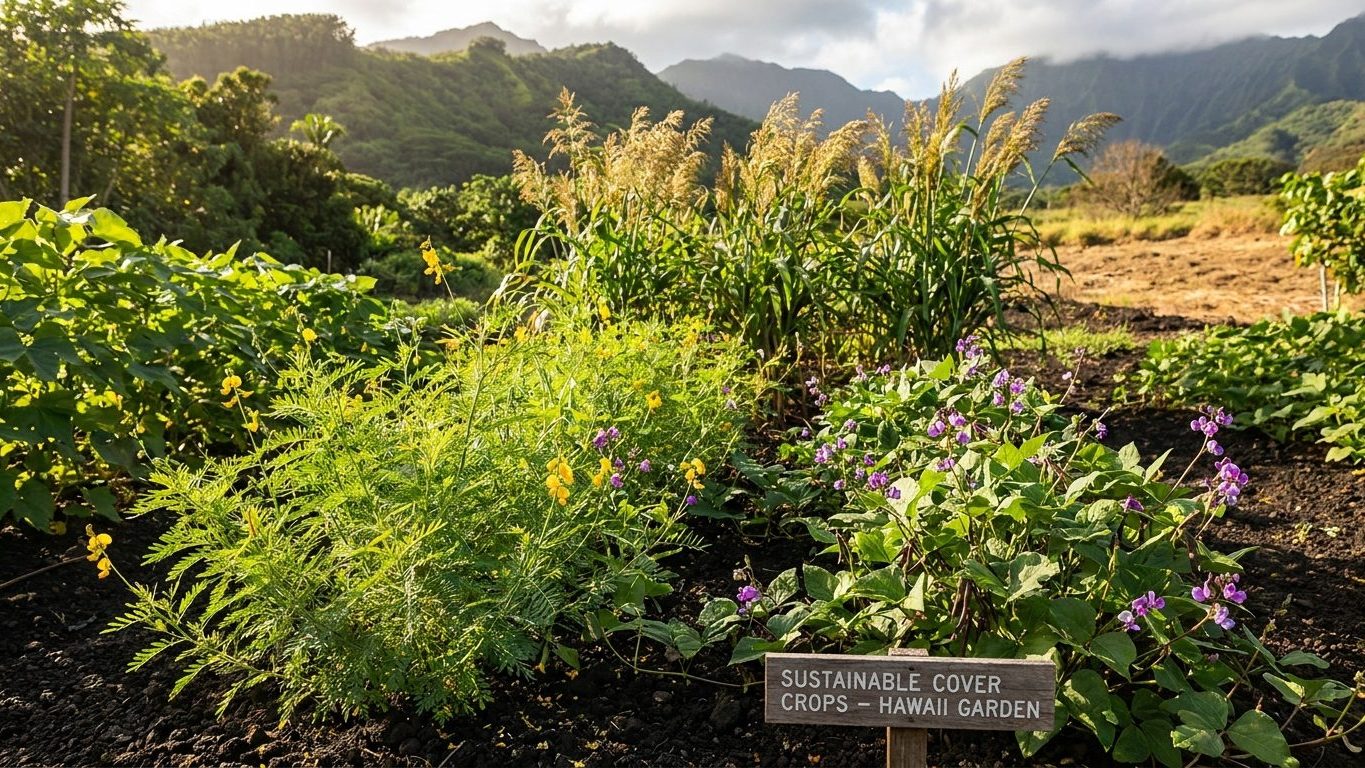

Cereal rye is the safe statewide choice for Pennsylvania because it survives the cold everywhere in the state, while legumes like crimson clover only make sense in the milder southeastern corner. North of the ridges and up in the Alleghenies, stick to the toughest species and plant them earlier than you’d think.
The short answer for Pennsylvania
The decision here comes down to one thing: how cold does it get, and for how long. Philadelphia’s coldest month averages a daily minimum of 26.0°F, which sounds mild until you remember that’s the reference station for the state’s warmest corner. That single number is the line between cover crops that reliably overwinter here and ones that gamble on a soft winter.
Cereal rye tops the list for a reason that has nothing to do with fashion: it’s the only widely planted cover crop that shrugs off winter across the entire state, from the Philadelphia suburbs to the ridges above Erie. Plant it after your last summer harvest and it will still be green come spring, ready to be terminated ahead of a cash crop. Hairy vetch runs a close second for nitrogen-hungry gardens, tolerating cold nearly as well as rye while fixing meaningful nitrogen for a following crop of corn or squash.
Crimson clover is the crop that separates Pennsylvania gardeners by zip code. In the mild southeast, it often survives winter and delivers an early nitrogen boost plus a burst of pollinator-friendly blooms. Move north or gain elevation and that same clover frequently winterkills, which isn’t necessarily a failure. If you’re using it as a killed mulch rather than a spring-growing legume, a winterkill is the plan, not the problem.
Oats and forage radish belong in a different category entirely: crops planted specifically to die. Both germinate fast in late summer, put on bulk through fall, and collapse at the first hard freeze, leaving a loose, weed-suppressing mat with zero spring cleanup. Given that the first fall frost lands anywhere from November 5 to November 16 depending on where in the state you’re standing, both crops have a workable window almost everywhere, provided you get seed in the ground while there’s still real summer heat left to push growth.
Annual ryegrass sits in the middle: hardy enough to survive most Pennsylvania winters, but with enough spring regrowth vigor that it needs a firm termination plan before it turns into a weed itself. It’s a reasonable pick for gardeners who want green cover through winter without the aggressive tillering of rye, but it’s not the crop to plant and forget.
What will not work here
Buckwheat is the crop most likely to disappoint a Pennsylvania gardener who read about it online without checking the calendar. It’s a fantastic summer cover, smothering weeds in six weeks and feeding pollinators heavily, but it has zero frost tolerance. Plant it expecting winter cover and it will be a blackened mat the morning after the first freeze, sometimes weeks before you expected, since that first frost can arrive as early as November 5 in parts of the state.
Warm-season legumes bred for the Deep South, sunn hemp and most cowpea varieties among them, run into the opposite problem: they need a long stretch of real heat to bulk up and fix nitrogen before frost shuts them down. Pennsylvania’s frost-free season, bookended by a last spring frost that doesn’t clear until March 29 to April 6 and a first fall frost that can show up in early November, simply doesn’t leave these crops the runway they get in Georgia or the Carolinas. Planted here, they often barely flower before the season ends, which defeats the entire purpose of growing a nitrogen-fixing summer cover.
Tender Mediterranean cover crops, certain fava bean strains among them, struggle for a different reason: the state’s coldest month averages a nightly minimum of 26.0°F, and that’s the mild end of the range. Varieties bred for winters that barely dip below freezing get caught out repeatedly here, especially once you’re away from the Philadelphia corner and into the colder interior.
Dense, close-spaced legume mixes designed for drier climates also underperform in a state where summer humidity sticks around. Crowd hairy vetch or clover too tightly in a humid Pennsylvania July and you invite fungal disease long before you invite good nitrogen fixation. Wider spacing than the seed packet suggests, plus decent airflow, matters more here than in a drier state where the same seeding rate causes no trouble at all.
Finally, anyone counting on a single planting date to work statewide is setting themselves up for a bad surprise. A date that works in Philadelphia can land three to four weeks too late once you’re near the New York border or up at elevation in the Alleghenies, and by then the cover crop simply doesn’t have enough fall left to establish before the ground locks up.
What changes across Pennsylvania
Pennsylvania isn’t one growing zone, it’s a stretch of them. The USDA Plant Hardiness Zone Map puts the state anywhere from 5a to 7b, which is a genuinely wide spread for a single state, wider than most gardeners assume when they read a generic planting guide. Zone 7b, found in the Philadelphia area and the lower Susquehanna valley, tolerates cover crops that would struggle to survive winter just a couple hours north or a few thousand feet higher.
That gap shows up directly in frost timing. The last spring frost clears the mild southeast by early April, but the northern tier and the Alleghenies run two to four weeks later in spring, and the same lag applies in reverse each fall. For a gardener planning a fall-seeded cover crop, that’s the difference between a comfortable six-week establishment window and a rushed two-week scramble before the ground freezes.
The practical shift for northern and high-elevation gardeners is straightforward: lean harder on the crops that need the least babying. Cereal rye and hairy vetch tolerate both the shorter season and the colder winter minimums without complaint. Crimson clover, workable as a semi-perennial legume in the southeast, becomes a winterkill-only proposition farther north and at altitude, which isn’t a disqualifier, just a different plan for the same seed.
There’s no single frost date or zone number that applies to the whole state, and this page can’t tell you which one governs your particular yard. The USDA hardiness zone map is built for exactly that lookup, using the average annual extreme minimum temperature as its one variable, and it’s worth five minutes checking before you buy seed rather than assuming a Philadelphia-based date applies to a garden three counties north.
Where to check this for your own county
Penn State Extension runs the state’s official cooperative extension service, and its site is the next stop after this page. State-level guidance, including everything above, has to average across a five-zone spread. County-level guidance doesn’t.
Search for your county’s cooperative extension office through that site and look for two specific things. First, a local planting calendar built around your county’s actual frost dates rather than the statewide range cited here, since a county office near the New York border works from a meaningfully later spring frost than one in the Philadelphia suburbs. Second, look for variety trial results or recommended cultivar lists specific to your county, since extension agents often track which cereal rye or clover varieties have actually performed well in local trial plots, information that simply doesn’t exist at the state level.
Some county extension offices also run soil testing programs, and a soil test result changes which cover crop makes sense faster than any calendar date does. A gardener sitting on nitrogen-depleted soil after a heavy corn harvest has a different priority than one managing compacted clay, and a county-specific recommendation from a local agent accounts for that in a way a statewide article never can.
Treat this page as the broad strokes, useful for understanding why cereal rye works everywhere and crimson clover doesn’t, but not the final word on what to plant in your specific soil, at your specific elevation, on your specific frost schedule. The county office exists precisely to fill that gap, and it’s free to call or email.
Checking this against your own garden
Every date and zone number in this article is a regional average, and your own patch of ground will disagree with it in small but important ways. Three observations beat any calendar for figuring out what your soil is actually doing.
Start with soil feel in early spring. Grab a handful from where you plan to terminate a winter cover crop and squeeze it. If it forms a slick, sticky ball, it’s still too cold and wet to work without compacting it, regardless of what the calendar says about the last frost date having passed. If it crumbles apart loosely, the soil has warmed and dried enough to till or plant into.
Second, watch your cereal rye or vetch for the first real flush of new growth after winter dormancy. That green-up, distinct from the dull, static look of dormant winter foliage, signals the soil has warmed enough for active root growth, which is your cue that termination timing has arrived, not an arbitrary date circled in advance.
Third, if you’re running a summer cover like buckwheat, watch for its first true leaves to appear after the seed leaves. That first true leaf tells you germination succeeded and the plant has moved into active growth, which matters because a cool, slow spring can delay that milestone by a week or more compared to what a neighboring county experiences. Your own soil, sitting in your own microclimate, is always the better judge than a regional average, and these three checks cost nothing but a few minutes of attention.