
Garlic cloves pushed into frozen ground in January don’t root — they rot, and the bed sits empty until spring proves it. The mistake is trusting a 50-degree afternoon: the top six inches of Ohio soil haven’t warmed at all, and a hard freeze usually follows within days anyway. Nothing tender can close that gap before May. What January actually allows is narrow — dormant garlic, bare-root stock, nothing green — and missing that distinction wastes the whole planting, not just a week of it.
What goes in the ground in January

January falls well before Ohio’s last spring frost window, which OSU Extension’s Ohio Gardening Calendar sets at May 5 to May 15 for the Columbus area in USDA zone 6a. That means every warm-season vegetable, and most cool-season ones too, stay off the sowing schedule this month. The soil is what decides this, not the calendar: even a stretch of 50-degree afternoons does not warm the top six inches of ground enough to matter, and a hard freeze usually follows within days.
What still goes in is narrow but real. Garlic and shallots can be planted on any day the ground is actually workable rather than just thawed on top, if fall planting was missed or a bed opened up. Push cloves root-down, two inches deep, and mulch heavily with straw right away, since a late-planted clove has less root system to anchor it against winter heaving. Bare-root fruit trees, brambles and asparagus crowns that arrive from mail-order nurseries in a dormant state can go into a prepared trench the same way, heeled in with soil and mulch if the planting hole itself is still frozen.
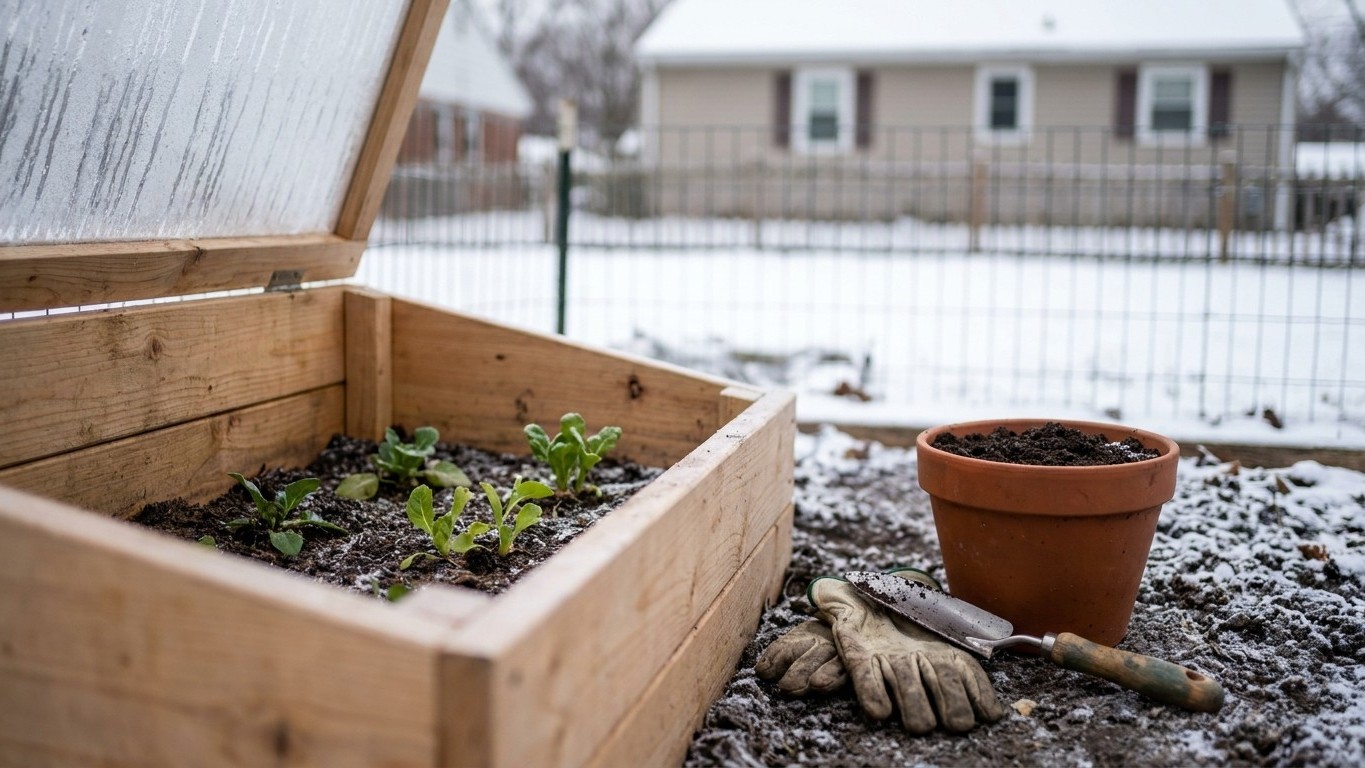
Cold frames and low tunnels extend the hardy end of the garden rather than starting a new one. Spinach, mache, claytonia and other greens sown under cover in fall keep producing slowly through January as long as the cover stays intact, and a frame can also hold a fresh sowing of spinach or radish for a very early spring crop once daylight lengthens. None of this is the same as planting into open soil, and treating a cold frame like a heated greenhouse is how seedlings get cooked on the one sunny afternoon nobody was watching.
Indoors, this is the month to force what is already dormant. Potted rhubarb crowns or chicory roots lifted from the garden and kept cool can be brought into a dark, moderately warm space to throw pale, tender growth within a few weeks, giving a harvest when nothing else in the state is producing. Nothing on this list substitutes for a spring planting, it only fills the gap until the ground itself is ready, which the Ohio planting calendar lays out month by month.
What to start under cover
Seed-starting math runs backward from the transplant date, not forward from the first of the month. OSU Extension’s frost window of May 5 to May 15 sets the earliest safe date to move tender seedlings outside near Columbus, and every packet’s “weeks before last frost” instruction counts back from somewhere inside that range.
Onions and leeks are the exception that make January useful. Both are slow enough from seed that starting them well ahead of the frost window is standard practice, and a leek or onion seedling does not turn leggy the way a tomato does if it spends extra weeks under lights. This is the month to get flats going under fluorescent tubes or a grow light, kept just above soil-cooking heat and no warmer.
Why tomatoes and peppers wait
Tomatoes are the clearest case of the opposite mistake. A cultivar like Sun Gold needs about 57 days from transplant to first fruit and goes outside mid May to late May per the catalog figure, while Cherokee Purple needs roughly 72 days on the same transplant window. Indoor seed-starting for tomatoes generally runs six to eight weeks before that transplant date, which lands in late March to early April for zone 6a, not January. Start a tomato seed now and by the time the soil and air are warm enough to plant it out, the stem has stretched thin and the roots have circled the pot for months, so the plant spends its first weeks outside recovering instead of growing.
Peppers follow the same logic on a slightly longer clock, since they germinate slower and sulk longer after transplant shock. Both crops belong on next month’s list rather than this one; What to Plant in Ohio in February covers where that window actually opens.
What is ready to pick
Little comes out of open ground in Ohio in January, and admitting that saves a wasted trip out to the beds. Anything still standing outdoors is there because it tolerates hard freezes, not because it is actively growing.
Overwintered kale, collards and leeks planted in fall keep their quality even buried under snow, since cold sweetens rather than damages them. Dig leeks with a fork rather than pulling, since a frozen crown snaps off at the soil line if pulled straight. Brussels sprouts left standing after a fall harvest continue to hold on the stalk and can be cut sprout by sprout as needed. A cold frame with spinach or mache sown the previous fall can still be cut a few leaves at a time on any day the cover is not iced shut.
Indoors, and in storage
Sprouts and microgreens grown on a windowsill or under a light are the fastest fresh crop available this month, ready in one to three weeks depending on the seed. Beyond that, the harvest is really an inspection job. Check stored squash, potatoes and onions on a regular rotation rather than waiting for a smell to announce trouble: a soft spot on a winter squash, a sprouting potato, or an onion gone papery and light for its size means pulling it before it takes the crate around it down too. Sort as you check, and use anything showing early signs of decline first rather than saving the best for last and losing the rest.
The jobs that matter this month

January’s work is all before-the-season work, and skipping it does not show up until the plants that needed it are already behind.
Pruning, ordering, and planning
Dormant pruning of apple, pear and other fruit trees, along with brambles and grapevines, is best done while the plant is fully leafless and the branch structure is easy to see. Cuts made now heal over before spring growth starts, and removing crossing or diseased wood while it is bare is far faster than fighting through summer foliage to find the same branch. Order seed before the popular disease-resistant cultivars sell out, since the varieties gardeners reach for most, the ones bred to resist verticillium wilt or early blight, tend to disappear from catalogs first in a hard winter with heavy demand.
This is also the month to sketch next season’s rotation on paper rather than by memory, so tomatoes do not land back in the same bed that grew them for the second or third year running. A soil test sent out now comes back with time to actually amend before planting, rather than in April when every lab in the state is backed up.
Maintenance that has no other slot
- Turn the compost pile if it is not frozen solid, to keep the center working
- Clean and sharpen pruners, loppers and hoes before the season demands they be ready
- Repair raised bed corners, trellis posts and fencing while the ground is bare and the damage is visible
- Walk the stored crops (squash, potatoes, onions, apples) on a set schedule and pull anything turning
None of these jobs are tied to a specific date the way a frost-driven planting is, which is exactly why they get skipped. A cracked hose bib or a loose trellis post ignored now is a mid-summer repair done under a tomato that is already sprawling on the ground.
What not to do in January
The most common January mistake in Ohio is reading a warm afternoon as a planting signal. Air temperature climbing into the fifties for a day or two does not move the soil temperature the crops actually root into, and anything tender put out on the strength of one mild spell is dead within the week when the next front comes through. Wait for the soil, not the thermometer on the porch.
The second mistake is uncovering cold frames, mulch or row cover too early after a stretch of mild weather. A frame opened to let some air in during a warm week and left cracked overnight when temperatures drop back down can wipe out a whole flat of overwintered greens in a single freeze. Check the forecast before opening anything, not just the current reading on the thermometer.
Feeding nitrogen this month, whether to dormant fruit trees, garlic beds or a lawn, pushes soft new growth that has nowhere safe to go before the next hard freeze arrives. Hold nitrogen until active growth actually resumes. A phosphorus-heavy root feed at planting time for garlic and bare-root stock is a different matter and does not carry the same risk.
Starting tomatoes and peppers from seed this early is the last trap, and it was covered above for a reason: a leggy, rootbound seedling by transplant time produces a weaker plant than one started on schedule, however tempting it is to get a jump on the season while there is little else to do indoors.
Checking this against your own county
Every figure above comes from OSU Extension’s Ohio Gardening Calendar and the USDA hardiness map, both measured at or near Columbus, and Ohio is not that uniform. The USDA Plant Hardiness Zone Map puts the state across zones 5b to 6b, and a farm near Lake Erie’s shore or up at higher elevation can run weeks behind or ahead of a Columbus-based date depending on lake effect and elevation. Treat every window in this piece as a starting point, not an instruction, and check it against the OSU Extension office for the county in question before committing seed or money to a date. The What to Plant in Ohio in December page covers the month just behind this one, for anything left unfinished from fall.
Common questions
Can I start seeds indoors this early in Ohio?
Only for the slow growers. Onions and leeks tolerate an early start because they do not stretch and go rootbound the way tomatoes and peppers do, so January suits them while the nightshades wait until closer to their six-to-eight-week window before the frost-driven transplant date.
Is it too late to plant garlic if I missed fall?
It is late, not too late, as long as the ground is workable rather than frozen solid. Expect a smaller bulb by harvest than a properly fall-planted clove would produce, since the root system has less time to establish before the plant pushes top growth.
What USDA zone is Ohio for planting purposes?
The USDA Plant Hardiness Zone Map places Ohio across zones 5b to 6b, which is a state-wide range, not a single number. A gardener near Columbus plans around zone 6a, but the actual zone for any address should be checked directly against the map rather than assumed from the state average.
Can I still harvest anything from a home garden in January?
Only what was planted for exactly this: overwintered kale, leeks and Brussels sprouts left standing, plus whatever a cold frame is holding. Anything else outdoors this month is stored, not standing, and needs checking rather than picking.