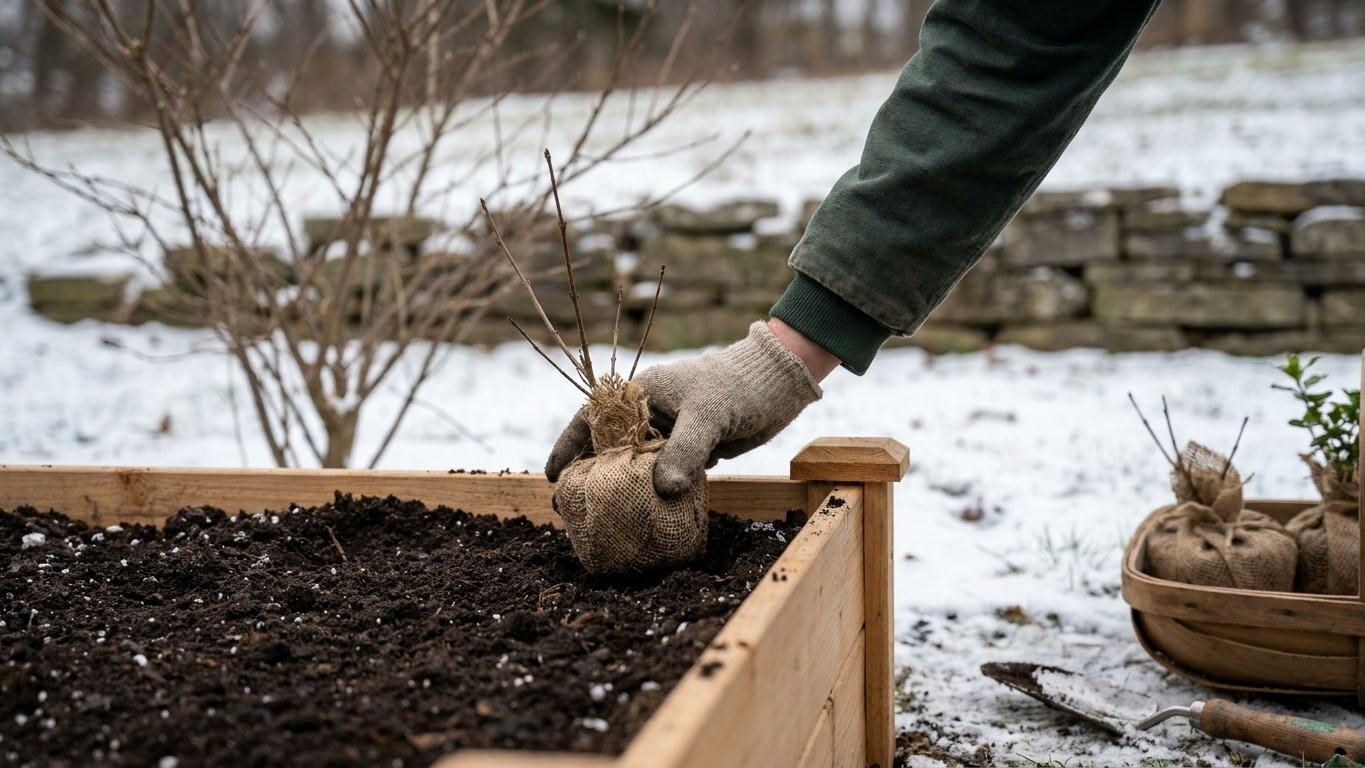

Nothing new goes into open Ohio ground in December, because the state has already passed its first fall freeze window of October 5 to October 15 (OSU Extension, Columbus) and soil temperatures are dropping toward frozen. The one exception is garlic and shallots, which can still go in if the ground hasn’t locked up. Check whether your soil is workable with a shovel before you do anything else this month.
What goes in the ground in December

Short answer: garlic and shallots are the only thing still going into Ohio ground this month, and only if it hasn’t frozen solid. Everything else — tomatoes, peppers, the usual spring lineup — is done for the year, no matter how tempting a warm afternoon feels. Before you touch a trowel, walk out and push a shovel into the soil; if it rings hard, put the cloves back in the bag and wait.
Garlic and shallots, if the ground allows
The one crop still worth planting outdoors is garlic and shallot cloves, and only where the soil is still workable rather than frozen solid. Most Ohio gardeners get these in during October or November, a step covered in What to Plant in Ohio in November, but a mild stretch can leave a short window open into early December in the southern part of the state. Push cloves root-down, 2 inches deep, and mulch heavily with straw the moment you finish. If the ground rings hard when you strike it with a spade, stop. Cloves planted into frozen or waterlogged soil rot before they root.
Cold frames, low tunnels, and dormant planting
Cold frames and low tunnels are the other legitimate December project. They don’t create new growing season so much as protect what’s already there, letting hardy greens and overwintered alliums hold rather than freezing out completely. If you’re planting bare-root fruit trees, brambles, or roses, December still works as long as the ground isn’t frozen, since these go in dormant and don’t need to grow until spring. Container-grown perennials can also go in now on the same logic, provided the planting hole isn’t fighting frozen soil.
Indoors, this is a good month to force rhubarb or chicory. Dig a rhubarb crown after it’s had a hard frost, pot it, and keep it in a dark, cool spot around 50 to 60°F. Chicory roots forced the same way in a dark closet produce pale, tender chicons in a few weeks. Neither needs the outdoor frost window at all, which makes them the most reliable “planting” project on the calendar this month.
What to start under cover
Seed-starting math runs backward from the last spring frost, not forward from today’s date, and in December that arithmetic tells most gardeners to wait. OSU Extension’s Columbus-area window for the last spring freeze is May 5 to May 15 for zone 6a. Tomato transplants in that window typically go out mid-May to late May, and standard indoor sowing happens 6 to 8 weeks before transplanting. Run the numbers for a cultivar like Sun Gold or Jasper, both 55 to 60 days from transplant, and the sowing date lands in late March to early April, not December.
The two ways to get the timing wrong
Starting a tomato or pepper crop in December instead of late winter produces exactly the problem OSU Extension’s calendar is built to prevent: seedlings that outgrow their pots weeks before the ground and air are warm enough to receive them. Rootbound, leggy transplants set back hard when finally planted out, sometimes losing more time than they gained by starting early. The opposite failure, waiting too long, leaves a long-season paste tomato like Amish Paste, at 85 days from transplant and only 44 days of frost margin, with too little runway to ripen a full crop before the October freeze window closes.
What does make sense to start under cover in December is a longer-lead crop like onions or leeks from seed, which typically need 10 to 12 weeks of growth before hardening off. Counted back from the May 5 to May 15 window, that sowing date falls in late February to early March, close enough that some gardeners begin trays in the last days of December to be sure of a February start. If that’s your plan, What to Plant in Ohio in January covers the next step in that same countdown.
The other legitimate December project is winter sowing: seeds that need a cold, moist stratification period, many native perennials and some hardy annuals, get sown into vented containers and left outdoors through the freeze-thaw cycle. It isn’t indoor seed-starting in the usual sense, but it is a real way to use this month’s cold rather than fight it.
What is ready to pick
Almost nothing is coming out of open Ohio ground in December, and the honest answer is that most of the harvest work this month happens in storage and under cover rather than in the beds. Kale, and leeks left in the ground under a layer of mulch or snow, are the exception. Both improve after hard frost, converting starches to sugars, and can be dug or cut as needed through the month as long as the ground isn’t frozen too deep to work.
Cold frames, sprouts, and the stored crops that need checking
A cold frame planted in fall with spinach, mache, or a cold-hardy lettuce will keep producing small pickings through December on sunny days. Indoors, sprouts and microgreens are the most reliable fresh crop of the month, ready in days rather than weeks and needing nothing but a windowsill or a shelf under lights.
The bigger job this month is checking what’s already in storage before small problems spread. Go through the root cellar, basement shelf, or garage stash on a regular basis and pull anything showing trouble:
- Potatoes with soft, dark patches or a sweet, fermented smell
- Winter squash with a soft spot near the stem, often the first sign of rot
- Onions and garlic that have gone soft or started sprouting green shoots
- Apples with any bruising, which speeds up rot in everything stored nearby
One rotten potato or squash left in a bin can take down its neighbors within a week, so this check is worth doing on a set schedule rather than only when you happen to notice a smell.
The jobs that matter this month

December carries more real deadlines than the empty beds suggest, and most of them are the kind that cost an entire season if they slip.
Dormant pruning and tool care
Fruit trees, brambles, and grapevines are pruned while fully dormant, which limits stress and makes it easy to see the branch structure without leaves in the way. Wait for a dry, above-freezing day, since cutting into frozen wood can crack rather than clean-cut a branch. While you’re out there with pruners in hand, this is also the month to clean and sharpen every blade in the shed: a dull pruner tears bark instead of cutting it, and torn wood heals slower and invites disease.
Seed orders and planning
Seed catalogs move fast on popular disease-resistant cultivars, and ordering in December beats competing for the last packets of something like Big Beef Plus or Celebrity Plus once late winter arrives and everyone else has the same idea. This is also the natural point to sketch out next season’s rotation on paper, moving tomatoes and other nightshades to a bed they haven’t occupied in the last two or three years to keep soil-borne disease pressure down.
Soil, compost, and repairs
A soil test taken now gives lime or sulfur time to adjust pH before spring planting, something that doesn’t work on the same short notice in April. Turn the compost pile if it isn’t frozen solid, since a pile left untouched all winter can go anaerobic and slow to a stop. Finally, walk the fence lines and raised bed frames while nothing is growing: a rotted board or a sagging gate is a five-minute fix now and a spring-morning emergency later.
What not to do in December
A run of mild days in December fools people into treating it like spring, and that’s where most of the month’s real mistakes start. A warm afternoon does not mean the soil has warmed with it, and any warm-season seed or transplant put into ground that’s still cold at root depth will simply rot or sit and stall, not grow. If you’re tempted to get a jump on the season, wait for the actual sowing windows covered in the Ohio planting calendar rather than trusting the thermometer on a single sunny day.
The same mild spell causes the second common error: pulling mulch or row cover off overwintering crops to “let them breathe,” then getting caught when the cold returns a few days later. Garlic cloves, cold frame greens, and newly planted bare-root stock all rely on a steady insulating layer through the winter, and stripping it off even briefly resets whatever protection it had built up.
Fertilizer is the third trap. Nitrogen applied now pushes soft, tender growth on anything still active, and that new growth has no chance to harden off before the next freeze. Hold off on feeding dormant plants until they show real spring growth. If a soil test flagged a deficiency, correcting pH or adding phosphorus and potassium now is fine, since those work into the soil slowly and don’t trigger the same flush of vulnerable new growth that nitrogen does.
Checking this against your own county
Every figure above is measured at or near Columbus, and OSU Extension’s own frost window, May 5 to May 15 for the last spring freeze and October 5 to October 15 for the first fall freeze, is a zone 6a reading. The USDA Plant Hardiness Zone Map, using 1991-2020 climate normals, puts the whole state anywhere from 5b to 6b, and counties near Lake Erie, at higher elevation, or well south of Columbus can run weeks off that baseline in either direction. Treat everything here as a starting point and confirm it against OSU Extension’s own site at extension.osu.edu before locking in a date for your county.
Common questions
Is it too late to plant garlic in Ohio in December?
It depends entirely on whether the ground is still workable. If a spade goes in without a fight, cloves can still go in and mulched heavily, but once the soil is frozen solid, wait until spring and expect a smaller bulb than a fall-planted crop would give.
Can I start tomato seeds indoors in December to get a head start?
Starting that early usually backfires. Counting Back From OSU Extension’s May 5 to May 15 transplant window puts the real sowing date for most tomato cultivars in late March to early April, and seedlings started in December will be leggy and rootbound long before the soil is warm enough to plant them out.
Why is my cold frame lettuce still alive under snow?
Snow itself insulates rather than kills, trapping ground heat under a layer of cold-hardy leaves. Brush it off gently to harvest, but don’t leave the frame lid open afterward, since the exposed leaves can flash-freeze once the insulating layer is gone.
Should I keep watering anything outdoors this month?
Only if the ground isn’t frozen and a bed genuinely looks dry, which is uncommon in an Ohio December. Overwintering garlic and cold frame greens rarely need supplemental water once the soil has gone cold, and watering frozen ground does nothing but sit on the surface.