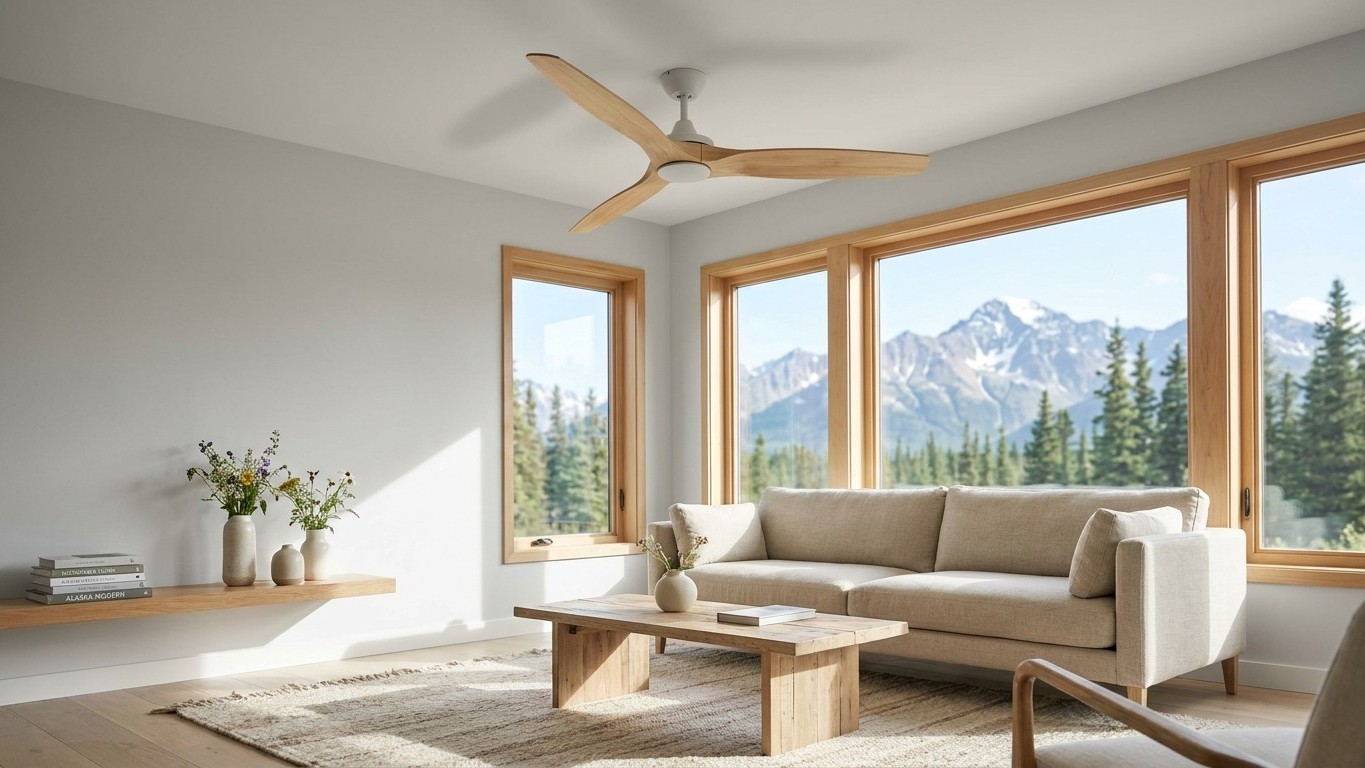

Kansas homes cool overwhelmingly with central air. Ninety-three percent of homes here use some form of air-conditioning equipment, and 85% run a central air-conditioning unit, the highest share of any cooling method in the state. The rest, window units, ductless mini-splits, portables, make up the balance, and 73% of Kansas homes also keep ceiling fans running alongside whatever cools the air.
What homes in Kansas actually cool with
Start with the gap. Ninety-three percent of Kansas homes report using air-conditioning equipment of some kind, and 85% of homes use a central air-conditioning unit. Subtract nothing here, because the survey already gives the third number directly: 15% of Kansas homes rely on an individual air-conditioning unit, a category that covers ductless mini-splits, window or wall units, and portables. That 15% is the story in plenty of homes, older farmhouses without ductwork, apartments above a garage, additions built after the main system was sized.
Compare that to other states and the picture sharpens. Connecticut shows air conditioning in 90% of homes but a central unit in only 34%, meaning more than half its cooled homes are running window or wall units room by room. Alabama runs 94% and 81%, a gap almost as tight as Kansas’s. Kansas sits closer to the Alabama pattern than the Connecticut one: a state where central air is the default and individual units fill in gaps rather than carrying whole houses.
None of this is a recommendation. A share like 85% central reflects what got built and wired decades ago, when ductwork was standard in new Kansas construction and central systems were the affordable option for a growing ranch-house or split-level. It says nothing about what performs best in a given room today. The 73% ceiling-fan figure matters too, since fans don’t lower temperature on their own, they move air across skin to make a room feel a few degrees cooler, which is why so many Kansas households run them even with central air already installed. It’s a cheap way to raise the thermostat setpoint without losing comfort, and it shows up in the data as a habit that outlasts whatever cooling system sits underneath it.
How much cooling the year actually asks for
The number that measures Kansas summer heat load is 57.6 days a year at or above 90°F, recorded at the Wichita reference station under NOAA’s 1991-2020 climate normals. That’s a count of days, not an average temperature and not a statewide figure, it’s what one weather station logs in a typical year, and it’s the number that drives cooling demand, water use, and heat stress on anything living outdoors.
Fifty-seven and a half days above 90°F is a serious load, more than eight weeks of the year where an air conditioner isn’t cycling occasionally but running hard, often for hours at a stretch. States with heat loads like this tend to split into two camps: places where the housing stock caught up with central systems, and places where it didn’t and window units still carry the summer. Kansas lands in the first camp. With 85% of homes on central air, the equipment mix here actually matches the heat load, a hot state that built out ductwork rather than relying on room-by-room units.
That alignment matters more than it sounds. A state that’s hot but stuck on window units is fighting its climate with underpowered, unevenly distributed equipment. Kansas isn’t in that position. The heat load is real, nearly two months of 90-plus days a year, but the installed base of central systems is sized to handle a whole house rather than patch it room by room. Where the 15% running individual units live, though, that mismatch between climate and equipment is exactly where sizing and run time deserve the closest attention, which is what the sizing chart further down actually resolves.
Wet heat or dry heat, and what it changes
Kansas summers bring about 13.2 inches of rain across June, July and August, out of 34.3 inches for the whole year, with July the driest of the three months at 3.98 inches, June the wettest at 4.93, and August in between at 4.3. That’s precipitation measured at the reference station, not a humidity reading and not a dew point, so it says how often the sky opens up, not how sticky the air feels once it does.
What that figure changes is how an air conditioner spends its time. Every system does two jobs at once: it pulls heat out of the air, and it condenses moisture out of that same air as it passes over the cold coil. Lowering temperature is fast. Wringing out moisture takes sustained run time, minutes of continuous operation, not a quick burst. In a summer that gets meaningful rainfall spread across three months, like Kansas’s, a good share of the machine’s job each week is moisture removal, not just cooling. That’s why an oversized unit is such a specific kind of failure here: it satisfies the thermostat in a few minutes, shuts off, and never runs long enough to pull the humidity down, leaving a room that reads cold on the thermostat but feels damp and clammy to skin.
A few practical moves follow directly from that mechanism in Kansas:
- Favor longer, lower-speed run cycles over short blasts, since drying the air happens during sustained operation, not at the moment temperature first drops.
- Set the fan to “auto” rather than “on” for central systems, so the blower stops when the compressor does and doesn’t re-evaporate condensed moisture back into the airstream.
- Size equipment to the space rather than rounding up, since a unit that’s too large for the room finishes its temperature job before it’s done its moisture job.
Sizing a room unit, from the published chart
For the 15% of Kansas homes running a window, wall, or portable unit, ENERGY STAR publishes a starting chart matching room area to cooling capacity:
| Area to be cooled (square feet) | Capacity needed (BTU per hour) |
|---|---|
| 100 up to 150 | 5,000 |
| 150 up to 250 | 6,000 |
| 250 up to 300 | 7,000 |
| 300 up to 350 | 8,000 |
| 350 up to 400 | 9,000 |
| 400 up to 450 | 10,000 |
| 450 up to 550 | 12,000 |
| 550 up to 700 | 14,000 |
| 700 up to 1,000 | 18,000 |
| 1,000 up to 1,200 | 21,000 |
| 1,200 up to 1,400 | 23,000 |
That’s the full published range. It doesn’t extend past 1,400 square feet, and the jump between steps isn’t a fixed rate per square foot, so there’s no honest way to interpolate a figure for a room the chart doesn’t cover. Buy for the step your room actually falls into, or the one just below it if the room sits near a boundary.
This chart sizes a room unit, nothing more. It does not size a central system, and with 85% of Kansas homes running central air, that distinction covers most of the housing stock in this state. Central equipment gets sized through a load calculation done at installation, weighing square footage against insulation, window area, orientation, and duct layout, a different process entirely from matching a window unit to a room’s floor area. Where this chart earns its keep is in the smaller slice of Kansas homes on individual units, an add-on over a garage, a sunroom, a bedroom with no ductwork reaching it. In those spots, the same rule from the section above applies: don’t round up. An oversized window unit in a Kansas summer humid enough to need real dehumidifying will cool the room in minutes and shut off long before it’s dried the air.
What actually needs looking after here
With central air running most Kansas homes, the upkeep that matters most is the upkeep central systems actually need. ENERGY STAR is direct about the first one: “Inspect, clean, or change air filters once a month in your central air conditioner, furnace, and/or heat pump.” That’s monthly, not seasonally, and it covers all three pieces of equipment together, a detail worth flagging since plenty of homeowners assume filter advice applies to the furnace alone and let the air conditioner’s filter go unchecked all summer.
Skipping that habit costs more than it looks like it should. ENERGY STAR notes that “Airflow problems can reduce your system’s efficiency by up to 15 percent,” and a clogged filter is the single most common airflow problem there is. A system can be mechanically sound, compressor fine, refrigerant charge correct, and still underperform by that margin simply because air isn’t moving through it the way it was designed to.
For the 85% of Kansas homes on central air specifically, there’s a second issue that lives in the ductwork rather than the unit itself. ENERGY STAR’s figure here is blunt: “In a typical house, however, about 20 to 30 percent of the air that moves through the duct system is lost due to leaks, holes, and poorly connected ducts.” That’s air, and the cooling paid for to make it, escaping into an attic or crawlspace before it ever reaches a vent, which is often the real explanation when one room in a Kansas house never quite cools down while the rest of the place feels fine. This one doesn’t apply to the 15% running window or wall units, since a room unit has no ducts to leak.
A seasonal pass through both systems, run once before the heat load climbs each year:
- Check or replace the filter on a monthly schedule through the entire cooling season, not just once at the start of summer.
- Have ductwork inspected for leaks and disconnected sections if a central system is cooling unevenly room to room.
- Confirm outdoor condenser coils and indoor evaporator coils are clear of debris, since restricted airflow at either coil produces the same efficiency loss ENERGY STAR describes.
- For homes running individual units, check that window or wall installations are sealed tight against the frame, since a poor seal lets conditioned air escape the same way a leaky duct does.