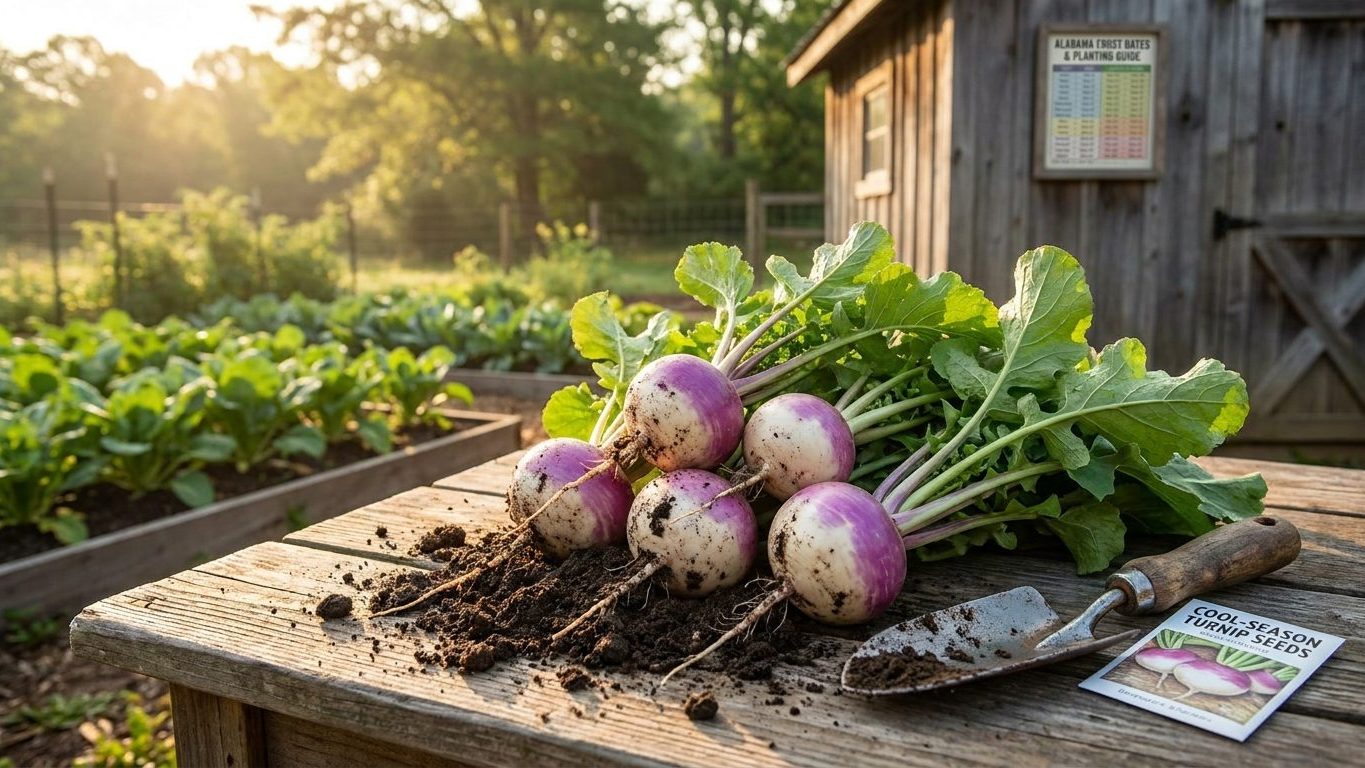

In Delaware, sow turnips for a spring crop between mid-February and mid-March, then again for the better fall crop between mid-July and mid-August, counting back from the average first fall frost. Both windows come from the state’s frost data below, not a fixed rule of thumb.
The short answer for Delaware
Turnips are a cool-season root crop, and Delaware’s frost dates set the two honest sowing windows rather than any generic “spring and fall” advice. The reference station for this data, Wilmington (USW00013781), shows a last spring frost falling somewhere between April 3 and April 14, and a first fall frost landing between October 26 and November 7. Turnip seed germinates in cool soil and tolerates a light frost once established, so gardeners typically sow four to six weeks before that spring frost date, meaning mid-to-late February through mid-March for most of the state.
The fall sowing matters more for turnips, because roots sized up in cooling weather taste sweeter and store better than a spring crop rushed by rising heat. Counting back roughly 60 days for standard turnips from a first fall frost in the October 26 to November 7 range puts fall sowing at mid-July through mid-August, depending on how quickly your specific county tends to cool.
These are probability windows, not guarantees. The 30-70% freeze probability band behind these dates means there’s real spread from year to year and from one part of the state to another. A gardener in a low-lying frost pocket in Sussex County or up near the Pennsylvania line should expect the practical window to run later in spring and earlier in fall than the Wilmington station shows.
Delaware’s hardiness range of 7a-8a also confirms the state can support a true winter turnip planting in mild years, especially near the coast, where soil rarely freezes hard for long. That’s a bonus option, not the default recommendation, and it depends heavily on local shelter and drainage.
What will not work here

The biggest mistake in Delaware turnip growing is treating this state like a Deep South garden. Summer sowing for a fall crop needs to dodge the hottest stretch, and turnip seed germinates poorly and bolts fast when soil temperatures sit in the 85-90°F range that’s common here in late July. Sowing too early in that window, before the heat has started to ease, gives you leggy, bitter roots rather than the sweet fall crop the cooling season is supposed to deliver.
Rutabaga is where this really bites. Rutabaga needs 90 or more days to mature, a much longer runway than a 40-to-60-day turnip, and Delaware’s frost-to-frost growing season doesn’t leave forgiving room for a late start. Sow rutabaga after the first week of August here and you’re racing the calendar against that October 26-to-November 7 frost window with little margin if the season runs on the early side.
Winter survival is the other trap. The coldest month’s average daily minimum here is 25.6°F, cold enough to damage or kill exposed turnip roots left in unprotected ground through a hard January stretch, even though the USDA zone rating (7a-8a) sounds mild on paper. That zone figure is built from the average annual extreme minimum, a different measurement than the coldest month’s typical low, and it can lull gardeners into leaving roots in the ground too long without mulch or row cover.
Watering habits imported from drier climates fail here too. Delaware’s summers bring enough humidity that turnips planted too closely, especially in a rush to fill space before the fall window, invite fungal leaf spot and root rot in wet years. Wide spacing and a sowing date that respects the heat, not just the calendar page, matter more than most seed packets let on.
What changes across Delaware
Delaware is a small state, but its 7a-8a hardiness range still spans a real difference between the milder coastal south and the cooler inland north. That’s not a single garden’s worth of climate, and there’s no one sowing date that fits both ends of the state equally well.
Gardeners in the northern part of the state, up around New Castle County and away from the moderating effect of the Delaware Bay, tend to sit at the cooler end of that zone spread. Expect a slightly later last spring frost and an earlier first fall frost than the Wilmington station average, which pushes the safe spring sowing window a few days later and tightens the fall window from the other direction.
Head south toward Sussex County and the coastal areas near the bay and ocean, and the milder end of the 7a-8a range applies. Soil warms a bit sooner in spring there, and the first fall frost typically arrives closer to the later end of that October 26-to-November 7 range, giving a slightly longer runway for a fall turnip or even a shot at rutabaga in a favorable year.
Low-lying spots anywhere in the state, regardless of which end of the zone range they’re in, behave like a colder microclimate. Cold air pools in hollows and near creek bottoms on clear, calm nights, so a garden in a low spot can see frost one to two weeks earlier in fall and later in spring than open, elevated ground just a mile away. There’s no substitute here for knowing your own plot’s drainage and airflow, because the state-level zone map can’t capture that kind of backyard-scale variation.
Where to check this for your own county
This page gives Delaware’s statewide picture, built from one reference weather station. A county-specific recommendation from your local extension office will always beat a state-level date, because it accounts for local soil, elevation, and years of trial data that a single airport station can’t capture.
The University of Delaware Cooperative Extension is the right place to check next. Look specifically for two things once you’re there: a county-level vegetable planting calendar, which will refine the sowing window given here down to your specific location, and any turnip or rutabaga variety trial results, which tell you which cultivars have actually performed well in Delaware’s soil and humidity rather than just on a seed packet from a different climate.
Extension offices also field direct questions from local gardeners, often by phone or email, and county agents can speak to conditions in your specific zip code in a way no statewide article can. If your garden sits in a known frost pocket, backs up to woods, or has unusually heavy clay soil, that’s exactly the kind of detail worth raising with them directly.
Treat this article as the starting frame, useful for understanding why Delaware’s turnip windows look the way they do, but the extension service’s county calendar is the document to actually mark on your wall calendar. When the two disagree by a few days, follow the county source, since it’s the one built from decades of local observation rather than one airport’s temperature record.
Some gardeners also time this by the Moon: when to plant turnips by the moon, as almanac tradition rather than fact.
Checking this against your own garden
Every date on this page is a statistical average from one weather station, and your own garden will tell you more than any calendar once you know what to look for. Soil temperature is the first and most reliable signal: turnip seed germinates poorly below roughly 40°F, so before spring sowing, push a finger a couple inches into the bed on a sunny afternoon. If the soil feels only cool rather than cold, and that’s held true for several days running, you’re likely past the point where seed will just sit and rot.
Watch the first true leaves once seedlings emerge, not just the initial sprouting. The rounded seed leaves that appear first don’t tell you much, but the jagged, more turnip-shaped true leaves that follow show the plant has settled into active growth rather than merely surviving a cold snap. A slow gap between seed leaves and true leaves, stretching well past two weeks, usually means the soil was colder than it felt or that the sowing happened a bit early for that particular spring.
For a fall crop, keep an eye on how quickly plants bulk up once nights start cooling in September. Turnips that stall out and stay spindly through early fall are often reacting to lingering summer heat in the soil, a sign that this year’s fall sowing window should shift a few days later next time. None of this replaces the frost-date ranges above, but it’s the fastest way to learn whether your specific plot runs warmer or colder than the Wilmington station this whole article leans on.