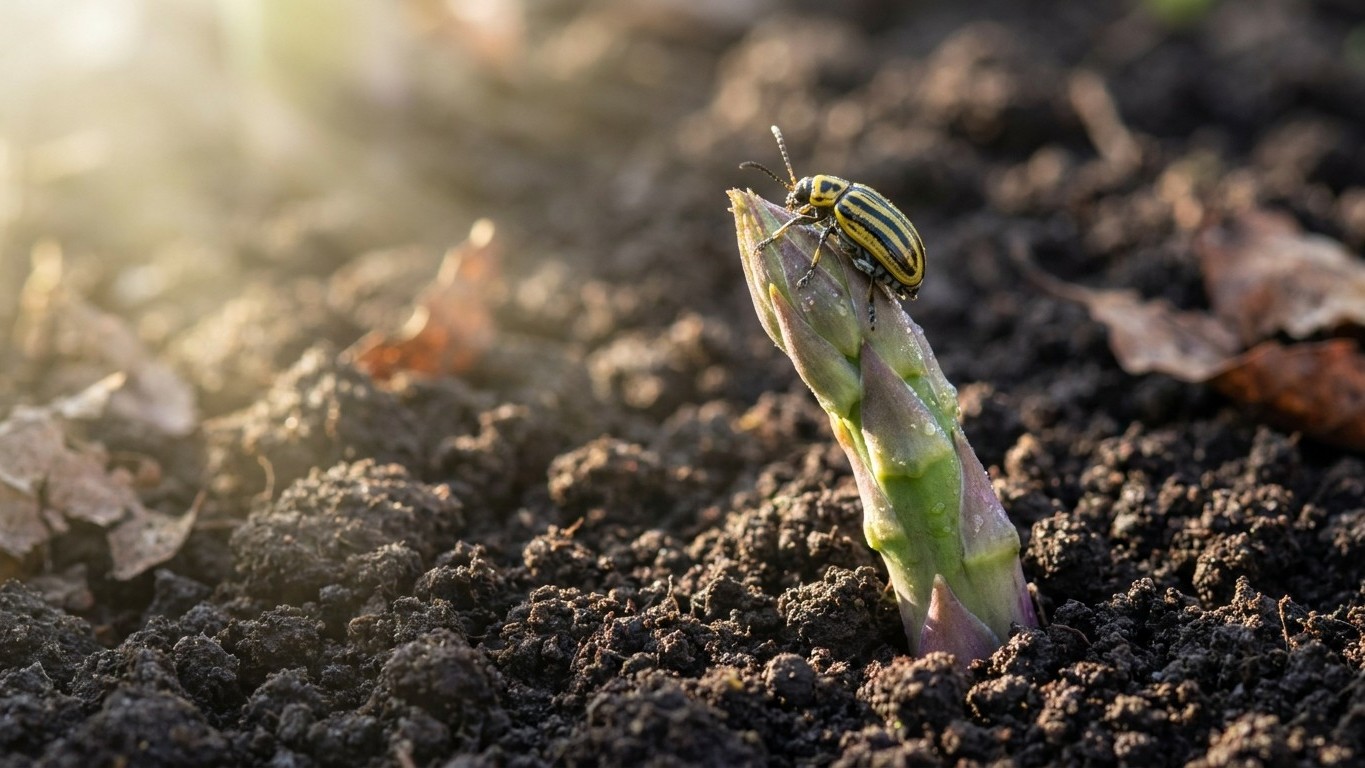

Asparagus beetles typically appear in West Virginia between late April and mid-May, right as the first spears push through the soil, and they stick around until the ferny tops die back in fall. Two generations per season are common in the state’s warmer valleys, which means a garden can face pressure twice: once when spears emerge and again in mid-to-late summer when the plants are building energy for next year’s crop. Stopping them comes down to timing your cleanup, catching the first wave of adults before they lay eggs, and choosing a control method that matches the size of your patch.
When Asparagus Beetles Show Up Across West Virginia

West Virginia’s terrain creates a patchwork of microclimates, and that patchwork shifts the beetle calendar by two to three weeks depending on where you garden. In the Eastern Panhandle, around Martinsburg and the lower Shenandoah Valley, soil warms fastest, and overwintering adults often crawl out of leaf litter and old plant debris by the third week of April. In the central mountains, Elkins, Marlinton, and similar higher-elevation towns, spring lags behind, and beetle activity usually doesn’t ramp up until mid-May.
The Ohio Valley and southern coalfields sit somewhere in between, with beetles showing up in early May in most years. What matters more than the calendar date is soil temperature and asparagus growth stage: adults become active once soil hits roughly 50 degrees Fahrenheit at a few inches deep, and they’re drawn specifically to the tender green spears just breaking the surface. If your asparagus bed is up and growing, the beetles are already looking for it, regardless of what the calendar says.
West Virginia’s asparagus beetle population is dominated by two related species: the common asparagus beetle (Crioceris asparagi) and the spotted asparagus beetle (Crioceris duodecimpunctata). Both overwinter as adults in hollow stems, mulch, and garden debris left standing over winter, which is a big reason fall cleanup matters more than most gardeners realize. A messy asparagus bed left standing through winter is essentially a beetle hotel with heated rooms.
The Second Wave: Midsummer Beetles
After the first generation lays eggs on spears in spring, larvae feed for two to three weeks before dropping to the soil to pupate. A second generation of adults typically emerges in July across most of the state, sometimes stretching into August in the warmer river valleys. This second wave targets the fern-like foliage rather than spears, since harvest has usually ended by then. That foliage damage matters more than gardeners assume, because a defoliated asparagus plant can’t store enough energy in its roots to produce a strong crop the following spring.
How to Tell Asparagus Beetles From Other Garden Pests
Common asparagus beetles are small, roughly a quarter-inch long, with a blue-black body and cream-colored squares along the wing covers, bordered in red. Spotted asparagus beetles are slightly more rounded, orange-red with black spots, and easy to mistake for a small ladybug at a glance. Neither species is large enough to spot from across the yard, so most gardeners in West Virginia first notice the damage before they notice the insect itself.
Eggs are the giveaway sign nobody talks about enough. Common asparagus beetle eggs are dark, oval, and glued in tidy rows standing upright on the spear tips, almost like tiny black rice grains. Spotted asparagus beetle eggs are laid singly and tend to be a pale greenish color, tucked onto the foliage rather than the spears. If you see either pattern, you’re looking at the start of a larval generation within days.
Larvae themselves are soft-bodied, slug-like, and grayish or olive green with dark heads. They feed in clusters and can strip the outer tissue of spears, leaving a scarred, grayish surface that makes harvested asparagus look bruised even when it’s perfectly edible underneath. Heavy larval feeding on ferns later in the season causes a browning, skeletonized look that some gardeners initially mistake for drought stress or a fungal problem.
What Actually Stops Asparagus Beetles
Control works best as a layered approach rather than a single fix, and timing beats intensity almost every time. Catching the first-generation adults before they lay eggs on spring spears prevents the bulk of the season’s damage, since one female beetle can lay dozens of eggs over just a few weeks.
Fall and Spring Sanitation
Cutting asparagus ferns down to ground level after they yellow in fall, rather than leaving them standing through winter, removes the hollow stems beetles use for overwintering shelter. WVU Extension and similar land-grant programs across the Mid-Atlantic recommend clearing bed debris completely by late November in most of the state, then disposing of it away from the garden rather than composting it on-site, since compost piles rarely get hot enough to kill overwintering adults.
A second sanitation pass in early spring, before spears emerge, catches any adults that overwintered nearby in fence rows, mulch piles, or brush. Removing weeds and volunteer asparagus seedlings around the bed’s perimeter closes off the alternate shelter beetles use when the main bed gets disturbed.
Hand-Picking and Daily Harvest
For home gardens under a few hundred square feet, daily harvest during spring cutting season does double duty as pest control. Cutting every spear that reaches harvest height each morning removes the surface most eggs get laid on, since beetles strongly prefer laying eggs on spears rather than on the crowns below soil level. Shaking plants over a bucket of soapy water in early morning, when beetles are sluggish and less likely to fly off, can knock out a meaningful chunk of the adult population in a small planting within a week or two of consistent effort.
Biological Control
A parasitic wasp, Tetrastichus asparagi, attacks asparagus beetle eggs and has established naturally in many East Coast asparagus-growing regions, including parts of the Mid-Atlantic. Populations of this wasp build up over a few seasons in beds that avoid broad-spectrum insecticide use, since those sprays kill the wasp along with the target pest. Gardeners who lean on cultural controls for a season or two often see natural predation increase on its own, without needing to purchase or release anything.
Row Covers and Physical Barriers
Floating row covers placed over young asparagus beds in early spring, before spears emerge, block adult beetles from reaching the plants during that critical first-generation window. Covers need to come off once harvest begins, since asparagus needs pollinator access and airflow, but that early-season barrier can prevent the first wave of egg-laying almost entirely in a small bed.
When Insecticides Make Sense
For larger plantings or commercial-scale beds where hand-picking isn’t practical, insecticides labeled for asparagus beetle and approved for use on asparagus remain an option, particularly during the non-harvest window between spring cutting and fall dieback. Products containing spinosad or pyrethrins are commonly used because they break down relatively quickly and carry shorter pre-harvest intervals than some older chemistries, though gardeners should always confirm the specific product label allows use on asparagus and check the required waiting period before harvest. Spraying during active pollinator visits should be avoided, since asparagus flowers do attract bees even though the crop isn’t typically thought of as a pollinator plant.
Why West Virginia’s Climate Keeps Beetles Coming Back
Unlike some garden pests that struggle through harsh winters, asparagus beetles are well adapted to survive West Virginia’s cold season as long as they find sheltered debris to overwinter in. Average winter lows in the state’s mountain counties regularly drop below zero, but adults tucked into hollow stems or leaf litter a few inches down are largely insulated from that exposure. That’s part of why sanitation matters so much here: it’s less about killing the current population and more about removing the shelter that lets next year’s population survive the winter in the first place.
Established asparagus beds, the kind that have been producing in the same spot for eight, ten, or fifteen years, tend to carry heavier beetle pressure than younger plantings simply because the pest population has had time to build up locally. Gardeners moving into an older West Virginia homestead with an existing asparagus patch should expect a heavier first season of beetle activity than someone starting a bed from scratch, and should plan sanitation and daily harvest accordingly rather than being surprised by it.