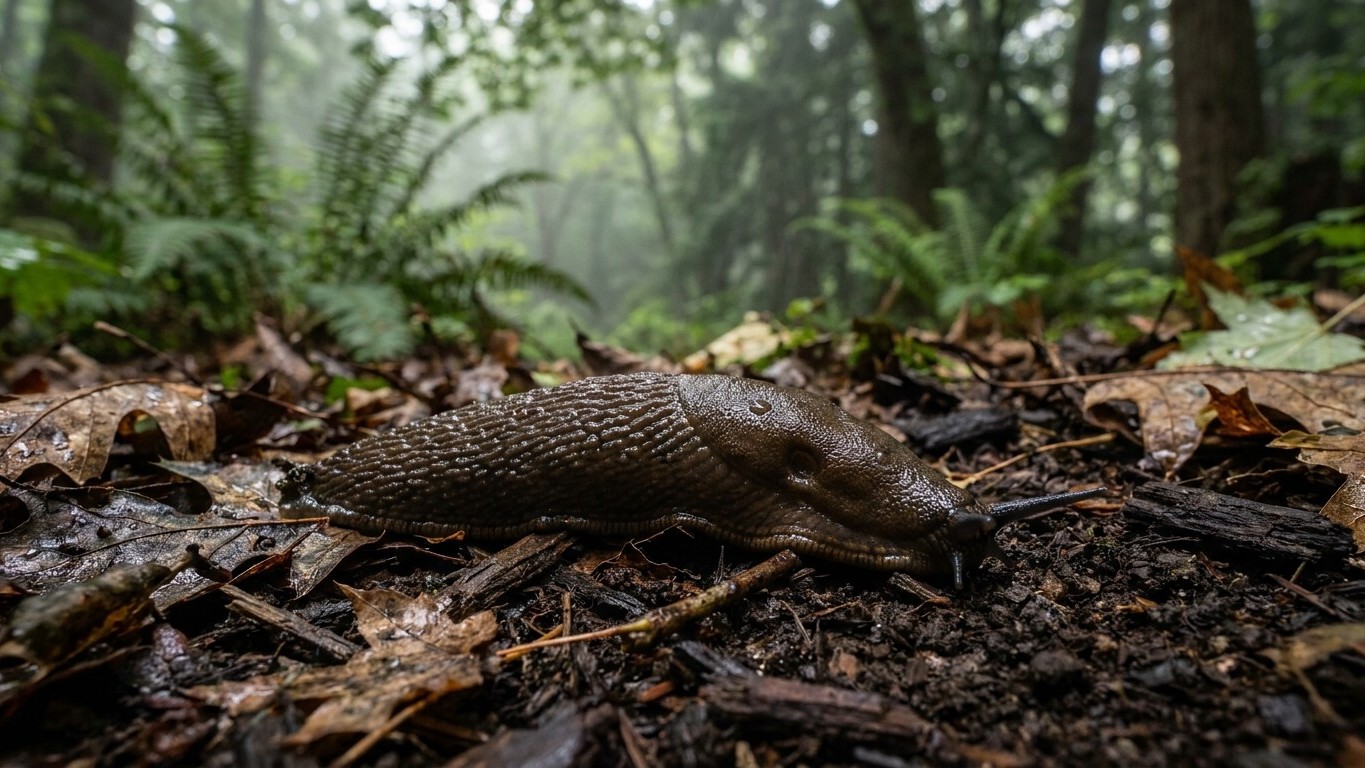

Slugs turn up across West Virginia mainly from mid-April through June, then again in September and October when nights cool off but the ground stays damp. Between those windows, a hot, dry Appalachian summer usually slows them down, and hard frost pushes adults out of the picture entirely, though their eggs ride out winter tucked into leaf litter and mulch. If you garden anywhere from the Eastern Panhandle to the coalfields of the south, that two-season rhythm is the one to plan around.
Why West Virginia’s Terrain Keeps Slugs Around

Slugs are basically walking water balloons with no shell to slow evaporation, so they need constant moisture to survive. West Virginia hands them that on a plate. The state averages somewhere between 40 and 45 inches of rain a year, and mountain hollows in counties like Pocahontas, Randolph, and Greenbrier trap fog and humidity long after a storm has passed through the valleys below. Add dense hardwood canopy, thick leaf litter, and the kind of clay-heavy soil that holds water instead of draining it, and you’ve built a slug habitat without even trying.
Elevation plays a role too. Lowland river valleys along the Ohio and Kanawha tend to warm and dry out faster in summer, giving slugs a shorter active window. Higher ground near Spruce Knob or the Monongahela National Forest stays cooler and wetter later into the season, which is why gardeners up there sometimes report slug damage into July when folks down in Charleston have already stopped seeing much activity.
The species doing most of the damage in home gardens is the gray garden slug (Deroceras reticulatum), a soft, mottled gray-brown mollusk usually under two inches long. Larger banana-yellow or spotted leopard slugs also show up in wetter, wooded parts of the state, though they tend to feed more on decaying matter than on living plants. Either way, the telltale sign is the same: a silvery, dried slime trail crisscrossing your hostas, and irregular holes chewed into leaves that look nothing like the clean bites of a caterpillar.
The Seasonal Timeline, Month by Month
Late winter eggs, laid in clusters of 20 to 100 in the fall, sit dormant under mulch and dead leaves until soil temperatures climb into the mid-40s. In most of West Virginia that happens sometime in March, though at higher elevations it can slip into early April.
Spring brings the first real wave. Juvenile slugs hatch and start feeding almost immediately on tender new growth, which is exactly why seedlings and transplants take the worst hit. This stretch, roughly April through early June, is when extension offices across the state field the most slug complaints. Cool, rainy spring weather, the kind West Virginia specializes in, keeps them active around the clock instead of just at night.
Summer is the wild card. A normal humid stretch keeps slug numbers steady, but a dry spell in July or August, which does happen even here, sends them burrowing under mulch, rocks, and boards to wait it out. Gardeners sometimes assume the problem is solved by August, only to watch it come roaring back the moment fall rains arrive.
That second peak, September into October, catches people off guard because they’ve stopped watching for it. Cooler nights and returning moisture wake up a fresh generation, and this is also when adults are laying next year’s eggs. Anything you do in autumn to disrupt egg-laying pays off the following spring far more than a summer intervention would.
What Actually Stops Slugs in a West Virginia Yard
Timing your watering matters more than most people realize. Slugs feed and move almost exclusively when surfaces are damp, so watering gardens in the early morning instead of evening lets the soil surface dry out by nightfall, cutting off their preferred travel conditions during their most active hours. It’s a small adjustment that costs nothing and works with the state’s already-humid baseline instead of adding to it.
Habitat removal is the next lever, and it’s the one most gardeners skip because it’s tedious. Slugs hide by day under boards, flower pots, thick mulch, and dense ground cover, then emerge at dusk to feed. Pulling back mulch to a thinner two-inch layer, clearing debris piles near garden beds, and spacing plants for airflow all remove the daytime shelter they depend on. In a state with this much forest edge pressing against backyard gardens, that shelter is never far away, so consistency matters more than any single cleanup.
Physical barriers work because slugs dislike anything sharp, dry, or metallic against their soft underside. A ring of diatomaceous earth around vulnerable plants damages their skin on contact, though it has to be reapplied after every rain, which in West Virginia can mean every few days during a wet spring. Copper tape wrapped around raised bed edges or pot rims creates a mild electrical reaction that most slugs won’t cross, and unlike diatomaceous earth, it keeps working through wet weather.
Trapping remains the low-cost standby. A shallow dish of beer sunk to ground level draws slugs in with the yeast smell, and they drown overnight. A simple board or wet burlap laid flat on the soil gives slugs a daytime hiding spot you control, so flipping it over each morning turns their own hiding instinct against them. Both methods take a few minutes and no chemicals, which matters on properties with chickens, dogs, or grazing livestock, a common concern on the state’s many small farms and homesteads.
When damage is heavy enough to need bait, iron phosphate pellets are the safer choice over older metaldehyde products. Iron phosphate is far less toxic to pets and wildlife if accidentally ingested, which is a real consideration in rural West Virginia where free-roaming dogs, barn cats, and backyard poultry are the norm rather than the exception. Scatter it thinly right at the base of affected plants rather than broadcasting it across the whole bed, since slugs need to actually contact or eat it to be affected.
Letting Nature Help
West Virginia’s woodlands already host a decent lineup of slug predators, and encouraging them beats fighting the problem alone. Ground beetles, certain rove beetles, toads, and garter snakes all eat slugs and their eggs, and simply leaving a rock pile or a log at the edge of the garden gives these predators somewhere to live. Songbirds, especially robins and thrushes common statewide, will pick slugs off exposed soil in the early morning if given the chance, so a garden that isn’t blanketed in thick mulch actually invites more help than it loses in shelter for pests.
Signs You’re Dealing With Slugs, Not Something Else
Confusing slug damage with insect feeding is a common mistake, and it leads people toward the wrong fix. Slugs leave ragged, irregular holes in the middle of leaves and along edges, often concentrated low on the plant near the soil line where they climb up from ground cover. The dried slime trail, a faint silvery sheen visible in morning light, is the giveaway that separates slug damage from grasshopper or beetle feeding, which tends to leave cleaner, more uniform bite marks. Hostas, lettuce, cabbage family crops, strawberries, and young bean seedlings take the heaviest hits in West Virginia gardens, since their soft, low-growing leaves sit right at slug-feeding height.
A flashlight check an hour or two after dark, especially following a rain, will settle any doubt. If slugs are the culprit, you’ll see them out feeding in the open, moving slowly across leaves and mulch, an easy visual confirmation before spending money on the wrong control method.
One detail worth remembering heading into next spring: slug eggs laid this September in an untouched leaf pile can produce a hatch of 50 or more juveniles from a single clutch. Clearing that debris before the ground freezes does more to shrink next year’s population than any trap or bait applied after the fact.
Related guides
- Slugs in Ohio: When It Shows Up and What Stops It
- Slugs in Wisconsin: When It Shows Up and What Stops It
- Slugs in Yukon: When It Shows Up and What Stops It
- Cabbage worms in West Virginia
- Cucumber beetles in West Virginia
- Asparagus beetles in West Virginia
- Slugs in Michigan: When It Shows Up and What Stops It