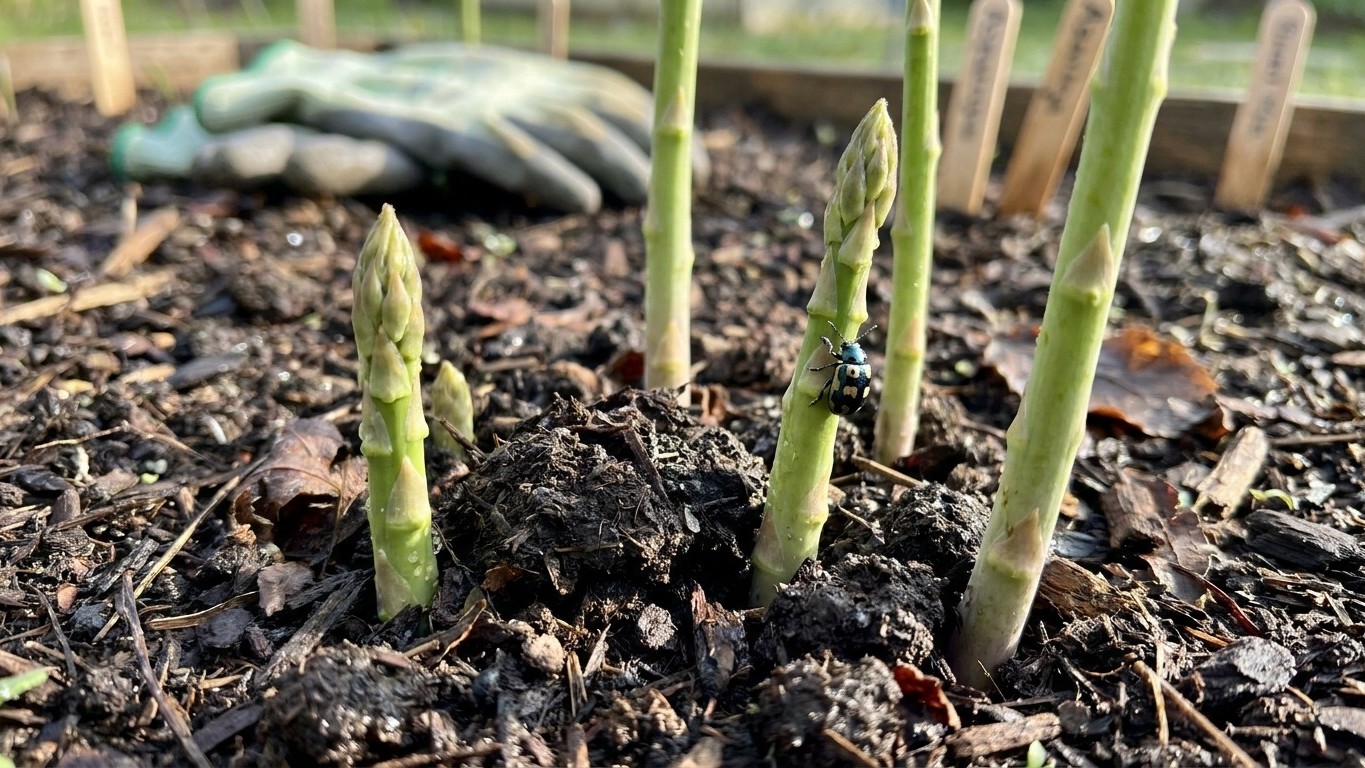

Asparagus beetles show up in Ontario the moment spears break through the soil, usually in late April in the southwest and closer to mid-May farther north and inland. Cool, consistent temperatures around 50°F wake overwintering adults from their hiding spots in old stalks and garden debris, and they head straight for the first tender growth. What actually stops them is a combination of fall bed cleanup, early hand removal, and, for bigger infestations, a well-timed organic spray. Skip any one of those and the beetles come right back the following spring, because the adults that survive winter simply move into next year’s patch.
Two Beetles, Two Different Problems

Ontario gardens deal with two distinct species, and mixing them up leads to wasted effort. The common asparagus beetle (Crioceris asparagi) is the one that actually hurts your harvest. Adults are roughly a quarter-inch long, metallic blue-black with cream or orange squares along their wing covers. Both the adults and their olive-gray, slug-shaped larvae feed directly on spears and ferns, leaving brown scars, chewed tips, and stunted growth that makes spears unmarketable and, in a home patch, less appetizing.
The spotted asparagus beetle (Crioceris duodecimpunctata) looks similar in size but is orange-red with twelve black spots. It causes far less damage to the plant itself. Its larvae develop inside the berries of female asparagus plants rather than chewing on spears or ferns, so most of the harm is cosmetic and limited to seed production. If you’re only seeing orange beetles with spots, you can generally relax the treatment schedule compared to what you’d do for the blue-black species.
When Asparagus Beetles Actually Show Up in Ontario
Emergence tracks soil warming more than the calendar. In Essex and Niagara counties, where asparagus growing has a long commercial history, adults typically appear in the last week of April as spears start pushing through. In the Ottawa Valley and central Ontario, that window slides to early or mid-May. Northern growing areas near Timmins or North Bay often don’t see beetle activity until late May, simply because the ground takes longer to reach the temperature that triggers movement.
These insects don’t just appear once and disappear. Ontario’s growing season is long enough for two to three generations of common asparagus beetle between April and September. The first generation feeds heavily during the harvest window in May and June, which is exactly when spear damage hurts the most. A second generation typically builds through July, targeting the ferny foliage that develops after harvest ends. That second wave matters more than most gardeners realize, because damaged ferns can’t photosynthesize properly, and a weakened fern canopy means a smaller root reserve and a thinner harvest the following spring.
Adults overwinter in hollow old stalks, loose bark, and plant debris left standing over winter, sometimes just inches from where they’ll feed next spring. That’s the single biggest reason infestations return to the same beds year after year in Ontario gardens that don’t clear old growth in the fall.
Spotting the Eggs Before They Hatch
Females glue small, dark, cigar-shaped eggs in tidy rows directly onto the surface of spears, usually near the tip. They’re visible to the naked eye without a magnifying glass, dark brown to black against the green stalk. A single spear can carry several egg rows if beetle pressure is high. Brushing or wiping spears before cooking removes surface eggs easily, which is why light infestations are more of an appearance issue than a food safety concern for home cooks.
What Actually Stops Asparagus Beetles
Control works best as a sequence rather than a single fix. Fall cleanup, early scouting, hand removal, and targeted spraying each address a different point in the beetle’s life cycle, and skipping the fall step tends to undo everything you do in spring.
Fall and Winter Cleanup
Cutting asparagus ferns down to the ground after the first hard frost, then removing and destroying the stalks rather than composting them, eliminates the shelters adults use to survive an Ontario winter. Old, standing stalks left through winter act like a beetle motel. Clearing volunteer asparagus plants growing along fence lines or in ditches near the main bed also removes bridge habitat that lets beetles jump back into cultivated rows once spring cleanup happens.
Hand Removal in Small Patches
For backyard beds, picking beetles by hand remains one of the more effective, zero-cost tactics. Adults are sluggish in cool morning air and drop readily when disturbed, so knocking them into a bucket of soapy water before 9 a.m. catches a large share of the population before the day warms up. Checking twice a week during the first few weeks of spear emergence, when populations are still low, prevents the population from building toward a second generation.
Biological Control Already at Work
A tiny parasitic wasp, Tetrastichus asparagi, lays its own eggs inside asparagus beetle eggs, and studies in several northern growing regions have found parasitism rates high enough to meaningfully reduce beetle numbers over a season without any spraying at all. Avoiding broad-spectrum insecticides preserves this wasp population, which is one more reason spot-treating instead of blanket spraying pays off over a few seasons.
Sprays and Barriers When Numbers Climb
When hand removal isn’t keeping pace, insecticidal soap and spinosad-based products give reasonable control on both adults and larvae with a shorter re-entry window than harsher chemical options, which matters if you’re harvesting spears every day or two during peak season. Pyrethrin-based sprays work as well but break down quickly in sunlight, so evening application extends their effectiveness. Floating row covers over young spears during the first two to three weeks of emergence physically block adults from reaching new growth, though covers need to come off once ferns start growing to allow pollination on female plants.
Timing sprays matters more than product choice. Applying after harvest but before ferns fully develop protects the foliage that fuels next year’s crown without putting residue on spears headed to the kitchen. That single timing decision does more for long-term yield than most other steps in the control sequence, because a healthy fern stand through August and September builds the energy reserves the plant relies on the following spring.
How Much Damage Is Actually a Problem
Home gardeners can tolerate more cosmetic damage than commercial growers, since a few scarred spears still cook and taste fine once trimmed. Commercial operations in Ontario generally start treatment once five to ten percent of spears show feeding damage or visible egg rows, a threshold set because asparagus is sold largely on appearance. For a backyard bed, waiting until you see clusters of larvae stripping fern needles, or noticing that a third or more of your spears carry egg rows, is a reasonable point to move from watching to active control.
One detail that catches gardeners off guard: heavy larval feeding on ferns in July and August, well after the harvest season ends, does more long-term damage than beetle activity during the actual spring harvest. It’s easy to stop paying attention once you’ve picked your last spear, but that’s precisely the window when protecting the fern canopy determines whether next spring’s harvest holds steady or drops off.