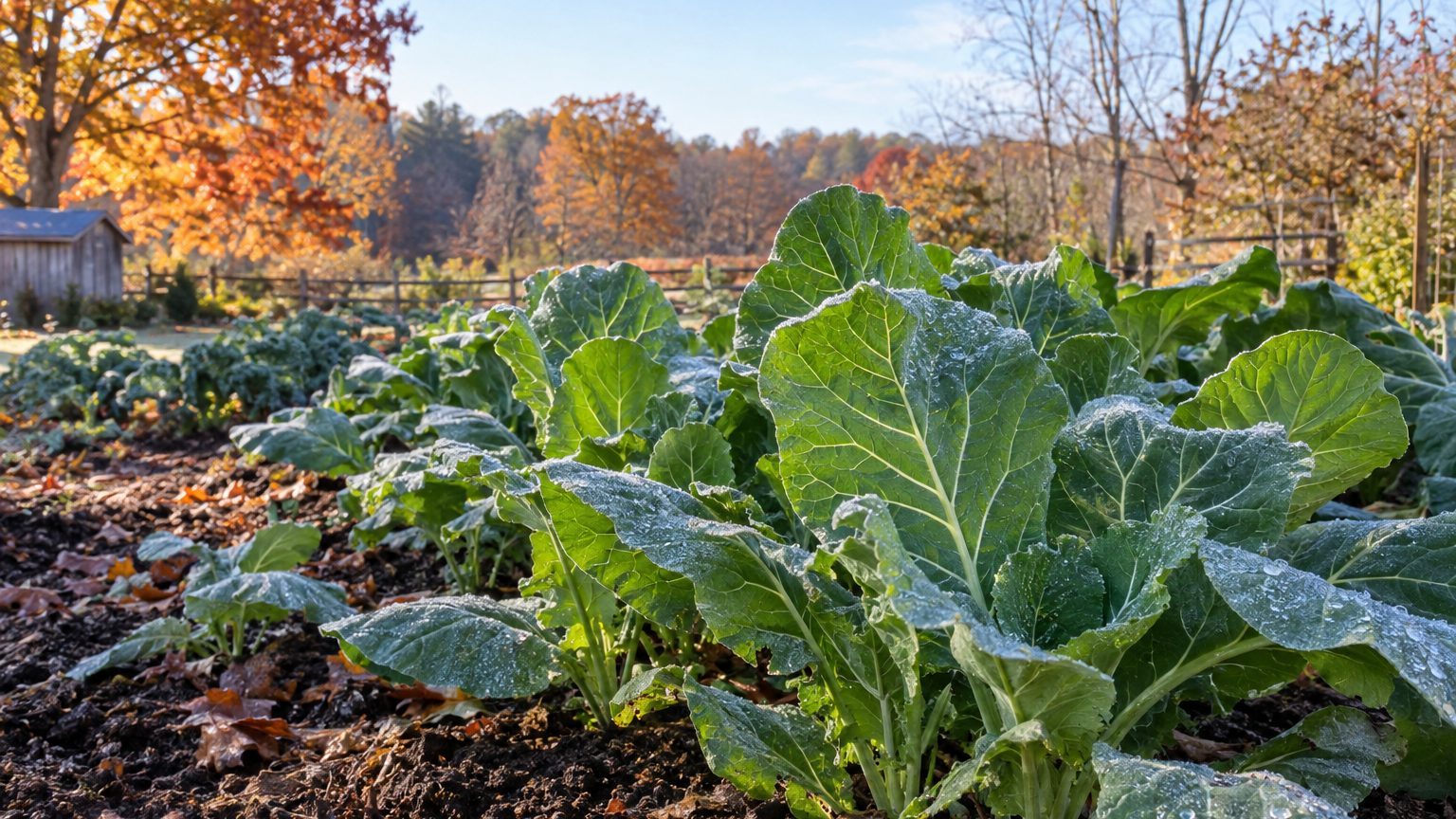

In low-desert Arizona, collards go into the ground in fall, not spring, timed to escape summer heat rather than to dodge a killing frost. The Phoenix area barely freezes at all most winters, so the usual last-frost-to-first-frost planting math doesn’t apply here the way it does almost everywhere else collards get grown.
The short answer for Arizona
Sow collards in the low desert from early September through October, giving them the cooling fall air to establish before the mild Arizona winter carries them through to a late-winter or early-spring harvest. That’s the opposite sequence from what a Georgia or Carolina gardener would use, and the reason is written into the climate record for Phoenix itself.
NOAA’s 1991-2020 Climate Normals for station USW00023183, the long-running Phoenix reference station, list the frost-free season at 365 days. Daily records from the same station back that up in an unusual way: over 30 monitored spring seasons, the temperature only dropped to 32°F in 6 of them. A true, reliable “last spring frost date” doesn’t really exist here, which means a frost-based sowing calendar, the kind that works for most of the country, has nothing to anchor to in the low desert.
What actually limits the collard season in central and southern Arizona is heat, not cold. The coldest month’s average daily minimum sits at a mild 45.3°F, comfortably above the range where collards suffer real damage. Summer is the problem: months of sustained high heat stop leafy growth, turn the leaves bitter, and push the plants toward bolting long before they’d reach full size. That’s why the sowing window shifts to fall, when the heat finally breaks and the plants can grow through a winter that almost never threatens them with a hard freeze.
This calendar applies specifically to the low desert, the part of the state Phoenix represents in the climate data. Arizona’s high country runs on a completely different clock, covered in the next section, because it experiences the kind of real winter that Phoenix simply doesn’t.
What will not work here

Planting collards in spring, the way a home gardener transplanted from a colder state might instinctively do, sets the crop up to fail in the low desert. A spring sowing barely gets a head start before daytime heat climbs into the range that stalls leaf growth and triggers bolting, and by the time the plant would normally be reaching harvest size, it’s fighting May through September heat instead of growing through it. Collards need that window to be cool, not warming.
A weekly watering routine, common advice for gardeners in humid Southern states where collards are a staple crop, also fails here. Arizona’s low desert is arid enough that soil dries out far faster than it would under humid summer air, and a schedule built for the Southeast will leave desert-grown collards drought-stressed and tough long before they’d normally show it.
Treating the whole state as one climate is the other trap. A planting calendar tuned to Phoenix’s mild winter and 45.3°F cold-month average will actively hurt a gardener in Arizona’s high country, where real hard freezes are routine and a fall-sown crop left unprotected can be killed outright rather than merely slowed. The state’s hardiness zone range, discussed next, is wide enough that a single calendar simply can’t serve both ends of it.
Finally, expecting a full summer harvest anywhere in the low desert doesn’t work at all. Once the heat sets in, the growing window closes for months, not weeks, and no amount of extra watering or shade cloth turns collards into a true summer crop in this climate.
What changes across Arizona
Arizona’s USDA hardiness zones run from 4b to 10b, according to the USDA Plant Hardiness Zone Map built on 1991-2020 normals. That’s a spread built on one variable, the average annual extreme minimum temperature, but the range alone tells you this state is not one growing climate. Zone 10b, which covers the Phoenix area used throughout this page, barely dips below freezing in an average year. Zone 4b, found in Arizona’s high country near Flagstaff and other high-elevation communities, sees winter lows cold enough to kill unprotected crops outright.
A gardener working anywhere near the low desert reference point can follow the fall-sowing logic described above with real confidence, because that’s the climate the data actually describes. A gardener at higher elevation or further north needs to flip the entire approach: treat collards more like a true spring-to-fall crop, sown after the real local last frost and pulled or protected before an actual hard freeze arrives, the pattern used almost everywhere else in the country.
This page can’t tell an individual reader which of those zones applies to their own yard, since a five-mile drive in elevation-heavy parts of Arizona can shift the local climate more than a five-hundred-mile drive would in a flatter state. The USDA Plant Hardiness Zone Map is the tool built for that job, matched to a specific address rather than a whole state, and it’s worth checking directly before locking in a sowing date based on the low-desert calendar above.
Where to check this for your own county
Arizona Cooperative Extension, run through the University of Arizona, publishes county-level guidance at https://extension.arizona.edu/, and that’s the next stop for anyone who wants a date more precise than the state-wide pattern described here. Extension offices are organized by county specifically because Arizona’s climate varies too much for one statewide sheet to serve everyone well, which is exactly the problem this page runs into with the 4b-to-10b hardiness spread.
Two things are worth pulling from the county office directly. The first is a local planting calendar, built around that county’s actual frost pattern and heat timing rather than the Phoenix reference data used throughout this page. The second is a list of collard and Southern green varieties that extension agents have actually trialed in that county’s soil and climate, which matters more in Arizona than in most states given how much conditions shift between the low desert, the middle elevations, and the high country.
A county-level recommendation will always beat a state-level one for the simple reason that it’s built on a smaller, more accurate slice of climate data. This page works from the Phoenix station because that’s the best documented reference point available for Arizona’s low desert, but it can’t account for a specific county’s microclimate the way a local extension calendar can. Anyone gardening outside the immediate Phoenix area, and especially anyone at higher elevation, should treat the county office as the tie-breaker over anything written here.
Some gardeners also time this by the Moon: when to plant collard greens by the moon, as almanac tradition rather than fact.
Checking this against your own garden
No calendar, including this one, beats what the plants and soil are actually doing in a specific yard. Three simple checks tell a gardener more about their own microclimate than any regional date.
Soil warmth by feel is the first. Pressing a bare hand a couple of inches into the bed before sowing gives a rough sense of whether the ground has actually cooled enough for fall planting, or is still holding onto summer heat, regardless of what the calendar suggests for that week.
The first flush of male flowers, the early sign of bolting, is the second, and it’s the clearest warning that heat has caught up with the plants. Collards that flower early in a season that was supposed to be mild point to a microclimate running warmer than the Phoenix reference data assumes, whether from a south-facing wall, reflected heat off pavement, or simply an unusually warm stretch.
The appearance of first true leaves, the leaves that emerge after the initial seedling leaves and actually resemble mature collard foliage, is the third. Their timing shows how the young plants are handling the current stretch of weather, and a noticeably slow or fast emergence compared to a neighbor’s garden a few miles away is often the first real clue that a yard sits in its own small pocket of Arizona’s very wide climate range.