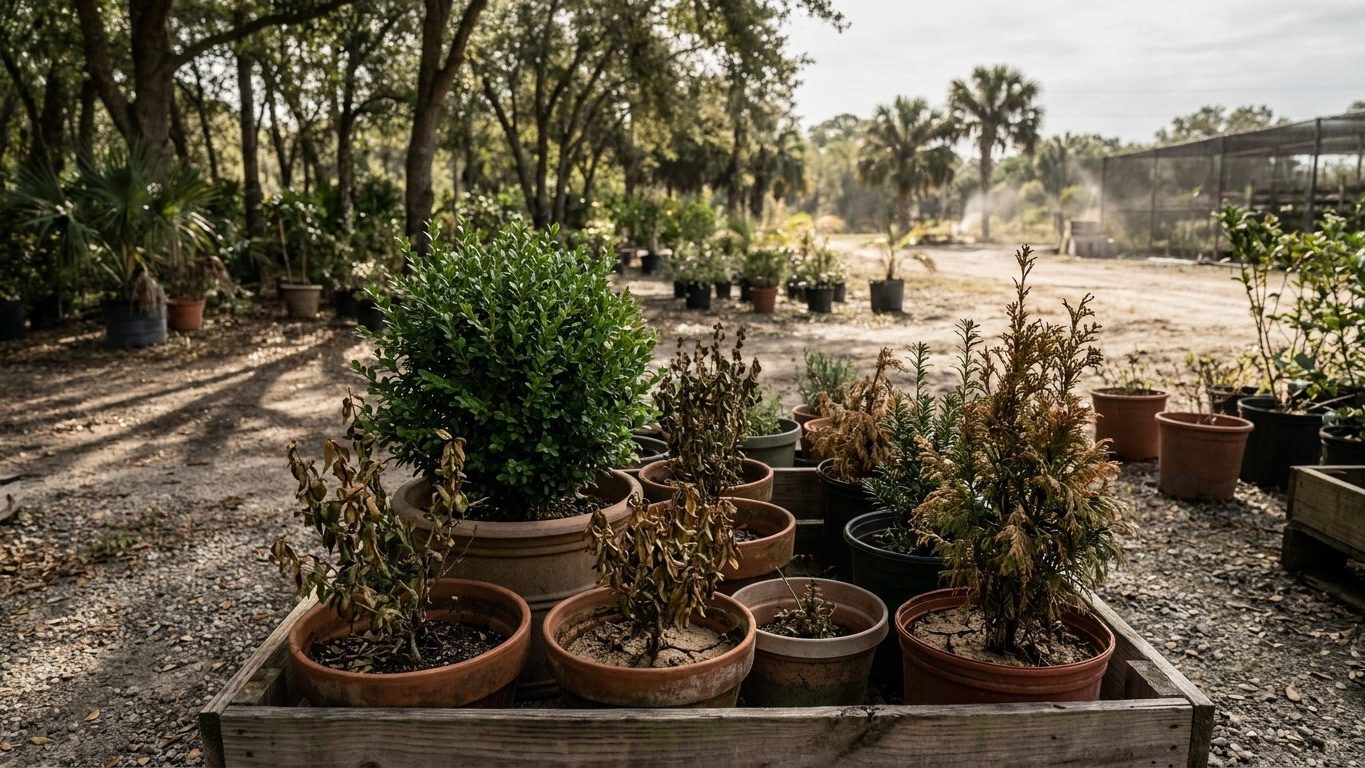

Six of the twelve hedge species tracked on this site survive across the entire state, from the high mountain valleys to the eastern plains. Six more only hold in the warmer half of Colorado’s range. None fail everywhere. The catch is that Colorado stretches across USDA zones 3b through 7b, and a hedge that shrugs off winter in Denver can die outright two hours west at higher elevation.
What actually holds in Colorado
Start with the bad news, because it’s the half most planting guides skip. Colorado’s coldest zone, 3b, sits in the mountain valleys and high-elevation towns where winter lows drop hard and stay there. Of the twelve documented hedge species, none are rated for 3b. That’s not a typo. Boxwood, Leyland cypress, cherry laurel, yew, privet, and inkberry holly all fall short of that zone’s minimum. If you garden at altitude, in a mountain town or a high valley, you are working from a shorter list than a reader in the Denver metro or on the eastern plains.
The six species rated for only part of the state split into two tiers. Inkberry holly, privet, and yew are rated for zones 4a through 7b, meaning they hold everywhere in Colorado except that coldest 3b band. Boxwood needs 5a through 7b, ruling out both 3b and 4a-4b. Leyland cypress and cherry laurel are the pickiest of the group, rated only for 6a through 7b, which in Colorado terms means the lower, warmer valleys and plains rather than anywhere with real elevation.
“Holds” is doing specific work in that sentence, and it doesn’t mean “thrives.” The upper end of a hardiness range is usually a heat and humidity ceiling, not a cold one. Cherry laurel and Leyland cypress are both mid-Atlantic and Southeast plants first; they tolerate Colorado’s warmer zones but never asked for its dry air or its intense high-elevation sun. They survive there. They don’t necessarily look happy about it.
| Species | Common name | Zones where it holds | Colorado reality |
|---|---|---|---|
| Ilex glabra | Inkberry holly | 4a-7b | Holds statewide except 3b mountain zone |
| Ligustrum vulgare | Privet | 4a-7b | Holds statewide except 3b mountain zone |
| Taxus x media | Yew | 4a-7b | Holds statewide except 3b mountain zone |
| Buxus sempervirens | Boxwood | 5a-7b | Fails in 3b and 4a-4b, the coldest bands |
| Prunus laurocerasus | Cherry laurel | 6a-7b | Warm valleys and plains only |
| x Hesperotropsis leylandii | Leyland cypress | 6a-7b | Warm valleys and plains only |
Before buying anything, check your own zone against your county extension office or a current USDA hardiness map rather than assuming the Front Range figure applies to your yard. The state’s range runs from 3b to 7b, and no single number describes it.
The hedges you can never cut back down
Three species on this list share a trait that matters more than height or growth rate: they do not regrow from old wood. Leyland cypress, eastern red cedar, and arborvitae all fall into this category, and it changes how you have to treat them from the day you plant.
Cut one of these back past its green growth, into bare interior wood, and that section stays bare. There’s no resprouting, no filling back in next season. A boxwood or a yew hedge that’s gotten shaggy can be whacked back hard and will push new growth from the old stems within a year or two. Try that with an overgrown arborvitae hedge and you’re left with a permanent brown gap the shape of your pruning saw.
That makes early, consistent shaping non-negotiable for these three. Eastern red cedar and arborvitae are both rated hardy across the entire state, zones 3b through 7b, which makes them the go-to choice for windbreaks and screens in Colorado’s colder mountain towns where boxwood and privet aren’t an option. But that statewide hardiness comes with the same restriction: prune lightly, prune often, and never let the hedge get away from you waiting for a weekend to deal with it. Arborvitae takes cuts in late winter before growth starts, or again in midsummer. Eastern red cedar wants only light cuts, done in late winter. Leyland cypress, where it holds in the warmer 6a-7b zones, takes shaping from late spring through midsummer, but the same rule applies: shape it while it’s still small enough that a mistake doesn’t cost you a decade.
Compare that to the plants that forgive you. Boxwood, yew, privet, inkberry holly, cherry laurel, American hornbeam, winterberry holly, eastern hemlock, and arrowwood viburnum all regrow from old wood. That doesn’t mean hack away carelessly, but it does mean a hedge that’s been neglected for a couple of seasons, or one a previous owner let get out of hand, can usually be brought back with a hard renovation cut. If you inherited an overgrown hedge and don’t know the species, that single fact, whether it resprouts from old wood, is the first thing worth figuring out before you touch a pruning saw. For a general refresher on cutting technique and timing across species, the site’s main Hedges guide covers the mechanics in more depth.
Matching the plant to the job
A two-foot border along a front walk and a fifteen-foot windbreak along a fence line are different projects, and Colorado’s plant list sorts fairly cleanly by scale.
For a low, formal edge, boxwood is the classic choice where your zone allows it (5a through 7b), growing just 3 to 6 inches a year and topping out at 2 to 6 feet as a clipped hedge. It’s slow, which is exactly the point for a shape you want to hold precisely. Yew works the same role a zone colder, hardy down through 4a, growing 6 to 12 inches a year up to 3 to 8 feet, and it takes shade better than boxwood does.
Move up to a mid-height privacy hedge and privet is the workhorse, 2 to 3 feet of growth a year reaching 4 to 12 feet, though that speed means shaping it twice a season, in spring and again in midsummer, or it gets away from you fast. Inkberry holly covers similar ground more slowly, 6 to 12 inches a year toward a possible 15 feet, and it stays evergreen where privet in cold winters can look ragged.
For a full screen or windbreak, height and speed matter more than precision. Leyland cypress is the fastest thing on this list, 3 to 4 feet a year toward 15 to 25 feet, but it’s confined to the warmer 6a-7b bands and can never be cut back hard once it fills in. Arborvitae, hardy statewide, grows a more modest 6 to 9 inches a year but reaches the same range, 4 to 15 feet, with the reliability of a plant rated for the whole state rather than a warm pocket of it. Eastern red cedar, also statewide hardy, is the toughest and most drought-tolerant of the group, native to a wide swath of the country and generally more tolerant of neglect than the cultivated cypress.
For something less formal, arrowwood viburnum offers a wildlife-friendly, loosely shaped hedge, 12 to 24 inches a year toward 6 to 10 feet, pruned right after flowering so you don’t cut off next year’s blooms. It’s hardy statewide and asks for the least fuss of anything on this list. Readers comparing notes across states will find a different mix of pressures shaping the list elsewhere; the same three-bucket logic plays out with different results in Hedge Plants for Pennsylvania: What Holds, and What Only Looks Hardy and in Hedge Plants for New Mexico: What Holds, and What Only Looks Hardy.
The ground you are planting into
USDA’s representative soil for Colorado is the Seitz series, an Alfisol, a forest-derived soil of moderate fertility that holds onto nutrients reasonably well. Its surface horizon runs slightly acid, around pH 5.6, with a loam-to-silt texture, 42 percent sand, 21 percent clay, and 37 percent silt, and it’s well drained.
That figure is worth using carefully. It’s the value USDA records for one representative soil series mapped as characteristic of the state, not a measurement of any particular backyard. Colorado covers river bottoms, high mountain valleys, scraped and filled residential lots, and dry plains soils that have nothing in common with a forest-derived Alfisol. The organic matter figure attached to this series, around 70 percent, is a strong tell that this is a natural surface layer, closer to forest litter than to a worked garden bed; a cultivated hedge row will never carry organic matter anywhere near that level. Treat the Seitz numbers as a general signal of what the region’s ground tends to do, drain well and run on the acid side where forest soils dominate, rather than as your own yard’s chemistry. A basic soil test, available through most county extension offices, is the only way to know your actual pH and texture before amending anything.
Timing matters as much as soil chemistry. At the Denver reference station, the National Centers for Environmental Information puts the last spring frost between May 1 and May 11, and the first fall frost between September 30 and October 12, based on 1991-2020 climate normals. Those windows work for planting decisions in the Denver metro and similar elevations on the plains. They do not apply to mountain towns, which sit at higher elevation and can see frost far outside those dates, sometimes into July in a hard year. If you’re planting a hedge above the plains, check frost data specific to your elevation before setting a schedule, and lean on Colorado State University Extension for local guidance rather than a single statewide date.
Common questions
Can I plant a hedge in a Colorado mountain town using the same list as Denver?
Not without checking your zone first. Denver sits in the warmer end of Colorado’s 3b-7b range; many mountain towns fall into 3b or 4a, where boxwood, cherry laurel, and Leyland cypress aren’t rated to survive at all. Stick to the statewide-hardy list, arborvitae, eastern red cedar, hornbeam, winterberry holly, eastern hemlock, or arrowwood viburnum, until you’ve confirmed your local zone.
Which Colorado hedge grows fastest?
Leyland cypress, at 3 to 4 feet a year, is the fastest on this list, but it only holds in the state’s warmer 6a-7b zones and can never be pruned back once it outgrows its space. Privet, at 2 to 3 feet a year, is the fastest option hardy across more of the state.
What happens if I let arborvitae or eastern red cedar get too tall?
Both fail to regrow from old wood, so a hard cut back into bare interior branches leaves a permanent gap. Shape them while they’re still small and keep up with light annual pruning rather than waiting for a major renovation cut.
Does my soil need amending before planting a hedge?
Possibly, but the state’s representative Seitz series soil, slightly acid and well drained, isn’t a stand-in for your yard’s actual dirt. Run a soil test through your county extension office before adding lime, sulfur, or organic matter, since Colorado’s soils vary enormously by elevation and location.