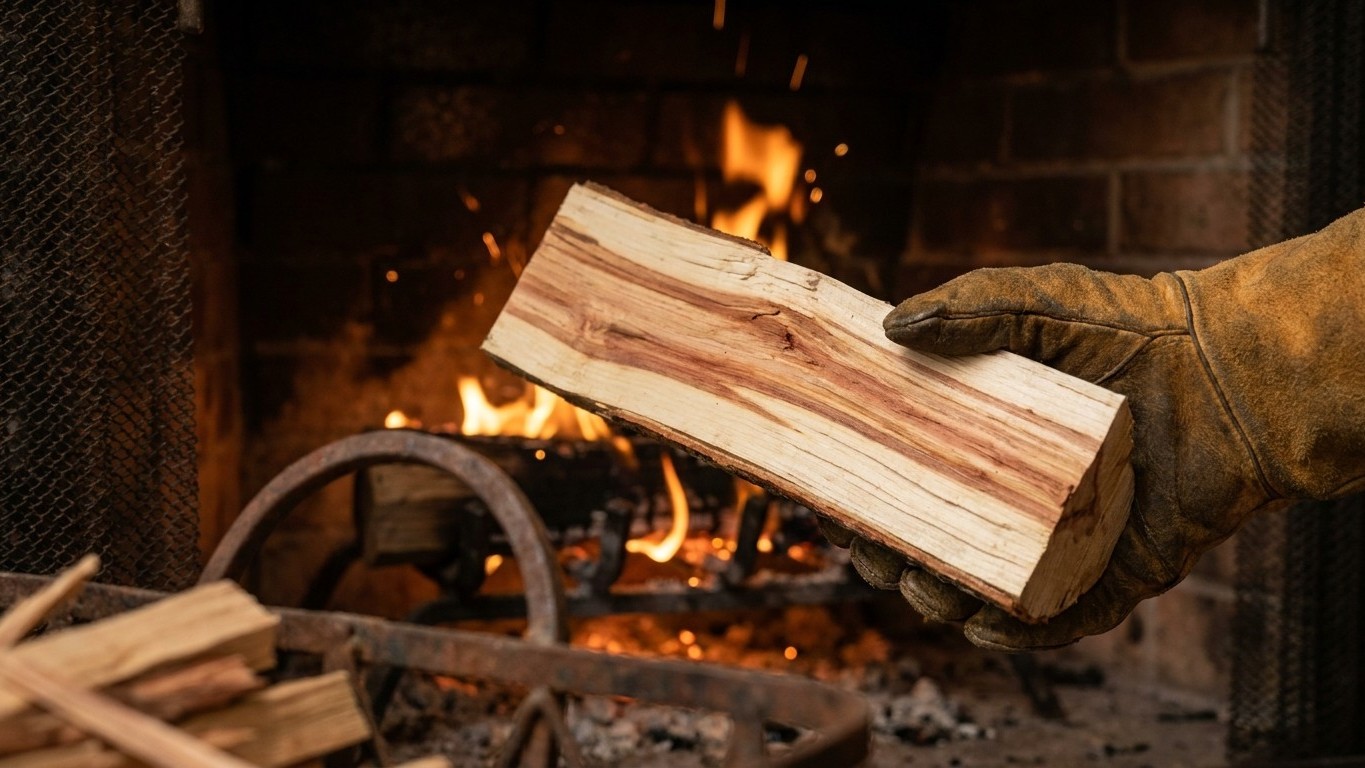

Boxelder burns hot enough for shoulder-season fires but falls short of oak or hickory for serious winter heating. It splits easily, seasons fast, and throws a decent flame, but the BTU output sits in the lower-middle of the hardwood pack, and the wood is prone to sparking more than most people expect from a maple relative. If you’ve got a downed boxelder in the yard, it’s worth burning, just not the wood you want stacked as your only fuel source through a Minnesota January.
How Much Heat Does Boxelder Firewood Actually Produce?

Boxelder (Acer negundo) is technically a maple, though it looks and behaves nothing like sugar maple when it comes to a fire pit. SDSU Extension charts typically place seasoned boxelder at 17 million BTUs per cord, which puts it closer to soft maple, hackberry, or elm than to the dense hardwoods that dominate firewood rankings. For comparison, a cord of dry oak or hickory can push past 24 to 27 million BTUs. That gap matters over a full heating season: you’ll burn through a boxelder woodpile noticeably faster to get the same warmth.
The wood’s low density is the culprit. Boxelder is soft for a hardwood, similar in feel to cottonwood or aspen when you’re splitting it. Less mass per log means less fuel packed into each piece, so the fire burns through it quickly and the coal bed doesn’t hold heat overnight the way a bed of oak coals does. Homeowners who rely on a wood stove as a primary heat source often find boxelder frustrating for that reason. It’s a wood that wants tending, not a wood you load up before bed and forget about.
Where boxelder earns its keep is in transitional weather. Cool fall evenings, early spring mornings, the kind of nights where you want a fire but not a furnace, that’s boxelder’s sweet spot. It lights fast, ramps up to a solid flame quickly, and doesn’t overheat a small space the way a full oak load might.
Smoke Output: What to Expect
Properly seasoned boxelder produces a moderate amount of smoke, comparable to other soft maples. The bigger variable isn’t the species, it’s the moisture content. Boxelder trees often grow in wet bottomland and along creek banks, areas where they compete with cottonwood and willow, and freshly cut logs can carry a lot of internal moisture. Burn it green or half-seasoned and you’ll get the telltale white, billowing smoke that signals water boiling off inside the log rather than clean combustion.
That unseasoned smoke isn’t just an annoyance for the neighbors. It’s also the mechanism behind creosote buildup in chimneys and flue liners, a genuine chimney fire risk documented by fire safety researchers. The U.S. Consumer Product Safety Commission and the National Fire Protection Association both flag improperly seasoned firewood as a leading contributor to residential chimney fires, since unburned smoke particles condense on cooler flue surfaces and accumulate over a season.
Boxelder’s low density actually works in its favor here once it’s properly dried. Softer wood loses moisture faster than dense hardwood, so a boxelder round split to standard size (roughly 4 to 6 inches across) can reach burnable moisture content in as little as four to six months under good drying conditions, compared to a year or more for a comparable oak round. Stack it off the ground, top-covered but with open sides for airflow, and check it with a moisture meter before burning. Anything above 20 percent moisture is still going to smoke more than it should.
The Boxelder Bug Factor
One quirk worth mentioning: boxelder trees are notorious hosts for boxelder bugs, the black-and-red insects that cluster on bark and siding in fall. Firewood cut from an infested tree can carry bugs or egg clusters into a woodshed or garage. It’s not a fire-performance issue, but anyone storing boxelder indoors before burning should expect a few unwanted visitors when the wood warms up.
Sparks and Popping: A Real Consideration for Open Fires
This is where boxelder distinguishes itself from other maples, and not in a good way for anyone using an open fire pit or a stove with a loose-fitting door. Boxelder has a reputation among firewood users for popping and throwing sparks more than its density would suggest. Part of this comes from trapped moisture pockets and irregular grain, especially in wood that grew fast or was stressed by drought, disease, or storm damage, all common in boxelder given how weedy and fast-growing the species is.
For an enclosed wood stove or insert, this barely matters, the sparks stay contained. For a backyard fire pit or an open fireplace without a screen, it’s a legitimate safety concern. Anyone burning boxelder outdoors should use a spark screen, keep the fire pit clear of dry leaves and mulch, and give it a wider safety perimeter than they might with a low-spark wood like ash. This is especially relevant in dry Western states where a single ember can start a spot fire in cured grass.
Fully seasoned wood pops less than half-dried wood, so once again, drying time is doing a lot of the safety work here, not just the comfort work.
Splitting, Handling, and Practical Burning Tips
Boxelder is genuinely easy to split, one of its few unambiguous advantages. The wood is soft and generally straight-grained, so a hand axe or maul handles rounds without much fight, unlike elm, which is notorious for interlocked grain that resists every splitting tool invented. This makes boxelder a reasonable choice for anyone processing their own firewood without a hydraulic splitter.
The heartwood sometimes shows a reddish or pinkish streak, caused by a fungal infection rather than natural coloration. Woodworkers prize this “flame boxelder” figure for turning bowls and furniture accents, but for firewood purposes it has zero effect on burn quality. Don’t discard streaked rounds thinking the wood is diseased or unsafe to burn; the staining is cosmetic and the wood burns the same either way.
Because of its lower heat output, boxelder works best mixed with a denser hardwood rather than burned alone through a full winter. A common approach among people managing mixed woodpiles is to use boxelder for the early evening fire, when the goal is quick heat and easy lighting, then switch to oak, hickory, or hard maple for the overnight load that needs to hold coals until morning. This blending strategy stretches a hardwood supply further and puts fast-growing, often free or cheap boxelder to good use instead of letting it rot in a brush pile.
Kindling is another strong use case. Small split pieces of boxelder catch fast thanks to the low density and moderate resin content, making it a solid fire-starter wood even for people who otherwise burn only premium hardwood for their main heat source.
Where Boxelder Firewood Fits in a Heating Strategy
Boxelder isn’t a wood to seek out and pay premium prices for, but it’s also not a wood to turn away if it’s already on the property or available cheap from a tree service. It’s abundant across much of the central and eastern United States, often removed as a “weed tree” from fence lines, riverbanks, and vacant lots, which means supply is rarely the limiting factor. The tree’s fast growth and tolerance for poor soil mean it shows up in storm cleanup piles and utility right-of-way clearing far more often than slower-growing hardwoods.
For someone heating primarily with a wood stove as a supplemental or backup heat source, a mixed pile with 20 to 30 percent boxelder alongside denser species makes practical sense. For someone relying on wood as the sole heat source through a full northern winter, boxelder should stay a minority player, valued for kindling, shoulder-season burns, and stretching the harder, higher-BTU wood a little further into spring.