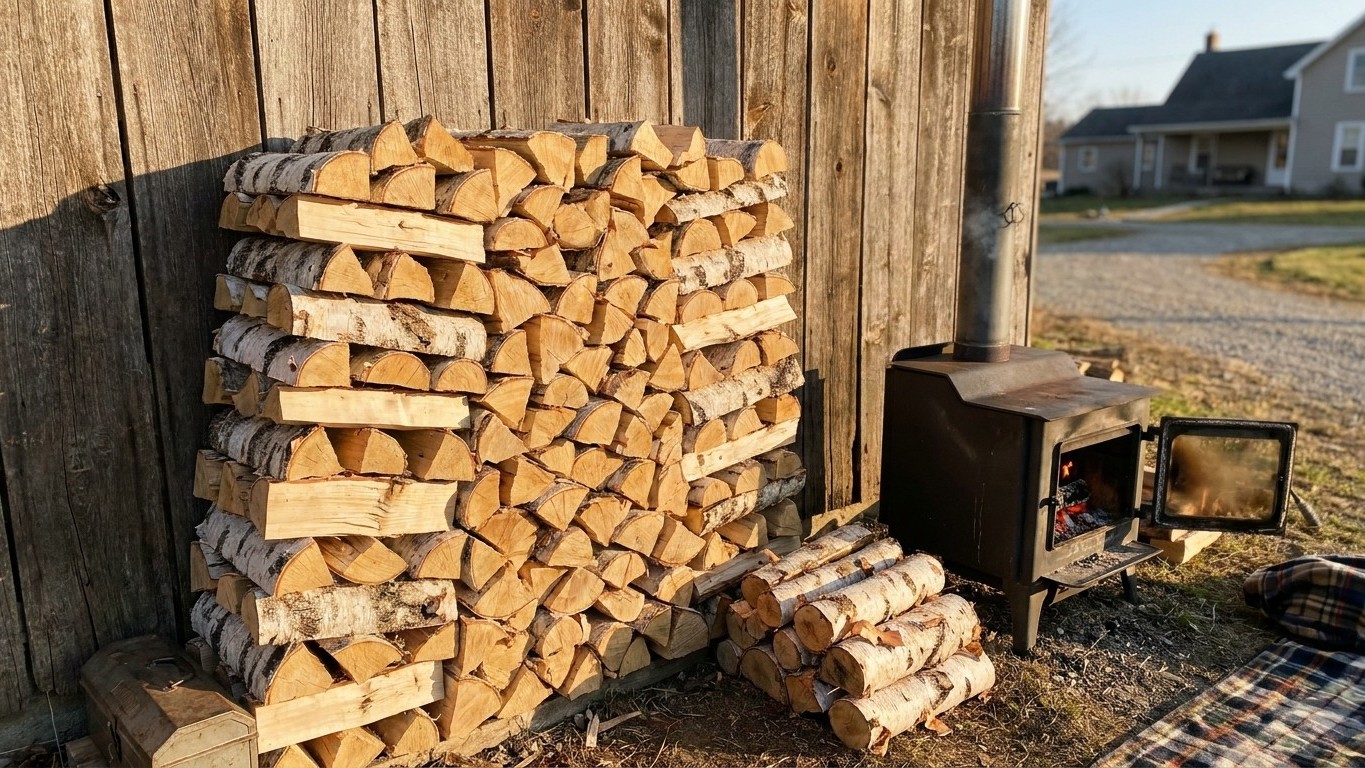

Birch throws decent heat, burns fast, and pops more than you’d like near an open hearth. According to SDSU Extension, split and dried right, a cord puts out somewhere in the 20 to 26 million BTU range depending on the species, which places it solidly in the “good but not great” tier of hardwoods, well above pine but short of oak or hickory. The tradeoff is Smoke and Sparks. Birch bark is loaded with resin, and that same bark makes it one of the best natural fire starters in the woods, and one of the noisier logs to burn indoors.
How Much Heat Birch Actually Puts Out

Not all birch is the same tree. Paper birch (the white-barked one you see across the northern states) runs on the lighter end, roughly 20 to 21 million BTU per cord when properly seasoned. Yellow birch, denser and heavier, climbs closer to 24 to 26 million BTU. For comparison, a cord of well-seasoned oak or hickory can push past 28 to 30 million BTU, while pine and spruce sit down around 14 to 17 million.
What that means in practice: birch warms a room faster than softwood because it lights easily and ramps up quickly, but it burns through faster too. A stove loaded with birch at 9 p.m. usually needs a reload before sunrise, whereas a load of oak might still have coals at breakfast. Homeowners running wood stoves as a primary heat source often mix birch with a denser hardwood specifically to get that fast start and steady base rolled into one fire.
Where Birch Fits Against Other Common Woods
Think of it as a middle-tier wood. It outperforms cottonwood, aspen, and most pines for sustained heat. It falls short of sugar maple, ash, and the oaks. That makes birch a strong shoulder-season choice, October evenings or a chilly April night, when you want heat without babysitting a fire that’s still going strong at 3 a.m.
Why Birch Smokes More Than People Expect
Birch has a reputation for smoking heavily, and there are two real reasons behind it, not just folklore. First, the bark contains high concentrations of resinous oils (mainly betulin, the compound that gives birch bark its waterproof, papery quality). Those oils ignite fast and burn hot, but they also produce a thicker, more visible smoke plume than the wood underneath.
Second, and more common as a cause of complaints, birch bark seals moisture inside the log almost like a rain jacket. Round, unsplit birch logs can look bone dry on the outside while the interior still holds 30 percent moisture or more, months after being cut. Burn that wood and you get exactly what wet wood always produces: heavy white smoke, poor draft, and creosote buildup in the flue. The fix isn’t complicated. Split every round, even the skinny ones, so the bark’s waterproofing doesn’t trap moisture where you can’t see it.
The Spark and Pop Problem
If you’ve ever heard a fire crackle sharply and watched a bark curl launch off a log, there’s a decent chance it was birch. The same oils that make the bark such a good fire starter also cause it to pop and spit small embers as it burns, especially when the bark hasn’t fully dried or when a log still carries pockets of sap. This isn’t dangerous in a properly screened fireplace or a closed wood stove, but it’s a real consideration for open hearths without a spark guard, especially in homes with wood floors, rugs, or pets that like to nap near the fire.
A few practical habits cut down the sparking:
- Use a spark screen or glass door on any open fireplace burning birch
- Avoid tossing in large bark-heavy chunks; smaller splits with less exposed bark surface pop less
- Let rounds season a full season before burning, since drier bark curls and separates rather than sputtering
None of this rules birch out for indoor use. It just means treating it less like a “set it and forget it” log and more like a wood that rewards a little attention while it burns.
Seasoning Birch the Right Way
Birch dries faster than the dense oaks, which can take a full two years to reach usable moisture content. Split and stacked in a sunny, breezy spot, birch typically reaches burnable moisture (below 20 percent) in six to twelve months. That’s a meaningful advantage for anyone who didn’t get their wood in early and needs something ready by the first cold snap.
The catch, again, comes back to that bark. Left in round form, or stacked too tightly with bark touching bark, birch holds moisture stubbornly and can even start rotting from the inside before it ever dries out. The wood underneath the bark is relatively soft compared to oak or hickory, so once moisture gets trapped, decay sets in faster than most people expect. Splitting immediately after cutting, and stacking with real airflow between rows (not shoved against a fence or a wall), makes the difference between usable firewood in eight months and a moldy pile by spring.
A simple moisture meter, the kind sold for under $30 at most hardware stores, takes the guesswork out. Split a piece, press the meter to the freshly exposed face, and look for a reading under 20 percent before it goes anywhere near the firebox.
Storage Considerations Specific to Birch
Because birch bark sheds water so effectively, uncovered birch actually handles rain better than most species in the short term. That’s part of why it’s a classic bushcraft fire starter, dry tinder can often be found under wet bark even after a storm. But that same water resistance works against you in long-term storage. A birch pile with no elevation off the ground, sitting bark-side up in a low spot, traps humidity underneath and invites rot and insect activity faster than woods like ash or oak, which don’t have that sealed-bark effect.
The reliable setup is the same one that works for most firewood, just with a bit more attention paid to airflow: a stack up off bare ground on pallets or rails, split face exposed to sun and wind, and a top cover that keeps rain off without wrapping the sides in plastic. Wrapping the sides traps humidity exactly where you don’t want it, undermining the drying process the whole point of splitting was supposed to solve.
Where Birch Makes Sense in a Wood Pile
Birch works best as a complement, not a solo act. Its fast ignition and moderate heat output make it a strong choice for morning fires, quick warm-ups, or mixed loads where a couple of birch splits get the fire established before denser hardwood logs take over and hold the heat. For campfires and outdoor fire pits, where smoke dispersal and stray sparks matter less, birch’s easy-lighting nature and pleasant burn make it a popular pick across the northern tier of the country, from Minnesota’s lake country to Maine’s woodlots.
For anyone heating a home primarily with wood, relying on birch alone through a full winter usually means more frequent reloading and more frequent chimney cleaning than a denser hardwood mix would require. Pairing it with oak, maple, or ash gives you the best of both, birch’s quick, hot start feeding into a bed of coals that a slower-burning hardwood can then sustain through the night.