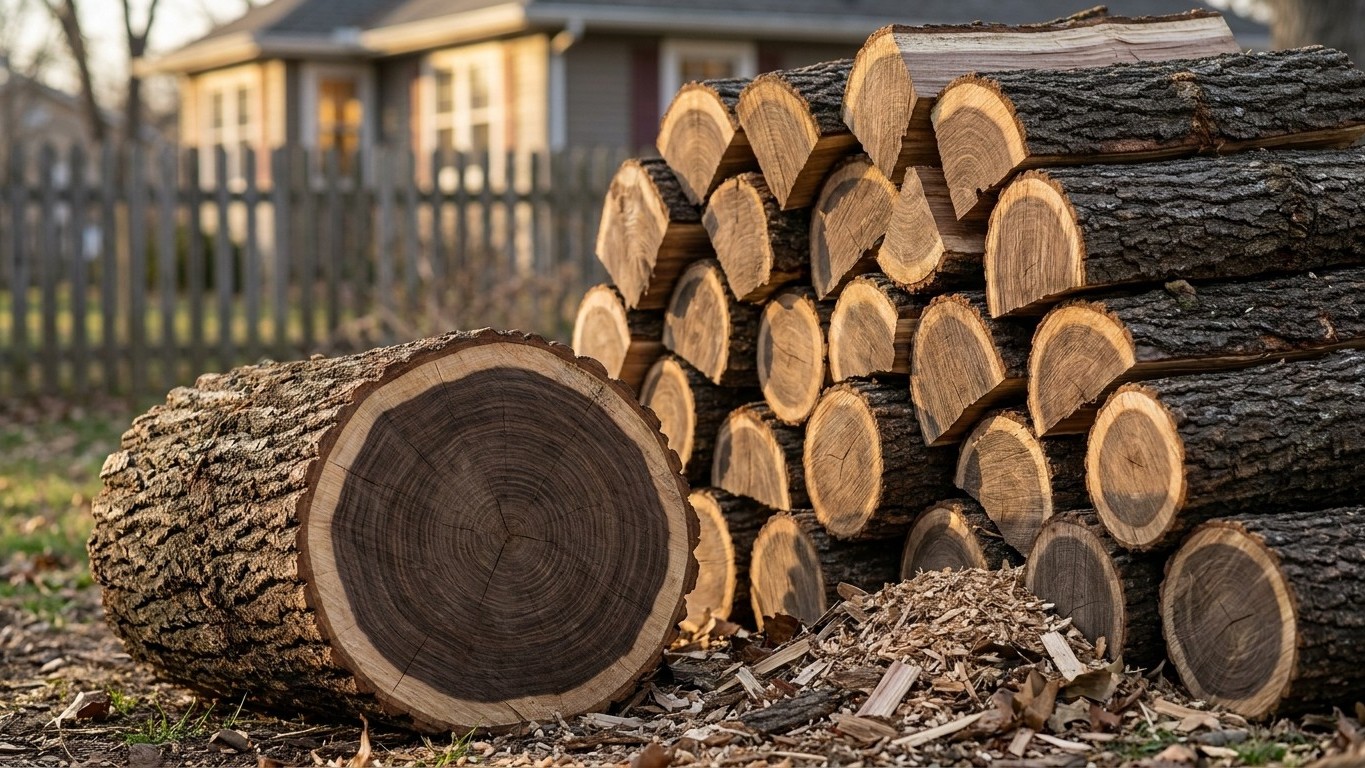

Black locust burns hotter than almost any other wood you can put in a stove east of the Mississippi, clocking in around 28.1 million BTUs per cord once fully seasoned, according to the Missouri Department of Conservation. That puts it in the same league as shagbark hickory and ahead of red oak, white ash, and sugar maple. If you’re choosing a species for an all-night burn in January, this is one of the best options available in most of the eastern and central United States.
Heat Output: Why Black Locust Runs So Hot

Density drives heat output, and black locust is dense. Dried wood weighs roughly 45 pounds per cubic foot, heavier than red oak and close to hickory. That mass translates directly into BTUs per cord, since a denser log packs more combustible material into the same physical space.
For comparison, a cord of black locust delivers heat output similar to burning about 200 gallons of heating oil, according to general BTU-equivalency figures used by extension foresters. Standard firewood species like red maple or white pine fall well short, sometimes producing half the heat per cord. If you’re heating a whole house through a wood stove rather than just enjoying an occasional fireplace fire, that difference matters for how much wood you need to cut, split, and stack each season.
The tradeoff is burn rate. Black locust doesn’t flame up fast. It catches slower than ash or birch and takes longer to get going, but once established it produces a long-lasting coal bed that holds heat for hours. That makes it a strong overnight wood, especially mixed with a faster-igniting species to get the fire started.
Smoke and Creosote: What Determines the Difference
Properly seasoned black locust burns clean, with a modest, pale smoke output and relatively low creosote buildup compared to resinous softwoods. The wood’s tight grain and low sap content help here. But moisture content is the real variable, not the species itself.
Green or under-seasoned black locust smokes heavily and deposits creosote fast, the same way any wet wood does, regardless of how good its BTU rating looks on paper. This is the part people miss: a “high heat” species burned too early can actually run dirtier than a properly dried lower-BTU wood like ash. Moisture content above 25 percent is where problems start showing up in the flue.
Because black locust is so dense, it holds onto internal moisture longer than lighter woods. A log that feels dry on the outside can still carry significant water in the core. Splitting wood into smaller pieces speeds drying and gives you a more reliable read with a moisture meter, which is worth owning if you burn wood regularly. Aim for a reading in the high teens to low twenties before loading it into a stove.
Chimney maintenance still applies no matter what species you burn. The Environmental Protection Agency recommends annual inspection and cleaning of wood-burning chimneys to reduce creosote-related chimney fire risk, and that guidance holds whether you’re burning locust, oak, or pine (EPA Burn Wise program).
Sparks and Popping: A Real Consideration for Open Fireplaces
Black locust has a reputation for throwing sparks, and it’s earned. The wood pops and crackles more than oak or maple, sometimes sending small embers a short distance from the firebox. This isn’t unique to locust, plenty of dense hardwoods do this when trapped moisture pockets or gas bubbles ignite, but locust seems to do it more than most, even when properly seasoned.
For a closed wood stove or an insert with a glass door, this is a non-issue. The enclosed firebox contains any sparks, and you get the full benefit of the wood’s high heat output without the safety tradeoff. This is really where black locust shines, and why it’s such a popular choice among stove owners in the Northeast and Appalachian regions where the tree grows wild along fence lines and old pastures.
An open masonry fireplace without a screen is a different story. If you’re burning locust in an open hearth, use a spark screen and keep flammable rugs, furniture, and pet bedding well back from the opening. Some longtime burners reserve locust for stove use only and stick with lower-spark species like ash for open fires. That’s a reasonable approach if you have both setups at home.
Splitting and Seasoning: Timing Matters More Than Effort
Black locust splits relatively easily while the wood is still green, straight-grained and cooperative under an axe or splitter. Wait too long and it turns stubborn, developing a stringy, twisted grain that resists even a hydraulic splitter. Most experienced firewood cutters split locust within a few weeks of felling rather than letting rounds sit.
Seasoning time runs longer than average because of the density. Where ash or cherry might be ready to burn in six to nine months under good conditions, black locust typically needs a full year, and many burners prefer a full 18 to 24 months for best results, especially in humid climates. Splitting the wood small, stacking it off the ground, and giving it good airflow with sun exposure on at least one side of the stack speeds things along.
One advantage worth noting: black locust is naturally rot-resistant, among the most decay-resistant native hardwoods in North America, which is why it’s a traditional choice for fence posts. That means a stack of locust rounds left out longer than planned won’t degrade into punky, useless firewood the way a soft maple or poplar stack would. You get more flexibility on timing without losing wood quality.
Where Black Locust Fits in Your Wood Supply
Black locust (Robinia pseudoacacia) grows aggressively across much of the eastern and central United States, often colonizing old fields, roadsides, and disturbed ground. Because it’s considered invasive or at least undesirable in some managed woodlots, landowners frequently clear it and give it away or sell it cheap, making it one of the more accessible high-BTU woods for people without their own land to cut from.
It pairs well in a mixed wood supply. Use faster-burning, easier-to-season species like ash or cherry to start fires and provide daytime heat, then load up with black locust for the overnight burn when you want coals that last until morning. This kind of species rotation is common practice among people who heat primarily with wood rather than using it as a supplemental source.
The bark is another identifying feature worth knowing if you’re sourcing your own: thick, deeply furrowed, almost braided-looking ridges of gray-brown bark, along with paired thorns on younger branches. Mature trees can reach two to three feet in diameter, so a single tree taken down for firewood can yield a substantial amount of split wood, often more than a cord from one good-sized specimen.