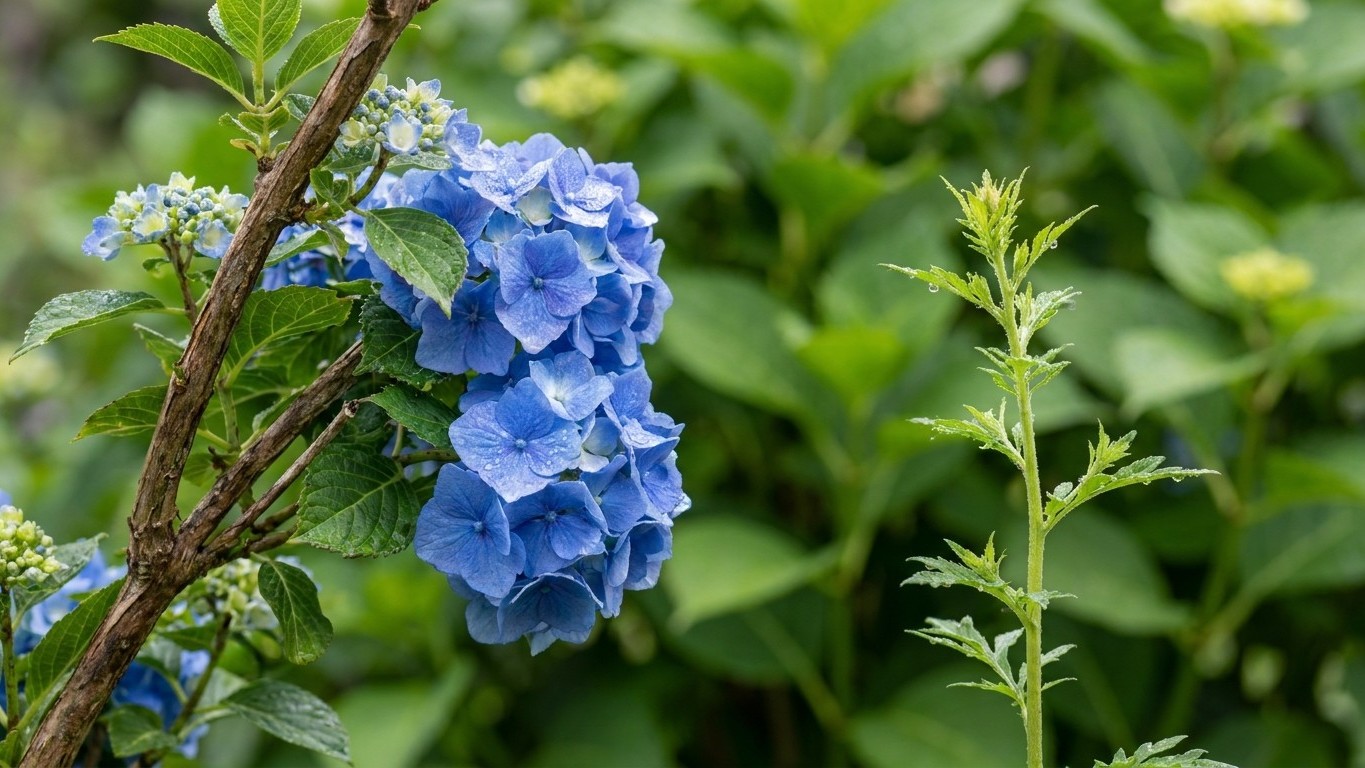

Container-grown hydrangeas go into Illinois ground after the last spring frost, or in early fall while the soil is still warm enough for roots to settle. The reference figures come from Chicago’s airport weather station: last spring frost between April 11 and April 22, first fall frost between October 24 and November 3. Your yard almost certainly differs from that airport. Choose a type that fits your winter, get the site right, and hydrangeas will reward you for decades.
When to plant Hydrangeas in Illinois

Those dates come from NOAA NCEI’s 1991-2020 Climate Normals, the band where the odds of a 32F freeze move from likely to unlikely. It is a window, not a deadline. Inside it, a freeze is neither safe to rule out nor certain to arrive. The station is at Chicago’s airport, and suburban and rural gardens typically see the last spring frost one to two weeks later. Northern locations and higher ground run later still. April 22 at the airport can easily mean the first week of May in your yard, so check the date for your own county before you commit.
Spring planting and the count-back
Almost nobody starts hydrangeas from seed. Seedlings take years to flower and rarely match the named variety you wanted, so the indoor seed-starting calendar you would use for tomatoes does not apply. What replaces it is a shorter count-back with nursery plants. Take your local last-frost date as the target (say May 6 if you are two weeks behind the airport’s April 22). Count back seven to ten days and that is when hardening off begins, so April 26 to April 29 in this example.
Hardening off matters more than it sounds. Plants sold in April have often spent weeks in a greenhouse, and their soft new leaves scorch in real sun and wind. Set the pot in shade for a few days, move it into morning sun, then full exposure, and haul it back inside if a frost is forecast. Bigleaf types with swelling buds are the most vulnerable, because a late freeze after bud break can cost you the year’s flowers.
If you want to propagate your own, take softwood cuttings in early summer. Rooted cuttings are small and should be grown on in pots and planted out in fall or the following spring, not the same season.
Fall planting
Fall is at least as good as spring. Roots keep growing in warm soil after the air cools, and the plant is not asked to support leaves in July heat. Count back four to six weeks from your first fall frost. Chicago’s airport figure is October 24 to November 3, and suburban gardens often see frost one to two weeks earlier. Today is September 28, so a plant set in the ground this week still has roughly four weeks at the airport, and less inland. Water it well, mulch it, and it should settle in. Anything bought later is better sunk in its pot in a garden bed, mulched, and planted in spring.
Soil and site preparation
Give bigleaf, oakleaf and smooth hydrangeas morning sun and afternoon shade. Panicle types tolerate full sun in Illinois if the soil stays moist. A spot on a west or south wall, where reflected heat bakes the leaves, is the classic mistake.
The ideal soil is loose, rich in organic matter, and moist without staying wet. Much of Illinois gardening means heavy clay, and hydrangeas will live in it if water moves through. Dig a hole about a foot deep, fill it with water, and come back the next day. If water is still standing, pick another spot or build a raised bed a foot or so high. Roots sitting in saturated soil rot faster than they dry out.
Do the thinking weeks ahead. A soil test through your county extension office costs little and tells you pH and nutrient levels. Sulfur to lower pH or lime to raise it works slowly, over months, so test in late summer for a fall planting or the previous fall for spring. Compost can go in at any time. Work two to three inches into a bed about three feet across, mixing it into the native soil rather than layering it on top. Pure compost in a clay hole creates a bathtub.
On planting day, dig the hole twice as wide as the root ball but no deeper than it. Set the top of the ball level with the surrounding soil, backfill with the native soil you dug out, and tease circling roots loose first. Space by mature width, not by the size in the pot. Smooth types generally settle at three to five feet across, while full-size panicle types can reach six to eight feet. Read the tag. Keep the planting away from shallow-rooted trees such as maples, which will out-drink anything you put beneath them.
Varieties that suit Illinois
The trait that matters most here is where a variety sets its flower buds. Illinois winters and late spring freezes can kill buds formed the previous summer. Types that bloom on new wood grow their flowers each spring and sidestep that risk. Northern Illinois shares much of its winter character with lower Michigan, so the Growing Hydrangeas in Michigan: Types, Colour and Winter guide is a useful comparison if you garden near the Wisconsin line. Hardiness varies from the north of the state to the south, so match the plant tag to your own zone.
| Type | Blooms on | Winter reliability | Widely sold examples |
|---|---|---|---|
| Smooth (H. arborescens) | New wood | High; blooms even after hard winters | Annabelle, Incrediball |
| Panicle (H. paniculata) | New wood | High; best sun and heat tolerance | Limelight, Little Lime, Bobo, Quick Fire |
| Bigleaf (H. macrophylla) | Old wood, some reblooming | Variable; buds can freeze | Endless Summer |
| Oakleaf (H. quercifolia) | Old wood | Moderate; good fall foliage | Snow Queen |
For a first hydrangea in Illinois, start with a smooth or panicle type. Annabelle is the well-known workhorse but flops in rain, and Incrediball was bred with sturdier stems. Limelight carries big cones that turn from lime to cream to pink and handles heat well. Little Lime and Bobo suit smaller yards. If you love the mophead look, reblooming bigleaf types like Endless Summer are worth trying, with the understanding that a rough winter may cost you a season.
Color is a bigleaf game. Blue flowers need acidic soil (pH below about 5.5) where aluminum is available, while pink shows up above about 6.5. Plenty of Illinois yards sit on neutral to alkaline soil, which pushes bigleaf toward pink, so blue often works best in a container of acidic mix. Gardeners in Oregon can count on a milder, wetter climate that suits these plants, and the Growing Hydrangeas in Oregon: Types, Colour and Winter guide covers that side. White types stay white whatever the soil, and folk fixes such as coffee grounds or rusty nails do not shift pH reliably.
What to plant alongside
Good neighbors share the same appetite for moisture and partial shade. Hostas, ferns, astilbe and heuchera cover the ground beneath a hydrangea, shade the soil, and keep roots cooler. Daffodils and other spring bulbs fill the bed before the shrub leafs out. Their fading foliage then hides behind the hydrangea’s own. Boxwood or another evergreen gives the bed winter structure when the hydrangea is bare sticks. In sunnier spots, panicle hydrangeas sit comfortably with coneflowers, black-eyed Susans and ornamental grasses, which also draw pollinators through late summer.
Trouble comes from competition. Shallow tree roots and turf grass pulled up to the stem both take water, so keep a mulched ring around each shrub. Plants prone to powdery mildew, such as phlox and bee balm, can raise humidity and crowd airflow if planted tightly around a hydrangea. Roses are worth thinking about too. Japanese beetles love both, and putting them side by side concentrates the beetles in one place.
One claim to be skeptical of: marigolds, garlic or chives planted to repel pests. There is little evidence that they protect ornamental shrubs, and the beetles and bagworms that bother hydrangeas are not reliably confused by strong-smelling neighbors. Plant those for their own sake, not as armor.
Watering, feeding and support
Hydrangeas are named for water (hydra, in the Greek root) and act like it. Give them about an inch a week, rain included, delivered deeply at the base in the morning. Two long soaks beat seven light sprinkles because they push roots downward. In the first summer, check the soil two inches down before deciding. Afternoon wilt in July heat that perks up by evening is normal. A plant still limp the next morning is asking for water, or it is drowning.
Mulch does half the work. Spread two to three inches of shredded bark or leaf mulch, pulled back a couple of inches from the stems so the crown stays dry. It holds moisture, moderates soil temperature and suppresses weeds. Get mulch and compost from a clean source. Jumping worms travel in bulk landscaping products, and infested mulch can bring the problem into your bed.
Feed lightly. A slow-release balanced fertilizer as growth starts in spring is plenty, with a second small dose in early summer for hungry container plants. Stop by midsummer. Late nitrogen pushes soft growth that will not harden before winter, and too much nitrogen at any time yields big leaves and fewer flowers.
Support is mostly a smooth-hydrangea issue. Big flower heads soaked by a summer thunderstorm can pull the stems flat. Set a peony ring or a few stakes with soft ties in early spring, while the shoots are short, and let the plant grow through it.
Pruning depends on bloom timing. New-wood types (smooth and panicle) get cut in late winter before growth starts, taking off up to about a third to a half of the height. Old-wood types (bigleaf and oakleaf) need only deadheading and removal of dead stems, and any shaping should happen right after flowering and no later than early August. Stems that look dead in April are often alive, so wait until leaves emerge before cutting. Smooth hydrangeas also spread by suckers. Dig out the extras or divide them in spring to share.
Common problems

Blossom end rot and fruit cracking belong to tomatoes, not hydrangeas. What hydrangeas do show comes in two categories: leaf symptoms and flower symptoms.
What the leaves are telling you
Yellow leaves with dark green veins point to iron chlorosis, which is common when soil pH runs high. A soil test confirms it, and sulfur plus a chelated iron product can help over time. Crisp brown edges usually mean scorch from too much afternoon sun or too little water. Small purple-brown spots with tan centers signal a fungal leaf spot such as Cercospora. It is unsightly but rarely fatal. Water at the base, clean up fallen leaves, and thin crowded stems. A white dusty coating is powdery mildew, common in humid late summer where airflow is poor.
Leaves that cup, twist or curl are trickier. Heat and drought stress cause cupping. Narrow, strappy, twisted new growth after a lawn treatment suggests herbicide drift, and there is no cure but time and watering. Confirm what you sprayed and when before blaming an insect.
When flowers fail
Bigleaf and oakleaf hydrangeas that leaf out beautifully and never bloom are the classic Illinois complaint. The usual suspects are buds killed by winter cold, a hard spring freeze after bud break, pruning at the wrong time, too much shade, or heavy nitrogen. Switching to a new-wood type solves most of these at once. Flowers that brown early usually mean heat and dry soil, not disease. Stems that flop under flower weight are a support problem, not a sick plant.
Chewing insects are a separate case, and the next section takes those on by name.
Pests that actually show up in Illinois
University of Illinois Extension highlights eight pests for home gardens: Japanese beetle, squash vine borer, squash bug, Colorado potato beetle, bagworm, brown marmorated stink bug, jumping worms and spotted lanternfly. Three of them (squash vine borer, squash bug and Colorado potato beetle) go after vegetables, not hydrangeas. Pest pressure runs from late May through September and peaks from late June through August. Your county extension office can identify anything unfamiliar.
Japanese beetles are the ones to expect. Adults emerge in late June and are present in July and August. What you see first is lacy leaves, with only the veins left behind, often with metallic bronze-and-green beetles feeding in clusters. The control that works is dropping them into soapy water by hand in the cool morning, when they are sluggish. Skip pheromone traps, which can draw more beetles into your yard.
Bagworms hatch from late May to mid-June. Look for small hanging cones of silk and plant debris and for ragged, partly stripped leaves. They favor evergreens such as arborvitae and juniper, so check those first, then your shrubs. Once the bags are visible, hand-pick them and drop them in soapy water, and do it before the eggs hatch the following spring if you can.
Jumping worms are confirmed in 49 of Illinois’s 102 counties. The clue is not the plant itself but the soil: crumbly, coffee-ground-like castings, mulch that seems to vanish, and worms that thrash and flip when you pick them up. Stripped topsoil leaves hydrangea’s shallow roots exposed and dry. No product reliably kills them, so the control is prevention. Do not move soil, mulch or divisions from an infested bed, and buy bagged, heat-treated compost.
Spotted lanternfly was first detected in Cook County in September 2023. Look for gray, mud-like egg masses on bark, stone or outdoor furniture, and sticky honeydew on and beneath plants. The action is to kill what you find, scrape egg masses into a bag, and report the sighting to your county extension office. Brown marmorated stink bug is mostly a nuisance around the house and only an occasional feeder on shrubs.
Harvest and end of season
Hydrangeas are cut flowers, and the timing depends on how you want to use them. For fresh bouquets, cut in the cool morning once the blooms are fully open, take a long stem, and get it into water immediately. Bigleaf stems wilt fast, and a quick dip of the cut end in hot water can help.
For drying, leave the flowers on the plant into late summer or fall. They are ready when the florets feel papery and the color has shifted to muted greens, burgundy or tan. Cut them, strip the leaves, and stand the stems in a couple of inches of water in a cool, dim room until the water evaporates. Hanging them upside down also works. Once fully dry, store them out of direct sun. Kept dry, they hold their look for a year or more.
Frost is the marker for everything else. Chicago’s airport station shows the first fall frost between October 24 and November 3, and suburban and rural yards often see it one to two weeks sooner, so we are within a month of it now. Stop fertilizing, and keep watering new plantings until the ground freezes. Leave spent blooms on the plant, since they help protect the buds beneath. After the ground has cooled, mound four to six inches of shredded leaves or bark over the base. For reblooming bigleaf types, a wire cage filled with leaves around the plant gives extra insurance. Skip the heavy cutting until spring.
Local help
County-level frost dates and soil testing come through your state extension service. Start at University of Illinois Extension to find your county office, ask about a soil test, and bring in any unfamiliar insect for identification. More state-specific guidance is collected in our Illinois guides.
Common questions
Do hydrangeas survive Illinois winters?
Smooth and panicle types do reliably, because their flowers form on new spring growth. Bigleaf and oakleaf plants usually survive too, but their buds, formed the previous summer, can freeze and skip a year of bloom.
Which hydrangea is the easiest to bloom?
A smooth type like Annabelle or Incrediball, or a panicle such as Limelight. Both bloom on new wood, so a bad winter or a mistimed pruning does not cancel the flowers.
Can I turn my hydrangeas blue?
Only bigleaf types respond, and only where soil pH is low enough for aluminum to be taken up. Many Illinois yards run neutral to alkaline, so a container with acidic mix is often more successful than a bed. A soil test tells you where you stand.
How much sun do hydrangeas need in Illinois?
Morning sun with afternoon shade suits most. Panicle types handle full sun if watered consistently. Deep shade cuts flowering sharply.
Are hydrangeas safe around pets?
No. They are listed as toxic to dogs, cats and horses if eaten, usually causing vomiting and diarrhea. If a pet has chewed on one, call your veterinarian.