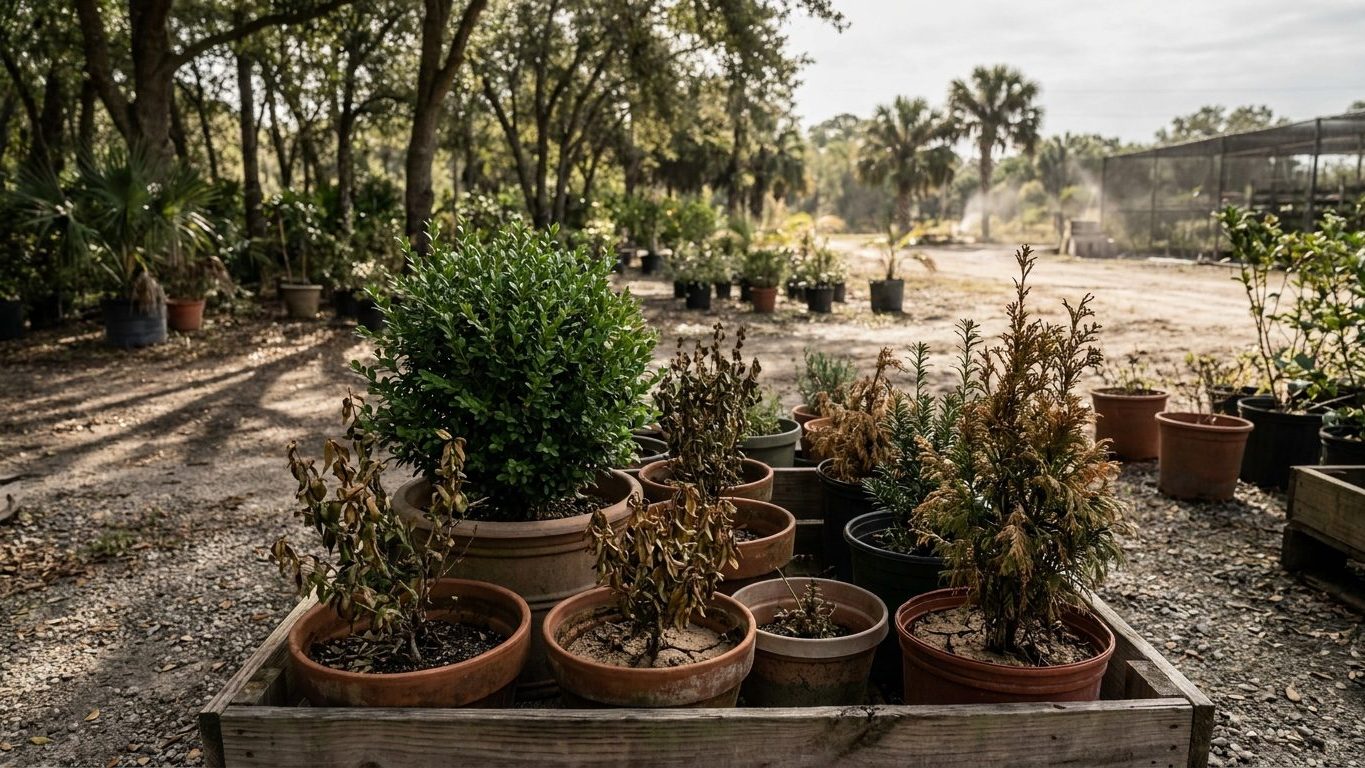

Ten of the twelve hedge species documented on this site hold across all of Massachusetts, from the Berkshires to the coast. The other two, Leyland cypress and cherry laurel, are hardy only in USDA zones 6a through 7b. No species fails everywhere. But “hardy” means survives, not thrives, and three of the plants that do hold can never be cut back to size once they outgrow the spot. That last fact should shape your choice of hedges as much as the zone does.
What actually holds in Massachusetts
The two that need a zone number
Massachusetts spans zones 5a to 7b on the USDA Plant Hardiness Zone Map 2023, which is built on the 1991-2020 normals. The map rests on a single variable, the average annual extreme minimum temperature. Across that range the coldest winter nights differ by roughly two full zones’ worth of degrees, and that gap is where two popular hedges fall through.
Leyland cypress (x Hesperotropsis leylandii) and cherry laurel (Prunus laurocerasus) are rated for zones 6a, 6b, 7a and 7b only. That comes from the NC State Extension Gardener Plant Toolbox hardiness ranges, crossed with the state’s own USDA range. Leyland is the fast one: 3 to 4 feet a year, reaching 15 to 25 feet as a screen, pruned from late spring to midsummer. Cherry laurel is slower, at 1 to 2 feet a year, and tops out at 6 to 15 feet as a hedge, pruned in late spring after flowering.
In a 5a or 5b garden, planting either one is a bet on mild winters. The plant may survive a few seasons, then lose a lot of foliage or die back after one hard January. Look up your own zone on the USDA map before you buy, and don’t borrow the number from a friend two counties over.
The ten that hold statewide
Ten species are hardy throughout 5a to 7b. Among the conifers: arborvitae, eastern hemlock, eastern red cedar and yew. Two broadleaf evergreens qualify, boxwood and inkberry holly. The deciduous group is American hornbeam, winterberry holly (which loses its leaves in winter), privet and arrowwood viburnum. That is a wide enough menu to build almost any hedge without gambling on cold.
Frost timing matters for pruning and planting, though the numbers need care. At Boston’s Logan station, NOAA NCEI’s 1991-2020 Climate Normals put the last spring freeze (32 F, 30 to 70 percent probability band) between April 1 and April 8. The first fall freeze falls between November 3 and November 14 (station data). Logan is a waterfront urban station and the mildest spot in the state. Inland suburbs and the Berkshires frost noticeably earlier in fall and later in spring, so read those dates as the most generous calendar Massachusetts offers.
The hedges you can never cut back down
Three of the twelve species do not regrow from old wood: Leyland cypress, eastern red cedar and arborvitae. Cut into the older, leafless interior of one of these and the branch stays bare. There is no second chance. A hedge that outgrows its space can only be removed.
The three, plant by plant
Leyland cypress is the trickiest of them, because it faces two problems at once. It is limited to zones 6a to 7b, and at 3 to 4 feet a year it reaches its 15 to 25 feet quickly. Since it cannot come back from old wood, every cut has to stay inside the green growth.
Eastern red cedar grows 12 to 24 inches a year and reaches 8 to 20 feet as a screen. Its pruning window is late winter, and the guidance is light cuts only. It suits a big property where a tall screen is the goal, not a tidy edge.
Arborvitae is the gentlest: 6 to 9 inches a year, 4 to 15 feet as a hedge, pruned in late winter before growth starts or in midsummer. Slow growth gives you time to notice a size problem early. It still cannot be rescued once it is too big. The mistake here is buying for the height you want today and forgetting the height it will reach.
What forgives a hard cut
The other nine species all regrow from old wood, and a few of them are conifers, which is the surprise. Yew (Taxus x media) and eastern hemlock both come back, so you can renovate them. Hemlock still calls for light cuts only in late spring. Yew is pruned in late spring after the new growth hardens.
Boxwood, inkberry holly, winterberry holly, American hornbeam, privet, arrowwood viburnum and cherry laurel also regrow. Privet is the most forgiving of the group, though it demands work: twice a season, in spring and midsummer.
The practical rule is to decide the mature size first. If the strip can hold 6 feet and you want an evergreen, yew or boxwood lets you correct mistakes. If you need 15 feet of screen, accept that the three no-regrow plants are one-shot choices and space them for their full height.
Matching the plant to the job
The right hedge starts with the job, not the catalog photo. A knee-high edge, a 6-foot privacy line and a 15-foot windbreak call for different species, and the table below sets the same criteria side by side. The two zone-limited plants are marked.
| Plant | Height as hedge or screen | Growth per year | Prune | Regrows from old wood |
|---|---|---|---|---|
| Boxwood | 2 to 6 feet | 3 to 6 inches | Late spring, after the last frost | Yes |
| Yew | 3 to 8 feet | 6 to 12 inches | Late spring, after new growth hardens | Yes |
| Arborvitae | 4 to 15 feet | 6 to 9 inches | Late winter, or midsummer | No |
| Inkberry holly (evergreen) | 5 to 15 feet | 6 to 12 inches | Late winter, while dormant | Yes |
| Winterberry holly (deciduous) | 5 to 15 feet | 6 to 12 inches | Late winter, while dormant | Yes |
| American hornbeam | 6 to 15 feet | 12 inches | Midsummer, after the first flush | Yes |
| Arrowwood viburnum | 6 to 10 feet | 12 to 24 inches | Right after flowering | Yes |
| Privet | 4 to 12 feet | 2 to 3 feet | Twice a season, spring and midsummer | Yes |
| Eastern red cedar | 8 to 20 feet | 12 to 24 inches | Late winter, light cuts only | No |
| Eastern hemlock | 10 to 20 feet | 12 to 24 inches | Late spring, light cuts only | Yes |
| Cherry laurel (zones 6a to 7b only) | 6 to 15 feet | 1 to 2 feet | Late spring, after flowering | Yes |
| Leyland cypress (zones 6a to 7b only) | 15 to 25 feet | 3 to 4 feet | Late spring to midsummer | No |
For a low, formal edge, boxwood and yew are the two that fit under 6 to 8 feet and stay in bounds on 3 to 12 inches of growth a year. For a mid-height privacy hedge, the hollies, hornbeam and arrowwood viburnum sit in the 5 to 15 foot range, and all regrow. Inkberry keeps its leaves through winter. Winterberry does not, so it screens less from November to April.
Tall screens are where the decisions get expensive. Hemlock, at 10 to 20 feet, is the only tall evergreen in the group that regrows from old wood and hardy statewide. Red cedar and arborvitae are hardy too but cannot be renovated. Privet is the fast, cheap answer at 2 to 3 feet a year, with the trade-off of pruning twice a season.
For comparison with other states’ lists, see Hedge Plants for Michigan: What Holds, and What Only Looks Hardy and Hedge Plants for Virginia: What Holds, and What Only Looks Hardy.
The ground you are planting into
Massachusetts has an official state soil, the Paxton series, named by state law in 1990 under the USDA NRCS State Soils program. It is an Inceptisol, a young soil that has not developed strong horizons yet. The representative surface values from USDA NRCS Soil Data Access (Soil Survey Geographic Database, 265 mapped components, queried August 29, 2026) tell you what the region’s ground tends to do:
- Surface pH of about 5.5, slightly acid
- Texture of 61 percent sand, 7 percent clay and 32 percent silt
- Organic matter of about 5.5 percent
- Well drained
Those numbers point in a useful direction. Well-drained, slightly acid ground is comfortable for hollies, yew and most of the conifers on the list, and it rarely holds standing water around roots. The flip side is that a sandy, fast-draining soil dries out quickly, so a newly planted hedge needs consistent watering through its first seasons. Mulch helps hold moisture without changing the soil underneath.
The Paxton series represents the state, not your yard. Massachusetts spans hundreds of soil series, and river bottoms, hill country and any ground a builder has scraped or filled can be completely different: heavier, wetter, more compacted or more alkaline. The figures above are representative values for the surface horizon as mapped, not a measurement of a worked garden bed. Never read that 5.5 as your own pH.
The only way to know is a soil test, and the UMass Amherst Extension site at ag.umass.edu is the place to start for testing information. Take the sample from where the hedge will go, not from the lawn beside it. A test costs far less than replacing 40 feet of dead hedge.
Common questions
Can I plant Leyland cypress anywhere in Massachusetts?
No. It is rated for zones 6a to 7b only, and Massachusetts runs from 5a to 7b. Check your zone on the USDA Plant Hardiness Zone Map first. It also cannot regrow from old wood, so even where it survives, a hedge that gets too big can’t be cut back.
Which hedges can I cut hard if they outgrow the space?
Nine of the twelve regrow from old wood: boxwood, American hornbeam, both hollies, privet, yew, eastern hemlock, arrowwood viburnum and cherry laurel. Leyland cypress, eastern red cedar and arborvitae do not regrow, so they are the ones to place with mature size in mind.
When should I prune my hedge?
It depends on the plant. Late winter suits the hollies, red cedar and arborvitae. Late spring suits boxwood, yew and hemlock. Hornbeam gets midsummer, arrowwood viburnum right after flowering, and privet twice a season. In late September, none of those windows is open.
Does the state soil tell me what my yard is like?
Only roughly. Paxton is the official state soil, with surface pH around 5.5 and good drainage, but your lot may be river bottom, hill ground or builder fill. A soil test on the actual planting strip gives you your own number.