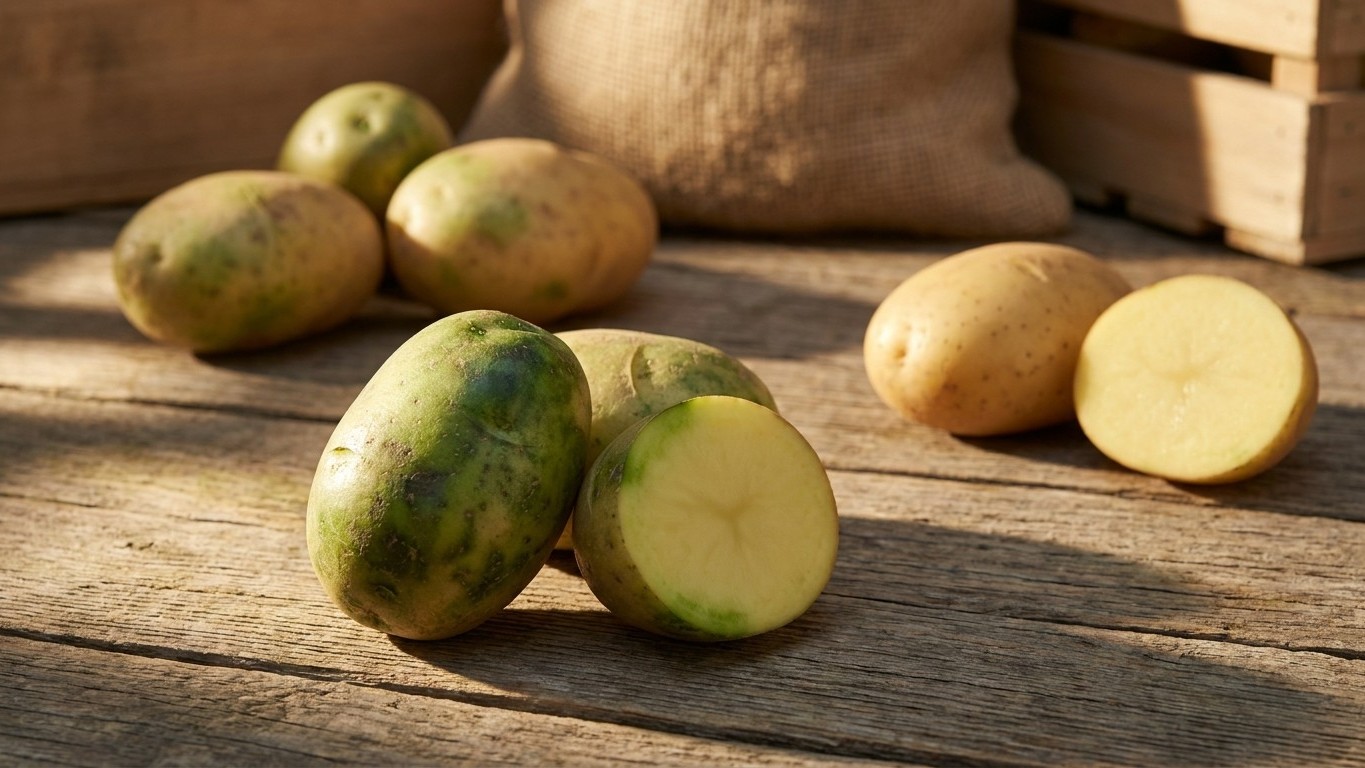

There is no planting date to look up. Lowland Hawaii has no frost season, so sweet potatoes here follow rainfall, elevation and which side of the island you garden on, not a calendar. At low elevations the calendar barely limits you. The real questions are how much water the plot gets and how cool the ground stays as you climb. And one correction up front: a sweet potato is not a yam, and it is not a potato.
When the soil is warm enough in Hawaii

On the mainland, the date question starts with the last spring frost. In Hawaii, the NOAA NCEI 1991-2020 Climate Normals for the Honolulu reference station (USW00022521) record zero days per year at or below 32F. The freeze percentiles at both 32F and 36F can’t even be computed, because freezes don’t occur where people live. Frost shows up only on the high summits of Mauna Kea, Mauna Loa and Haleakala. So there is no last spring frost and no first fall frost to build a schedule around.
Frost was only ever a stand-in. Sweet potatoes wait for warm soil, and the soil warms after the frost risk ends, not at the same moment. Where frost exists, its date is a rough proxy for that warmth. Where it doesn’t, the proxy disappears and the soil itself becomes the thing to read. (Normals are averages over 1991-2020, a probability rather than a promise, though the record shows no freeze at all in the lowlands.)
Three things stand in for the frost calendar. Elevation comes first: upcountry gardens sit in cooler air and cooler ground, so slips root more slowly there than they do at the coast. Exposure comes second. Windward slopes are wetter, cloudier and slower to dry out, while leeward sides are sunnier and drier, with soil that warms quickly and needs irrigation to keep up. Rainfall is the third, and it gets its own section below.
A practical test beats any date. If slips stall after transplanting, yellow at the edges or sit sulking for weeks, suspect ground that is too cool or too wet for the spot you chose. The healthy sign is new leaf growth within a couple of weeks of planting. Your state extension service can tell you the soil temperature that works at your elevation, which this page does not have.
The plant itself deserves a word, because the grocery store muddies it. Sweet potato belongs to the morning glory family. It is not a nightshade, so it doesn’t rotate with potatoes, tomatoes or peppers, and the “yam” label on supermarket bins is wrong. True yams are a separate plant altogether. For slips, hilling and curing steps that hold in any climate, the main guide, Growing Sweet Potatoes: Slips, Heat, and a Careful Cure, covers them.
How long the season lasts here
The usual arithmetic subtracts the last spring frost from the first fall frost to get the frost-free window. Both dates come from the same NOAA NCEI 1991-2020 normals, and both are absent for inhabited Hawaii: zero days at or below 32F at station USW00022521. The subtraction has nothing to work with. Frost does not cap the lowland season at either end, so no count of days applies.
What does that allow? Staggered plantings, mainly. In a short-season state, the first planting is the only one, and every slip has to justify the trouble of checking its roots before it goes in the ground. Here a poor slip costs you a few weeks, not a year. You can plant in batches and set a new round of slips into the ground every few weeks, so the bed doesn’t ripen all at once and one bad stretch of weather doesn’t take the whole crop. The main sweet potato guide covers slips and heat in detail, and the succession sowing guide on this site lays out how to stagger plantings.
Root checks still pay off, just with lower stakes. A slip with a few white roots along the stem, taken from a healthy, disease-free source, goes in with confidence. A limp or blackened one gets replaced. Since replanting is cheap in a climate with no frost cutoff, be strict.
The limits here are not cold. They are water and elevation. Higher ground slows growth, so the stretch from planting to harvest runs longer there, and this page has no reliable figure for how much longer. Ask extension for maturity times from local trials rather than trusting a seed packet written for another climate.
The USDA Plant Hardiness Zone Map (2023, built on 1991-2020 normals) gives Hawaii a range of 9a to 13a. That system rests on a single variable, the average annual extreme minimum temperature, so it describes how cold the coldest nights get across a very wide territory. It says nothing about rain, heat or exposure, which are the things that decide this crop. A coastal plot and a high-elevation one sit far apart on that scale.
One consequence of having no frost deadline: nothing forces you to dig. That can backfire. Roots left too long in wet ground invite rot and root-feeding pests, so harvest is a decision you make on purpose. Clearing plant residue after digging and rotating the bed away from sweet potatoes are the standard practices for keeping pests from building up.
Heat and water in Hawaii

At the Honolulu reference station, NOAA NCEI Climate Normals for 1991-2020 count 18.7 days a year at 90F or more. That is a count at one station, not a description of the whole state, and it is a modest number: under three weeks of hot afternoons. Sweet potatoes care less about the afternoon peak than about accumulated warmth and warm nights. Low-elevation Hawaii tends to hold both, because the ocean keeps nights mild, so the crop is routine near the coast. Higher up, cooler nights turn it into more of a project, with black plastic mulch, raised ridges and quicker-maturing types, the same tools northern gardeners use.
Where the 90F count is high, as in the hot-summer mainland states covered on the Texas and Oklahoma pages, heat stress and evaporation become the daily concern. In Hawaii’s lowlands the concern shifts to water.
The same station shows that summers are dry. Rainfall across June, July and August adds up to about 1.9 inches, out of 16.4 inches for the whole year. June is the driest month at 0.5 inches, followed by July at 0.52 and August at 0.84. These are what the region can usually expect over 1991-2020, not a forecast. On a leeward lowland plot, irrigation is part of the plan, not a backup.
Soil changes the picture. The same inch of rain drains from a sandy surface within a day but clings to clay for a week. A sandy garden can therefore need water every second day even in a month that looks wet on paper. Heat pushes the other way, since hot days speed evaporation, and rain that arrives as one hard shower mostly runs off. A rain shadow, a slope or a nearby city can shift all of it, so a rain gauge on your own plot settles the question better than any station.
Water also decides how the roots finish. Steady moisture lets them swell evenly. A long dry spell followed by a drenching, from a storm or from a heavy irrigation catch-up, is what splits them late in the season. Aim for even watering through the swelling weeks and ease off as harvest nears.
Windward and upcountry plots face the opposite risk. Constant cloud and rain bring mildew, slow ripening and rot, the same trouble a cool damp summer causes anywhere. Ridges, spacing and drainage do more good there than extra fertilizer.
Which sweet potatoes suit Hawaii
This page names no varieties, on purpose. A variety recommendation means something only when someone has grown it beside others in comparable soil and rain, and that record belongs to the University of Hawaii’s extension network. Reach it through CTAHR Cooperative Extension. Any name pulled from a general list would be a guess, and local gardeners would catch a bad guess quickly. Reasoning by type is safer.
- Upcountry and cooler sites: favor the earliest-maturing types, since cool nights slow everything.
- Leeward lowlands: favor vigorous vining types whose dense leaf cover shades the soil over the roots, and pair them with mulch and steady irrigation.
- Windward and wet sites: put disease resistance first, and plant clean, certified stock with rows spaced for airflow.
Because frost never cuts the lowland season short, quick maturity is a lower priority near sea level than it is in the mainland North. Flesh color (orange, pale or purple) is a matter of taste and nutrition, not climate. Sweet potato, known in Hawaiian as ʻuala, has been grown in the islands for centuries, so local growers have a deep store of experience to tap.
Curing and storage are where a good crop gets ruined. Cure roots in a warm, sheltered spot, and keep them out of the refrigerator and the cold cellar. Cold injury below the storage range is real and irreversible. Before storing, inspect every root. A soft patch or a weeping spot ends the question, and that root goes in the trash, not the pantry. A root that looks sound is not proof it is safe, and no keeping time can be promised. The main guide covers the curing steps.
Common questions
Is there a best month to plant sweet potatoes in Hawaii?
No date is set by frost, because none occurs in inhabited areas. Plant when the soil is warm and workable at your elevation, and stagger batches over several weeks. Ask CTAHR Cooperative Extension for guidance tied to your island and slope.
Can I grow them at higher elevation?
Yes, but expect slower growth. Frost stays on the highest summits, so the issue is cooler ground, not freezing. Black plastic, raised ridges and earlier-maturing types help.
How much watering do sweet potatoes need in a Hawaiian summer?
At the Honolulu station, June through August bring only about 1.9 inches of rain in total. Leeward lowland beds usually need regular irrigation, sandy ones more often than clay. Windward sites may get plenty of rain, so a gauge in your own plot beats guessing.
Is a sweet potato a yam, and can it follow tomatoes or potatoes?
It is not a yam, and it is not a nightshade. It is a morning glory relative, so tomatoes and potatoes are no reason to avoid the bed. Rotate away from other sweet potatoes, though, since they share pests and diseases with one another.