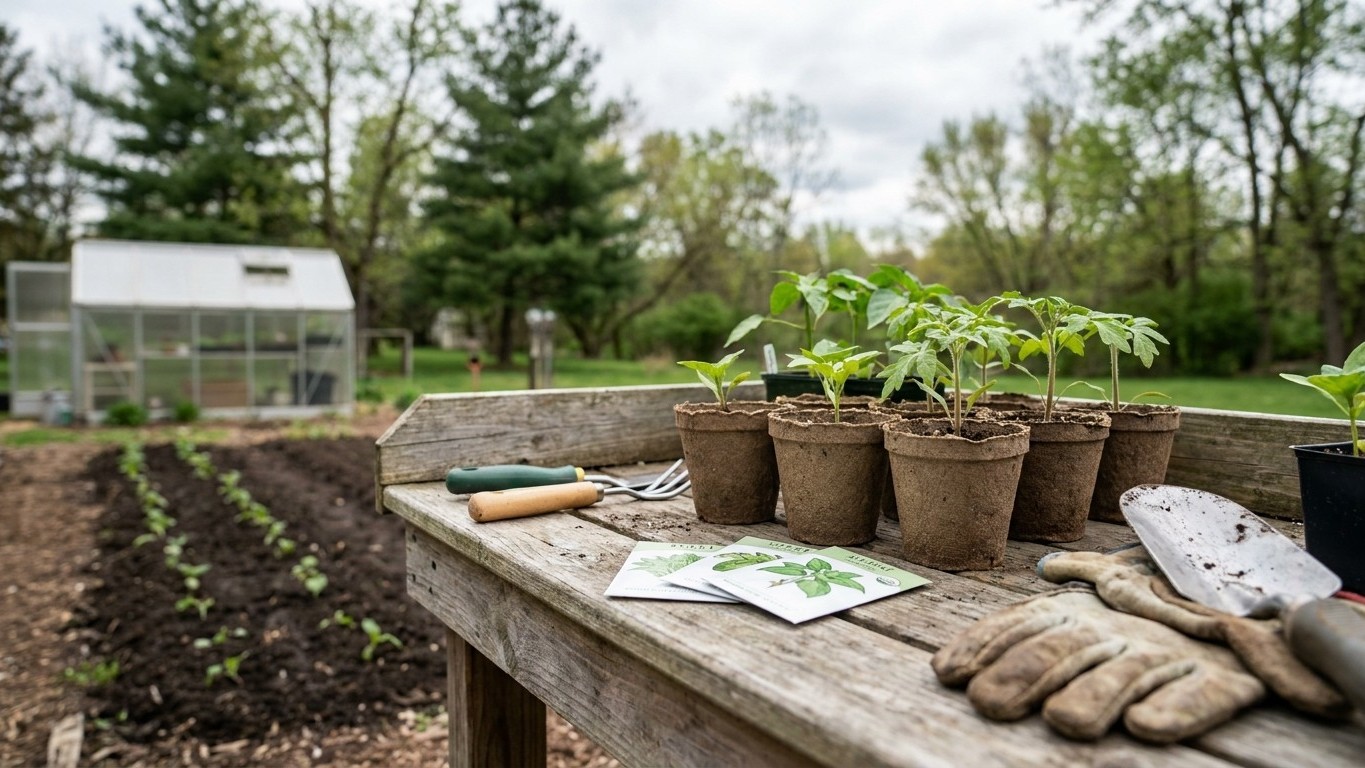

Start leeks and onions indoors between October 5 and November 2, broccoli, cabbage and head lettuce between November 2 and November 30, peppers and eggplant between November 16 and December 7, and tomatoes between December 7 and January 4. Those windows are for south Louisiana. Each one is counted back from the last spring frost, and this year the first window opens in less than a week. North Louisiana sows later, and the mildest coastal spots can sow a little earlier.
The date everything counts back from
Every indoor sowing date starts from one range: the last spring freeze, January 18 to February 8. That comes from the NOAA NCEI 1991-2020 Climate Normals, which give the dates when the chance of a 32°F freeze sits in a 30 to 70 percent band. Take a crop’s weeks indoors, subtract them from those two dates, and you have the sowing window.
Where the range comes from
South Louisiana barely freezes. At the reference station, a 32°F freeze shows up in only 86.8 percent of years, which means roughly one year in seven has no freeze at all. The frost season is short, and it straddles the New Year instead of sitting neatly in late winter. A “last frost date” here is a statistical band, not a deadline you can trust the way a Minnesota gardener trusts theirs.
Summer heat is the real limit. A tomato or pepper transplant that goes out late is not racing a frost; it is racing the weeks when heat starts to interfere with flowering and fruit set. That is why the frost range still works as an anchor, even in a mild year. It marks the point after which cold stops being the main worry and the calendar starts working against warm-season crops.
The USDA Plant Hardiness Zone Map (2023 edition, built on 1991-2020 normals) puts the state in zones 8a to 10a. That system rests on a single variable, the average annual extreme minimum temperature, so it tells you how cold the worst night gets, not when the last freeze arrives. Zones also differ from the coast to the northern parishes, so treat any dated advice as a starting point for your own location.
Why a range and not a single day
Sow at the early end of a window and the seedlings finish growing long before the weather lets them out. They wait in pots, stretch toward the light, run out of root room and arrive in the garden tired. Sow at the late end and you lose weeks, which in a place where spring turns hot in a hurry is weeks of good growing weather you will not get back.
The sensible move is to write down January 18 to February 8 as your anchor, then pick a sowing date inside each crop’s window instead of at either edge. Gardeners in the colder northern part of the state should shift everything later, because the last freeze there comes later and freezes are far more dependable. Those who garden near the milder coast can lean earlier. For a closer read on your own parish, see First and Last Frost Dates in Louisiana.
The calendar, crop by crop
The weeks below are the usual extension guidance from the University of Minnesota Extension table on starting seeds indoors. They describe how long a seedling typically stays indoors before planting out. They are general horticultural practice, not a law, and a strong seedling grown a week short or long will not fail. The Minnesota calendar months in that source do not apply here. The windows in the last column come from counting those weeks back from January 18 to February 8.
The sowing windows
| Crop | Usual weeks indoors before planting out | Indoor sowing window, south Louisiana |
|---|---|---|
| Leeks, onions | 14-15 weeks | October 5 to November 2 |
| Celery | 12-13 weeks | October 19 to November 16 |
| Broccoli, Brussels sprouts, cabbage, cauliflower, head lettuce | 10-11 weeks | November 2 to November 30 |
| Eggplant, okra, peppers | 9 weeks | November 16 to December 7 |
| Tomatoes | 5-6 weeks | December 7 to January 4 |
| Sweet potatoes (slips) | 3-4 weeks | December 21 to January 18 |
Read the table from the top and you see the pattern: the slowest crops go first, sometimes while the weather still feels like summer. Onions and leeks need the longest head start, and starting them in October feels early because it is. Tomatoes come last of the main crops. The gap between the long-lead crops and tomatoes is more than two months, and mixing them up is one of the easier ways to end up with seedlings out of step with the garden.
Tomatoes get a short lead of 5 to 6 weeks, so tomato seed goes in between December 7 and January 4. It is tempting to start them sooner because they are the crop everyone wants. A seedling grown too long indoors usually does worse than a younger one set out on time; the details are in Growing Tomato Seedlings Indoors. Lettuce is the odd one on this list, because it is a cool-season crop that dislikes heat, and its head-lettuce window closes early for that reason. Starting Lettuce covers how to time it.
These windows are for south Louisiana. In the colder northern part of the state, move every date later, since the last freeze comes later there. Near the milder coast, the early end of each window is the safer bet. The Louisiana Planting Calendar shows how these indoor starts fit with direct sowing outdoors.
Crops that should stay out of pots
Not everything belongs on a windowsill. Root crops such as carrots, beets and radishes resent disturbance and are best sown where they will grow. Beans do the same, and most squash and cucumbers are fast enough that a long indoor head start buys little. In the usual practice, these go straight into warm soil. A few gardeners start squash indoors to dodge pests or a short season, but in Louisiana, where the season is long and the problem is heat, the shortcut rarely earns its keep.
Light, warmth and hardening off
Three things decide whether a seedling turns out sturdy or spindly: how much light it gets, how steadily warm it stays while sprouting, and how gradually it meets the outdoors. Most failures indoors come from getting one of them wrong, and light is the most common culprit.
Why window light makes leggy seedlings
A south-facing window looks bright to a person, but to a seedling it is weak. Sunlight through glass is dimmer than it seems, and in the short days of November through January, the days when most of these crops are started, it is dimmer still. Seedlings respond by stretching toward the glass, putting their energy into height instead of a thick stem. The result is a tall, pale plant that flops over and struggles once it reaches the garden.
The fix is to bring the light close. A grow light hung just above the seedlings, raised as they grow, gives the compact, dark green growth you want. Without one, turn the trays often and keep the plants as near the glass as you can without touching cold panes. A plant that stretches badly can be buried deeper at transplant time in the case of tomatoes, but that is a repair, not a plan.
Steady warmth and the week outdoors
Seeds germinate best in warm, even conditions, and an unheated room in a Louisiana winter can swing from mild afternoons to cold nights. Peppers, eggplant and okra are the pickiest, and a heat mat under the tray gives them the steady bottom warmth they want. Once the seeds sprout, the mat can come off; seedlings do not need the same warmth as seeds.
The last step is the one people skip. University of Minnesota Extension advises that all plants should be hardened off over the last 1 to 2 weeks before planting out. Start with a few hours of shade outdoors, then extend the time and the sun exposure a bit each day. A seedling that goes straight from a living room to full sun and wind can scorch or stall, and a gradual week or two prevents most of that.
What goes wrong
Three mistakes account for most disappointing seedling seasons, and each leaves a recognizable sign.
Starting too early, and damping off
Seeds sown ahead of their window produce seedlings that outgrow their pots. The signs are stems that stretch and lean, roots circling the bottom of the container, and leaves that turn yellow from crowding. The cure is not a bigger pot but a later sowing date, so use the windows above and hold to the later half if your indoor light is limited.
Damping off is a different problem. Seedlings look fine, then collapse overnight, with a thin, pinched stem at the soil line. It is caused by fungi that thrive in soggy, stagnant conditions. Fresh seed-starting mix, clean containers, trays that drain, gentle airflow from a small fan and watering only when the surface dries out prevent most cases. Once a seedling has collapsed, it does not recover, so the work is all in prevention.
Planting out too soon
The most tempting error is planting warm-season crops the week after the average last frost. Remember what the range means: a 30 to 70 percent chance of a 32°F freeze on the dates between January 18 and February 8, and in some years a freeze after that. Soil also lags the air, and a warm afternoon can hide roots sitting in cold, wet ground. Peppers and eggplant sulk in that soil and can stall for weeks.
In practice, hold transplants until the range is behind you and the extended forecast shows no freeze. In a year with no freeze at all, roughly one in seven, the temptation grows, but the same patience pays off. Keep frost cloth or old sheets handy in the meantime.
Common questions
Can I start tomatoes in October so I have bigger plants in spring?
You can, but it usually backfires. The usual guidance is 5 to 6 weeks indoors for tomatoes, which puts sowing between December 7 and January 4 in south Louisiana. Seedlings started months early get leggy, root-bound and stressed before the weather allows planting out.
Do these dates work in north Louisiana?
Shift them later. The colder northern part of the state has a later last spring frost and freezes far more reliably than the south, so spring tasks there move later. The dates in this article are anchored to the south Louisiana range of January 18 to February 8, and northern gardeners should count back from their own, later date.
What if the winter has no freeze at all?
Roughly one year in seven passes without a 32°F freeze at the reference station, which is 86.8 percent of years with one. Keep using the sowing windows anyway. The range is a planning anchor, and the summer heat that limits warm-season crops arrives on schedule whether or not winter froze.
Which crops should I skip starting indoors?
Root crops, beans and, in most cases, squash do better sown directly in the garden. They dislike transplanting, and the head start rarely matters. Save your windowsill space for the crops in the table, and for anything else, check the Louisiana guides for timing that suits your area.