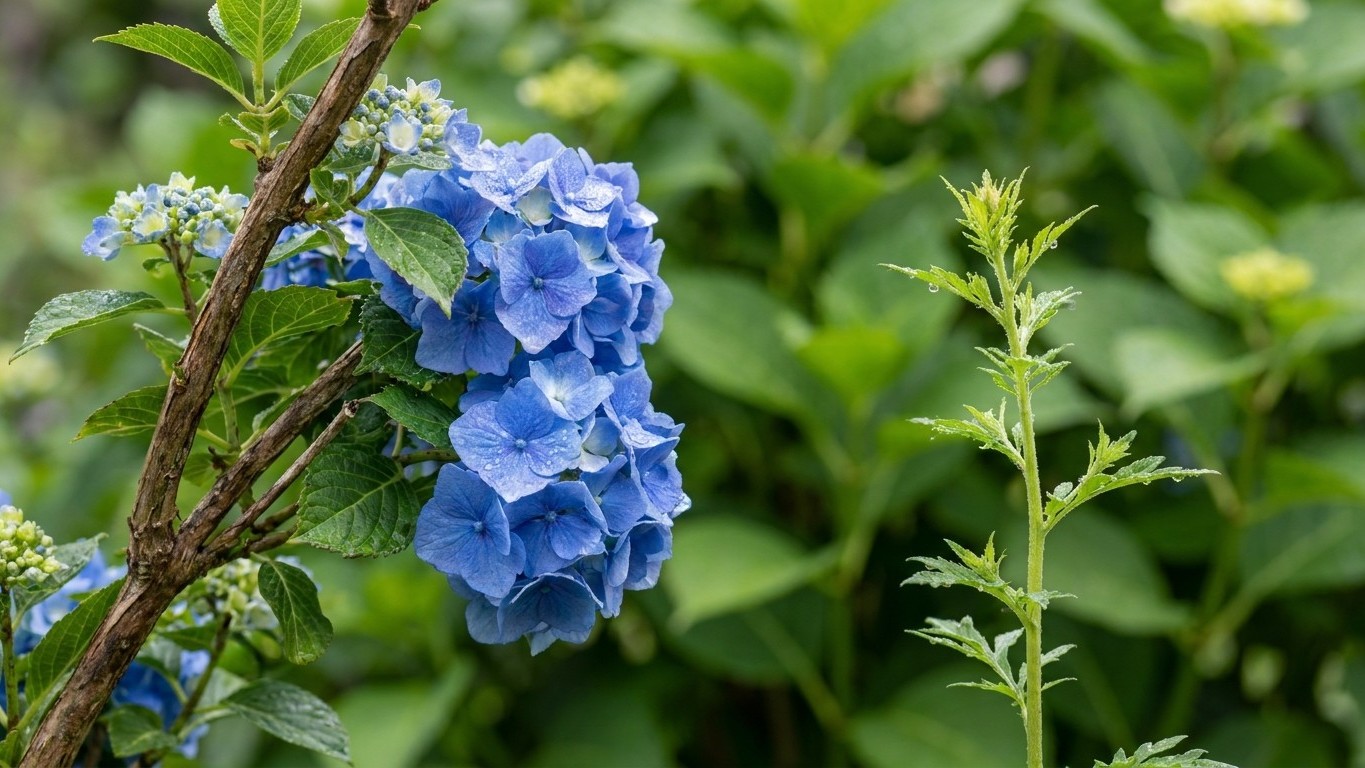

Bigleaf hydrangeas turn pink in Arkansas because the plant builds its color from aluminum, and soil with a higher pH keeps that aluminum out of the roots’ reach. Acidic soil frees it up, and the flowers shift toward blue. Nothing is wrong with your plant. The color is a readout of what is happening in the ground, and you can change it, though not overnight.
What this comes down to in Arkansas

In Little Rock, the reference city for the frost figures here, the last spring freeze at 32°F falls somewhere between March 12 and March 28 (NOAA NCEI 1991-2020 Climate Normals, 30-70% probability band), and that opening stretch of growth is when a hydrangea starts pulling up whatever the soil offers. Turning pink flowers blue comes down to getting soil pH low enough, and keeping it there, before and through that growth period.
Pink is the default for many yards because soil chemistry in much of the state leans toward neutral or alkaline, especially where limestone sits underneath or where builders backfilled around foundations. The Delta’s alluvial soils and the limestone-influenced valleys of the Ozarks tend to run higher in pH. Forested sandstone ridges in the Ouachitas tend the other way. Even so, a single lot can hold both: acidic soil in the back bed, limy soil beside the concrete porch.
The pH-to-color map
Only bigleaf (Hydrangea macrophylla) and mountain (H. serrata) types respond. Panicle, smooth, and oakleaf hydrangeas ignore your soil, and white bigleaf flowers stay white. For the responsive ones, the commonly cited pattern looks like this:
| Soil pH (approximate) | Typical flower color | What is happening |
|---|---|---|
| Below about 5.5 | Blue | Aluminum dissolves and the roots absorb it |
| About 5.5 to 6.5 | Purple, or a mix of pink and blue on one plant | Partial uptake |
| Above about 6.5 | Pink to red-pink | Aluminum stays locked in the soil |
Those bands are rules of thumb, not guarantees. Some cultivars lean stubbornly pink even in acidic ground, and the exact response varies plant to plant. Arkansas soils also carry plenty of natural aluminum, so the lever you pull is pH, not aluminum supply.
Working it out for your own garden
Start with a soil test, not a bag of amendment. A basic test through your county extension office reports pH and usually suggests how much sulfur or lime a bed needs. Without that number you are guessing, and guessing with aluminum sulfate can injure roots.
Then work the arithmetic. Say a test comes back at 6.8 and your goal is blue. That sits well above the roughly 5.5 line, so you need to bring the pH down by more than one full point. Elemental sulfur does this slowly, over months, because soil bacteria have to convert it. Aluminum sulfate acts faster but is harsher, and it supplies aluminum directly. Either way the change arrives in steps, not in one application, and a retest after a growing season tells you whether you moved far enough.
Timing follows the frost window. New growth in the Little Rock area follows the March 12 to March 28 range for the last 32°F freeze, so a spring treatment belongs once leaves have opened and the ground is thawed, not during a warm spell in February. For the fall round, count backward from the first fall frost range of November 7 to November 20. Allowing roughly six weeks for an amendment to work into the soil before the ground cools (a planning rule of thumb, not a published figure) gives a range of about late September to early October. That makes now a fair time to treat, if a soil test says you need to.
A worked comparison shows where the line falls. A bed at pH 6.0 with sandy, low-buffer soil may respond to a season of sulfur and reach purple-blue by the following summer. A bed at pH 7.8 beside a concrete foundation, watered with alkaline tap water, can push the pH right back up after every treatment. There, blue flowers are a long fight, and growing the plant in a container with acidic potting mix is the practical answer.
One more habit helps. Use a fertilizer low in phosphorus, because high phosphorus ties up aluminum inside the soil and mutes blue even when the pH looks right. Keep notes on when you treated and what the next bloom looked like. One season of notes beats a year of memory.
What changes across the state
Arkansas is not one garden. The hardiness zone range runs 6b to 8a on the USDA Plant Hardiness Zone Map, and that spread matters because it controls whether flower buds survive the winter, which is a separate question from what color they open. Color tells you about soil. Whether there are any flowers at all depends on cold.
The northern tier and higher ground of the Ozarks and Ouachitas run colder and see more late freezes that can kill buds on old wood. The southern and eastern parts of the state warm up earlier, so growth starts sooner and the treatment schedule shifts earlier as well. The Little Rock dates are a reference point, not a rule for Fayetteville or El Dorado.
Geology matters as much as climate here. Gardeners on the Delta’s flat, silty ground often fight pH that drifts back toward alkaline, while those in pine-forest soils of the Ouachitas and parts of the south may find blue comes almost on its own. Irrigation water adds another layer: if your water comes from a limestone source or a well, it can slowly undo your work. Neighbors a mile apart, with different soils and different water, can get opposite colors from the same cultivar.
The mistakes this state punishes

The most common error is treating the whole bed with aluminum sulfate before testing. In soil that is already acidic, extra aluminum can burn roots and stunt the plant. Test first, treat second, retest third.
Planting too close to a foundation is a quieter problem. Concrete leaches lime into nearby soil, and in an Arkansas yard that can hold pH stubbornly high right where people love to Plant Hydrangeas. Give the plant some distance, or amend the bed knowing the concrete will keep pushing back.
Warm spells in March cause a different kind of loss. Growth starts, then a freeze inside the March 12 to March 28 range (or just after it) kills the tender new tissue. You can get the soil chemistry exactly right and still have no flowers to color. A few notes on when to prune help here, and When to Prune Hydrangeas in Arkansas covers how pruning at the wrong time removes the buds that would have carried your blue. The same goes for cold protection: Protecting Hydrangeas Through a Arkansas Winter explains how to save the old wood in the zones where it is at risk.
Last, expecting fast results. A single spring treatment rarely changes a whole plant. Buds that formed last year carry last year’s color, and the new color shows up only in flowers that develop after the soil has changed. Give it a full growing season, and then a second.
Checking this against your county
A state-wide figure is a starting point, not an instruction. Your county office of the University of Arkansas Cooperative Extension Service can run a soil test, tell you what the local soil tends to do, and confirm which frost dates fit your area. For the rest of the growing picture, including site, watering, and care, the state guide to growing hydrangeas in Arkansas covers those topics.
Common questions
Why are my hydrangeas pink when I bought blue ones?
Nursery plants are often grown in acidic potting mix, which produces blue flowers. Once planted in neutral or alkaline garden soil, the plant stops taking up aluminum and the new blooms drift toward pink. It is a soil response, not a sign of a bad plant.
How long does it take to turn hydrangeas blue?
Expect at least one full growing season, sometimes two. Flowers already formed keep their color, so the change appears in buds that develop after the soil pH has dropped.
Can I turn a white hydrangea blue or pink?
No. White bigleaf flowers lack the pigment that reacts to aluminum, and panicle, smooth, and oakleaf types do not change color with soil at all.
Is it safe to use aluminum sulfate on my hydrangeas?
It can be, when a soil test shows you need it and you follow the label. Overuse can burn roots, which is why the test comes first and why slower-acting sulfur is often the gentler choice.