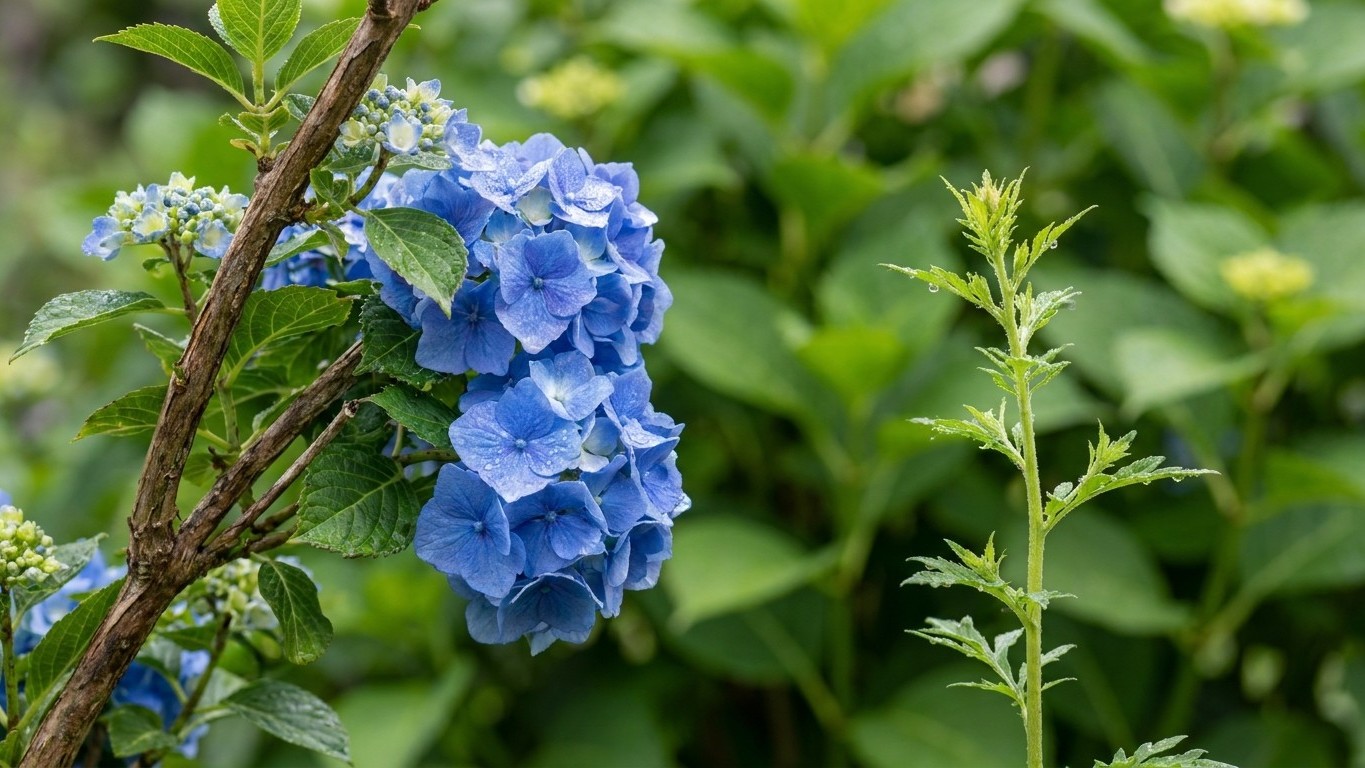

Plant hydrangeas in Arkansas either in early spring once the last frost risk has passed, or better yet in fall while the soil is still warm. Panicle types (Limelight, Little Lime) tolerate the state’s heat and humidity best statewide, while bigleaf varieties need afternoon shade and winter protection for their flower buds. Amend soil with compost, choose a site with morning sun, and mulch heavily going into winter.
When to plant Hydrangeas in Arkansas
The frost math for Arkansas comes from NOAA’s 1991-2020 Climate Normals for station USW00013963, which sits at Little Rock. That data puts the last spring freeze (32°F) between March 12 and March 28, and the first fall freeze between November 7 and November 20. Those dates describe central Arkansas. Gardeners in the Ozarks and the higher ground of northwest Arkansas should expect spring frost to linger later and fall frost to arrive sooner than what Little Rock sees, simply because elevation and latitude both push the growing season shorter as you move north and up. If you garden in Fayetteville, Bentonville, or anywhere above roughly 1,000 feet, treat the Little Rock window as a starting point, not a promise.
Hydrangeas aren’t started from seed the way tomatoes or squash are. Nurseries sell them as rooted cuttings in containers, and the timing question isn’t about when to sow but when to get that container into the ground so roots can establish before stress hits. Spring planting works, but it means the plant has to build root mass while also pushing new leaves during a season that runs hot fast in Arkansas. Fall planting sidesteps that problem: the top of the plant goes dormant while the soil, still warm from summer, keeps roots growing for weeks longer than most people expect.
Counting back from the first fall frost
If you’re planting in fall, count backward from that November 7 to November 20 freeze window. Roots need roughly six to eight weeks of undisturbed growth before the ground turns cold, which puts the ideal planting window in mid-September through early October for most of the state. Plant later than that and the shrub goes into winter with a root system that hasn’t gripped the surrounding soil yet, which raises the odds of frost heave pushing it partway out of the ground over winter.
For spring planting, wait until the March 12 to March 28 freeze risk has mostly passed before moving a hydrangea from a container into open ground. New growth on a freshly transplanted shrub is tender and has none of the cold tolerance that established wood carries. A nursery-grown hydrangea has usually spent its life in a greenhouse or a shaded holding area, so give it a few days in a sheltered spot outdoors, out of direct wind and midday sun, before putting it in its permanent bed. That short acclimation period matters more in Arkansas than in milder climates, because the jump from greenhouse conditions to an April afternoon in the low 80s with full sun can scorch leaves that haven’t toughened up yet.
Whichever season you choose, avoid planting during a heat spike or right before a hard freeze is forecast. A newly disturbed root ball has no buffer against either extreme for the first few weeks.
Soil and site preparation
Most hydrangeas want morning sun and afternoon shade in Arkansas, a state where summer afternoon sun is intense enough to scorch leaves on plants that would tolerate full sun in a cooler climate. Panicle hydrangeas handle more direct light than bigleaf types, but even they benefit from some relief once temperatures climb past 90°F for days in a row, which happens regularly across the state in July and August.
Drainage matters more than exact soil type. Hydrangeas dislike standing water around their roots, and a lot of failed plantings trace back to a low spot that looks fine in April but turns into a puddle after a summer thunderstorm. Before planting, walk the site after a heavy rain and watch where water sits. If it pools for more than a few hours, either pick a different spot or build up a raised planting area six to eight inches above grade.
Work compost or aged organic matter into the bed two to three weeks before planting, not the day of. That lead time lets the amendment start breaking down and lets the bed settle, so the plant isn’t sitting in a loose pocket of soil that sinks and pulls the root ball down with it. A bed that’s been prepped ahead of time also gives you a chance to spot drainage problems before you’ve committed a shrub to that spot.
Spacing depends on the mature size of the variety. Smaller panicle and smooth hydrangeas top out around 3 to 5 feet wide and can be spaced accordingly, while larger bigleaf and oakleaf types spread 6 to 10 feet and need room to reach that size without crowding a wall, fence, or neighboring shrub. Crowded hydrangeas hold moisture on their leaves longer after rain, which sets up the fungal leaf spot problems that show up often in Arkansas’s humid summers. Give each plant the airflow its mature spread requires, even if that means the bed looks sparse the first year or two.
Varieties that suit Arkansas
The traits that matter most here are heat tolerance, resistance to fungal leaf disease in humid conditions, and, for reblooming types, the ability to recover after a late spring frost damages the first flush of flower buds. Arkansas’s growing season is long enough that bloom timing isn’t usually the limiting factor the way it is farther north; the bigger risks are summer heat stress and a cold snap that catches new growth off guard.
Panicle hydrangeas (Hydrangea paniculata) are the most forgiving choice for most of the state. They bloom on new wood, so a late frost that damages old growth doesn’t wipe out the season’s flowers the way it can on a bigleaf type. Varieties widely sold under names like Limelight and Little Lime tolerate more direct sun than other types and hold up well through Arkansas summers, though their heavy flower heads sometimes need support once they fill out with rain-soaked blooms.
Smooth hydrangeas (Hydrangea arborescens), sold widely as Annabelle and Incrediball, are native to parts of the eastern United States and handle cold well, blooming reliably on new wood each year regardless of winter damage to old stems. They’re a solid pick for gardeners who want dependable blooms without fussing over pruning timing.
Bigleaf hydrangeas (Hydrangea macrophylla), including reblooming series sold as Endless Summer, are the trickiest fit for Arkansas because most bloom on old wood and their flower buds can be killed by a late freeze or a harsh winter in the colder pockets of the state. Reblooming varieties hedge against that by also setting some buds on new growth, giving a second chance at flowers even after a rough winter. They’re worth growing in sheltered, warmer microclimates rather than open, exposed sites.
Oakleaf hydrangea (Hydrangea quercifolia) is native to Arkansas woodlands and handles the state’s humidity and soil conditions about as well as any hydrangea can, with varieties like Snow Queen and Ruby Slippers offering strong fall color as a bonus. No extension office or agency is naming these varieties as official recommendations here; these are simply widely available options that carry the traits Arkansas’s climate rewards.
What to plant alongside
Hostas, ferns, and astilbe share a hydrangea’s preference for part shade and consistent moisture, which makes them genuinely useful bed companions rather than just decorative filler. They fill the space at the base of a hydrangea, shade the soil to slow moisture loss, and don’t compete hard for the same nutrients since their root systems sit at different depths.
Azaleas and rhododendrons make sense near hydrangeas because they both prefer slightly acidic, well-drained soil, so one bed prep serves both. Heuchera adds low, colorful ground cover without crowding a hydrangea’s root zone, and a few clumps of catmint or salvia nearby draw pollinators into the general area without pulling moisture away from the shrub itself, since hydrangea blooms aren’t heavily pollinator-dependent the way fruiting plants are.
Keep hydrangeas well away from black walnut trees. Black walnut roots release juglone, a compound that’s toxic to a range of ornamental plants, and hydrangeas are among the species that struggle or die when planted within a black walnut’s root zone, which can extend well beyond the tree’s canopy. Shallow-rooted, thirsty trees like willows or silver maples are also poor neighbors, since they’ll out-compete a hydrangea for water during Arkansas’s dry summer stretches.
Claims that marigolds or other companion plants repel insect pests from ornamental shrubs the way they’re sometimes said to protect vegetable gardens don’t hold up well under scrutiny. That pairing gets repeated often in casual gardening advice, but there’s little solid evidence it does much for a shrub like hydrangea. Plant marigolds if you like them, not because they’re doing pest control work they haven’t been shown to do.
Watering, feeding and support
Newly planted hydrangeas need water two to three times a week for the first month, tapering to a deep soak once a week as roots establish. The rule of thumb once a plant is settled is about an inch of water weekly, delivered slowly enough to soak down 6 to 8 inches rather than running off the surface. Arkansas summers bring stretches of high heat with little rain, and A Hydrangea That wilts by midafternoon in July is usually telling you the root zone has dried out below what a quick surface sprinkle can fix.
A 2- to 3-inch layer of mulch, kept a few inches back from the stem, does double duty: it holds soil moisture through hot spells and buffers root temperature swings going into winter. Refresh it in late spring and again in fall.
Feed in early spring as new growth starts, using a balanced or slightly phosphorus-heavy fertilizer rather than something high in nitrogen, which pushes leafy growth at the expense of blooms. A second light feeding in early summer is enough for most varieties; feeding late in the season encourages tender new growth that won’t have time to harden off before the first fall frost.
Panicle varieties with heavy flower heads, especially after a rain soaks the blooms, sometimes flop under their own weight. A simple stake or a loose cage set up in early summer, before the plant fills out, saves you from propping up a bent stem later. Pruning timing depends entirely on whether the variety blooms on old or new wood: prune old-wood bloomers like most bigleaf types right after flowering, and prune new-wood bloomers like panicle and smooth hydrangeas in late winter or early spring before growth starts. Getting that timing backward is the single most common reason gardeners lose a season’s blooms.
Common problems
Wilting is the symptom gardeners see most often, and it has two very different causes that look almost identical. Underwatering shows up as leaves drooping in the afternoon heat and recovering by morning; if that recovery stops happening, the roots are likely sitting in soggy, poorly drained soil and starting to rot instead. Squeeze the soil a few inches down before assuming the plant just needs more water.
Leaf scorch and curl usually trace back to too much direct afternoon sun combined with Arkansas’s summer heat, showing up as browned, crispy edges on leaves that face west or south with no shade relief. It can also follow heavy aphid feeding on new growth, which curls and distorts leaves as the insects draw sap from the underside. Check the undersides of curled leaves before assuming it’s purely a sun problem.
Poor blooming, rather than any kind of fruit-set failure, is the hydrangea version of a disappointing season. On old-wood bloomers, a late spring freeze after buds have started to swell can kill the flowers for that entire year even though the plant looks perfectly healthy otherwise. Pruning an old-wood bloomer at the wrong time of year does the same damage by cutting off the wood that was going to carry that season’s flowers.
Fungal leaf spot, often Cercospora, shows up as small brown or purple spots scattered across older leaves, usually starting low on the plant where humidity lingers longest after rain. It’s common in Arkansas’s humid summers and rarely kills a hydrangea outright, but it looks bad and can cause early leaf drop. Improve airflow around the plant, water at the soil line rather than overhead, and remove badly spotted leaves rather than letting them sit on the ground and reinfect the plant next season.
Stem splitting or cracking near the base sometimes follows a hard, early freeze hitting a plant that went into fall still pushing soft new growth. That tender tissue doesn’t have time to harden off and splits when it freezes. Stopping fertilizer applications by late summer, well ahead of the first fall frost, reduces the odds of this happening.
Pests that actually show up in Arkansas
The University of Arkansas Division of Agriculture Cooperative Extension names aphids, whiteflies, scale insects, stink bugs, squash vine borer, squash bugs, and Japanese beetles as the pests home gardeners deal with most in summer. Not all of them target hydrangeas specifically. Squash vine borer and squash bugs go after squash and other cucurbit vegetables, not ornamental shrubs, so if you’re growing hydrangeas near a vegetable patch, watch for those two on the squash plants rather than the shrub itself.
Aphids are the pest most likely to show up on hydrangea new growth, clustering on the undersides of young leaves and along soft stem tips where they suck sap and cause the curling and distortion often mistaken for sun scorch. They tend to build up early in the season as new growth flushes out, and a strong spray of water aimed at the undersides of leaves, repeated every few days, knocks populations down without resorting to chemical treatment for a light infestation.
Japanese beetles hit hardest from June through August, chewing ragged, skeletonized holes in leaves and sometimes feeding on the flowers themselves, leaving behind a lacy pattern that’s hard to miss. Handpicking beetles into a bucket of soapy water in the cooler hours of the morning, when they’re sluggish, is more effective than it sounds for keeping numbers manageable on a few shrubs.
Scale insects and whiteflies both show up as summer progresses, scale appearing as small, immobile bumps along stems that are easy to miss until a plant looks weirdly weak, and whiteflies scattering in a small white cloud when a branch is disturbed. Stink bugs turn up occasionally on flower heads and buds through summer but rarely cause serious damage to hydrangea specifically. For any of these, a county extension agent can confirm identification before you decide whether treatment is warranted.
Harvest and end of season
Hydrangeas aren’t a food crop, but plenty of gardeners cut blooms for fresh arrangements or for drying, and timing that cut matters. For fresh flowers, cut mophead and lacecap blooms once they’ve reached full color and feel slightly papery to the touch rather than soft, since flowers cut too early tend to wilt quickly in a vase. For drying, panicle varieties like Limelight are the easiest to work with; cut the stems once the blooms have started to take on their late-season color shift and hang them upside down in a dry, dark space out of direct sun.
As the first fall frost approaches, which arrives between November 7 and November 20 across the central part of the state, shift focus from cutting flowers to preparing the plant for winter. Stop fertilizing well before that window so the plant isn’t pushing tender new growth right as cold arrives. Water deeply in the weeks before the ground freezes, since a well-hydrated root system handles winter cold better than a dry one.
Add a heavier layer of mulch, 3 to 4 inches, over the root zone once nighttime temperatures start dropping consistently, and for bigleaf varieties in exposed or colder spots, consider loosely wrapping the plant or building a simple leaf-and-wire cage around it to protect the flower buds that will produce next year’s blooms. Those buds are already set on old-wood bloomers by fall, and losing them to a hard winter means a season without flowers even though the plant itself survives fine.
Local help
Frost dates and pest pressure shift across Arkansas’s counties, and a local extension office can give you dates and soil test results specific to your address rather than a statewide average. The University of Arkansas Division of Agriculture Cooperative Extension Service, uaex.uada.edu, offers county-level guidance and soil testing for home gardeners.
Common questions
Can I plant hydrangeas in Arkansas clay soil?
Yes, but amend it first with compost worked in a few weeks ahead of planting, and confirm the site drains within a few hours after heavy rain. Unamended, compacted clay holds water around the roots long enough to cause rot.
Why didn’t my bigleaf hydrangea bloom this year?
The most common cause is losing flower buds to a late spring frost or pruning the plant at the wrong time and cutting off old wood that was set to bloom. Reblooming varieties are more forgiving because they also set buds on new growth.
Do hydrangeas need full sun in Arkansas?
Most do better with morning sun and afternoon shade, since direct afternoon sun in Arkansas’s summer heat scorches leaves on all but the most sun-tolerant panicle varieties.
How do I change hydrangea flower color?
Flower color on bigleaf varieties responds to soil pH and aluminum availability, with more acidic soil producing bluer blooms and more alkaline soil pushing toward pink. This is specific to bigleaf types; panicle and smooth hydrangeas don’t shift color this way.
Is it too late to plant a hydrangea in October in Arkansas?
Early October generally still leaves enough time before the first fall frost, which falls between November 7 and November 20, for roots to establish. Planting much later than mid-October cuts that establishment window thin.