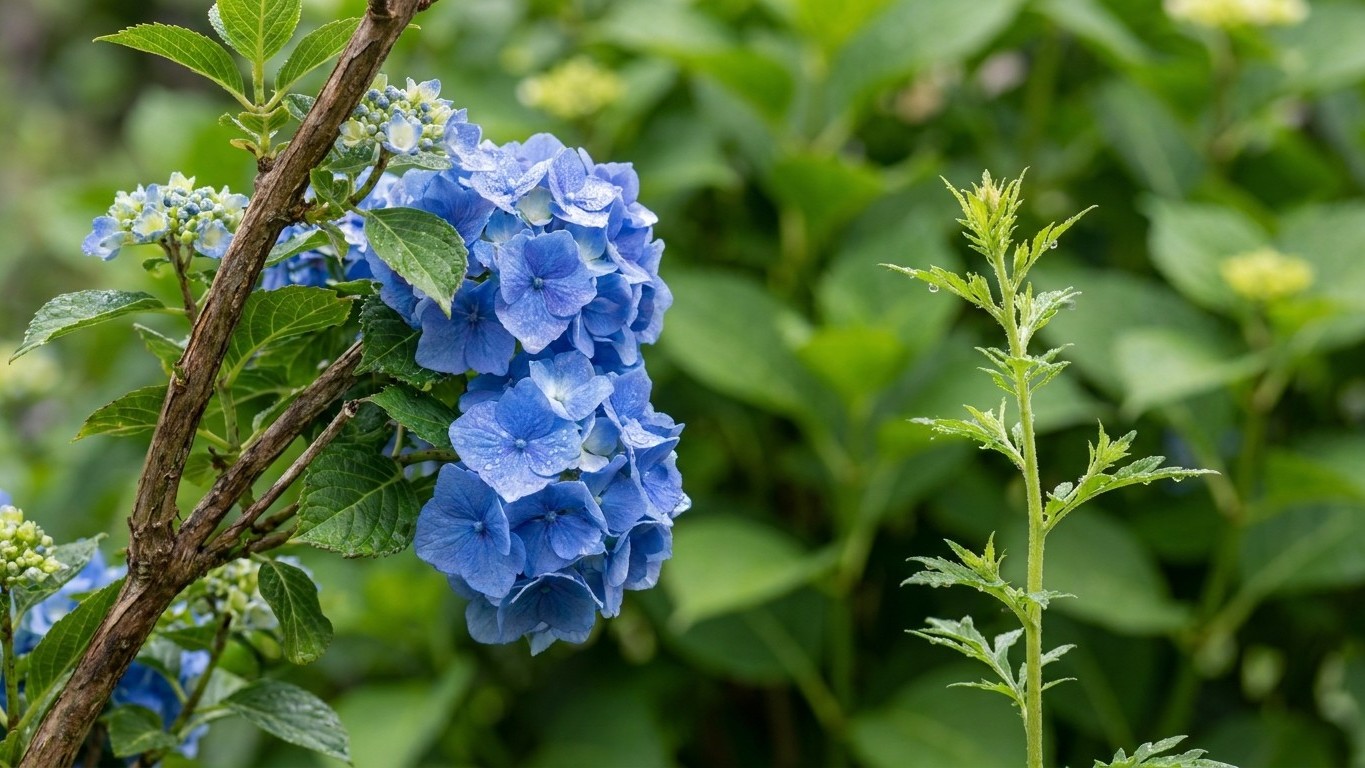

Prune bigleaf and oakleaf hydrangeas right after they finish blooming, in early to mid summer. Prune panicle and smooth hydrangeas in late winter, before the buds swell. Get those two groups swapped and you can cut off a whole season of flowers. The calendar matters less than knowing which type is growing in your yard, because the type decides where next summer’s blooms are already waiting.
What this comes down to in Arkansas
In Arkansas, hydrangeas that bloom on new growth get pruned in late winter, a few weeks ahead of a last spring freeze that falls between March 12 and March 28 at Little Rock. Hydrangeas that bloom on old wood get pruned only in the weeks right after flowering, months before the first fall freeze, which lands between November 7 and November 20 in the same Little Rock data. Both ranges come from NOAA NCEI climate normals for the Little Rock station and mark the band of dates where the probability of a 32F freeze falls between 30 and 70 percent.
The reason two schedules exist is mechanical. Some hydrangeas form next year’s flower buds on stems that grew this year, tucked in during late summer and fall. Others grow fresh stems each spring and build flower buds on that new growth. Cut an old-wood plant in February and you remove the buds. Leave a new-wood plant alone for years and it turns leggy, with flowers held up on weak stems that flop after a summer thunderstorm.
Old-wood bloomers
Bigleaf hydrangeas (mopheads and lacecaps) and oakleaf hydrangeas set buds the previous season. Prune them lightly, and only right after the blooms fade. Reblooming bigleaf types flower on both old and new stems, so they forgive mistakes better, but a light hand still pays off.
New-wood bloomers
Panicle hydrangeas (the cone-shaped white-to-pink kind, such as Limelight) and smooth hydrangeas (Annabelle is the well-known one) bloom on stems grown in the current season. They tolerate hard pruning in late winter and often look better for it.
| Type | Blooms on | When to prune | How much |
|---|---|---|---|
| Bigleaf (mophead, lacecap) | Old wood | Right after flowering | Remove spent blooms and a few old stems |
| Reblooming bigleaf | Old and new wood | After the first flush, or lightly in spring for dead wood | Light shaping only |
| Oakleaf | Old wood | Right after flowering | Very little; thin the oldest stems |
| Panicle | New wood | Late winter, before buds swell | Up to about one-third of the height |
| Smooth | New wood | Late winter, before buds swell | Cut back hard, to roughly a foot or two |
If you are still deciding which hydrangeas to plant, Which Hydrangeas Survive a Arkansas Winter covers how each type handles cold. For the broader picture, the state guide on growing hydrangeas in Arkansas is the place to start.
Working it out for your own garden
A method beats a memorized date, especially after a warm winter or a cold spring throws the usual timing off. Start by identifying the type. If you do not know it, think back to when it bloomed. Flowers opening in late spring to early summer on a rounded shrub with big, broad leaves point to bigleaf, which means old wood. Flowers that show up from midsummer into fall, on cone-shaped or dome-shaped heads, usually mean panicle or smooth, which means new wood. Oakleaf gives itself away with leaves shaped like oak leaves and bark that peels in strips.
Now do the arithmetic for the new-wood types. The last spring freeze at Little Rock runs March 12 to March 28. Prune three to four weeks ahead of that band, and you land between mid-February and early March. That gives the plant time to close its cuts before growth starts, and it keeps you from cutting long, soft shoots that a late freeze could burn. In a north Arkansas garden, the window slides later. In a warm February, watch the buds rather than the calendar: once they visibly swell, the window has closed for a clean prune.
For the old-wood types, count from the other direction. A common rule of thumb is to finish pruning by early August, since buds for next year begin forming after that. Early August sits about 14 to 16 weeks ahead of the November 7 to November 20 first-freeze window, so there is a comfortable margin, but the margin is for the plant, not for you. Waiting until September or October means you are cutting buds that are already set.
One more check covers the spring dead-wood question. Bigleaf hydrangeas leaf out late, and stems that look lifeless in March often wake up in April. Scratch a small patch of bark with a thumbnail. Green underneath means the stem is alive, and tan or brown and brittle means it is dead. Wait for leaves to emerge before removing anything from an old-wood plant, and then cut only the stems that stayed bare.
What changes across the state
The Little Rock numbers describe the middle of the state. Arkansas runs from the Ozark and Ouachita highlands down to the flat, warmer Delta and the southern lowlands, and the USDA Plant Hardiness Zone Map spans 6b to 8a across the state. That system rests on one variable, the average annual extreme minimum temperature, so it says a lot about winter cold and nothing about spring frost timing or summer heat. Treat the zone as a rough guide to how much winter dieback to expect, not as a pruning schedule.
In the highlands, elevation pulls both ends of the frost window inward: spring freezes linger longer and fall freezes arrive sooner than at Little Rock. Shift your late-winter prune for new-wood types a little later, and expect more cold-killed stems on bigleaf hydrangeas in spring, which makes the scratch test more useful there. On the flip side, that colder winter keeps buds dormant and less prone to a false start.
Farther south and east, the risk flips. Warm spells in February can coax buds open weeks ahead of schedule, and a freeze that arrives after that is more damaging than the same freeze in a cold year. Gardeners there can prune new-wood types on the early side of the window. The Little Rock range is the only reference point this page carries, so how far your own garden sits from it is a local call. Your nearest county extension office can tell you how your area compares.
The mistakes this state punishes
The most common mistake is the fall cleanup. A gardener cuts everything to the ground in November for a tidy bed, and the bigleaf hydrangea sulks through the next summer with lush leaves and no flowers. Leave old-wood hydrangeas standing through winter. The bare stems also carry the buds through cold snaps.
Second is the warm-spell prune. Arkansas winters swing, and a stretch of mild days in February makes spring feel close. Pruning an old-wood plant then costs you buds, and pruning any hydrangea hard after buds have started to swell pushes tender regrowth right into the March 12 to March 28 freeze band. If growth has already started, prune only what is dead and let the rest ride.
Third is treating everything like a bigleaf. Panicle hydrangeas that never get a late-winter cut grow tall and floppy, and the heavy heads bend the stems to the ground after summer rain. A one-third reduction each year keeps them sturdy. Oakleaf hydrangeas get the opposite problem: a hard cut sets them back for a couple of seasons, so thin only the oldest stems.
Last is expecting pruning to change color. Bloom color on bigleaf hydrangeas comes from soil chemistry, not from where you make the cut. Why Hydrangeas Are Pink in Arkansas, and How to Turn Them Blue explains that side of the story.
Checking this against your county
A state-wide figure is a starting point, not an instruction. The Little Rock frost window tells you where the middle of the state sits, and your county may run earlier or later. Contact your county office of the University of Arkansas Cooperative Extension Service through uaex.uada.edu for local frost timing and pruning advice. Pair that with the state guide to growing hydrangeas in Arkansas for the rest of the season’s care.
Common questions
Can I prune hydrangeas in fall in Arkansas?
Panicle and smooth types can take it, though late winter is the better time because the stems protect the crown through cold snaps. Bigleaf, reblooming bigleaf and oakleaf types should not be cut in fall, since their buds for next year are already formed by then.
Do hydrangeas need pruning every year?
Panicle and smooth types benefit from a yearly cut. Bigleaf and oakleaf types need only spent blooms removed and the occasional old stem thinned. Skipping a year on those causes no harm.
What if I do not know which type I have?
Wait through one bloom cycle and note the timing. Late spring to early summer flowers on a bigleaf-looking shrub suggest old wood, so prune right after they fade. Flowers from midsummer on suggest new wood, so prune next late winter. In the meantime, remove only stems that are clearly dead.
My bigleaf hydrangea looks dead in April. Should I cut it back?
Not yet. Bigleaf hydrangeas leaf out late, and stems that look bare in spring often sprout new growth from the lower buds. Scratch the bark to check for green, wait until other stems have leafed out, and cut only what stays bare. If the whole plant froze back to the ground, expect leaves but few flowers that year.