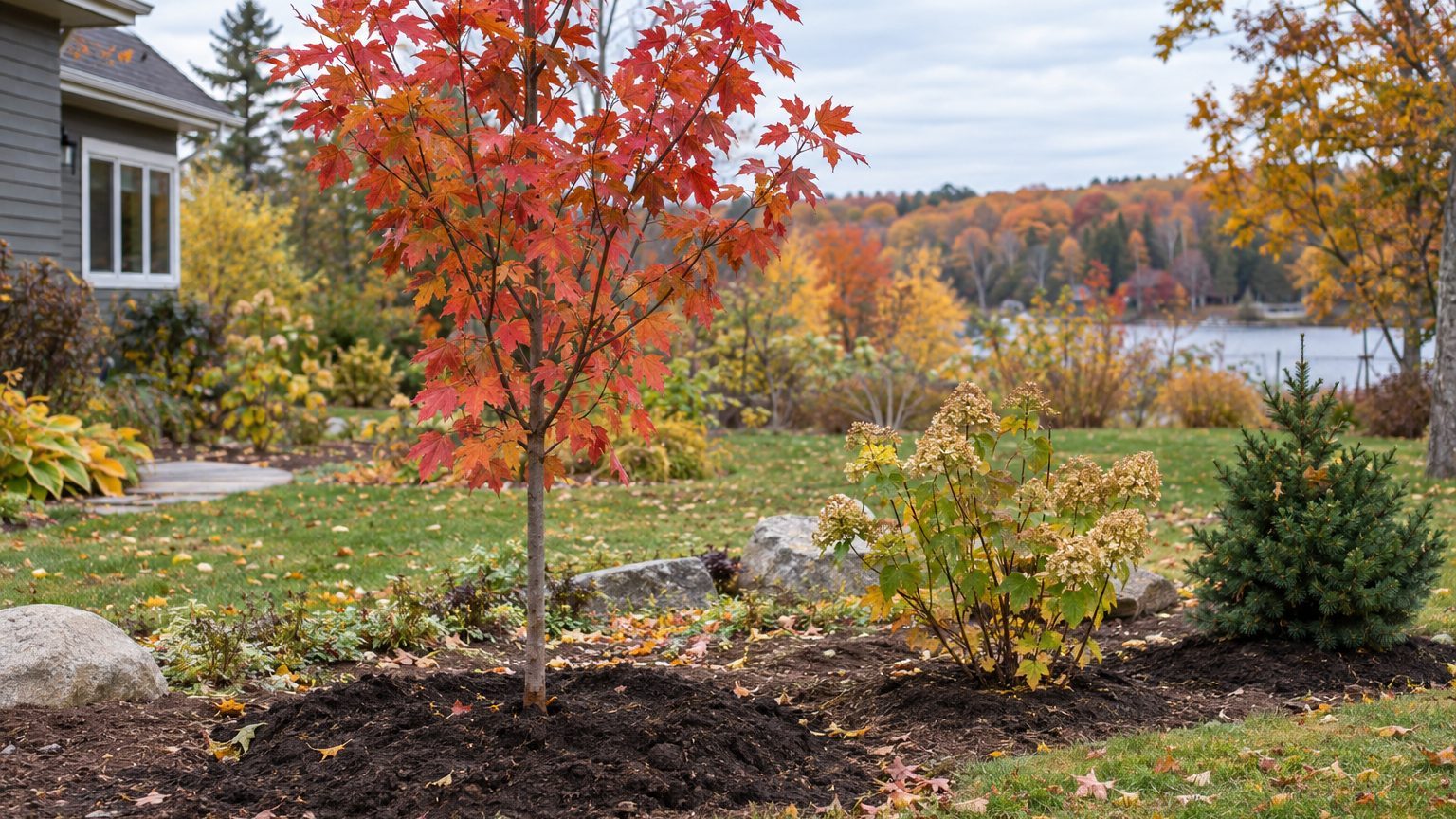

In Nebraska, the safe target for fall planting is September 3 to September 14, which is six weeks before the first fall frost of October 15 to October 26 at Omaha’s airport weather station. Planting later often works, because roots keep growing until the soil freezes. But each week past that window shortens the time a tree or shrub has to anchor itself, and gardens outside the city tend to freeze sooner than the airport does.
The deadline in Nebraska
Why roots outlast the air temperature
A frost warning on the evening news is about air. Roots live in soil, and soil cools slowly. A tree can lose its leaves to a 28°F night in October while its roots keep pushing outward for weeks, as long as the ground stays workable and above freezing. That gap between the first frost and frozen ground is the entire reason fall planting works on the Plains.
Cornell Cooperative Extension (Orleans County) states the rule this way: “Fall is an excellent time for transplanting, provided you get them to their new home at least 6 weeks before the ground freezes, allowing them time to establish roots before winter dormancy.” Notice what it counts from. Not the first frost, but the day the ground freezes, which arrives later. Counting back from the first frost, a date the weather service actually publishes, builds a cushion into the plan.
Here is the arithmetic. NOAA’s 1991-2020 U.S. Climate Normals put the first fall freeze at 32°F in Omaha between October 15 and October 26. Six weeks back from those dates lands on September 3 to September 14. Treat that as the safe target, the stretch when you can plant and expect strong root establishment. It is not a hard cutoff. The true limit is the ground freezing, and that usually falls well after the first frost.
Does the ground freeze in Nebraska? Reliably. NOAA’s normals for Omaha show the mean daily minimum of the coldest month at 15.2°F, far below 32°F. So the deadline logic applies here, and no part of the reference station’s climate lets you ignore it. Gardeners in places where winter nights never dip below freezing can plant through the winter, and that does not describe Nebraska.
Adjusting for your own county
One caution matters more than any other. The October 15 to October 26 range comes from an airport weather station, and airports sit in open ground, often warmed by pavement and the surrounding city. Suburban and rural gardens typically see their first fall frost earlier, often by one to two weeks, and more at higher elevation. Your safe window therefore opens and closes earlier than September 3 to September 14 if you live outside the metro area.
Direction matters, too. The colder you are (farther north, higher up), the earlier fall arrives, so planting deadlines move earlier, not later. A gardener in a cold pocket of the state should treat early September as the practical finish line and use the Omaha dates as the outer edge of the plan. Your county extension office can tell you what your own frost dates look like, and the First and Last Frost Dates in Nebraska article walks through how those numbers vary.
For hardiness, the USDA Plant Hardiness Zone Map 2023 (built on 1991-2020 normals) places Nebraska across a range from 4a to 5b. That range reflects the average annual extreme minimum temperature, a single variable, so it says who survives the cold, not when to plant. For a dated plan, work from the frost range of the station closest to you, and read the plant tag against the zone for your location.
What to plant late, and what to wait on
The plants that handle a late start
Container-grown and balled-and-burlapped trees and shrubs that are fully hardy in your zone are the best late-fall candidates. Their roots are intact, the plant arrives with soil around it, and a deciduous plant has little to lose once its leaves drop. Roots in a container-grown shade tree keep growing into surrounding soil as long as the ground has not frozen, so a planting in late September or even October still gets some weeks of root growth, only fewer than an early planting would.
The word “fully hardy” is doing real work here. A plant that grows comfortably in the middle of its range can still take a hit on a Nebraska winter night, and more so in the first year, before the roots can supply it properly. Pick hardy stock rated for your zone, plant it inside or close to the September 3 to September 14 window, and save everything marginal for spring. Because the state runs from 4a to 5b on the USDA 2023 map, a plant rated for the warmer end can be borderline in a colder county.
| Type of plant | Late-fall outlook | Main risk |
|---|---|---|
| Hardy deciduous trees, container or balled | Good, even somewhat past the safe window if the soil is workable | Drying out in a dry fall |
| Hardy deciduous shrubs, container | Good, with a bit more flexibility than trees | Heaving if roots are shallow |
| Hardy needled evergreens | Best inside the safe window, riskier after | Winter water loss from needles |
| Broadleaf evergreens | Wait for spring unless clearly hardy locally | Winter burn and cold damage |
| Plants at the edge of the zone | Wait for spring | Cold damage in the first winter |
The ones to hold until spring
Evergreens carry the biggest problem. Needles and leaves keep losing water through the winter, and a freshly planted evergreen has a small root system that cannot always replace it, especially once the soil is frozen and nothing can be taken up. That is why a spruce or juniper planted in early September usually does fine while the same plant set out in November has a much rougher time. Broadleaf evergreens are touchier still.
Borderline plants belong in the spring column as well. The first winter is the hardest test a young plant faces, since it has not yet grown the roots that help it recover from damage. A plant that is marginal in your zone gets one more year of settling in if you plant it in spring, then faces its first cold season with a full season of roots behind it. If you are weighing the options, the broader Planting and Caring for Trees, Shrubs and Perennials section covers the basics of site, depth and soil that apply in any season.
A related point is the sale rack. Nurseries often discount trees and shrubs in October, and the bargain tempts people to plant whatever is left. The deals are real for hardy deciduous stock. They are a poorer bet for evergreens and anything of doubtful hardiness, where a markdown is not worth a dead plant in March.
Watering and mulch until the ground freezes
Water deeply, then keep checking
Fall planting works only if the root ball stays moist while roots grow out. Nebraska autumns are often dry and breezy, with long stretches between rains, so a new planting cannot count on the weather. Water slowly and deeply, so moisture soaks down through the root ball and the soil around it rather than running off. Frequent light sprinkles encourage roots to stay near the surface, which is the opposite of what you want going into winter.
Keep it up until the ground freezes. A common mistake is to stop watering after the first hard frost because the garden looks finished. But the soil is still thawed, the roots are still active, and a dry root ball going into freeze-up is the setup for winter damage. Before you water, check by digging a small hole near the root ball with a trowel. If the soil is moist at root depth, hold off. If it is dry, soak it.
Mulch in a ring, not a volcano
Mulch evens out soil moisture and temperature, and both matter for a plant that is still building roots. The NC State Extension Gardener Handbook (chapter 11, Woody Ornamentals) gives two sentences that point to the same depth. On weeds: “A 2-inch to 3-inch layer of mulch suppresses most annual weed seeds and makes it easy to hand-pull any that do germinate.” On trees: “Provide a 3-inch layer of mulch to reduce water loss and maintain uniform soil moisture and temperature around roots.”
A 2-inch to 3-inch layer is the target, and 3 inches is the ceiling for trees. More is not better. Spread it in a wide, flat ring and pull it back from the trunk so the base of the tree stays visible and dry. Mulch piled against the bark holds moisture against the trunk, invites rot and gives rodents a sheltered place to nest. A mulch volcano looks tidy and does slow damage. The Mulching Without Killing the Plant article covers the mistakes in more detail.
The first winter is about roots, not growth. A newly planted tree is not trying to grow taller or fuller before spring. It is spending its limited energy on a root system large enough to feed it next summer, which is why late pruning or heavy feeding that pushes new top growth works against the plant. Water, mulch and patience are the three jobs. Everything else can wait for spring.
What goes wrong
Planting too late and winter burn
Planting too late for the climate is the most common failure. A tree set out after the soil is cold and close to freezing has almost no time to root, and it enters winter with little more than the roots it came with. Since Nebraska’s coldest month averages a daily minimum of 15.2°F at the Omaha reference station (NOAA NCEI Climate Normals 1991-2020), the first winter is a real test. If you miss the September 3 to September 14 window, plant only hardy deciduous stock while the soil is still workable, and put evergreens off until spring.
Winter burn shows up as brown, scorched-looking needles or leaves in late winter or early spring. It happens when wind and sun pull moisture from evergreen foliage while frozen ground keeps the roots from replacing it. Young evergreens in open, exposed sites suffer most. A good soak before freeze-up and a sheltered location both help, and so does choosing a plant that is truly hardy where you live.
Heaving and drying out
Frost heave happens when the ground freezes and thaws repeatedly and pushes shallow root balls upward, exposing roots to air. A plant set too high, or planted so late that the soil around it never settled, is especially prone. If you see a root ball lifting during a winter thaw, press the soil back around it and add mulch once the ground is cool, rather than waiting until spring.
A dry fall causes quieter trouble. With little rain, the root ball dries out and the plant goes into winter stressed, even though you planted on time. Check the soil rather than the calendar. The same logic that sets the deadline in Nebraska also guides gardeners elsewhere, and the How Late Can You Plant Trees and Shrubs in Fall in Connecticut? article shows how the same six-week rule produces different dates in a different climate. For more local planning, the Nebraska guides collect the regional details.
Common questions
Can I still plant trees in October in Nebraska?
Often yes, with limits. The safe target is September 3 to September 14, but roots keep growing while the soil is workable and above freezing. Hardy container and balled deciduous trees planted in October can still establish, provided you water deeply until the ground freezes. Evergreens and borderline plants are better held for spring. In colder parts of the state, the window closes earlier.
Does the first frost mean it is too late?
No. A frost is an air temperature, and the ground freezes later. The first freeze at Omaha’s airport station falls between October 15 and October 26, according to NOAA’s 1991-2020 normals, but root growth continues until the soil freezes. Frost will end the season for tender top growth, so leaves may drop, yet the roots of a hardy plant keep working underground.
Does the Omaha frost range apply to my yard?
Treat it as a reference point, not a guarantee. The figures come from an airport weather station, and suburban and rural gardens typically see the first fall frost earlier, often by one to two weeks. Farther north and at higher elevation, the first frost comes earlier still. Check your own county’s frost dates and move your planting deadline earlier to match.
Should evergreens wait until spring?
When in doubt, yes. Evergreens keep losing water through the winter, and a young root system in frozen ground cannot keep up, which is how winter burn starts. Hardy needled evergreens planted inside the safe window can do well, but late-fall evergreen planting carries more risk than it does for deciduous trees. Spring planting, once the soil thaws and can be worked, gives them a full growing season to root before the first winter.