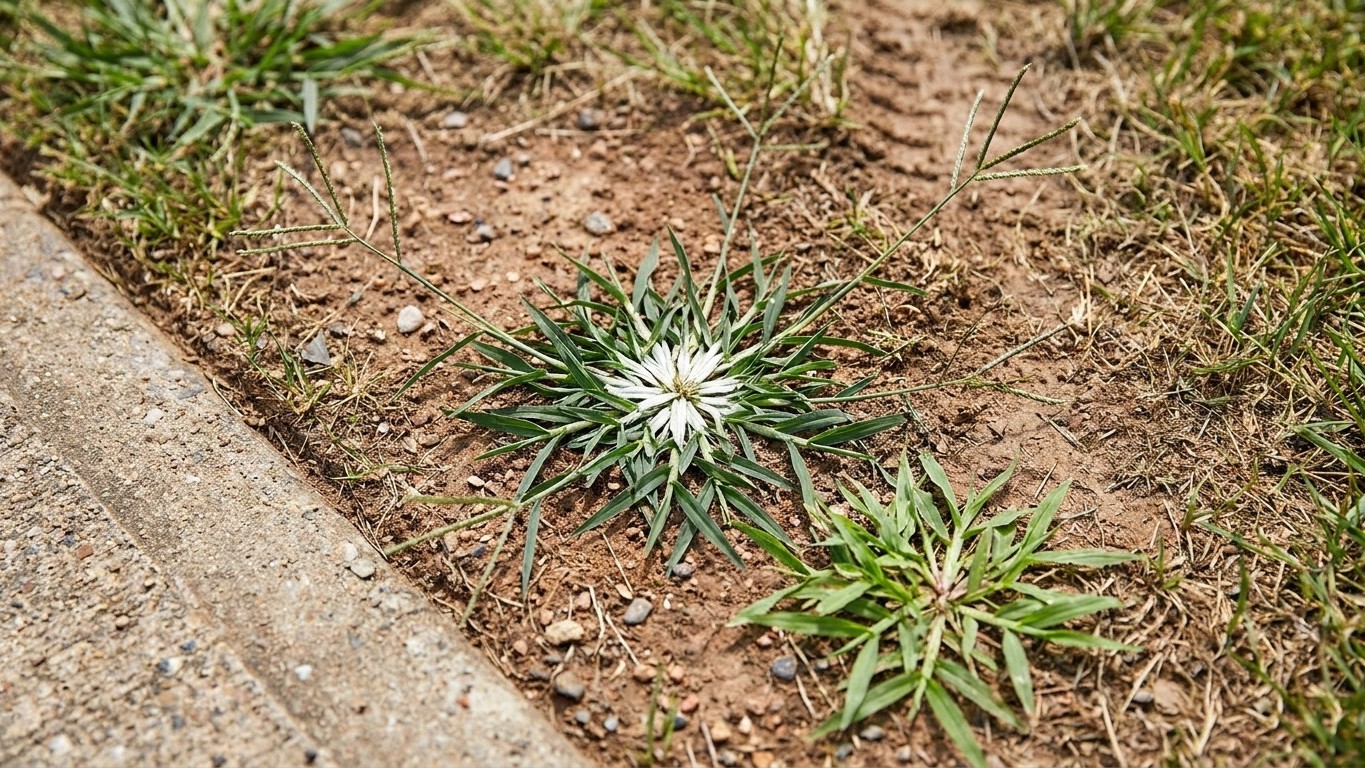

In Iowa, cool-season grass seed goes down best from late August into early September. The cutoff is about 45 days of growing weather before the first fall freeze. It’s October 1 now, so that window has closed across most of the state. Seed sown today would likely germinate and then die over winter. The next good opening is spring, once the soil warms into the 50 to 65 °F range.
The best time to sow grass seed in Iowa
Grass seed doesn’t care what the calendar says. It cares what the soil is doing. Cool-season seed germinates when the ground sits between 50 and 65 °F, measured two inches down in mid-morning. That’s the number to chase, and a cheap soil thermometer gives it to you in thirty seconds. In Iowa, late summer ground is still warm from July, while the air has begun to cool and rain tends to return. Seedlings get warm soil underneath and gentler days above.
Then the clock matters. A new lawn needs about 45 days of growing weather before the first fall freeze to build enough root and crown to survive winter. NOAA’s 1991-2020 Climate Normals put the first 32 °F freeze at October 14 to October 25 for the 30 to 70 percent probability band, at the airport station in that dataset. Count back 45 days and you land between August 30 and September 10. That’s the latest date, not the target. Aim earlier and you give the seedlings a cushion.
Which grasses belong here
Iowa is cool-season country. The species that hold up are:
- Kentucky bluegrass
- Tall fescue
- Fine fescues
- Perennial ryegrass
- Rough bluegrass
Most store-bought lawn mixes are built from several of these. Read the tag on the bag. A “sun and shade” blend leaning on fine fescues behaves very differently from a bluegrass-and-ryegrass sports blend, and the tag lists the percentages.
Why warm-season grass is the wrong bet
Warm-season grasses do their growing in sustained heat and shut down at the first frost, turning straw-colored until the following summer. Iowa’s frost-free stretch runs roughly six months, from the April last-frost dates to the October first-frost dates quoted here. That leaves a warm-season lawn brown for the other half of the year, with the winters in between to survive. Cool-season species keep growing in the shoulder months and green up early. They’re also the ones the extension guidance points to for this part of the country.
The last date that still works
Two sets of frost numbers circulate for Iowa, and they disagree. The NOAA normals above come from one airport weather station. Iowa State Extension’s county figures (1950-2021) run about 4 days later in spring and 10 days earlier in fall than that station. Treat the airport numbers as the optimistic end, and a single station can’t speak for the whole state. Northern counties usually freeze sooner than southern ones, so your own county is the better guide.
| Frost source | First fall freeze | Last sowing date (45 days earlier) |
|---|---|---|
| NOAA 1991-2020 normals, airport station | October 14 to October 25 | August 30 to September 10 |
| Iowa State Extension county figures, roughly 10 days earlier | About October 4 to October 15 | About August 20 to August 31 |
The second row is my own arithmetic from the “about 10 days earlier” adjustment, so read it as approximate. The point holds either way. By October 1, you’re past the last sowing date under both sets of numbers.
Why not sow anyway? The risk is the quiet kind. Seed put down in early October still germinates, because the soil is often in the right range. A green fuzz appears and everything looks fine. But the seedlings haven’t had their 45 days, the roots are shallow, and winter kills them.
If you missed the window this year, plan for spring instead. Sow once the soil has warmed into the 50 to 65 °F range, with NOAA’s April 12 to April 24 last-frost band (airport station, so add about 4 days for the county figures) as a rough marker. Spring seedlings face a different problem, which is summer heat and weed competition before roots deepen. Plan to be more attentive with water. And mark next year’s calendar: the general method is laid out in Starting a New Lawn From Seed.
The frost dates come from NOAA’s 1991-2020 Climate Normals data, if you’d like to check the source.
Seed rate and soil preparation
More seed doesn’t buy insurance. Crowded seedlings compete for light and water, and the weak ones thin out anyway. Rates below are pounds per 1,000 square feet for a new lawn. Overseeding an existing lawn uses half these amounts.
| Grass | New lawn, lb per 1,000 sq ft |
|---|---|
| Tall fescue | 6 to 8 lb |
| Fine fescues | 4 to 6 lb |
| Perennial ryegrass | 4 to 10 lb |
| Rough bluegrass | 2 to 3 lb |
| Kentucky bluegrass | 1 to 3 lb |
Do the multiplication before you shop. A 5,000-square-foot yard in tall fescue takes 30 to 40 lb. The same yard in Kentucky bluegrass takes 5 to 15 lb, because the seed is so much smaller. Those ranges blend several extension sources, which is why they’re wide.
Depth is where most new lawns go wrong. Cover seed no more than 0.25 inch, and press it so it touches soil. Seed buried deeper often never emerges, and that’s the single most common reason a new lawn comes up patchy. Raking lightly after spreading is usually enough. Many seeders tuck the seed in at about the right depth, and a roller or even a walk-over firms it in.
What Iowa ground tends to do
USDA lists the Tama series as Iowa’s representative soil. It’s a Mollisol, the deep, dark prairie soil that built the Corn Belt. The surface layer averages about 6.5 pH (slightly acid), 3.5 percent organic matter, and a texture of 4 percent sand, 26 percent clay and 70 percent silt. It drains well. Those are representative values from USDA NRCS Soil Data Access for the surface horizon of this series, not a reading from your yard.
The tendencies are useful, though. Silt-heavy ground like this holds moisture well and tends to crust on top after a hard rain, which can block tiny seedlings. It also compacts if worked wet. So wait until the soil crumbles instead of smearing, and loosen the top few inches before you seed. River bottoms, hill country and any lot a builder has scraped or filled can be nothing like this. A soil test gives you your own pH and nutrient numbers, and Iowa State University Extension can point you to testing options and local guidance.
Watering a new lawn until it holds
Seed needs steady moisture in the top inch or so of soil, and that’s the hardest part of the job. Once seed starts to swell and germinate, a dry spell kills it. Surface-only watering can’t fix a soil that was never prepared, but good prep makes this part easier.
Early on, water lightly and often enough that the surface never dries out. Short, frequent sessions beat one long soak, because the seed sits near the top and a deep soak can wash it into low spots. Mid-morning and late afternoon often work for a sprinkler on a timer. On Iowa’s silt-heavy ground, watch for puddling and a shiny crust, which means you’re applying water faster than it soaks in. Back off and split the session in two.
Species set the pace. Perennial ryegrass is the quickest to emerge, and Kentucky bluegrass the slowest of the group, so a bluegrass lawn may look empty long after a ryegrass lawn has greened up. Don’t read slow as failed. Keep watering on the same schedule and be patient.
When the grass is up, start stretching the gaps between waterings and make each one deeper. That pushes roots down instead of letting them rest in the damp surface. Hold off on the first mowing until the lawn is tall enough to need it, use a sharp blade, and take only the tip. Stay off the area as much as you can in the early weeks. Foot traffic compacts the ground and crushes seedlings.
Common questions
Is it too late to plant grass seed in Iowa in October?
Yes, for a new lawn. The cutoff is about 45 days before the first fall freeze, which works out to roughly August 20 to September 10 depending on which frost figures you trust. Seed sown later germinates but usually dies over winter. Wait for spring.
What is the best grass seed for Iowa?
Cool-season species: Kentucky bluegrass, tall fescue, fine fescues, perennial ryegrass and rough bluegrass. Which one fits depends on sun, shade and traffic, so check the percentages on the seed tag. Warm-season grasses go dormant at the first frost and don’t suit Iowa winters.
How much seed do I need per 1,000 square feet?
It depends on the species. For a new lawn, tall fescue takes 6 to 8 lb, fine fescues 4 to 6 lb, perennial ryegrass 4 to 10 lb, rough bluegrass 2 to 3 lb and Kentucky bluegrass 1 to 3 lb. Overseeding uses half those amounts.
Do I need to test my soil first?
It’s worth doing. Iowa’s representative soil, the Tama series, has a surface pH of about 6.5, but that figure describes the series, not your lot. Fill, scraped building sites and river-bottom ground can differ a lot. A soil test gives you your own pH and nutrient numbers before you spend money on seed and fertilizer.