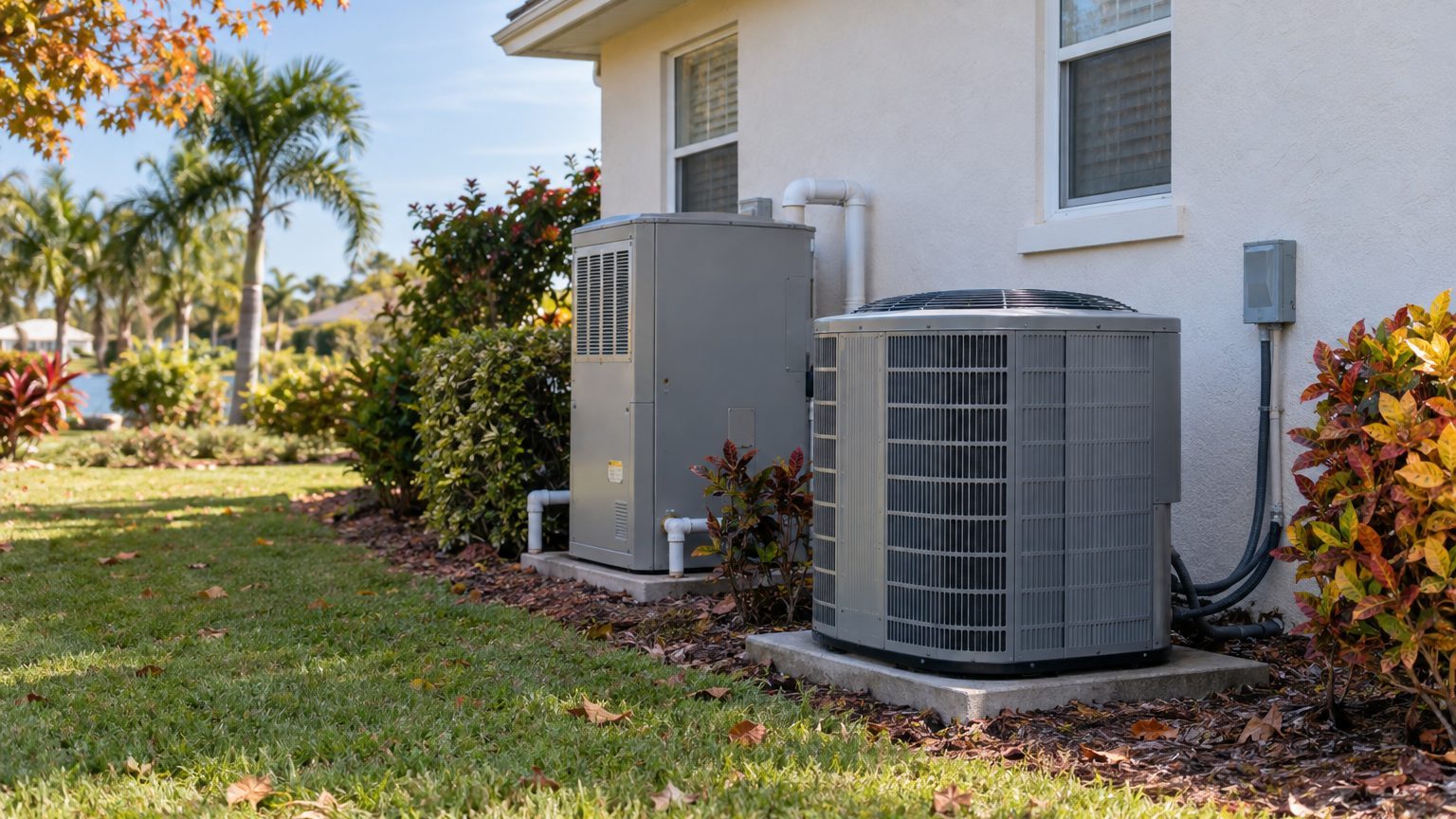

In Colorado, a natural gas furnace costs less to run than an air-source heat pump at average residential prices. The gap is real but not huge, and the heat pump beats electric baseboard heat by a wide margin. Equipment cost, air conditioning, and the coldest nights can still change which system makes sense for a particular house.
The short answer for Colorado
Start with the unit that makes fuels comparable: one million Btu of heat delivered to the house. Computed from EIA residential prices and ENERGY STAR efficiencies, a natural gas furnace at 97% AFUE delivers it for $11.10. A heat pump at 8.1 HSPF2 (a seasonal COP of about 2.4) delivers it for $20.64. That leaves the furnace $9.54 less per million Btu than the heat pump. Electric resistance heat, such as baseboard, comes in at $49.00.
Read these as running costs on the same unit of heat. They are not a yearly bill, because that depends on square footage, insulation, and duct condition. They are also not the price of buying and installing either system. A drafty house burns more fuel under either option, and the per-unit gap between them stays the same.
The heat pump figure uses the ENERGY STAR minimum HSPF2, a seasonal average. A better-than-minimum unit would run cheaper, and a heat pump working through deep cold would run costlier on those hours. The gas price behind the furnace figure is a statewide average too, so a local utility’s rate sheet is the place to confirm what you actually pay.
If you already have a gas line and a working furnace, the furnace is the cheaper system to run in Colorado, and a heat pump only wins on running cost against electric resistance.
What each option costs to run in Colorado
| System | Efficiency used | Cost per million Btu delivered |
|---|---|---|
| Electric resistance (baseboard) | 100% | $49.00 |
| Heat pump | 8.1 HSPF2 (seasonal COP about 2.4) | $20.64 |
| Natural gas furnace | 97% AFUE | $11.10 |
The electricity side rests on one published number: 16.72 cents per kWh, the average residential price year-to-date through July 2026, from the U.S. Energy Information Administration’s Electric Power Monthly, Table 5.6.B. The conversion is 3,412 Btu per kWh. The gas side starts from EIA’s average residential natural gas price, converted at about 1,037 Btu per cubic foot. No gas price per unit appears in the facts used here, so the $11.10 stands as a computed result. For the rate on your own bill, look to your gas utility. Both inputs are statewide averages, and rate plans vary by utility.
Why efficiency counts as much as the fuel price
Electricity is the pricier fuel per unit of energy here, which is why baseboard lands at $49.00. A heat pump does not turn electricity into heat one for one. It moves heat from outside air, and at a seasonal COP of about 2.4 it delivers roughly that many units of heat for each unit of electricity it draws. That is the whole reason $20.64 sits so far below $49.00 on the same electric rate. The furnace works the other way: gas is cheap per unit, and a 97% AFUE unit sends nearly all of it into the house.
The ENERGY STAR bar differs by design. Non-ducted split systems must reach 8.5 HSPF2, while ducted splits and single-package units need 8.1. A ductless system has no duct losses to begin with, so it has to do better to earn the same badge. The table uses the 8.1 minimum, and What HSPF2 Measures, and Why Ductless Asks for More explains why two ratings are not interchangeable. Compare quotes on dollars per million Btu delivered, and match heating rating to heating rating, since SEER2 only measures cooling.
How cold it gets, and what that does to a heat pump
Denver International Airport, the reference station here, logs about 5,862 heating degree days a year (base 65 F), according to NOAA’s 1991-2020 Climate Normals. Degree days add up how far the daily mean temperature sits below 65 F, so more of them means more fuel for the same house. The mean daily minimum of the coldest month is 18.4 F. That is cold enough to make winter a long, serious heating job, though not a deep-freeze climate on the reference city’s numbers.
Here is where the seasonal efficiency matters. The $20.64 figure is an average across the whole season. As outdoor temperatures drop, a heat pump pulls less heat out of each cubic foot of air, and its efficiency falls with it. On the coldest nights, a backup carries the load: resistance strips inside the air handler, or a gas furnace in a dual-fuel setup. Resistance strips run at the $49.00 rate, so the more hours they work, the further the real cost drifts from the table. How Cold Is Too Cold for a Heat Pump covers how the performance curve behaves and what to ask an installer about it.
Denver is one station. A mountain county in the same state can run far colder, with a longer heating season and more hours when the backup is running. For those homes, the heat pump gap in the table is a best case, not a typical one. Front Range homes near the reference city sit closer to the figures above. In the colder mountain counties, treat $20.64 as a floor and size the backup heat as if it will run often.
What homes in Colorado already heat with
The U.S. Energy Information Administration’s 2020 Residential Energy Consumption Survey gives the state’s picture. Furnaces are the main heating equipment in 77% of homes, and steam or hot-water boilers in 9%. By fuel, natural gas leads at 76%, electricity follows at 16%, and propane serves 4%. The survey does not publish a figure for central heat pumps (the estimate was suppressed as unreliable) or for fuel oil and kerosene (too few households to report). That is not the same as zero, only a gap in the data.
These shares say what was installed, and so which fuel was cheap and available when homes were built. They are not advice. They also run at the state level, so your own county may look different.
Still, they shape the comparison. A house on a gas line fits the table above: the furnace is cheap to run, and the question is whether a heat pump’s other advantages justify the switch. A house with no gas line compares the heat pump against resistance or propane, and against resistance the heat pump wins easily. (Propane has no price in the facts used here, so that comparison needs a local quote.) A boiler house is a different conversion altogether, since hot-water radiators have no ducts, and a heat pump means either new ductwork or ductless heads. Ductless or Central walks through that choice, and Heating a Home in Colorado covers the state’s other heating options. Check what your house has now before you compare, because a missing gas line or a boiler changes the question.
When the other choice wins
Cheapest to run is not always the right call. The first case is the simplest: no gas service. Without a gas line, the furnace is not on the table, and the heat pump’s $20.64 against the $49.00 of baseboard settles the running-cost question. Bringing gas to a house that lacks it is a separate project with its own cost, and the facts here carry no price for it.
Air conditioning is the second case. The reference station sees about 850 cooling degree days a year, which is real cooling demand even in a heating-dominated climate. A heat pump cools as well as heats (ENERGY STAR sets a floor of 15.2 SEER2 for the label), so replacing a furnace and an air conditioner with one machine can make sense even when gas heat is cheaper per Btu. The heating gap matters most in a house with little cooling load, and it matters less when a separate air conditioner needs replacing anyway.
Then there is the dual-fuel setup, a heat pump paired with a gas furnace as backup. It keeps gas for the coldest nights, which is where a heat pump’s efficiency is weakest, and gives you heat pump cooling the rest of the year. Whether it pays off depends on the house and the installer’s controls, and the figures here cannot settle that.
Finally, an older furnace with years left. Running cost is only one input, and a working furnace has no purchase price to recover. Repairing a Furnace or Replacing It lays out how to judge that. Keep a sound gas furnace running, and let the heat pump decision wait for a failed furnace, a needed air conditioner, or a house with no gas.
Common questions
Is a heat pump cheaper to run than a gas furnace in Colorado?
No, on average prices. The computed figures are $11.10 per million Btu for a 97% AFUE gas furnace and $20.64 for a heat pump at 8.1 HSPF2. The heat pump is cheaper than electric resistance heat, at $49.00.
Does the $20.64 figure apply in the mountains?
Not neatly. It uses a seasonal average efficiency, and it is built on the Denver reference climate. Colder mountain counties spend more hours when a heat pump’s efficiency drops and backup heat takes over.
Does a ductless system change the numbers?
ENERGY STAR requires 8.5 HSPF2 for non-ducted splits versus 8.1 for ducted ones, because ductless has no duct losses. The table uses the 8.1 minimum. A higher rating would lower the heat pump’s cost per million Btu.
Is the cost per million Btu my yearly heating bill?
No. It compares fuels on the same unit of heat. Your yearly bill depends on house size, insulation, air leaks, and your utility’s rates, so use the figures to compare systems, not to predict a bill.