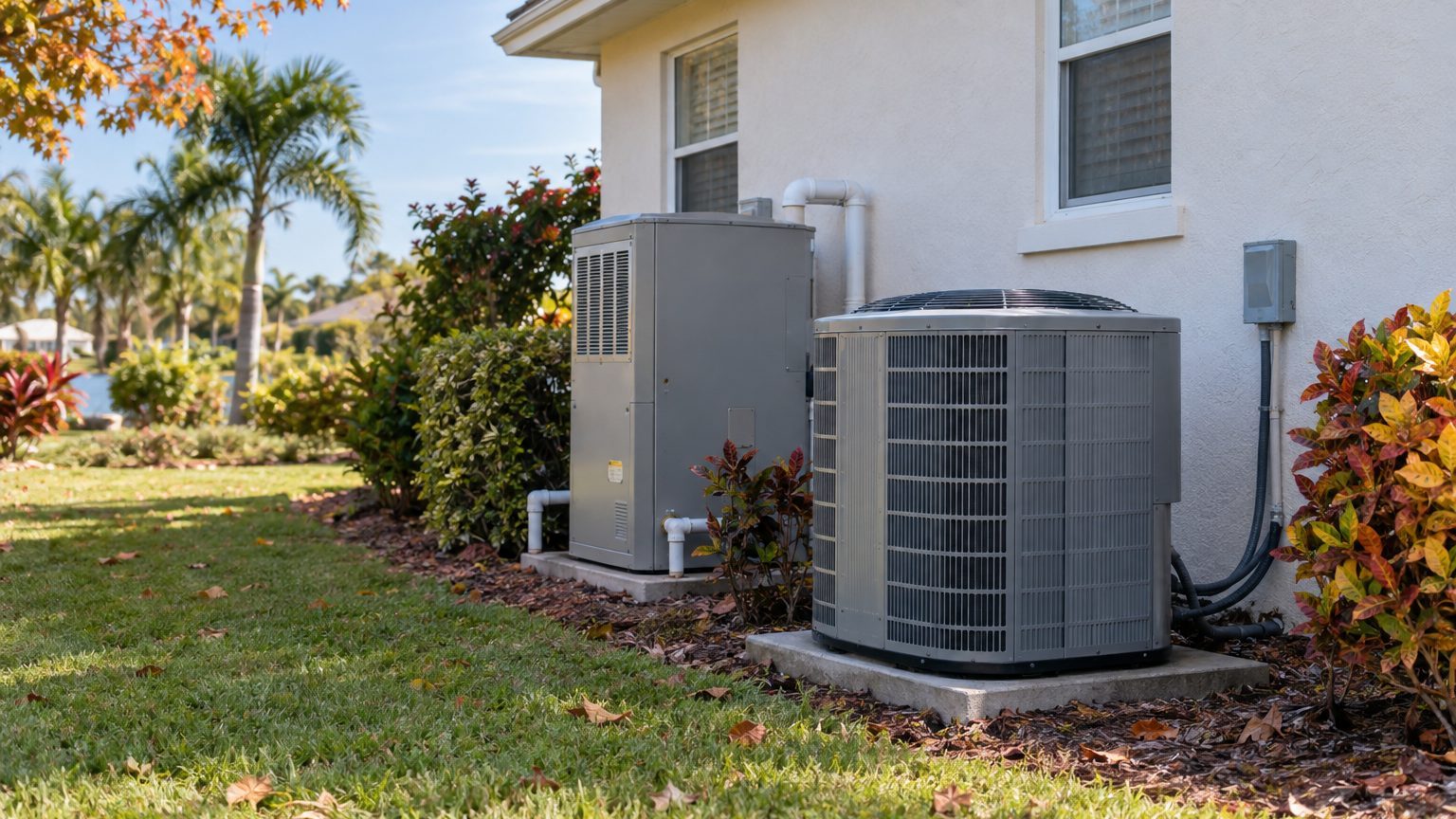

Minnesota homeowners who tear out a working gas furnace to save on heating can end up with a higher bill instead of a lower one. At the state’s average prices, gas heat costs less to run than a heat pump, and the heat pump has to justify itself on other grounds. Before you price anything, find out whether a gas line already reaches your house, then ask for a quote on both systems on the same sheet.
The short answer for Minnesota
The verdict
The comparison below was computed from the U.S. Energy Information Administration’s average residential prices for electricity and natural gas, combined with ENERGY STAR efficiency levels. Delivered into the house, a natural gas furnace at 97% AFUE runs at $10.92 per million Btu. A heat pump at 8.1 HSPF2 comes to $20.06. Electric baseboard, which turns each kilowatt-hour into exactly one kilowatt-hour of heat, lands at $47.63. If gas service is available, the furnace is the cheaper system to run in Minnesota, by about $9 for every million Btu of heat.
Baseboard is the outlier. It costs more than double the heat pump per unit of heat, so the real contest for most homes is gas against a heat pump.
What these figures leave out
These are running costs for the same amount of heat, not a yearly bill. A yearly bill depends on square footage, insulation, air leakage and how well the ducts are sealed. Nor do the figures include the price of equipment or installation, which is a separate calculation you should ask each contractor to put in writing.
Two more limits matter. The heat pump number uses ENERGY STAR’s minimum seasonal efficiency, so a better unit lands below $20.06 while a hard cold snap pushes real performance the other way. And the prices are statewide averages. Your utility and your rate plan may differ, and the climate figures later in this article come from the Minneapolis-St. Paul airport, so northern Minnesota sits colder. For the wider picture of how houses here are warmed, see Heating a Home in Minnesota.
What each option costs to run in Minnesota
The comparison
| System | Efficiency used | Cost per million Btu delivered |
|---|---|---|
| Natural gas furnace | 97% AFUE | $10.92 |
| Heat pump | 8.1 HSPF2 (seasonal COP about 2.4) | $20.06 |
| Electric resistance (baseboard) | 100% efficient | $47.63 |
The prices behind the table
For electricity, the EIA’s Electric Power Monthly (Table 5.6.B) puts the average residential price at 16.25 cents per kWh, a year-to-date figure through July. That is a statewide average, and your utility’s rate plan can sit above or below it. For gas, the computation uses the EIA’s average residential natural gas price and the EIA’s conversion of about 1,037 Btu per cubic foot. The gas price itself is not quoted here because it moves with the season and the utility. Read the per-therm or per-ccf rate off your own bill and you can check the table against your house.
The electricity side rests on the EIA’s conversion of 3,412 Btu per kWh. The 8.1 HSPF2 figure is the ENERGY STAR floor for a ducted heat pump. A non-ducted (ductless) system must reach 8.5 for the same label, because it has no duct losses to begin with and so has to be better to earn the same badge. The reasoning is laid out in What HSPF2 Measures, and Why Ductless Asks for More. When you compare two units, compare the same letters: HSPF2 rates heating, and SEER2 rates cooling.
Why efficiency matters as much as fuel price
One kWh carries 3,412 Btu. Baseboard hands you all of it. A heat pump at a seasonal COP of about 2.4 moves roughly 2.4 times that much heat for the same kWh, which is why it beats baseboard by a wide margin at the same 16.25 cents. A gas furnace at 97% AFUE puts nearly all the fuel’s energy into the house, and the fuel is cheap per Btu, which is why it still comes out ahead of the heat pump. A price per kWh or per therm tells you nothing until it is divided by efficiency. Compare systems on cost per million Btu delivered, never on the price of the fuel alone.
How cold it gets, and what that does to a heat pump
How hard winter works
NOAA’s 1991-2020 climate normals for the Minneapolis-St. Paul airport show about 7,399 heating degree days a year (base 65 F) and about 830 cooling degree days. Heating degree days add up, for every day of the year, how far the mean temperature sat below 65 F. Twice the degree days means roughly twice the fuel for the same house, so a count this high means a large heating load for a long stretch of the year. NOAA’s normals also put the mean daily minimum of the coldest month at 8.8 F. That is an average, and individual nights run colder.
These are readings from one station. Farther north in the state the winter is colder and the heating load larger, so the numbers here are a floor for the north, not a ceiling. When the season begins in your part of the state is covered in When Does the Heating Season Start in Minnesota.
What deep cold does to the $20.06
The heat pump figure is a seasonal average. In the coldest hours a heat pump’s efficiency drops, and the house leans on a backup, either electric resistance strips inside the air handler or a gas furnace. Strips deliver heat at the baseboard rate of $47.63 per million Btu, so every hour on strips costs far more than an hour of normal heat pump operation. How many hours your house spends on backup decides whether the seasonal average holds. A leaky house needs more heat on the worst nights and spends more time there. How the equipment behaves as the mercury falls is covered in How Cold Is Too Cold for a Heat Pump.
A tighter, better-insulated envelope lowers the load on every system and trims the hours the backup runs. The insulation question is taken up in How Much Insulation Does a Home in Minnesota Need. Before you buy a heat pump here, find out what carries the house on the coldest nights, and whether that backup is resistance strips or a furnace.
What homes in Minnesota already heat with
What the survey shows
The EIA’s 2020 Residential Energy Consumption Survey, in its state tables, puts furnaces as the main heating equipment in 73% of Minnesota homes and steam or hot-water boilers in 15%. By fuel, natural gas heats 68% of homes, electricity 14% and propane 15%. For central heat pumps and for fuel oil or kerosene, the survey does not publish a figure. The estimates were suppressed as unreliable, which is not the same as none existing. These are state shares from a national survey, not a count for your county.
The shares record what was installed, and so which fuel was cheap and available when the houses were built. They are not a recommendation.
What it means for your conversion
Most homes here already have a gas line and a duct system. For them the choice is simple: gas stays cheaper to run, and a heat pump can reuse the ducts if they are sound. The propane homes are the exception. Propane’s price is not among the figures used here, so get a delivered price from your supplier and rerun the comparison with your own number before you assume either answer.
Homes on electric baseboard have the most to gain, because the table above puts a heat pump at $20.06 against $47.63 for resistance. Homes on a boiler need more thought, because radiators mean no ducts. A heat pump there means either new ductwork or ductless heads, and that trade-off is explored in Ductless or Central. A house with a boiler or baseboard has no ducts, and adding them is a far bigger job than swapping a furnace.
When the other choice wins
When the heat pump is the right call
Gas being cheaper to run does not settle every house. With no gas service at the street, you are comparing a heat pump against propane or resistance, and against resistance the heat pump wins clearly. Cooling changes the math as well. NOAA’s normals show about 830 cooling degree days at the Minneapolis-St. Paul airport, a modest but real summer load. A heat pump also cools, and ENERGY STAR’s floor for a ducted unit is 15.2 SEER2. If your central air conditioner is near the end of its life too, one machine can replace two. Where winters are short and cooling dominates, the comparison comes out differently, as in Heat Pump or Gas Furnace in Florida: Which Costs Less to Run?
When to keep the furnace
A dual-fuel setup pairs a heat pump with a gas furnace and hands the coldest hours to the furnace. That backup runs at $10.92 per million Btu, against $47.63 for resistance strips, so in a state this cold it is the cheaper way to cover the worst nights, at the cost of maintaining two systems.
The last case is a furnace with years left in it. Moving from gas to a heat pump raises the fuel cost per unit of heat, so there is no running saving to offset the equipment cost. A working gas furnace with years left is rarely worth replacing with a heat pump on running cost alone. If yours is failing, Repairing a Furnace or Replacing It sets out how to weigh the repair against a new unit.
Common questions
Will a heat pump keep my Minnesota house warm on the coldest nights?
Usually only with help. NOAA’s normals put the average coldest-month minimum at 8.8 F in Minneapolis, and real nights go below that average. Efficiency falls in the deepest cold, so a backup carries part of the load. Ask the installer for the unit’s rated output at low outdoor temperatures and for what the backup is.
Does a heat pump above the ENERGY STAR minimum change the answer?
It lowers the running cost below $20.06, because that figure assumes the 8.1 HSPF2 floor. The published figures do not show whether any unit closes the gap to $10.92, so run the arithmetic with your own rates and the rated HSPF2 of the model you are considering.
Does a special electric rate for heat pumps change this?
It can. The $20.06 scales with the electricity price, so a lower rate lowers it in proportion. Ask your utility whether a heating rate exists and how it treats peak hours. The 16.25 cents per kWh from the EIA is a statewide average, not what every household pays.
Is electric baseboard ever cheaper to run than a gas furnace?
Not at these prices, with $47.63 for baseboard against $10.92 for the furnace. Baseboard makes sense only where nothing else reaches, such as a small room that is rarely used, where cheap installation matters more than the running cost.