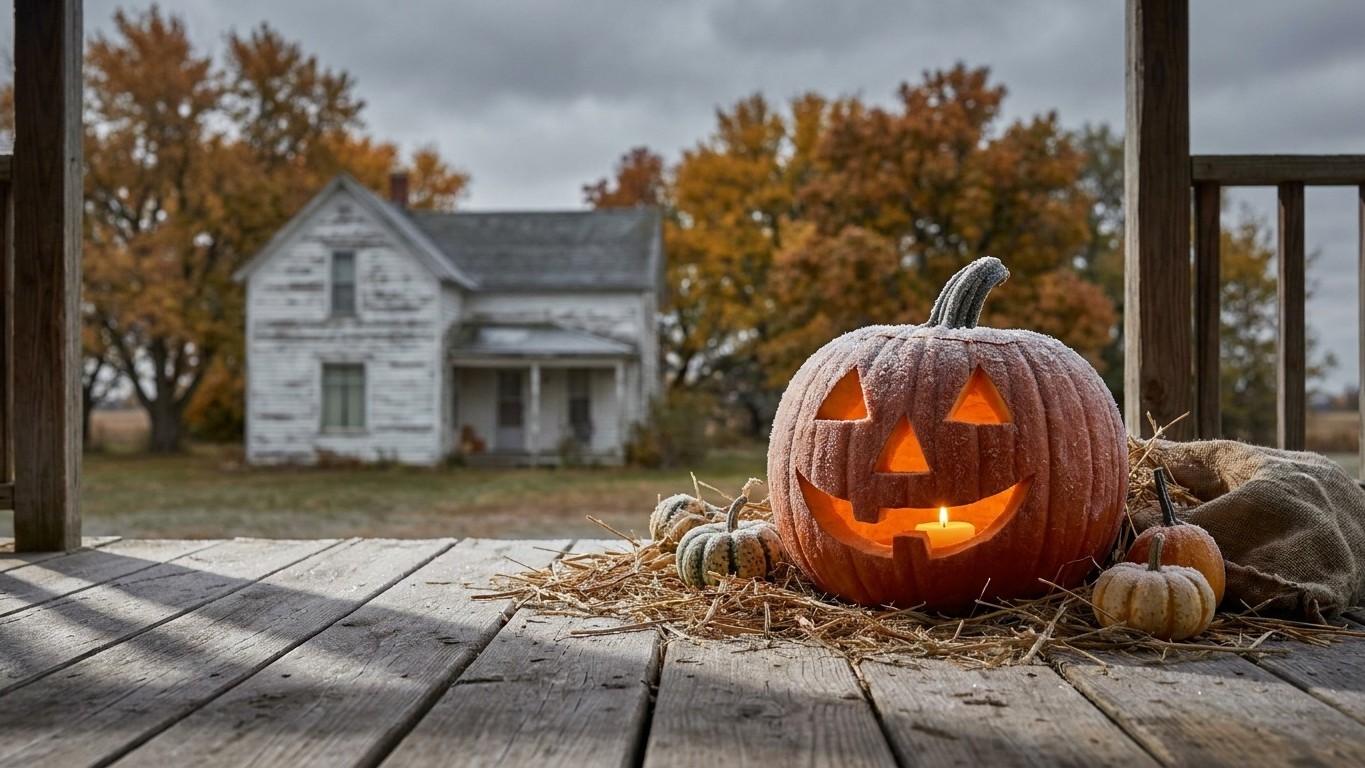

Frost is the one thing that eats Ohio pumpkins on a fixed schedule, and it works by calendar, not appetite. A pumpkin flower that opens after the middle of August has little chance of becoming a ripe fruit before the first hard cold arrives. Insects take their share too, but squash bugs and cucumber beetles each have their own state pages on this site. This page covers the clock. For the full picture, start with Growing Pumpkins in Ohio.
The short answer
Ohio State University Extension’s Ohio Gardening Calendar puts the first fall frost at October 5 to October 15 in zone 6a. Utah State University Extension says a pumpkin takes 45 to 55 days to mature after flowering. Put those two facts together and you get a deadline for flowers.
Counting back from the frost
Take the early end of the frost window, October 5, and subtract 55 days. You land on August 11. Take the late end, October 15, and subtract 45 days. You land on August 31. So the latest a flower can open and still give a ripe pumpkin in Ohio is roughly August 11 to August 31. It is a window, not a single day, because nobody knows in August which October date this year’s frost will pick.
A flower that opens on August 25 shows how the window works. At the fast end of the range (45 days), that fruit is ripe around October 9. At the slow end (55 days), it is ripe around October 19. Both dates fall after October 5, the early edge of the frost window. A frost in the first half of that window could catch the fruit unfinished. Gardeners who dislike gambling should plan around the early end of the window and treat anything later as a bonus.
Why the seeding date is the wrong starting line
The 45 to 55 days run from flowering, not from seeding and not from transplanting. A vine spends weeks making leaves and runners before it opens a single bloom, and none of that time counts toward ripeness. A sowing date tells you when the vine might begin to flower. It does not tell you when the fruit will be ready. Mixing the two is the most common way a good planting turns into a pile of green pumpkins in October.
The same source adds a rule for the finish: harvest with the stem attached, before frost. A pumpkin without its stem is harder to store. If you want to know what happens when the calendar runs out, see Will Pumpkins Ripen Before Frost in Ohio?. Counting back from your own flower dates is the quickest way to tell which fruits are still on track. A flower on August 5 is a pumpkin. A flower on September 10 is a vine ornament.
When to sow here
Sowing is the first step in the schedule, and it has its own trap. The last spring frost in zone 6a falls between May 5 and May 15, but the seed cares about soil temperature, not the air. Utah State University Extension says pumpkins are sown when the soil reaches 65 F. Soil lags the air by weeks, so 65 F soil is not the last frost date. Here is how to work it out, step by step:
- Start with the last spring frost. In zone 6a, Ohio State University Extension lists May 5 to May 15. That date describes cold air only. It is the earliest the question can even come up.
- Add the soil lag. The soil needs weeks after the last frost to reach 65 F. The source gives no exact count of weeks, so here is an illustration only. If the lag is three weeks, May 5 to May 15 becomes roughly May 26 to June 5 for sowing in open ground.
- Subtract the row cover bonus. Row covers buy about two weeks. In the same illustration, that pulls the sowing window back to roughly May 12 to May 22. The covers warm the soil underneath them, so the seed gets its 65 F sooner than a bare bed would.
- Check the result against the flower deadline. Sowing is only the start. The vine still has to grow, open flowers, and set fruit before the August 11 to August 31 cutoff. The facts here do not say how many weeks pass between sowing and first flower, and that varies by variety, so read the seed packet. If the packet’s schedule runs past the cutoff, you have sown too late.
- Trust a thermometer over the calendar. A soil thermometer pushed in a few inches is cheap and settles the question. Wait until it reads 65 F, then sow. Day-by-day dates for the state are on When to Sow Pumpkins in Ohio.
The arithmetic is simple, but the order matters. Frost date, then soil lag, then covers, then the flower deadline. Skip any step and the answer is wrong. Start from the last frost date alone and you will sow into cold soil. Start from the first fall frost alone and you will forget that the vine needs time before it flowers.
What goes wrong here
Ohio’s season is long enough for pumpkins but tight enough that small slips show up in October. These are the failures a short season causes, with the remedy for each.
- A late flower that never colors. A bloom that opens after the August 11 to August 31 window cannot finish 45 to 55 days of growth before frost. It stays green. The remedy is to stop counting on it. Pinch off flowers that open after the window, so the vine puts its energy into fruit that can still make it.
- A fruit caught by frost. The source’s rule is to harvest before frost, with the stem attached. When the forecast nears the first fall frost window of October 5 to October 15, bring in the fruit that is ready. Keep each pumpkin where it will not freeze. The source gives no storage temperature or keeping time for this step, only that it must not freeze.
- A vine that dies back before the skin hardens. A vine that collapses early, whether from cold, disease, or insect damage, cuts off a fruit that is not finished. Insect trouble is covered on the squash bug and cucumber beetle pages on this site. The better fix is timing: sow at 65 F soil, use row covers to gain two weeks, and get the flowers open early enough that the vine has time to finish its work.
- A whole pumpkin stored in the wrong place. University of Illinois Extension says a whole pumpkin keeps three to six months in a cool, dark location between 45 and 50 F. It also says to store pumpkins away from ripening fruit or vegetables such as apples, potatoes, or tomatoes. Ripening fruit gives off a gas that ages the pumpkin, which makes the porch next to the apple crate the worst spot. That 45 to 50 F range is for a whole pumpkin only.
Common questions
Do squash bugs and cucumber beetles matter for this schedule?
They matter, but they are not the subject of this page. Both insects have their own state pages on this site, so this page does not re-describe them. The point here is that a stressed or damaged vine has less room for error against the frost deadline.
Do I count the 45 to 55 days from seeding?
No. The count starts when the flower opens. Counting from seeding makes the pumpkin look ripe weeks before it is. Use the flower date, add 45 to 55 days, and compare the result with the October 5 to October 15 frost window.
How long does a whole pumpkin keep after harvest?
According to University of Illinois Extension, three to six months in a cool, dark location between 45 and 50 F, away from apples, potatoes, and tomatoes. That range is for a whole pumpkin. Utah State University Extension adds only that pumpkins should be kept where they will not freeze. Neither source supplies a figure for carved pumpkins, so none is given here.
Is 65 F soil the same as the last frost date?
No. The last spring frost in zone 6a falls between May 5 and May 15, and the soil reaches 65 F weeks after that. Row covers can bring sowing forward by about two weeks. The seed responds to soil temperature, so the thermometer decides, not the frost date.