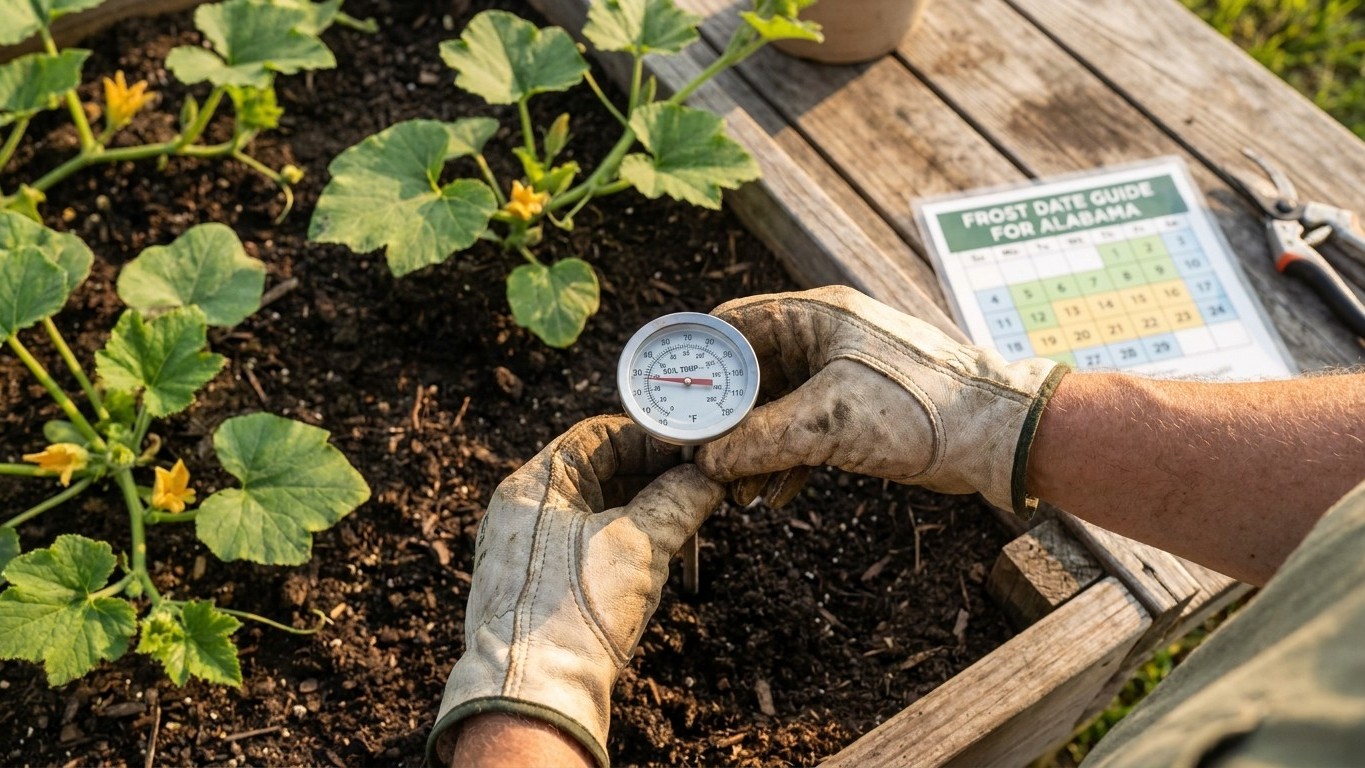

In Ohio’s zone 6a, pumpkin flowers need to open by late August at the latest to leave enough time to ripen before the first fall frost. That means sowing seed once the soil hits 65°F, which typically lands in late May through early June, not on the last frost date itself.
The short answer
Ohio State University Extension’s Ohio Gardening Calendar puts the state’s first fall frost between October 5 and October 15 for zone 6a. That single window is the anchor for every other date on this page, because everything about pumpkin timing works backward from it.
Utah State University Extension’s guide to pumpkins in the garden says fruit needs 45 to 55 days to mature after flowering, not after seeding and not after transplanting. That distinction matters more than almost anything else on this page. A gardener who counts 50 days from the day seed goes into the ground, rather than from the day the first female flower opens, will think the pumpkin has weeks it doesn’t actually have.
Run the math against Ohio’s frost window and a picture emerges. Take the earliest possible frost, October 5, and subtract the longest maturation period, 55 days: that lands on August 11. Take the latest possible frost, October 15, and subtract the shortest maturation period, 45 days: that lands on August 31. So the safe window for a flower’s last possible opening in Ohio runs roughly from August 11 to August 31, depending on which part of the state a garden sits in and how the season actually plays out.
A flower that opens in early September in Ohio is a gamble. It might still ripen in a mild fall that pushes frost toward the later end of the October 5 to October 15 window. It might not. There’s no way to know in advance which kind of fall is coming, so treating late August as the real deadline, rather than a suggestion, keeps a harvest from turning into a pile of green pumpkins on the vine.
None of this is a single date. It’s a window, because both ends of the calculation, the frost date and the maturation period, are themselves ranges. Anyone planning a pumpkin patch in Ohio should think in terms of a two-to-three-week band of flowering time, not a date circled on a calendar.
When to sow here
- Start from the last spring frost. Ohio State University Extension lists Ohio’s last spring frost for zone 6a as May 5 to May 15. That date matters, but it is not the sowing date.
- Wait for the soil, not the air. Soil warms far slower than air does. Air can sit comfortably above 60°F for days while six inches of ground underneath is still cold from winter. Utah State University Extension is specific that pumpkin seed goes in once soil reaches 65°F, a threshold that in Ohio typically arrives some weeks after that May 5 to May 15 frost date has already passed, not on the day the frost date ends.
- Check the ground directly. A simple soil thermometer pushed a few inches into the bed, checked in the morning before the sun heats the surface, is the only reliable way to know the 65°F mark has actually been hit. Guessing from the calendar alone risks seeding into soil that’s still too cold for germination.
- Use row covers to buy time if needed. Growers who want to push sowing earlier can use row covers to warm the bed faster, a step that typically buys about two weeks compared with bare, uncovered soil.
- Land on a practical sowing window. Between the lag behind the last frost and the option to shave time off with row covers, most Ohio gardeners in zone 6a end up direct-sowing pumpkin seed sometime from late May into early June, confirmed by soil temperature rather than by date alone.
What goes wrong here
- A flower opens too late to color up. Any female flower opening after roughly the third week of August is racing a frost that could arrive as early as October 5. The fix is to sow as soon as the soil legitimately hits 65°F rather than waiting for a “safer-feeling” later date, since every week of delay at planting pushes the whole flowering sequence later too.
- A nearly ripe fruit gets caught by frost. A pumpkin that’s mostly orange but still soft-skinned when frost hits can be lost overnight. Utah State University Extension’s advice is to harvest with the stem attached before frost arrives, which means watching Ohio’s October 5 to October 15 window closely once fruit starts coloring and cutting early rather than gambling on a few extra days of vine ripening.
- The vine collapses before the rind hardens. Vines weakened late in the season, whether from squash bugs, cucumber beetles, powdery mildew, or simple cold stress, can die back while the fruit’s skin is still soft. A soft rind won’t cure properly and won’t store. Gardeners dealing with insect pressure on the vines should check this site’s dedicated squash bugs and cucumber beetles pages for identification and control specific to Ohio, rather than treating vine decline as a mystery.
- Fruit gets stored somewhere it freezes. Utah State University Extension gives no specific storage temperature or humidity target for harvested pumpkins, only the instruction to keep them where they will not freeze. A garage or shed that dips below freezing on an Ohio fall night undoes a season’s worth of careful timing in a single cold snap.
Common questions
Can I start pumpkin seed indoors instead of direct-sowing in Ohio?
The same soil-temperature logic applies either way. A transplant set into ground that hasn’t reached 65°F will simply stall rather than grow, so starting seed early indoors only helps if the outdoor bed is actually warm enough to receive it.
What if my pumpkin flower doesn’t open until early September?
It’s outside the safe window calculated from Ohio’s October 5 to October 15 frost date and the 45-to-55-day maturation period. The fruit may still color in an unusually mild, late fall, but there’s no way to guarantee that in advance.
How do I know a pumpkin is ready to pick?
Utah State University Extension’s guidance is to harvest with the stem attached and to do it before frost hits, rather than waiting for a specific date. Full, deep color and a hardened rind that resists a fingernail scratch are the signs to watch for.
How should I store pumpkins after harvest?
The only published guidance from Utah State University Extension is to keep them somewhere they won’t freeze. No specific temperature, humidity level, or keeping time is given, so beyond avoiding freezing conditions, this source doesn’t specify further.