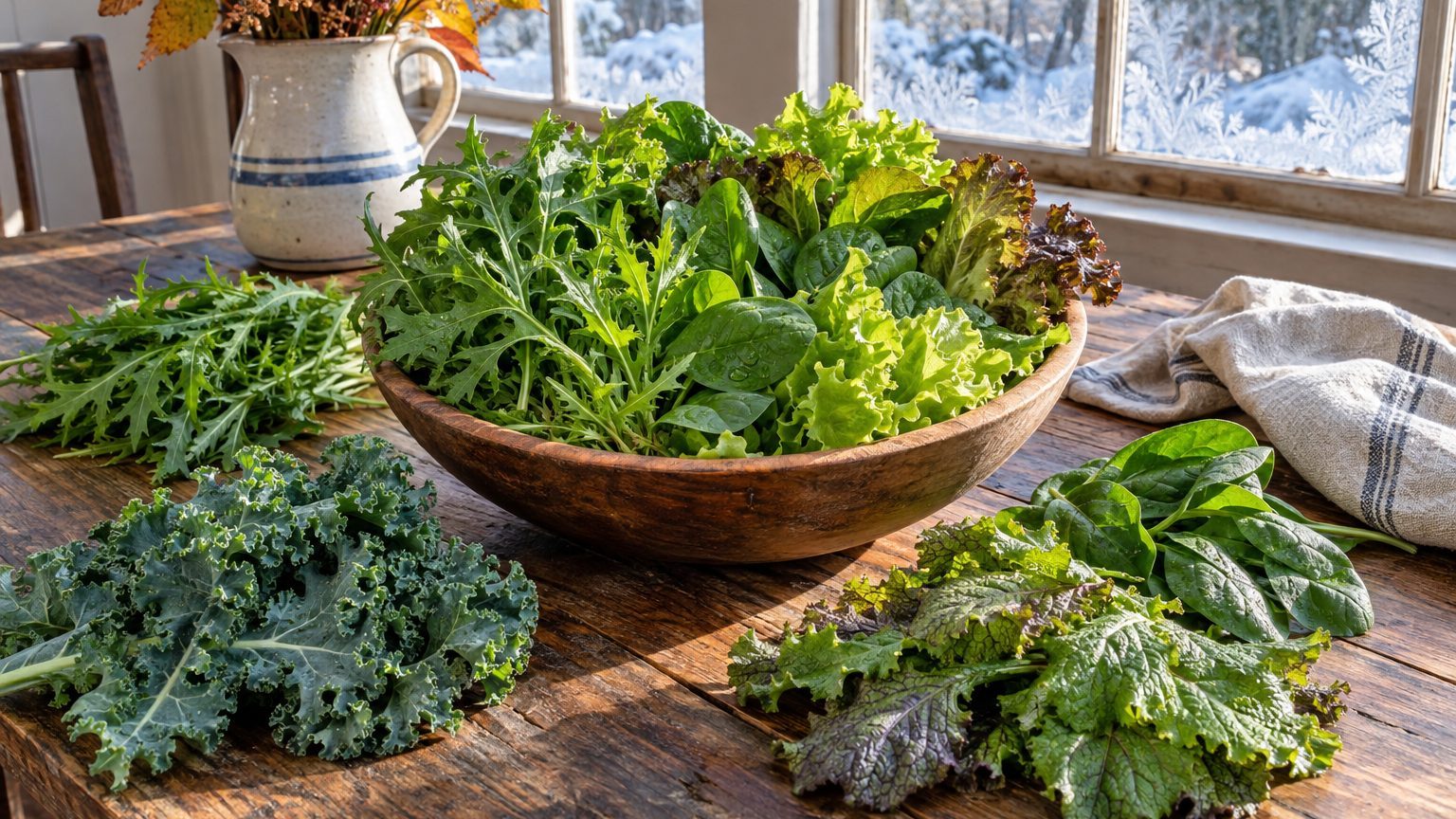

Georgia gardeners can pick salad greens most of the winter, and the dependable ones are the sturdy types: spinach, kale, arugula, mustards, and Asian greens such as mizuna and tatsoi. Lettuce works too, with more care. Cold rarely ends the season here. Heat at sowing time and early warmth in spring do. This page sorts the crops by type and says where its guidance stops.
The short answer for Georgia
Pick by type, in this order
Start with cold-tolerant leafy greens, add lettuces and tender mixes second, and treat slow chicories as a timing project. The reasoning starts with the cold. At the Atlanta reference station, the coldest month has a mean daily minimum of 35.6°F. That is the average overnight low in January-type weather, and it sits just above freezing. Plants that shrug off a frost will go through a Georgia winter without trouble.
The frost dates show how much room you have. At that station (NOAA NCEI 1991-2020 Climate Normals, station USW00013874), the first fall frost falls between November 13 and December 1, and the last spring frost between March 11 and March 29. Both ranges describe the 30 to 70 percent probability band of a 32°F freeze. A date inside the range means a freeze is somewhere between three-in-ten and seven-in-ten likely by then. It does not mean frost arrives on that day. Fall stays warm long after Labor Day, so the sowing question is about heat, not cold.
| Type | Examples | Fit for Georgia | Main risk |
|---|---|---|---|
| Hardy greens | Kale, collards, mustards, spinach | Best overall; holds through the mild winter | Bolting once spring warms |
| Asian greens | Mizuna, tatsoi | Fast and cut-and-come-again | Bolt quickly in warm spells |
| Peppery and cool-season minis | Arugula, mâche | Good in the cooler months | Arugula turns sharp and flowers in warmth |
| Lettuce | Leaf, romaine, butterhead | Good with careful timing and freeze-night cover | Warm soil at sowing; rot in wet weather |
| Chicories | Radicchio, endive | Possible, but slow | Need a cool stretch to finish well |
Why greens lead the list
Hardy greens are forgiving in both directions. They tolerate the occasional hard night and keep growing on mild days, which Georgia supplies in quantity. A single 4-by-8-foot bed of mixed kale, mustard, and spinach can feed a household salad habit for months if you harvest the outer leaves and leave the growing point alone.
Lettuce is the one most people want, and it is workable. Leaf and romaine types do better than tight heads here, because they dry faster after rain. For the wider picture of how these crops fit together, see Winter Salads for Georgia Gardens.
What will not work here
Sowing lettuce and spinach in early fall heat is the classic failure. With the first fall frost not due until November 13 to December 1, September and much of October still run warm. Lettuce seed in warm soil germinates poorly or not at all, and seedlings that do come up are stressed and bitter. A packet that says “fall planting” is not a promise that it will sprout in a warm bed.
The 35.6°F figure also misleads people. It is an average of lows, not a floor. Some nights in a mild winter bottom out in the 20s, and a frost range of March 11 to March 29 for the last freeze tells you freezes keep coming deep into spring. Tender baby lettuce left uncovered on a hard night turns glassy and collapses. Kale laughs at the same night. If a crop has to survive without cover, pick from the hardy rows of the table.
Humidity changes the spacing rules. A dense canopy of lettuce or arugula holds moisture on the leaves, and a damp, still, mild Georgia stretch is when mildew and leaf rot take hold. Seed packets often print tight spacing for the sake of yield. Give head lettuce and romaine extra room, thin mixes early, and water the soil at the base in the morning so leaves dry by afternoon.
The heavy-handed watering advice that works in dry climates backfires here too. Winter rain does a good share of the work, and a rigid weekly soaking can leave beds waterlogged and shallow-rooted. Check the soil a finger-joint down before you water.
Spring is the other wall. The last freeze lands between March 11 and March 29, and warm weather follows quickly. Slow crops sown late, such as radicchio and endive, run out of cool weather before they finish, and quick ones such as arugula and mizuna flower early. Plan on a harvest that thins out by spring. Do not plan on a salad garden that runs smoothly into May.
One more trap: treating Atlanta as Georgia. The frost dates on this page come from an urban airport station that runs warmer than the countryside around it. If you garden outside the metro core, expect different dates.
What changes across Georgia
Georgia does not have one winter. The USDA Plant Hardiness Zone Map (2023 edition, based on 1991-2020 normals) places the state anywhere from zone 6a to 9b. Zones are built on one variable only, the average annual extreme minimum temperature, so they say how cold the worst nights get and nothing about heat, rain, or day length. Four full zones across one state means there is no single answer to “what should I plant, and when?”
The Atlanta numbers are a reference point, not a rule. The station sits in a heat island, and the notes attached to the data are plain about it. North Georgia and the mountains freeze several weeks earlier in fall than Atlanta does, while the coastal plain runs milder. A gardener in the northern counties or at elevation should shift in three directions: sow earlier in late summer so plants are established before the cold, favor the hardiest crops (spinach, kale, mâche, collards), and keep row cover on hand for lettuce and tender mixes.
Down toward the coast the shift runs the other way. Fall heat lingers longer, so lettuce and spinach sowings often belong later than the calendar suggests, and the harvest window is generous through the winter months. The price is an earlier end in spring, because warmth arrives sooner and the crops bolt.
Which zone are you in? This page can’t tell you, and it shouldn’t guess. Look up your location on the USDA Plant Hardiness Zone Map and use it as a starting point. For specific sowing dates, When to Sow Winter Salads in Georgia goes into the timing in more detail.
Where to check this for your own county
Your state’s land-grant extension service is the best next stop. In Georgia that is University of Georgia Extension, which has an office in the counties it serves and staff who know local conditions. This page has no county-level salad calendar of its own, and none of its figures come from a county office.
When you get there, look for two things. First, the local vegetable planting calendar for your county or region, which will give fall and spring sowing windows that account for your own frost pattern. Second, any list of varieties trialled or recommended in your area. A cultivar that performed well in a north Georgia trial may bolt early on the coastal plain, and a county office will usually know which has done well and which hasn’t. If the website doesn’t surface what you need, a call or email to the county office is a reasonable next step. That is part of what extension offices are there for.
A county recommendation beats a state one, every time. This page is the state one. It is built from an Atlanta reference station and a statewide zone range, which makes it a good map of the territory and a poor guide to your street. Treat its numbers as a frame and let the county calendar set the dates.
Checking this against your own garden
Your own observations outrank every date here. Three signs are worth watching, and none needs equipment.
- Soil warmth by feel. In late summer and early fall, push your hand into the bed. If the soil still feels warm at midday, and especially if it stays warm into the evening, hold off on lettuce and spinach seed. A bed that feels cool and damp is ready. Beds near a south-facing wall or paving run warmer than open ground, so sow there later.
- The first true leaves. Seedlings first show a pair of seed leaves, then the real, shaped leaves. Seedlings with true leaves are tougher and can handle the first light frost. If they haven’t reached that stage by the time your first frost arrives, protect them or accept some losses.
- Where frost shows up first. On the first frosty morning, note which parts of the yard are white and which are green. Low corners hold cold air. Spots near the house or a wall stay milder. Put tender lettuce in the mild spots, and kale and spinach in the cold ones.
In spring, the sign to watch is a central stalk starting to rise in a plant that has been low and leafy. That is bolting, and it means the cool season is over in your yard, whatever the calendar says. Write down the date. Next year’s note will be worth more than anything printed here.
Common questions
Which winter salad is easiest in Georgia?
Kale and collards, with mustard greens close behind. They tolerate frost, grow through mild winter days, and do not need the fussy timing lettuce does.
Can lettuce survive a Georgia winter?
Often, yes, but with conditions. Leaf and romaine types do better than tight heads, and a cover on hard-freeze nights protects them. Success depends mostly on sowing when soil has cooled, since lettuce seed struggles in warm ground.
Do the frost dates here apply to my yard?
Probably not exactly. They come from the Atlanta reference station, an urban airport. North Georgia and the mountains freeze several weeks earlier in fall, and the coastal plain runs milder. Use them as a starting point and check your county’s local calendar.
Should I wait for the first frost before sowing?
No. The first fall frost at the reference station falls between November 13 and December 1, which is late for a winter salad start. Sow when the soil cools, so plants are established before the cold arrives.