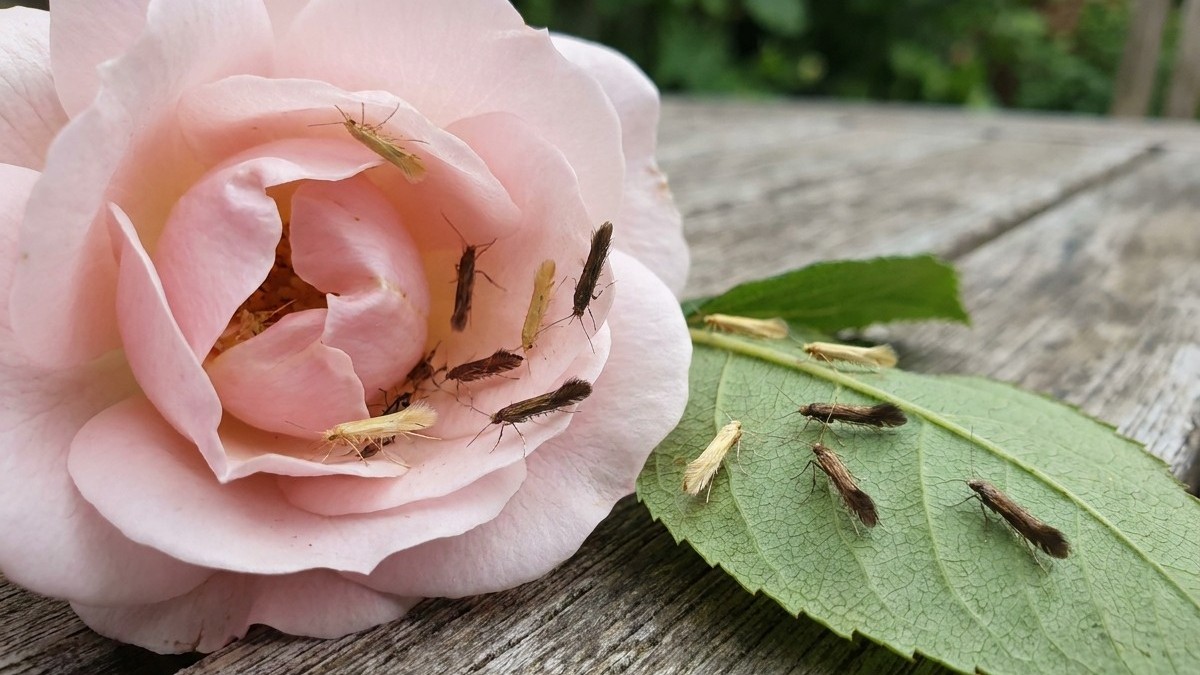

Plant potted roses in Michigan after the last spring frost, which falls around April 30 in the Detroit area and in early to mid May across most of the Lower Peninsula. Dormant bare-root roses can go in earlier, as soon as the soil is workable. Choose cold-hardy, disease-resistant types, give them sun, and expect the first serious insect pressure in late June. The sections below cover dates, soil, varieties, neighbors, care and the pests MSU Extension names for the state.
When to plant Roses in Michigan

Detroit is the reference city, and the number to anchor on is April 30, the average last spring frost there, according to MSU Extension’s frost-free dates. Most of the Lower Peninsula lands in early to mid May. Northern Michigan and higher ground run later than both. Treat any figure you see for Traverse City or the Upper Peninsula as a starting guess and confirm it with your county office.
Bare-root and container roses
Most Michigan rose gardens start with plants from a nursery, not seed. Bare-root roses arrive dormant in early spring, and they establish best when planted while still asleep, usually in April once the ground has thawed and is no longer a slushy mess. Container roses, already leafed out, are the ones that need the frost date. Wait until the frost risk for your area has passed, then plant. If you jump the gun and a late frost threatens, a bucket or an old bedsheet over the new growth overnight is enough protection.
Fall planting is possible but riskier here. The first fall frost in zone 6a falls between October 6 and October 21 (MSU Extension’s Michigan Garden Calendar), and a rose set out in late September has very little time to root before the ground stiffens. Spring gives the plant a full season of growth before its first winter.
Starting from seed: the count-back
Growing roses from seed is slow, and the plants will not match the parent. Hybrid teas and most named garden roses are grafted or propagated from cuttings precisely because seed gives unpredictable results. Still, species roses and rugosas come reasonably true. The schedule runs backward from your transplant date.
Say you want seedlings in the ground around May 10, in the early-to-mid May window for most of the Lower Peninsula. Hardening off takes 7 to 10 days, so the seedlings should start spending daylight hours outdoors about May 1. Seedlings need roughly 8 weeks of indoor growth after germination to be sturdy enough, which puts sowing at about March 15. Rose seed generally needs cold stratification first, commonly 8 to 12 weeks in a refrigerator in damp medium. Count back another 8 to 12 weeks from mid-March and the seed goes into the fridge between late December and mid-January.
Soil and site preparation
Roses want at least six hours of direct sun, and morning sun matters most because it dries dew off the leaves early, which cuts down on fungal disease. A spot with an open south or east exposure and decent airflow beats a sheltered corner against the house. Crowded, damp, shady beds are where black spot thrives, and Michigan’s humid summers hand that disease plenty of chances anyway.
Drainage decides more rose problems than fertility does. Dig a hole about a foot deep, fill it with water, let it drain, and fill it again. If water is still standing the next morning, choose another site or build a raised bed 10 to 12 inches high. Clay is common in much of southeastern Michigan and will hold water; sandy soils in parts of the west drain fast and dry out. Both improve with organic matter, though they need different follow-up. Clay needs it to open up the structure, sand needs it to hold moisture. A test on your own bed tells you more than a regional average would.
Roses generally do best in slightly acidic soil, roughly pH 6.0 to 6.5. MSU’s soil testing service will tell you where yours stands and whether phosphorus or potassium is short, and this is worth doing before you add anything. Nitrogen, in particular, is easy to overdo, and too much of it gives you leaves and few blooms.
A reasonable timeline for the weeks before planting:
- Six weeks out: send in a soil sample and mark the bed.
- Four weeks out: spread 2 to 3 inches of compost over the bed and work it into the top 8 to 12 inches. Skip fresh manure, which can burn roots.
- Two weeks out: pull weeds and turf, and set stakes where each plant will go.
- Planting day: soak bare-root plants in a bucket for several hours first, then dig a hole wide enough to spread the roots without bending them.
In cold climates like Michigan’s, grafted roses are commonly planted with the graft union (the knobby swelling where the canes meet the roots) an inch or two below the soil line, which gives it some insulation. Spacing runs about 2 to 3 feet for hybrid teas, 3 to 4 feet for most shrub roses, and more for climbers and ramblers. Resist crowding, because tight spacing traps humidity and invites disease.
Varieties that suit Michigan
Michigan’s growing season is generous in the south and tight in the north, and the winters are the real filter. Four traits matter more than color: cold hardiness, disease resistance (black spot and powdery mildew above all), whether the plant is own-root or grafted, and repeat bloom. Repeat bloomers flower until frost, which in zone 6a arrives between October 6 and October 21.
Own-root roses grow on their own roots, so if a hard winter kills the canes to the ground, whatever regrows is still the variety you bought. A grafted rose that dies back below the union may sprout rootstock growth instead. That makes own-root plants a safer bet where winters sting. The varieties below are widely sold in the Midwest.
| Type | Examples | Good for | Watch for |
|---|---|---|---|
| Knock Out family shrub roses | Knock Out and its relatives | Low-maintenance beds, repeat bloom, strong disease resistance | Large size at maturity, little fragrance |
| Groundcover roses | Drift series | Edging, slopes, containers | Needs good drainage; resistance varies by cultivar |
| Canadian Explorer roses | William Baffin, John Cabot | Cold hardiness, climbing or arching growth | Bloom pattern differs; some bloom once heavily |
| Rugosa roses | Hansa, other rugosas | Tough hedges, fragrance, hips for fall interest | Spreading habit, thorny |
| Hybrid teas and floribundas | Peace, Julia Child, Double Delight | Cut flowers, classic form | More spraying and winter protection |
For a first rose bed in Michigan, a Knock Out type or a rugosa is the lowest-risk choice. If you want hybrid teas, accept that they need winter mounding and a regular watch for black spot. Compare your choices against the How to Grow Roses: The Complete Guide if you want the general variety picture before narrowing to the state.
What to plant alongside
Good rose neighbors do one of four jobs: they shade the roots, cover bare ground, draw pollinators, or fill space without crowding the canes. Catmint is the classic example. It blooms in spring and early summer, covers the soil at the rose’s feet, and attracts bees. Lavender works in sunny, well-drained beds, and low perennials such as hardy geranium or sedum can cool the root zone. Give everything a foot or so of clearance from the crown, so air still moves through the base of the rose.
Garlic, chives and ornamental alliums come up constantly in rose advice, usually with the claim that their smell confuses aphids or protects roses from disease. The evidence is thin. A few small trials have shown mixed results, and no one has demonstrated that allium plantings reliably prevent black spot. Plant them because they look good in June and take little space, and treat any pest benefit as a bonus, not a plan.
Competitors are the plants to keep away. Turf grass is the biggest offender, because it pulls water and nitrogen from the top few inches of soil where young rose roots feed. Keep a bare or mulched circle of at least 2 feet around each plant. Large shrubs and young trees also compete for water and cast shade, and anything that grows tall enough to cut sun below six hours should be somewhere else. Aggressive spreaders like mint or running ground covers will invade the root zone in a season or two.
Watering, feeding and support
Roses want about an inch of water a week during the growing season, delivered slowly and deeply instead of in daily sprinkles. Shallow watering encourages shallow roots, which suffer first in a dry July. Water at the base, in the morning, and keep leaves dry where you can. A soaker hose or a drip line pays for itself in fewer fungal outbreaks. In sandy soil, or during a hot dry stretch, you may need to water more than once a week.
Mulch holds moisture, slows weeds and moderates soil temperature. Spread 2 to 3 inches of shredded bark or compost, and keep it a few inches back from the canes so the crown does not stay damp. Refresh it each spring after the soil warms. Mulch also helps against the mud splash that carries black spot spores up from the soil onto lower leaves.
Feeding follows growth. Give the first feeding when new leaves are fully open in spring, and a second after the first big flush of bloom fades, usually in midsummer. Use a balanced rose fertilizer or compost, following the label. The cutoff matters in Michigan. Stop feeding about six weeks before the first fall frost, so new tender growth does not get caught by the cold. With the earliest frost date in zone 6a at October 6, that works out to around August 25. Late feeding is a common reason for winter dieback.
Pruning is a spring job. Wait until buds begin to swell, then cut out dead, damaged and crossing canes, cutting back to healthy green tissue with a clean slanted cut just above an outward-facing bud. Michigan winters often kill some cane tips, so expect to remove more than you planned. Prune repeat bloomers lightly through the season by deadheading, and prune once-blooming roses right after they flower, since they bloom on last year’s wood.
On grafted roses, shoots from below the graft come from the rootstock; trace them back and tear them off at the root. Climbers need support: tie main canes to a trellis or fence as horizontally as you can, because sideways canes produce more flowering shoots than upright ones.
Common problems

Black spot shows up as round black spots with fringed edges on the upper leaves, followed by yellowing and leaf drop. It starts on lower leaves in warm, humid weather. Remove infected leaves, clean up fallen ones, water at the base, and open up the plant with thinning cuts. Resistant varieties are the best defense, and fungicides only protect new growth when applied before infection.
Powdery mildew looks like white dust on new leaves and buds, and it tends to appear when days are warm and nights cool, particularly in crowded plantings. It is more distorting than deadly. Better airflow and sun reduce it.
No blooms, or very few, usually point to too little sun, too much nitrogen, or pruning at the wrong moment on a once-blooming rose. Check light first. Canes that blackened or shriveled over winter are cane dieback; cut them back to green wood, and the plant often recovers from lower buds. Yellowing leaves with green veins can mean poor drainage or a nutrient problem, so check the soil before reaching for fertilizer.
Rose rosette disease causes red, distorted, overly thorny shoots that bunch into a witch’s broom, and it occurs in parts of the eastern United States. It has no cure. If you see those symptoms, take a photo and contact your county extension office before cutting anything, since proper removal matters.
Pests that actually show up in Michigan
The pest list MSU Extension highlights for Michigan home gardens skews toward squash and cucumber pests. Of those named, four do real damage to roses. Pressure varies across the state, and your county office can identify anything you cannot.
Asiatic garden beetle
The first sign is ragged, notched leaves and buds that look chewed, with no insect in sight during the day. The adults appear toward the end of June and feed at night, hiding in the soil by day. Go out after dark with a flashlight and knock them into a bucket of soapy water. That hand-control beats most sprays for a small bed.
Spotted cucumber beetle
This one does not overwinter in Michigan. It arrives from the South in late June, so a bed that was clean in May can suddenly show chewed petals and ragged blooms. You see small yellow-green beetles with black spots on the flowers. Shake them off into soapy water in the cool of the morning, when they are slow. Because they come in on the wind each summer, treating the soil in spring will not stop them.
Slugs
Slugs are most troublesome in spring and fall. Look for irregular holes in leaves and silvery slime trails, usually on plants in shade or near thick mulch. Iron phosphate bait scattered around the base is the dependable control, and pulling mulch back from the crown in wet weather removes their daytime hiding place.
Cutworms
Cutworms chew young stems at the soil line, so the symptom is a new transplant lying on its side, cut clean through. They work at night and hide curled just under the surface. A collar around each transplant, made from a cardboard tube pushed an inch into the soil, protects new plants during the vulnerable first weeks.
The remaining pests on MSU’s list are squash vine borer, squash bug, striped cucumber beetle, seedcorn maggot, flea beetles and emerald ash borer. Most of them target squash, seedlings and vegetable crops, and emerald ash borer attacks ash trees. Flea beetles can pepper leaves with tiny holes but rarely threaten a mature rose. The season for the pests above runs from late April through September.
Harvest and end of season
Cut roses in the morning, when stems are full of water. For most varieties, the right moment is when the bud shows color and the outer petals are just starting to loosen. Use sharp bypass pruners and cut above a leaf with five leaflets, at a slant. That cut also encourages the next flush of bloom. Strip leaves below the waterline and put the stems in clean water right away. Fresh water every couple of days extends vase life. Rugosa and some shrub roses also make hips in fall; leave the last flush of blooms uncut and the hips will color up for fall and early winter interest.
The first fall frost in zone 6a falls between October 6 and October 21. Before it arrives, cut any remaining good buds for the house, and stop deadheading in the final weeks so plants begin slowing down. Clean up fallen leaves, especially any with black spot, because spores overwinter on them. Skip heavy pruning in fall; it triggers new growth that will not survive.
Winter protection matters most for grafted hybrid teas and floribundas. After a few cold nights, when the ground begins to freeze, mound 10 to 12 inches of soil or compost over the base of each plant. Bring the soil from another part of the garden, not from around the rose itself, which would expose the roots. Shrub roses and rugosas usually need less. Keep mulch loose, and pull it back gradually in spring as growth starts.
Local help
County-level frost dates, soil testing and pest identification are the things this page cannot give you. MSU Extension has offices across the state that can test your soil, identify a mystery insect from a sample, and tell you what dates fit your county. For other state-level rose guidance, see Michigan guides, or compare with neighboring climates in Growing Roses in Indiana: Planting Dates, Varieties and Local Pests, Growing Roses in Massachusetts: Planting Dates, Varieties and Local Pests and Growing Roses in Utah: Planting Dates, Varieties and Local Pests.
Common questions
When is it safe to plant roses in Michigan?
For container roses, after the last spring frost: around April 30 in the Detroit area, and early to mid May across most of the Lower Peninsula. Northern and higher areas run later, so check with your county office. Bare-root roses can go in earlier, as soon as the soil can be worked.
Can I plant roses in the fall in Michigan?
You can, but spring is safer. The first fall frost in zone 6a arrives between October 6 and October 21, which leaves little time for roots to establish. If you do plant in fall, do it as early as possible, water well, and mulch.
Which roses survive Michigan winters best?
Cold-hardy, own-root types such as rugosas, Canadian Explorer roses and Knock Out type shrub roses are common choices. Hybrid teas can survive, but they usually need mounding and more attention to disease.
What pests should I watch for on roses in Michigan?
MSU Extension’s list for Michigan home gardens includes Asiatic garden beetle (adults appear toward the end of June), spotted cucumber beetle (arrives from the South in late June), slugs (spring and fall) and cutworms. Pressure varies within the state, so have unfamiliar damage identified by your county office.
When should I stop fertilizing roses?
About six weeks before the first expected fall frost. With the earliest zone 6a frost date at October 6, that is around August 25. Feeding later pushes soft growth that cold can damage.