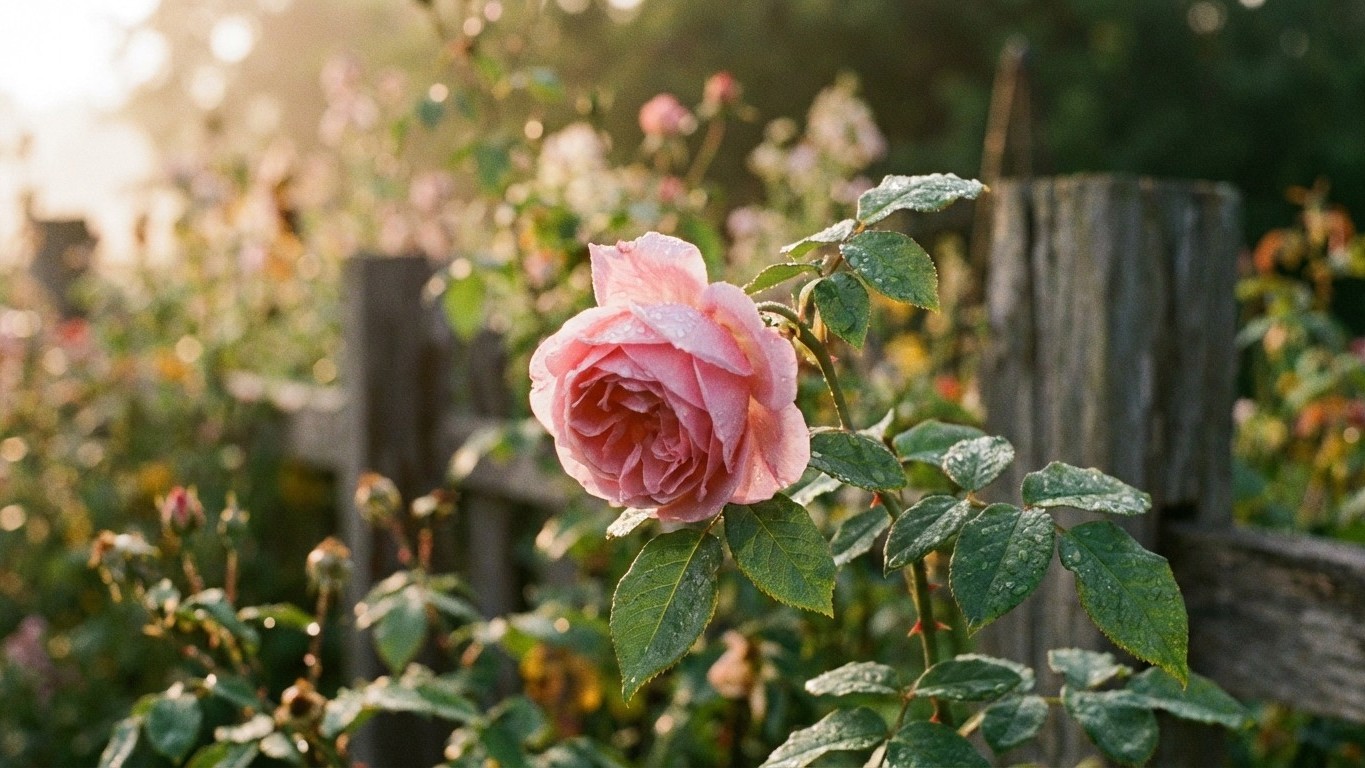

Roses go into Massachusetts ground in spring, as soon as the soil is workable. Dormant bare-root plants go first, and container roses follow once the last-frost window has passed. For Boston, NOAA’s normals put that window at April 1 to April 8. Inland and in the hills it runs later. Plant now, in early October, and you’re gambling on a young root system before the ground freezes.
When to plant Roses in Massachusetts

The reference city here is Boston, measured at Logan Airport. NOAA NCEI’s 1991-2020 Climate Normals give a last spring frost of April 1 to April 8, which is the 30-70% probability band for a 32°F freeze. The first fall frost falls between November 3 and November 14, using the same band. Logan sits on the water, so it is the mildest spot in the state. Inland suburbs and the Berkshires frost earlier in fall and later in spring, and the NOAA file doesn’t say by how many days. Shift every date below later for higher or more northern ground, and ask your local extension office for your own numbers.
Bare-root and container roses
Most Massachusetts rose gardens start with a plant bought from a nursery, not a seed. Bare-root roses arrive dormant in early spring and can go in as soon as the ground thaws and stops being a sponge. In greater Boston, that tends to overlap the April 1 to April 8 band. Soak the roots in a bucket of water for 12 to 24 hours first. If a hard freeze is forecast after the canes start to swell, drape a sheet or an upside-down bucket over the plant for the night.
Container roses already in leaf are less forgiving. Wait until the frost band has clearly passed, then harden them off. A plant raised in a greenhouse needs 7 to 10 days of outdoor exposure, starting with a couple of hours in shade and building up to a full day in sun. Skip that step and the leaves scorch. Wind and bright sun will do it faster than a late frost will.
Starting from seed: the count-back
Growing roses from seed is slow, and hybrids won’t come true. It does make sense for species roses such as rugosas, which are the roses most often grown this way. The seed needs a cold, moist period of roughly 8 weeks (a bag of damp sand in the refrigerator works), then about 10 weeks indoors under lights.
Work backward from the date you want seedlings outside. Say it’s April 8, the far end of Boston’s band. Hardening off starts about March 29. Ten weeks of indoor growth puts sowing near January 18. Eight weeks of chilling before that puts the refrigerator step around November 23. Inland gardeners add the extra weeks their local frost date demands. Most gardeners will find that buying a one-year-old plant skips about five months of waiting.
Fall planting works in the state, but it leaves roots little time to settle before the ground freezes. Spring is the safer bet. For the full national picture, see How to Grow Roses: The Complete Guide.
Soil and site preparation
Six hours of direct sun is the minimum for steady bloom, and morning sun matters most because it dries dew off the leaves before black spot can take hold. A spot with open air on at least one side beats a sheltered corner. Stagnant air is where fungal disease thrives.
Drainage is the next test. Dig a hole about a foot deep, fill it with water, let it drain, then fill it again. If water is still standing hours later, the bed needs to be raised or the site changed. Roses sulk in wet feet. Many Massachusetts yards run heavy and compacted, others sandy and fast-draining, and both can be improved with the same material: compost.
Timing is where most people go wrong, so work backward from planting day:
- Four to six weeks before: take a soil test and send it off. Results tell you whether lime is needed, and lime works slowly. Roses like soil that is slightly acidic, roughly 6.0 to 6.5.
- Two to three weeks before: strip sod, loosen the soil 12 inches down, and work in 2 to 3 inches of compost.
- Planting day: dig the hole about 18 inches wide and deep enough that the roots spread without bending.
Planting depth depends on the plant. Where winters are cold, set the graft union (the swollen knob where the canes meet the roots) about 1 to 2 inches below the soil surface. Own-root roses have no union, so plant them at the same depth they grew in the pot.
Spacing keeps air moving. Hybrid teas and floribundas need 2 to 3 feet between plants, shrub roses 3 to 4 feet, and ramblers up to 8 to 10 feet. Keep a 2 to 3 foot ring around each rose free of lawn grass, which competes for water and nitrogen. Water the planting thoroughly and leave the soil settled but not soggy.
Varieties that suit Massachusetts
Four traits matter here: winter hardiness, disease resistance, repeat bloom, and salt tolerance if you garden near the coast. Cold hardiness varies across the state, and a rose that sails through a Cape Cod winter may suffer in the Berkshires. Disease resistance counts more than most catalogs admit, because humid Massachusetts summers invite black spot and powdery mildew. Whether a rose is grafted or own-root matters too. An own-root plant killed to the ground by winter regrows as the same variety, while a grafted one can regrow as the rootstock.
| Type or variety | Best for | Trait to know |
|---|---|---|
| Knock Out series | Low-fuss hedges and borders | Strong disease resistance, repeat bloom |
| Rugosa roses (e.g., ‘Hansa’) | Coastal yards, windy sites | Hardy, salt tolerant, produces hips |
| Explorer climbers (e.g., ‘William Baffin’, ‘John Cabot’) | Fences, arbors in colder areas | Bred for cold winters |
| Drift and Oso Easy groundcover roses | Slopes, front-of-border edging | Compact, repeat blooming |
| ‘The Fairy’ | Mass plantings, containers | Late, long bloom season, small flowers |
| Hybrid teas | Cut flowers, formal beds | Showy but need more spraying and winter protection |
None of this is an official endorsement. These are widely sold types that carry the traits above. If you want a hybrid tea, plan on the extra work: protection each winter and a watch for black spot from midsummer on. A shrub rose with proven resistance is the sensible first rose for anyone who would rather not spray.
Check the plant tag for cold hardiness before you buy, and compare it to your own frost dates, not Boston’s. Gardeners in other states face a different set of choices, as in Growing Roses in Michigan: Planting Dates, Varieties and Local Pests or Growing Roses in Texas: Planting Dates, Varieties and Local Pests.
What to plant alongside
The best companions solve physical problems. Low perennials such as catmint (Nepeta) or hardy geraniums shade the soil around the base, hold moisture, and keep weeds down. Lavender needs the same full sun and sharp drainage, and it draws pollinators. Clematis is a classic partner for climbing roses because its roots like the cool shade of the rose’s base while its vines climb through the canes.
Pest-confusion claims need more scrutiny. Garlic, chives and other alliums are often said to repel aphids and protect roses. Gardeners swear by it, but I know of no solid study showing a rose-Protecting effect. Plant them because they’re attractive and tidy, not as a spray substitute. Marigolds have some evidence against root-knot nematodes in vegetable beds, but that doesn’t translate neatly to rose borders.
Several things don’t belong near roses:
- Greedy neighbors: shrubs and trees with big surface roots take the water and nutrients roses need.
- Lawn grass right at the base of the plant.
- Another rose in the same spot: replacing a dead rose with a new one in the same hole invites “rose replant” trouble. Dig a fresh hole several feet away or swap out the soil.
- Dense plantings: crowding blocks air flow, which is the real way mildew spreads. Tall, dense perennials packed against the canes create the same humid pocket.
Vegetable beds deserve a note. UMass’s home-garden pest list is dominated by beetles, borers and bugs that target squash, beans and potatoes. Roses planted beside those beds can catch a stray visitor, so keep a few feet of space and check both.
Watering, feeding and support
Water deeply, not often. Roses want about an inch per week from rain and hose combined, delivered at the base so the soil gets soaked 12 inches down. Shallow sprinkling coaxes roots to the surface where they dry out and freeze. Water in the morning and aim at the soil, not the leaves. Wet foliage overnight is an invitation to black spot.
Mulch with 2 to 3 inches of shredded bark or compost after the soil warms. It evens out moisture and suppresses weeds. Pull it back an inch or two from the canes so the base can breathe.
Feed lightly and on a schedule. Give a balanced rose fertilizer or a layer of compost as new growth emerges in spring, and a second dose after the first big flush of bloom. Stop about 6 to 8 weeks before your first fall frost. At Logan’s November 3 to November 14 band, that means early to late September, with inland yards stopping earlier. Late feeding pushes soft new shoots that winter will kill.
Pruning follows the plant. Prune hybrid teas and floribundas in spring, when the buds begin to swell, taking out dead, damaged and crossing wood. Cut dead canes back until the center looks white or green, not brown. Many gardeners use forsythia bloom as a cue. Once-blooming shrub roses and ramblers flower on old wood, so prune them right after bloom, not in spring, or you’ll cut off the flowers.
Watch for suckers on grafted roses. These are shoots that come up from below the graft union, often with seven leaflets instead of five, and they grow from the rootstock. Follow the shoot to its origin, then tear or cut it off at the base. Cutting it at ground level just makes it regrow.
Climbers need support from day one. Tie canes to a trellis or wires and train them as close to horizontal as you can. Horizontal canes produce more flowering side shoots. Tall hybrid teas rarely need stakes, though a young plant in a windy spot can use one for the first year.
Common problems

Black spot is the signature rose problem in humid places. Look for round black spots with feathered edges on the leaves, then yellowing and leaf drop, usually from midsummer on. Water at the base, give plants room, and rake up fallen leaves, since the fungus overwinters on them. Resistant varieties help most. If you spray, start early, before spots spread, and follow the label.
Powdery mildew looks like a white, dusty coating on new shoots and buds, and it likes warm days and cool nights. Prune for air flow, avoid overhead watering and don’t over-fertilize with nitrogen, which produces the soft growth mildew prefers.
Winter dieback shows up in spring as brown, shriveled canes. Cut back to healthy wood, where the pith in the center is white or green. A plant that dies back hard but regrows from below the soil is telling you the variety is marginal for your spot.
Plants that leaf out well but don’t bloom usually have one of three problems: too much shade, too much nitrogen (lots of leaves, few flowers) or pruning at the wrong time on a once-blooming rose. Yellowing leaves with green veins can mean poor drainage or an off pH, so check with a soil test before adding more fertilizer.
Aphids cluster on new growth and buds. A strong spray of water knocks them off, and repeating it every few days usually beats them. Japanese beetles, which chew buds and flowers in summer, are best hand-picked into a bucket of soapy water in the cool of the morning. The pests that UMass names for Massachusetts home gardens are covered in the next section.
Pests that actually show up in Massachusetts
The UMass Extension pest list is aimed at home vegetable gardens, and most entries on it (Colorado potato beetle, Mexican bean beetle, cabbage root maggot fly, European corn borer, squash bug, squash vine borer) target vegetables, while the lily leaf beetle goes after lilies. Three of its entries can realistically reach roses. The list isn’t exhaustive, and pressure varies within the state, so take anything unfamiliar to your county extension office.
Winter moth
You’ll see small green caterpillars in opening buds, and ragged, chewed holes in leaves as they expand. The calendar is unusual. Adults emerge in mid to late November, usually before Thanksgiving, and may fly into January. Eggs hatch from late March into early April, and caterpillars feed until late May or early June. For a rose, the damage is in April and May as buds break. The control that works is Bt (Bacillus thuringiensis var. kurstaki) sprayed on young caterpillars as buds open. Follow the label.
Spotted lanternfly
Look for sticky honeydew and black sooty mold on stems and nearby surfaces, with gray-brown egg masses on bark, stones or outdoor furniture. Black nymphs with white spots appear first, followed by winged adults later in the season. Scraping egg masses off in fall and winter is the practical control. If you find one, ask your extension office about local reporting.
Striped cucumber beetle
This yellow-green beetle with three black stripes can chew blossoms of many garden flowers, and roses planted near squash or cucumber beds are most at risk. It appears in late spring and summer. Shake or hand-pick adults into soapy water in the morning, and keep the rose area well separated from cucurbit beds.
Harvest and end of season
Cut roses in the morning, when the stems are full of water. Pick when the bud is loose and just starting to open, not tight and not fully flared. Make the cut on a slant, just above a leaf with five leaflets facing outward, so the new growth heads away from the center of the plant. Strip the lower leaves and put the stems in water right away. A cool room keeps them longer. A few stems cut often give you more flowers than one big bouquet.
Roses don’t ripen off the plant, but hips do soften and sweeten on it. Rugosa hips are the ones worth saving, and they’re traditionally harvested after the first frost. Leave some for birds.
For the fall, stop deadheading by late summer so the plant slows down and hardens off, and stop fertilizing as described above. With a November 3 to November 14 frost band at Logan (earlier inland), the work happens through October. Clean up fallen leaves to reduce black spot. Then wait for several hard frosts and for the ground to start freezing before mounding 10 to 12 inches of soil or compost over the base of tender grafted roses. Bring that material in from elsewhere, not from around the plant, which would expose the roots. Remove the mound gradually in spring once the worst cold passes. Don’t cut the canes back hard in fall. Save the real pruning for spring.
Local help
For county-level frost dates, soil testing and help identifying a pest you can’t name, contact UMass Extension. Frost timing can shift by weeks between the coast, the Worcester hills and the Berkshires. More local material is collected in our Massachusetts guides.
Common questions
When is the best time to plant roses in Massachusetts?
Spring, once the soil can be worked. Dormant bare-root roses can go in early, and container roses should wait until after the last frost. Boston’s NOAA band is April 1 to April 8. Inland and northern areas run later.
Do roses survive Massachusetts winters?
Many do, especially rugosas and cold-hardy Explorer types. Grafted hybrid teas benefit from a mound of soil or compost over the base after several hard frosts. Even hardy roses can lose canes in a harsh winter.
How much sun do roses need here?
At least six hours of direct sun. Morning sun is best, since it dries the leaves early and discourages black spot and mildew.
Which pests should Massachusetts rose growers watch?
UMass Extension’s home garden list includes winter moth, spotted lanternfly and striped cucumber beetle among those that can reach roses. The list isn’t exhaustive, so confirm unfamiliar insects with your county office.
When should I stop fertilizing roses?
About 6 to 8 weeks before your first fall frost. At Boston’s November 3 to November 14 band that is early to late September, and earlier inland. It’s now October 6, so if you haven’t stopped, stop today.