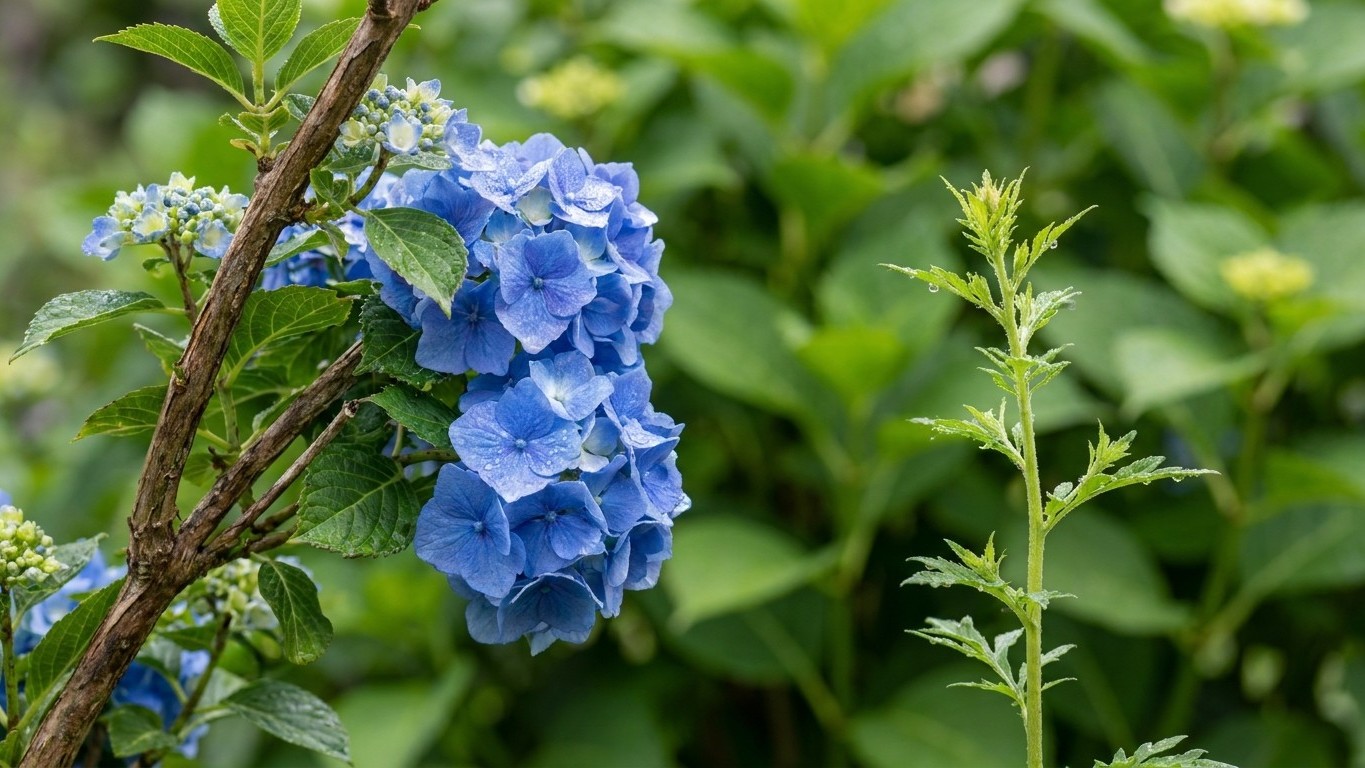

Fall is the best time for growing Hydrangeas in Mississippi, with early spring a close second. Roots get months of cool soil to settle in before summer heat arrives. Match the type to your site, give it morning sun and afternoon shade, mulch it, and water deeply all through the first summer. Panicle and oakleaf types handle heat best, while bigleaf types give the famous colors but ask for more care. For the bigger picture, see How to Grow Hydrangeas: The Complete Guide.
When to plant Hydrangeas in Mississippi

The only frost data we can quote comes from the NOAA NCEI 1991-2020 Climate Normals for the Jackson airport station. There, the last spring 32F freeze falls between March 6 and March 22, and the first fall freeze between November 7 and November 22. Those ranges are the 30-70% probability band, so a freeze just outside them is entirely possible. They describe one reference city, not the whole state.
Your own yard will likely differ. Suburban and rural gardens usually see the last spring frost one to two weeks later and the first fall frost one to two weeks earlier than an airport. Northern and higher-elevation parts of Mississippi run later in spring still. Treat the Jackson numbers as a starting point and ask your county Extension office for local dates (see the last section).
Spring planting
Take the Jackson window of March 6 to March 22 and add the usual one to two weeks for an outlying garden. That puts the safe edge somewhere between about March 13 and April 5. Set out container plants after that date. A freeze after leaf-out is the main spring risk, since it can blacken new growth and flower buds on bigleaf types. Spring planting leaves less time to root before summer, so plan on regular watering through the first season.
Fall planting
Fall wins for most gardeners. A common rule of thumb (mine, not NOAA’s) is to get shrubs in the ground at least six weeks before the first hard freeze. Count back from the Jackson fall range: six weeks before November 7 is September 26, and six weeks before November 22 is October 11. Today is October 7, so reference-city gardens are right in that window. If your yard frosts a week or two earlier, shift the count earlier by the same amount. Roots keep growing in warm autumn soil long after the leaves stop.
Seed, cuttings and hardening off
Starting hydrangeas from seed indoors is not how home gardeners do it. Seedlings rarely match the parent plant and take years to flower. Buy a container plant, or root your own softwood cuttings in early summer and grow them on in pots until the next planting window.
Anything raised in a greenhouse or kept indoors needs hardening off. Over about 7 to 10 days, move it outdoors for a few hours, then lengthen the time and increase the sun. If you want it in the ground on April 5, start on March 26. Skip this step and the leaves scorch.
Soil and site preparation
Light matters more than anything else on the site. Aim for morning sun and shade from about 1 p.m. on. The east side of a house or the edge of high pine shade works well. Panicle types tolerate more sun, but even they sulk in a Mississippi August if the soil dries out.
Mississippi soils vary from heavy clay to sandy loam, so test yours rather than guess. Hydrangeas want soil that is moist yet drains. To check, dig a hole about a foot deep, fill it with water, and look again the next morning. If water is still standing, raise the bed with a mix of native soil and compost or choose another spot. In sandy ground, organic matter is the fix, because it holds water and nutrients that sand lets through.
Timing matters here. Take a soil test a month or two before planting, because changing pH with lime or sulfur takes months to show. Work 2 to 3 inches of compost or aged pine bark into the top 8 to 10 inches of soil across the whole bed, not just the planting hole. A bigger prepared area lets roots spread without hitting a wall of clay.
On planting day, dig the hole as deep as the root ball and two to three times as wide. Keep the crown level with the soil (slightly high in clay), loosen circling roots, backfill, and water in thoroughly. Spacing depends on the type. Many bigleaf shrubs need about 4 to 6 feet, and large panicle types need more, so go by the plant tag. Crowded hydrangeas stay damp and invite leaf spot.
Varieties that suit Mississippi
The trait that matters most
With shrubs, the question is not days to maturity but whether the plant blooms on old wood or new wood. Old-wood bloomers set buds the previous summer and lose them if winter or a late freeze kills the stems. New-wood bloomers grow their flower buds in spring, so a freeze after the March frost window does far less harm. Mississippi’s warm winters can coax buds open early, which makes new-wood bloomers the safer bet.
| Type | Blooms on | Good for |
|---|---|---|
| Bigleaf (mophead, lacecap) | Old wood; reblooming forms also on new wood | Blue or pink color, cut flowers, shady beds |
| Panicle | New wood | More sun, reliable blooms, cone-shaped flowers |
| Smooth | New wood | Big white globes, cool corners, naturalized beds |
| Oakleaf | Old wood | Heat tolerance, fall leaf color, woodland edges |
Widely available choices
The Endless Summer series is the best-known reblooming bigleaf line, and it is easy to find in nurseries. Reblooming types flower on both old and new wood, which hedges against a bad freeze. Limelight is a popular panicle for sun and heat, and Little Lime is a smaller version for tight spaces. Annabelle is the classic smooth hydrangea, with huge white blooms, though heavy heads flop after rain. Oakleaf cultivars such as Alice and Snow Queen are native-style shrubs for the Southeast with big, coarse leaves that turn burgundy in fall. For comparison with cooler winters or other states, see how the same types behave in Arkansas, South Carolina and Virginia.
Tags and growers’ descriptions are a more reliable guide than a general claim about “the best” plant. Look for stated sun tolerance, mature size and bloom wood before you buy.
What to plant alongside
Good neighbors share the same conditions: part shade, even moisture, and acidic to neutral soil. The ones that genuinely help are:
- Ferns and hostas: they cover the ground under the shrub, shading the soil and keeping weeds down.
- Azaleas and camellias: they like the same acidic, well-drained conditions, so one watering routine suits all of them.
- Native understory plants such as woodland groundcovers, which fill the space around oakleaf hydrangeas.
- Perennials with fertile flowers: these give pollinators more to visit than mophead hydrangeas do.
That last point deserves a note. Mophead blooms are mostly showy sterile sepals with little pollen or nectar. Lacecap, oakleaf and panicle types have fertile flowers that bees do visit, so those make a bed more useful to pollinators.
Some pairings hurt. Shallow-rooted trees such as maples take water and nutrients from the same top few inches. Turfgrass planted to the stem competes for water, and lawn weed-and-feed products can damage shrub roots. Crowding anything close enough to trap humidity around the leaves raises the odds of mildew and leaf spot.
One claim has little backing: that marigolds or garlic planted nearby will keep pests off hydrangeas. There is no solid evidence for it here. Plant them if you like the look, but do not count on them for protection.
Watering, feeding and support
Water and mulch
Hydrangea means “water vessel,” and the leaves show it fast. Aim for about an inch a week from rain and irrigation combined, delivered deeply rather than in daily sprinkles. Shallow watering keeps roots near the surface where summer heat reaches them. Push a finger two inches into the soil before you water. If it is damp, wait.
Mulch with 2 to 3 inches of pine straw, shredded bark or leaf mold, pulled back a couple of inches from the stems. It cools the soil, slows evaporation, and breaks down into the organic matter these plants like. Refresh it each spring.
Feeding
Less is better. One application of slow-release fertilizer as growth starts in spring is plenty for most plants, and compost does much of the work in a prepared bed. Heavy nitrogen buys lots of leaves and fewer flowers. Stop feeding by midsummer so new growth can harden before freezes.
Support and pruning
Big-headed types such as Annabelle and some panicles bend under a wet bloom. A hoop or ring support set early in the season, before stems lean, is far neater than propping them up afterward.
Pruning follows the bloom wood. Cut bigleaf and oakleaf types right after flowering, before late summer, or you remove next year’s buds. Panicle and smooth types can be cut back in late winter, before growth starts. Suckers (new shoots from the base) are a bonus. Dig one up with some roots in early spring and you have a new plant.
Common problems

Wilting and scorch
Midday droop on a hot day with damp soil is normal and recovers by evening. Droop in the morning, or soil that is dry two inches down, means water. Crispy brown leaf edges point to sun scorch, drought or fertilizer salts. Move the watering schedule first, then think about relocating the plant.
No blooms
The usual causes are pruning at the wrong time, buds killed by a late freeze, too much shade, or too much nitrogen. Think back over the year before you blame the variety. If the plant is a non-reblooming bigleaf and a freeze hit after leaf-out, patience is the only cure.
Leaf color and disease
Yellow leaves with green veins usually mean iron chlorosis, which shows up when soil pH is too high. A soil test confirms it. Round brown spots with darker edges are a fungal leaf spot, common in humid summers. Powdery mildew looks like white dust on the leaves. Both come from damp, crowded foliage. Water at the base, thin the planting, rake up fallen leaves, and use a labeled fungicide only if the problem is severe.
A chewed or tunneled plant is probably a pest problem rather than a disease. That is next.
Pests that actually show up in Mississippi
Mississippi State University Extension Publication 2347, Insect Pests of the Home Vegetable Garden, is the source here. It is a vegetable-garden publication and does not mention hydrangeas. Squash vine borers, pickleworms, cowpea curculios, vegetable weevils, harlequin bugs and yellowmargined leaf beetles are tied to vegetable crops and rarely matter in a shrub bed. These four, from the same list, have broad enough appetites or habits to turn up around hydrangeas. The list is not exhaustive, so take unknown damage to your county office for identification.
Fire ants. You see a dome of loose soil at the base of the plant or in the mulch. Mounds show up in warm weather, especially after rain, and they disturb roots and make bed work painful. A bait labeled for fire ants, applied as the label directs, is the control that works.
Armyworms. The first sign is ragged leaves, then groups of caterpillars feeding. The list names fall, beet, yellowstriped and Southern armyworms, and fall armyworms are in the garden late in the season. Spray young caterpillars with Bt (Bacillus thuringiensis), which works best when they are small.
Leaf-footed bugs. Look for brownish bugs with flattened, leaf-like hind legs clustered on stems. The extension publication ties heavy numbers to late summer and early fall. Because they feed on many plants, a hydrangea next to a vegetable patch can get visitors. Hand-pick them into soapy water in the morning, when they are sluggish.
Mole crickets. The publication flags these for the southern half of the state, especially sandy soils. You see raised, meandering tunnels in the soil and young plants that wilt for no reason. A bait labeled for mole crickets is the control, and your county office can advise on timing.
Harvest and end of season
Cut fresh hydrangeas in the cool of the morning. Choose blooms that are fully open and firm, strip the lower leaves, and put the stems in water right away. Bigleaf types bloom on old wood, so cutting long stems late in summer takes next year’s buds with them. Take short stems or cut just above a healthy pair of leaves.
For drying, leave the blooms on the shrub until they feel papery and their color has shifted to muted antique tones, usually late summer into fall. Cut the stems, strip the leaves, and hang them upside down in a dry, dark spot for two to three weeks. Store dried stems out of direct sun and damp air, which fade and mold them.
The Jackson reference range for the first fall freeze is November 7 to November 22. Gardens outside the city may see it a week or two sooner, and higher or northern ground sooner still. As that window approaches, stop feeding and keep watering through dry autumn weeks. Add mulch if it has thinned. Leave old-wood bloomers unpruned, since their buds are already set, and keep a sheet or frost cloth handy for an early freeze. Plants usually tolerate it better with the dried blooms left on until late winter.
Local help
County-level frost dates, soil testing and pest identification are handled by Mississippi State University Extension, which has an office in every county. Bring a sample of the damage or a clean soil sample, and ask which dates apply to your area. For more state coverage, browse our Mississippi guides.
Common questions
Can hydrangeas grow in full sun in Mississippi?
Panicle types can handle full sun if watered well. Bigleaf, smooth and oakleaf types do better with morning sun and afternoon shade, because Mississippi summer heat scorches leaves and wilts blooms.
Why does my hydrangea wilt every afternoon?
Afternoon droop on a hot day is normal if the plant recovers by evening. If it stays limp, or the soil is dry two inches down, it needs a deep watering. Mulch cuts down on these swings.
How do I change the color of a bigleaf hydrangea?
Color depends on soil acidity and how much aluminum the plant can absorb. Acidic soil gives blue, and neutral to alkaline soil gives pink. Take a soil test first, because changes take months, and white varieties will not change color.
When should I prune hydrangeas?
Bigleaf and oakleaf types go right after flowering, before late summer. Panicle and smooth types can be pruned in late winter, since they bloom on new wood.
Is it too late to plant hydrangeas in October?
No. Today is October 7, and counting back six weeks from the Jackson first-freeze range gives September 26 to October 11. Plant now, water deeply, and mulch. Roots keep growing in autumn soil, and your own first frost date decides how much time you have.