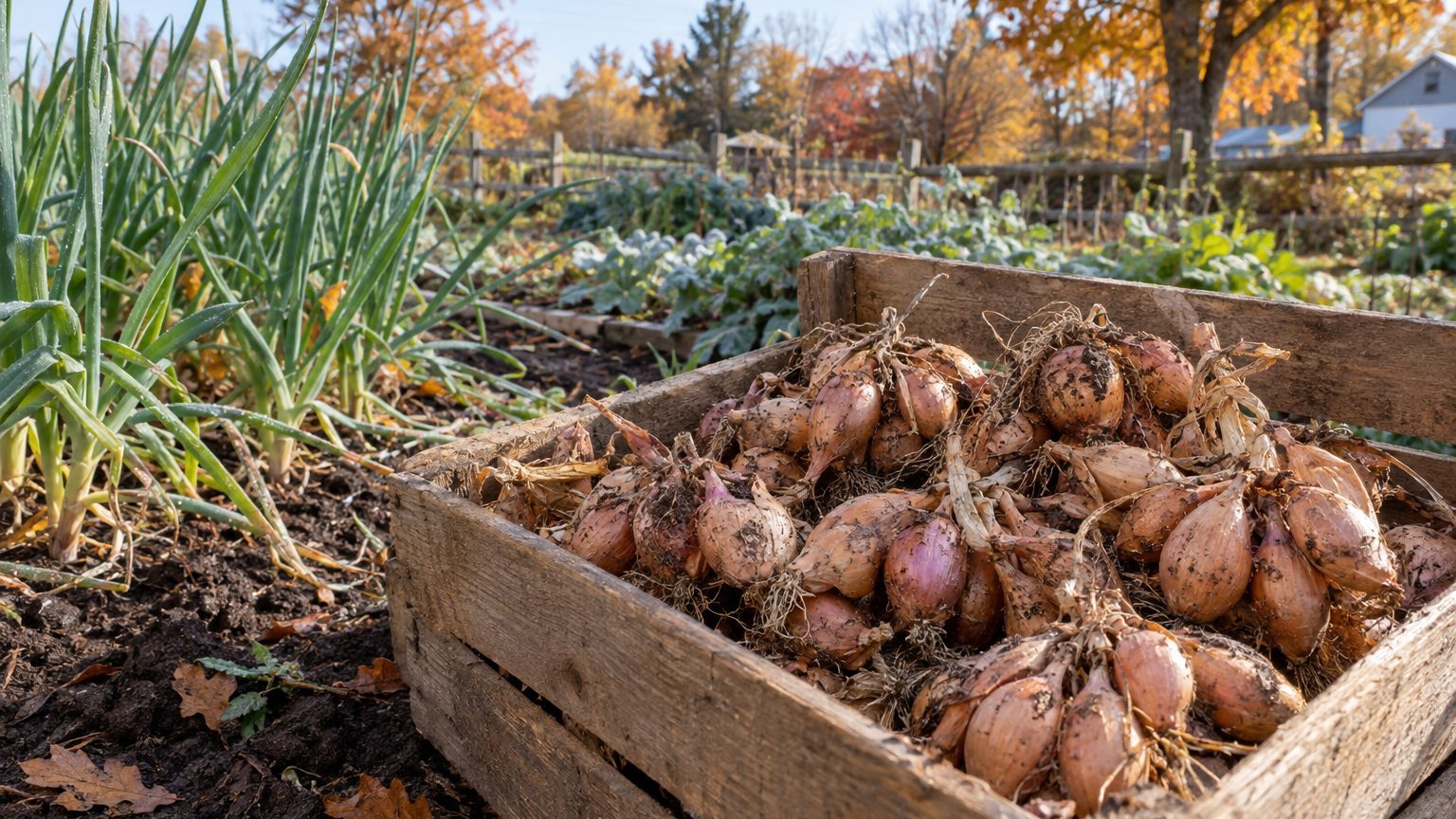

In the low desert, the best shallots are bulb-planted types suited to mild winters, set out in fall and harvested before summer heat arrives. In the high country, cold-hardy types planted early do better, the way they would in a northern garden. Arizona holds both climates, so the type you choose matters more than any variety name on a seed rack.
The short answer for Arizona
For low-desert gardens, choose multiplier shallots grown from bulbs (often sold as sets) and labeled for mild or southern winters. For gardens at altitude, choose hardy storage types and plant them as early as the soil allows. Phoenix is the reference station for the figures here, and it behaves nothing like Flagstaff.
Why heat, not cold, picks the winner
The coldest month in the Phoenix normals has a mean daily minimum of 45.3F. Winter does not threaten a shallot there. NOAA lists the frost-free season at 365 days, and Phoenix touched 32F in only 6 of 30 springs. A rare cold snap can bring 32F between late December and mid January, but that is an exception, not a schedule.
So this page does not offer a frost-based calendar for the low desert. A frost date means nothing where frost barely happens. The limit is summer heat, which ends the growing season from the other side. The right shallot is the one that finishes its work during the cool months. Timing details live in When to Plant Shallots in Arizona, and the general growing picture is in Growing Shallots in Arizona.
Choosing by type
| Type | Best fit in Arizona | Main risk |
|---|---|---|
| Bulb-planted multiplier shallots (sets) | Low desert, planted in fall | Planting while soil is still hot |
| Seed-grown shallots | Low desert for a cool-season crop; high country for a short spring start | Slow seedlings may not size up before heat |
| Cold-hardy storage types | High country and cold-winter pockets | Short season and hard winter freezes |
Bulb-planted shallots get the biggest head start. The bulb already holds the energy for early leaf growth, which matters when your cool window is limited. Seed-grown types can work, but they spend weeks as thin seedlings, and that time is the one thing a desert garden does not have to spare.
What will not work here
Spring planting in the low desert is the classic failure. A shallot set in the ground as the weather warms has little time to build leaves, and leaf growth is what sizes the bulb. Heat arrives while the plant is still small, and you pull a handful of marble-sized bulbs. The fix is not a better variety. It is moving the whole crop into the cool months.
Slow types and long-season plans
Slow-maturing types fail in the low desert for the same reason. They are bred for regions where cool weather stretches on, and a long-day type that wants a lengthy, gentle spring will be rushed by Arizona warmth. Look for descriptions that mention mild winters, southern gardens, or early maturity, and be skeptical of catalog language written for cold-climate growers.
The reverse applies up north. A short season at altitude defeats the slowest shallots, and a fall planting in the high country that goes in too late has no time to root before the ground freezes. Flagstaff and the surrounding high country freeze hard, and a plan built for Phoenix will leave sets sitting in cold, wet soil.
Watering habits and summer storage
Shallots have shallow roots. In a hot, dry climate, a weekly deep soak is a poor fit for them, especially in sandy or fast-draining soil, because the top few inches of the bed dry out between waterings. Drip lines or short, frequent watering suit them better, with mulch to hold moisture. Overwatering at the end is its own mistake, since bulbs need the soil to dry as tops fall over.
Harvest does not end the risk. Cured bulbs stored in an uncooled garage or shed through an Arizona summer can sprout, soften, or shrivel. Plan to use the crop early, keep it in the coolest, driest spot in the house, and save a few of your best bulbs as next fall’s planting stock.
What changes across Arizona
The USDA Plant Hardiness Zone Map (2023, based on 1991-2020 normals) puts Arizona anywhere from 4b to 10b. That system rests on a single variable, the average annual extreme minimum temperature. A range that wide means there is no single answer for the state. A gardener in the desert valleys and one in the mountain towns are practically growing in different countries.
Those zones say how cold the worst night gets, not how hot the summer runs. Both matter for shallots. In the colder zones, winter is the main threat and the season is short but cool, so the advice looks like the northern US: plant early, keep sets mulched through hard freezes, and expect to harvest in summer. In the warm zones, winter is mild and summer is the problem, so the crop shifts into fall through spring.
Places in between, such as mid-elevation towns, can combine both difficulties. Winters have real freezes, yet summers still bring enough heat to cut a season short. Gardeners there often do best by trying a small fall planting and a small early spring planting side by side, then keeping notes on which produced better bulbs.
Do not take a zone from this page. Look up your own on the USDA Plant Hardiness Zone Map by ZIP code, and remember that the zone is only a hardiness measure. Elevation, slope, and nearby walls or pavement can nudge a garden’s real conditions away from its mapped zone.
Where to check this for your own county
This page is the state view, and a county recommendation beats a state one. Arizona’s counties range from low desert basins to mountain forest, and each has its own planting windows and its own list of what grows reliably. Your local extension office knows which cool-season crops finished well in your soil last year.
Start at University of Arizona Cooperative Extension, the state’s land-grant extension service. Once there, look for two things. The first is a local vegetable planting calendar for your county, ideally one that lists onions, garlic, or shallots by month. The second is a record of varieties trialled in your area, which tells you what has been tested in real local conditions rather than in a catalog photo.
If the site has no shallot-specific guidance, use the onion and garlic entries as a close proxy, since the crops share a cool-season rhythm. A county office or master gardener program can often answer the rest by phone or email.
One caution: this page does not have county-level data, so it cannot tell you which of your neighbors’ dates to trust. Treat anything here as a starting frame, and let the county recommendation overrule it whenever the two disagree.
Checking this against your own garden
Your own observations outrank every date on this page. Three things are worth watching, and none needs a gadget.
- Soil warmth by feel. Press your palm flat on bare soil in the morning and again mid-afternoon. When the ground no longer feels warm to the touch even after a sunny day, the bed has cooled enough for fall planting. A bed against a south wall will cool later than an open one, which tells you your own microclimate runs warmer.
- First true leaves. Note how fast green shoots emerge after planting. Quick, sturdy growth says soil and light suit the crop. Slow or spindly leaves point to a bed that is too cool, too shaded, or too compacted.
- The first flower stalk. A stalk rising from a shallot signals that the plant is stressed, and often that heat or temperature swings arrived early in your spot. Write down the date. If it shows up sooner each year, plant earlier or shift to a faster type.
Keep a simple notebook with planting dates, first leaves, first stalks, and harvest size. After two seasons it will tell you more about your yard than any statewide table. For the wider approach, go back to Growing Shallots in Arizona.
Common questions
Can I grow shallots from seed in Arizona?
Yes, but seed-grown shallots start slowly. In the low desert they have to size up inside the cool months, so bulb-planted shallots are the safer pick. In the high country, seed is a reasonable choice where the season is cool but short.
Do shallots need frost to grow well?
No. Phoenix reached 32F in only 6 of 30 springs, and shallots can still be grown there through fall and winter. What they need is a stretch of cool weather, which the low desert has well before summer begins.
Can I plant shallots from the grocery store?
Sometimes they sprout, but you will not know the type or whether it suits mild winters. Some store bulbs are also stored or handled in ways that make them poor planting stock. Sets sold for planting are a better bet.
Is Phoenix too hot for shallots?
Not if you work with the calendar. The cool months are productive, and the summer is the stopping point. Plant in fall, harvest in spring, and keep the crop out of the hottest stretch.