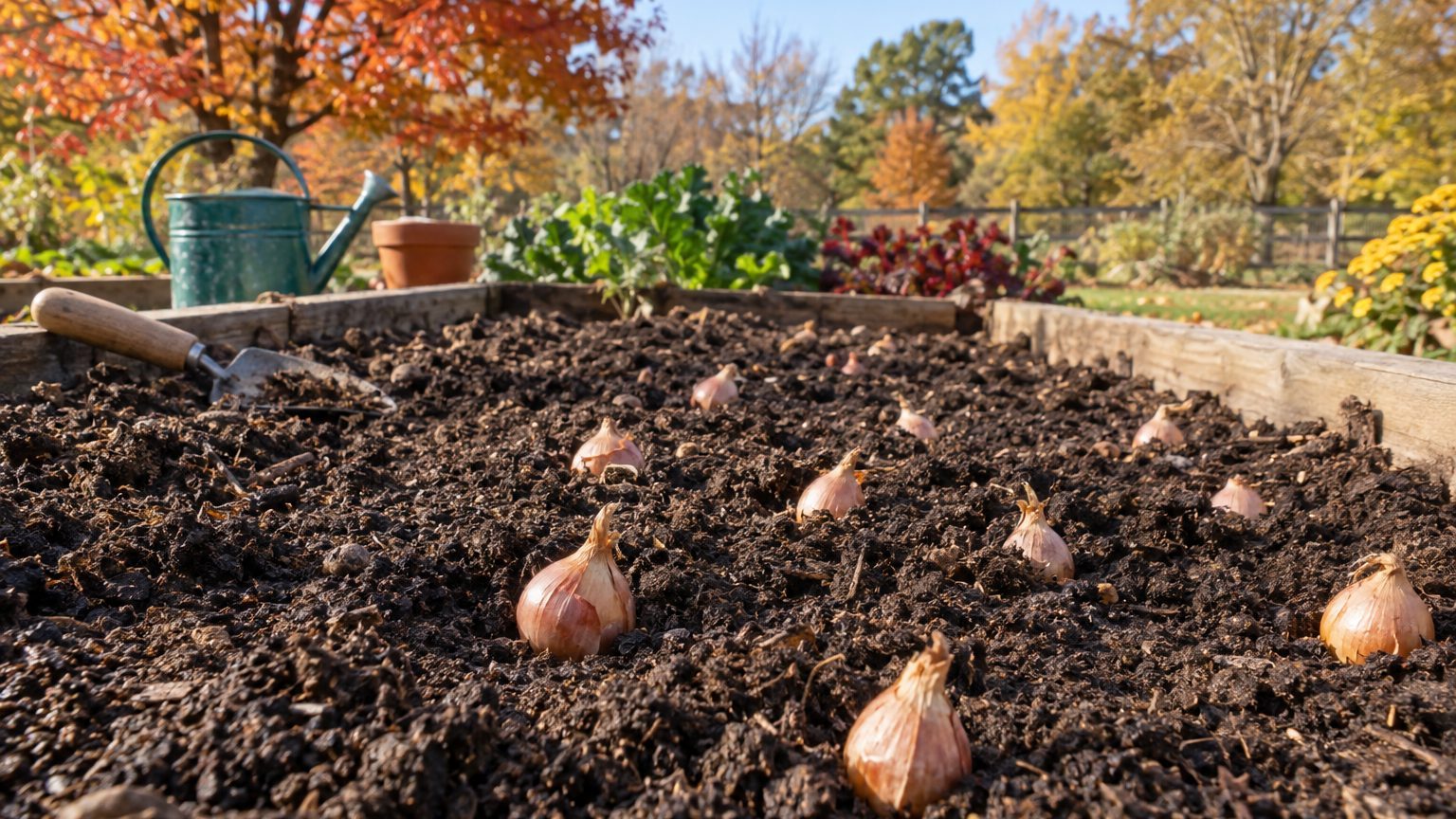

Plant shallots in Florida’s cool season and let the frost dates set the frame. At Jacksonville, the 30-70% band for a 32°F freeze runs February 16 to March 7 in spring and November 26 to December 13 in fall. Farther south, frost barely exists and the calendar flips: winter becomes the growing season and summer is the problem. No single window covers a state that stretches from zone 8b to 11b.
The short answer for Florida
In north Florida, plant shallots in the cool months of fall and winter, so the bulbs finish growing before summer heat arrives. In central and south Florida, plant in that same cool half of the year, but don’t wait for frost dates to guide you. There is hardly any frost there, and the calendar runs on heat instead.
What the north Florida dates measure
The only frost dates this page has come from Jacksonville, through the NOAA NCEI 1991-2020 Climate Normals (airport station USW00013889). They are probabilities of a 32°F freeze, taken from the 30-70% band. In spring that band runs February 16 to March 7. In fall it runs November 26 to December 13. Treat each one as a zone of uncertainty rather than a deadline. Inside the band, the odds of a freeze are somewhere between three in ten and seven in ten.
Two cautions come with the numbers. The airport is an inland site, so a coastal garden may behave differently. And three of the thirty falls in that record saw no freeze at all, which means the fall date sometimes never arrives.
Turning the bands into a planting window
Shallots are a cool-season crop, and a light freeze is not what ends them here. The coldest month’s mean daily minimum at the Jacksonville reference station is 42.9°F. That is the average low, not the record low, but it is well above freezing and tells you winter cold is not the limiting factor. The limit is the heat on either side of winter. So in north Florida the plan is to set shallots out once summer heat has broken, let them grow through the winter freeze risk, and pull them before the next hot season. The February 16 to March 7 band is a reminder that a late freeze can still land while the crop is in the ground.
This page does not have a county-tested sowing date for Jacksonville or anywhere else, so it won’t invent one. For the full growing picture, start with Growing Shallots in Florida.
What will not work here
The northern habit of planting shallots as soon as the soil thaws in spring fails in Florida. By the time the Jacksonville spring band closes on March 7, the days are already lengthening and warming. Bulbs started then spend their whole life racing toward summer. They tend to stay small, because they have little cool weather left to build leaves, and leaves are what become bulb.
Humidity is the second killer. Florida summers are warm and wet, and shallots want dry air at the end of their life. Tight spacing that works in a dry western garden traps moisture around the necks, and thick mulch piled against the bulbs keeps them damp. Both invite rot. Give plants room for air to move, and cure harvested bulbs in shade with good airflow rather than leaving them in a humid garage.
Slow varieties are a third problem. A shallot that needs a long, cool season to size up has little room in a climate where the cool season is short and mild. The choice of type matters more here than in a cold state, and The Best Shallots to Grow in Florida goes through it.
Sandy soil adds its own trap. Water drains fast, and nutrients leach with it, so a weekly deep soaking that suits clay in another state can leave shallot roots dry, then flooded by the next afternoon storm. Shallow roots like these do better with light, more frequent watering during dry spells and a feeding schedule split into small doses.
The biggest mistake is geographic. The Jacksonville frost window must never be applied to Orlando or Miami. Central and south Florida are effectively frost-free, so there is no “after the last frost” date to count from, and a gardener who waits for one will wait through the best part of the season. In those regions the main shallot season runs through winter, and summer is the hard part. Planting into summer heat and rain is the surest way to lose a crop.
What changes across Florida
Florida is not one garden. The USDA Plant Hardiness Zone Map (2023, built on 1991-2020 normals) places the state in zones 8b to 11b. That system rests on one variable, the average annual extreme minimum temperature, and the spread is wide: from a panhandle and northern region where winter freezes are a real planning factor to a southern tip where they are rare. There is no single answer for the whole state, only a spread, and Jacksonville’s numbers describe the north end of it.
| Area | Frost picture | What the shallot calendar does |
|---|---|---|
| North Florida (Jacksonville reference) | Spring band February 16 to March 7; fall band November 26 to December 13; some falls with no freeze | Cool-season crop, planted in fall, pulled before summer heat |
| Central and south Florida | Effectively frost-free | Calendar inverts: main season runs through winter, summer is the hard part |
A reader in the northern part of the state should lean on the frost bands and watch for late freezes in the spring window. A reader farther south should drop frost from the calculation altogether and plan around when the heat and rain begin. Florida has little altitude to shift things, so distance from the coast and latitude do most of the work. Inland sites run colder at night than coastal ones, and low spots collect cold air.
This page can’t tell you which zone your garden sits in. Look up your address on the USDA Plant Hardiness Zone Map and read the result for yourself, keeping in mind that the zone speaks only to winter cold, not to summer heat or humidity, which matter just as much for shallots here.
Where to check this for your own county
Your county’s extension office is the next stop. UF/IFAS Extension runs an office in each Florida county, and that office knows the soils, the rainfall pattern and the cold pockets in your area. This page is a state-level view built from one Jacksonville station. A county recommendation beats it every time.
Two things are worth looking for when you get there:
- The local vegetable planting calendar, which will give actual sowing months for your county rather than a bracket built from frost probabilities.
- Any shallot or onion-family varieties that have been trialled in your county, since a type that thrives in one part of the state can sulk in another.
If a published calendar doesn’t mention shallots by name, ask whether onions or garlic are covered. Those crops follow a similar cool-season rhythm, and an extension agent or a Master Gardener volunteer can tell you how closely shallots track them locally. Bring your rough planting location, whether the soil is sandy or has more organic matter, and how your beds drain after a storm. Those details change the advice more than most gardeners expect.
This page does not have a Florida-specific extension planting calendar for shallots, and it won’t borrow one from another state. Treat what’s here as a starting frame and let the county office replace it with something finer.
Checking this against your own garden
Your own observation outranks every date on this page. Three things are worth watching, and none of them needs equipment.
Soil warmth by feel. Push your hand a few inches into the bed in the morning. Soil that feels cool and comfortable says the season has turned; soil that still feels like warm bath water says wait. Compare a sunny bed with a shaded one and you learn how much your site differs from the regional picture.
The first true leaves. After planting, note how quickly green shoots appear and how sturdy they look. Quick, strong growth says the soil is the right temperature and moisture. Slow, yellowing or stalled growth points to a bed that’s too wet, too hot, or too poor in nutrients.
The first flower stalks. Squash gardeners watch for the first flush of male flowers; for shallots, the equivalent signal is a flower stalk rising from the clump. A stalk early in the season is a sign of stress, often from heat or a temperature swing, and it tells you your microclimate warmed earlier than the calendar predicted. Next year, plant earlier or choose a different type.
Write the dates down: planting, first shoots, first stalks, harvest. After one season you will have a local calendar more precise than any state-level page.
Common questions
Can I use the Jacksonville frost dates for Orlando or Miami?
No. Central and south Florida are effectively frost-free, so there are no comparable dates. In those regions the calendar inverts: the main shallot season runs through winter, and summer is the hard part.
What do the frost dates on this page actually mean?
They are the 30-70% band of probability for a 32°F freeze at the Jacksonville airport station, from NOAA’s 1991-2020 normals. Spring runs February 16 to March 7 and fall runs November 26 to December 13. They are probabilities, not guarantees, and three of thirty falls had no freeze at all.
Will winter cold damage shallots in Florida?
Cold is not the main limit. The mean daily minimum of the coldest month at the Jacksonville reference station is 42.9°F. Heat and humidity cause more trouble than winter does, especially at the start and end of the crop’s life.
Is it too late if I miss the fall window?
This page doesn’t have a county-tested cutoff date. Late planting means less cool weather for the plant to build leaves, so bulbs may come out smaller. Ask your county office for the local limit before you decide.