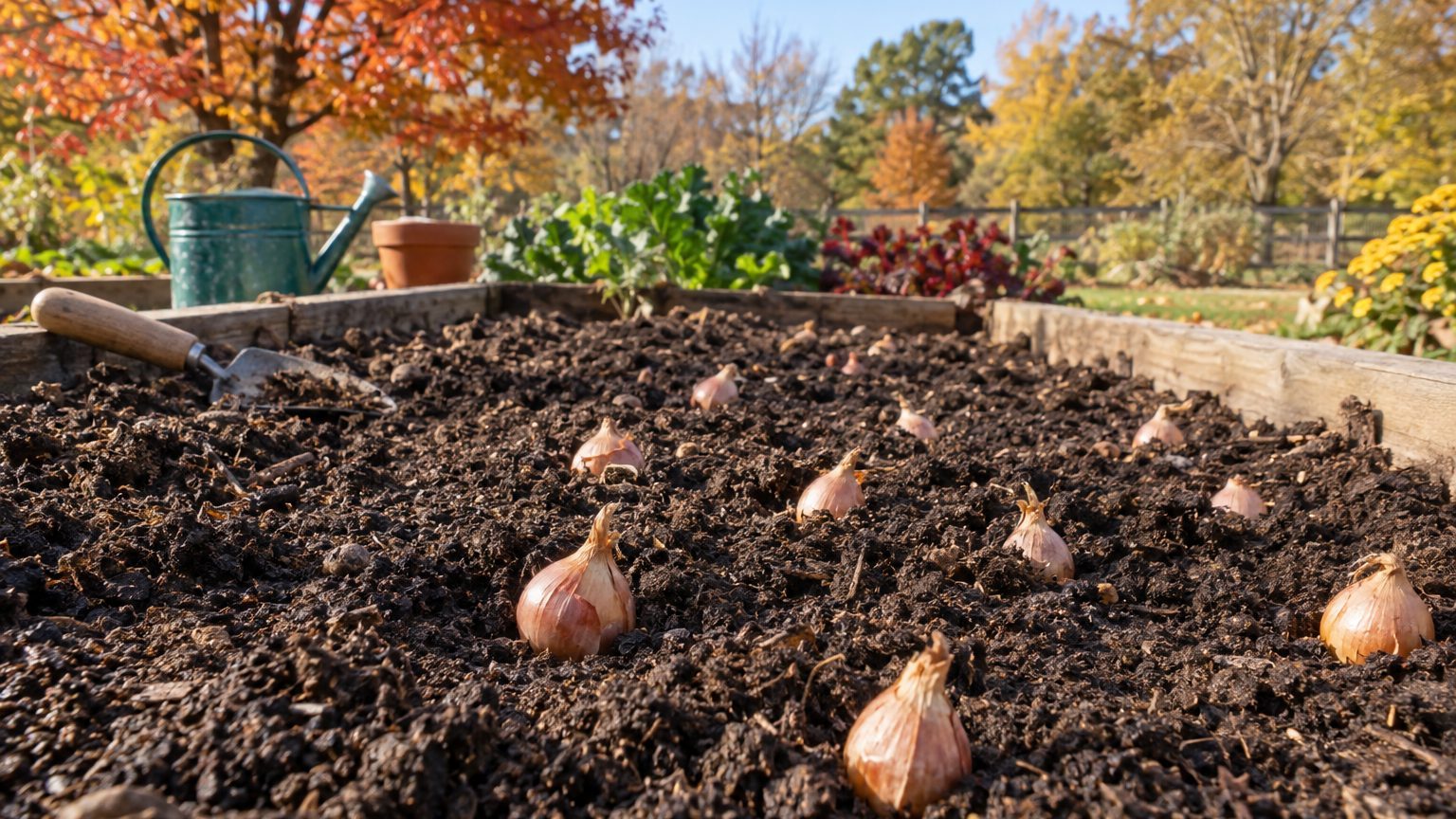

Plant shallots in Illinois in October for fall planting, or as early in spring as the soil can be worked. The frost dates below come from the Chicago airport weather station: last spring frost April 11 to April 22, first fall frost October 24 to November 3. Your garden almost certainly runs later in spring and earlier in fall. That’s the first thing to adjust. For the full growing picture, see Growing Shallots in Illinois.
The short answer for Illinois
Fall planting is the stronger default, with spring as the backup. Shallots set in October put down roots before the ground freezes and start growing the moment the soil warms, which gives bulbs a head start on summer heat. Spring planting works fine if autumn got away from you, but the clock runs faster, and the bulbs have less time to size up before July.
The frost numbers need a careful reading. NOAA’s 1991-2020 Climate Normals give the dates when the probability of a 32°F freeze sits in the 30 to 70 percent band. So April 11 to April 22 is when a spring freeze goes from “likely” to “unlikely” at the reference station. It is a coin flip, not a guarantee. The fall range of October 24 to November 3 works the same way in reverse.
| Event | Reference-city date range | What it means for shallots |
|---|---|---|
| Last spring frost (32°F, 30-70% band) | April 11 to April 22 | Spring sets can go in before or around this band, since shallots tolerate light frost |
| First fall frost (32°F, 30-70% band) | October 24 to November 3 | Fall planting happens in October, ideally ahead of this band |
Those figures come from an airport station. Suburban and rural gardens typically see the last spring frost later and the first fall frost earlier, often by one to two weeks, and more at elevation. If you garden outside the city, shift your spring window later and your fall window earlier.
Shallots don’t need to wait for the last frost. The bulbs sit below ground, and the green tops shrug off a light freeze. The better signal in spring is the soil itself: plant when a handful crumbles instead of smearing. Which varieties suit fall versus spring planting is a separate question, covered in The Best Shallots to Grow in Illinois.
What will not work here
Waiting for the “safe” date fails first. Gardeners who hold off until the frost risk is gone in late April, then get distracted until May, push bulbing into the heat. Shallots planted late spend their short window growing leaves, then switch to bulbing as summer arrives. The result is small bulbs. Illinois spring can swing from cold rain to 80°F within days, and the late planter pays for it.
Fall planting has its own failures. Sets planted too late, after the ground is hard or just before a freeze, never anchor. Then Illinois freeze-thaw cycles heave them out of the soil, leaving bulbs lying on the surface. The coldest month’s mean daily minimum is 18.8°F at the Chicago reference station. That figure is an average of daily lows, not the extreme, and a bare bulb on top of the soil won’t last through it. Mulch laid after the ground has started to freeze solves most of this.
Wet soil is the quiet killer. Much of Illinois sits on heavy clay or silty prairie soil that holds water through winter and spring. Sets planted in a low spot that stays soggy rot before they sprout. Raised rows or beds make a bigger difference here than any date choice.
Close spacing is the next trap. The usual Illinois summer is humid, and shallots packed tightly hold moisture around the leaves and bulb necks, which invites fungal disease. Crowded clusters also stay damp longer after rain. Give each set room for air to move, and keep weeds out of the row.
Seed-grown shallots are the slowest route. They need an early indoor start and a long run of growing weather, and a gardener who sows late or transplants late into a hot July will end up with thin plants instead of bulbs. The stretch between the last spring frost and first fall frost is roughly six months on paper, and in a cold rural garden it is shorter. Sets are the safer choice.
Treating airport dates as a county guarantee is the last mistake. They describe one station. Your garden may differ by a week or two in either direction.
What changes across Illinois
The USDA Plant Hardiness Zone Map (2023, built on 1991-2020 normals) places Illinois in zones 5a through 7b. That’s a wide spread, and it means there is no single answer for the state. The zone system rests on one variable only: the average annual extreme minimum temperature. It says whether a plant survives winter, not when to plant it.
In the colder north, the practical shift is toward earlier fall planting and heavier mulch. Roots need time to establish before the ground locks up, and winters bring deeper cold than the Chicago average of 18.8°F implies. In spring, the north also thaws later, so the planting window opens later and the bulbs get less cool weather before summer arrives.
In the warmer south, the pattern flips. Fall planting can run later into the season because the ground stays workable longer, and winter is milder on bulbs. But spring comes sooner and heat arrives earlier, so spring plantings run out of cool weather quickly. For southern gardeners, fall planting is even more clearly the better route. A spring planting there needs to go in at the first chance.
Elevation and local landforms push things around too. A garden on a ridge or in a river bottom can behave differently from one a few miles away, because cold air pools in low spots and drains off slopes.
Find your own zone on the USDA Plant Hardiness Zone Map by entering your ZIP code. Don’t guess from a neighbor’s advice or a seed packet. A zone tells you about winter survival, so use it for mulch decisions and variety hardiness, and use local frost dates for timing.
Where to check this for your own county
Your state extension service is the right next stop. University of Illinois Extension runs county-level offices staffed by horticulture educators and Master Gardeners, who know the local soil, frost pockets, and what has performed in nearby gardens.
Two things are worth looking for. The first is a local planting calendar for onions, garlic, and shallots, ideally one tied to your county or region rather than the whole state. The second is the list of varieties trialled in your area. A variety that does well in a trial plot nearby is a better bet than one that thrived in a catalog photo. If a county office doesn’t have a shallot-specific calendar, ask about garlic, which shares the same fall planting rhythm and is much more widely documented.
A county recommendation beats a state one, and this page is the state one. It is built on reference-city numbers and a zone range that spans three full zones. Extension staff can tell you whether your area runs a week behind the reference figures, whether late spring freezes are a pattern, and which fall mulch dates work locally. This page does not have a county-level shallot calendar, and it would be guessing to pretend otherwise.
Call or email the local office before you buy sets. The answer takes five minutes and can save a season.
Checking this against your own garden
No date on this page outranks what your own soil and plants are showing you. Three observations cost nothing and need no instruments.
- Soil warmth by feel. Dig a handful in spring from the bed you plan to use. If it crumbles and feels cool but not icy against your palm, it’s workable. If it clumps wet or stays cold, wait. Compare a sunny, sheltered bed with a shaded one and you’ll learn how much your garden’s warm spots differ.
- The first male flowers. Watch the catkins (male flowers) on nearby hazelnut or birch as they loosen and shed pollen. When they do, spring has really arrived. Note the date each year. If yours comes later than a neighbor’s, your garden runs cold.
- The first green shoots. On fall-planted shallots, note when the first leaves poke through in spring. For seedlings, watch for the first true leaves, the ones after the initial grass-like blade. Earlier emergence in one corner tells you where the warm microclimate is.
Keep a simple log with dates for a few years. Your own record will quickly become more useful than any reference-city table.
Common questions
Is fall or spring better for planting shallots in Illinois?
Fall planting in October usually gives bigger bulbs because roots establish before winter and growth resumes early. Spring planting works if you plant as soon as the soil is workable.
How late can I plant shallots in fall?
This page does not have a firm cutoff date. The test is whether the ground is still workable and roots have some time to settle before a hard freeze. Mulch after planting, and in the north, plant earlier.
Will a late spring frost kill shallots?
Light frost damages leaf tips at most. The bulbs are underground and generally fine. The April 11 to April 22 band is a reference-city figure, so a rural garden may see frost a week or two later.
Do the airport frost dates apply to my garden?
Only roughly. Suburban and rural gardens typically see the last spring frost later and the first fall frost earlier by one to two weeks, and more at higher elevation. Check with your county extension office for local numbers.