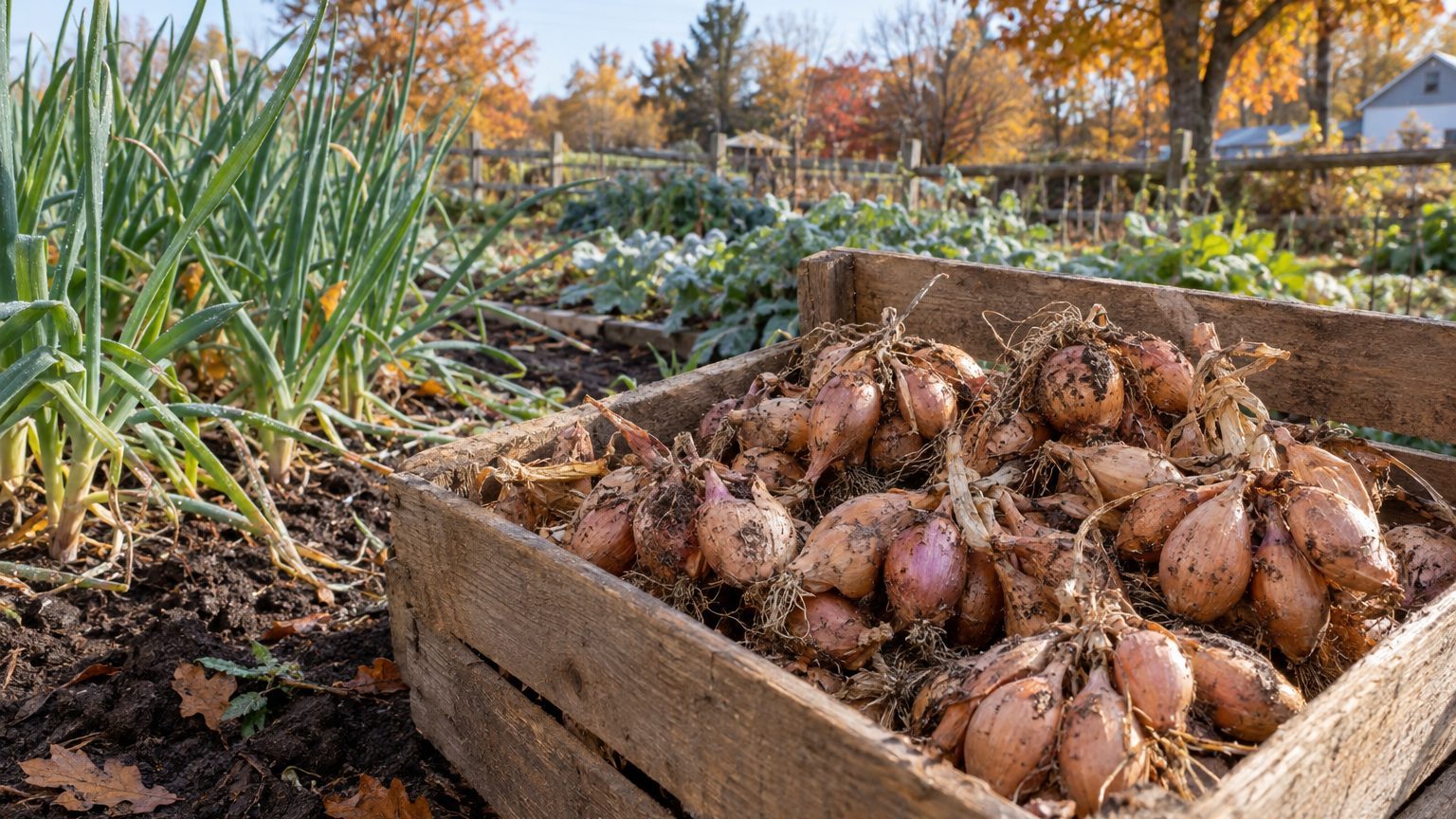

For most Indiana gardeners, the best shallot is a multiplying, bulb-grown type planted from sets, matched to how well the soil drains. Seed-grown shallots also work, but they ask for more babysitting and an earlier start. Here, type matters more than variety name, and a county trial result matters more than either.
The short answer for Indiana
Start with multiplying shallots from sets or bulbs, and treat seed-grown types as the second choice. Sets skip the slowest stage of the crop. A single planted bulb divides into a cluster, so the garden’s calendar does less of the work. Seed-grown types make sense if you want to avoid carrying disease on bulbs, or if you want a big harvest for little seed money, but they have to be started early and transplanted on time.
The numbers explain why. At the Indianapolis reference station, the NOAA 1991-2020 Climate Normals put the last spring frost between April 9 and April 21. That range is the 30-70% band of the probability of a 32°F freeze, not a promise. Purdue adds that roughly a 10% chance of a 32°F event remains after the published spring date. The first fall frost falls between October 21 and October 30, using the same measure. Between those windows lies about six months of frost-free growing, which is plenty for shallots.
The cold side is just as forgiving. The mean daily minimum of the coldest month at Indianapolis is 20.9°F. That is a cold winter, but not a killing one for a hardy allium that sits under soil and mulch. Shallots shrug off frost, so these dates matter less for them than for tomatoes. They matter for timing: you want roots and leaves established while days are still cool.
| Type | How it starts | Fit for Indiana |
|---|---|---|
| Multiplying shallots | Sets or bulbs, planted fall or earliest spring | Best first choice for most gardens |
| Seed-grown shallots | Seed started indoors early, then transplanted | Workable, but needs an early start and careful watching |
| Larger, rounder types | Usually from sets | Good where soil drains well and spring is not rushed |
| Smaller, tight-clustering types | Usually from sets | More forgiving of wet years and stronger for storage |
This page does not have Indiana variety-trial results by cultivar name, so it sticks to type. For the dates behind each planting season, see When to Plant Shallots in Indiana. For the full crop from bed prep to harvest, see Growing Shallots in Indiana.
What will not work here
Waiting too long fails first. Because the last spring frost lands between April 9 and April 21, the useful planting window opens in early spring, while the soil still feels cold. A gardener who waits for it to feel like May is planting into warm days that push bulbs toward maturity before the plants have grown enough leaf. Shallot size follows leaf size. Small tops mean small bulbs, and no amount of summer feeding fixes that.
Heavy, slow-draining soil fails next, especially for fall plantings. Winter in Indiana is not simply cold. It swings above and below freezing, and the coldest-month minimum of 20.9°F shows how often that line gets crossed. Bulbs sitting in wet clay can heave out of the ground during freeze-thaw cycles or rot where water pools. A raised bed or a ridge of soil solves most of this. Planting in a low spot that holds spring puddles solves nothing.
Humidity is the quieter failure. Indiana summers are muggy, and a dense stand of shallots with wet foliage invites fungal disease. Close spacing that works in a dry western climate can backfire here, because leaves dry slowly and air barely moves between rows. Give each cluster room, water at the base in the morning if you water at all, and keep weeds down so air can pass. In a humid state, overwatering is a more common mistake than underwatering, so a weekly soak on a fixed schedule often does harm.
Seed-grown shallots started too late also come up short. They need weeks indoors before transplanting, and a seedling set out in June has lost the cool stretch it needs. Rain at harvest causes trouble too. Bulbs pulled in a wet spell and left to cure in damp conditions can mold or rot in storage. If the forecast is wet, cure them under cover with good airflow rather than leaving them in the bed or on the ground.
What changes across Indiana
Indiana is not one garden. The USDA Plant Hardiness Zone Map, which is built on a single variable (the average annual extreme minimum temperature), puts the state in zones 5b to 7a. That is a spread of several half-zone steps, so there is no single answer for the whole state. Indianapolis is the reference point for the dates on this page, and other parts of the state differ from it.
The frost dates shift too. Southern Indiana runs earlier in spring and later in autumn than the north by a fortnight or more. A gardener near the Ohio River can often work the soil and plant in early spring well before a gardener in the far north, and can plant fall bulbs later too. The same warmth that helps in March also arrives sooner in summer, so a late spring planting in the south runs into heat faster.
If you garden in northern Indiana, expect the opposite. Shift your spring planting later by a fortnight or more, and give fall-planted bulbs enough time to root before the ground freezes. Plant them earlier in autumn than the Indianapolis dates suggest, and mulch more carefully, since the coldest stretches there run harder than the 20.9°F figure for the reference station. Hold seed-grown transplants until the weather settles, but not so long that you lose the cool window.
Do not guess your own zone from a neighbor’s advice or from a state-wide label. The USDA map lets you look up a ZIP code, and that is the right place to confirm it. Even then, a zone only describes winter cold. It says nothing about how wet your soil is in spring or how fast July heat arrives.
Where to check this for your own county
The best next stop is Purdue Extension, the state’s land-grant extension service. It runs county offices across Indiana, staffed by educators who know the local soils, weather and pest pressure. Look for two things there. The first is a local planting calendar or vegetable guide for your county or region. The second is any list of onion-family varieties that have been trialled near you, which is the closest thing to a verdict on what actually performs in your soil.
Be clear about what this page is. It is a state-level read, built on the Indianapolis station and a zone range that spans several steps. A county recommendation beats a state one, because it accounts for the local microclimate, soil type and disease history that no statewide page can capture. Where Purdue’s county guidance and this page disagree, follow the county.
If you call or visit your county office, ask which shallot or onion-family types have done well locally, whether fall planting is advised in your area, and what the local disease pressure is in wet summers. Bring a soil sample if they offer testing. A soil test tells you more about shallot yield than any variety name will, especially on ground that has been fed heavily for years.
Checking this against your own garden
Your own observation outranks every date above. Three things are worth watching, and none needs a gadget.
- Soil warmth by feel. Push a bare hand into the bed in early spring. If the soil feels cold and sticky, smears when squeezed and sits wet, wait. If it crumbles and feels cool rather than icy, it is ready. Beds that pass this test first are your warmest, best-drained spots.
- The first green shoots. Note the day your overwintered bulbs push up leaves, or the day seedlings show their first true leaves. A garden where this happens a week or two ahead of a neighbor’s is telling you it runs warm.
- Where water and frost linger. After a hard rain or a frosty night, see which corners stay wet or white longest. Those low spots are the ones where fall bulbs rot and spring growth stalls. A south-facing wall or fence will do the opposite.
Write the dates down for a season or two. A small notebook beats memory, and after two years it will tell you more about your yard than a state-wide range can.
Common questions
Do shallots survive Indiana winters?
Yes, in most cases. The mean daily minimum of the coldest month at Indianapolis is 20.9°F, and shallots are hardy bulbs. The real winter risk is wet soil and freeze-thaw heaving, not the cold itself.
Should I plant shallots in fall or spring?
Both can work, and the right choice depends on your drainage and how far north you garden. Fall planting suits well-drained beds, while spring planting suits heavy or wet ground. The dates are laid out in When to Plant Shallots in Indiana.
Are seed-grown shallots worth the extra work?
They can be, mainly if you want to avoid buying bulbs. They need an early indoor start and on-time transplanting, so they punish a late start more than sets do. Beginners usually do better with sets.
Can I plant shallots from the grocery store?
You can try, but results are unreliable. You will not know the type, and bulbs sold for cooking may carry disease or be unsuited to your climate. Sets sold for planting are the safer start, and your county Extension office can point you to sources that suit local conditions.