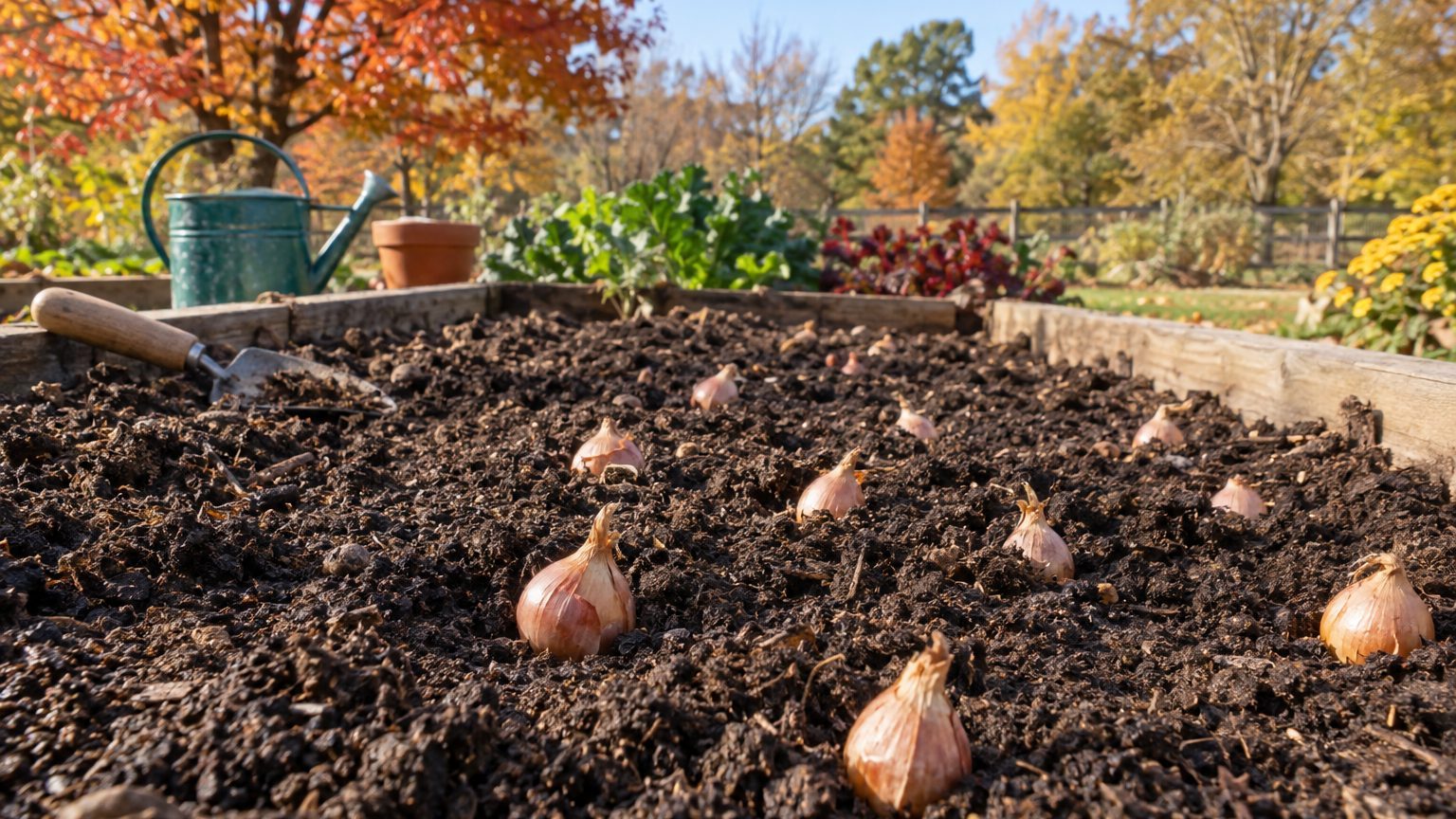

Plant shallots in Indiana in fall, from roughly the last week of October into early November, or in spring as soon as the soil can be worked, which usually means late March into April. Fall planting generally gives the bigger bulbs. Spring planting works, but summer heat arrives before the bulbs have much time to size up. Below, the frost dates behind those windows, and what to adjust.
The short answer for Indiana
Indiana gardeners have two good windows: fall, around the first autumn freeze, and early spring, around the last one. The NOAA 1991-2020 Climate Normals for the Indianapolis station put the last spring frost at April 9 to April 21 and the first fall frost at October 21 to October 30. Those are not calendar promises. Each range is the 30-70% probability band for a 32°F freeze: the stretch of days when the odds of another freeze (spring) or a first freeze (fall) sit between 30% and 70%. Frost can come before or after either range.
Why shallots tolerate the early edge
Shallots are hardy bulbs. Unlike tomatoes, they don’t need the last freeze to be safely behind you, so the spring window opens before April 9 whenever the ground is workable. Purdue notes about a 10% chance of a 32°F event after the published spring date, and that matters for tender crops. For shallots, it mostly means a late freeze may nip green tips, which rarely sets them back much.
Fall first, spring as the backup
Fall planting works because the bulbs spend autumn and winter building roots, then start growing in earliest spring when the soil warms. Aim to plant near the first-frost window at Indianapolis, so roots form but the tops stay short. The Indianapolis station is the reference point, and southern Indiana runs earlier in spring and later in autumn than the north by a fortnight or more. A gardener near the Ohio River can plant later in fall, and one near the Michigan line should plant earlier.
If you missed fall, plant in spring the moment the soil crumbles instead of smearing. That window closes by the time the Indianapolis last-frost band has passed and warm weather is coming. For choosing what to plant, see The Best Shallots to Grow in Indiana. For the full growing picture, see Growing Shallots in Indiana.
The coldest-month figure explains why fall planting is safe here. The mean daily minimum of the coldest month at Indianapolis is 20.9°F. That is a monthly average of nighttime lows, not the record low, but it shows winters cold enough to stop top growth and rarely cold enough to kill a well-rooted, mulched shallot.
What will not work here
Planting too early in fall is the commonest failure. If shallots go in during September, while Indiana soil is still warm, they send up tall green tops before winter. A freeze in the 21st to 30th of October band can burn that growth, and the plant spends reserves it needed for spring. Wait for cooler soil.
Planting late in spring
Setting shallots out in May, long after the April 9 to April 21 band, wastes most of the cool weather they need. Bulbs size up when days lengthen, and a late start means the tops are still small when summer heat arrives. The result is small bulbs that are often hard to cure well. Spring-planted shallots should go in as soon as the ground allows, not when it is convenient.
Wet clay and winter heave
Much of Indiana has heavy soils that stay wet well into spring. Shallots set in waterlogged ground rot before they root, so a rain-soaked April weekend is a bad planting day even if the date looks right on paper. Winter adds another problem. With a coldest-month mean minimum of 20.9°F, Indiana nights hover around the freezing mark often enough that the ground freezes and thaws repeatedly. Shallow, unmulched bulbs can be pushed up out of the soil by that cycle. Plant them with the tips just at or below the surface, and cover fall plantings with a few inches of straw or shredded leaves.
Humid summers also work against crowding. Spacing bulbs tightly traps moisture around the foliage, which invites fungal disease just as the tops begin to yellow and fall. Giving each bulb room, around 6 inches, helps the leaves dry out between rains.
One last failure is following a single date. A 30-70% band at one station can’t account for every Indiana garden. The Indianapolis dates are a reference, not a rule for the whole state.
What changes across Indiana
Indiana does not have one growing climate. The USDA Plant Hardiness Zone Map (2023, built on 1991-2020 normals) places the state in zones 5b to 7a. That zone system rests on one variable, the average annual extreme minimum temperature, so it says how cold the worst nights get, not how long the season runs. A spread that wide means no single answer works for Evansville and South Bend alike.
Shallots will survive in every part of that range. What shifts is timing. The Indianapolis frost dates are the middle of the state. In the south, spring thaw comes sooner and fall frost comes later, by a fortnight or more, so fall planting can wait longer and spring planting can start earlier. In the north, plant fall bulbs earlier, because the ground cools and then freezes sooner, and expect spring to arrive later.
A reader in the northern counties should lean more heavily on fall planting plus a thick mulch layer, since the colder end of the zone range means harder winters. In the south, the main concern flips. A mild stretch in winter can wake fall plantings early, and a hot early summer shortens the bulbing period. Both argue for planting on the later side of fall and not rushing spring.
Which zone is yours? Look yourself up on the USDA Plant Hardiness Zone Map rather than guessing from a county name. Zones can shift over short distances, especially in cities, which run warmer than the surrounding farmland.
Where to check this for your own county
This page is the state-level answer, built around one reference station. A county recommendation beats it every time. Purdue Extension has an office serving every Indiana county, and it is the best place to turn this general window into local dates.
When you reach the site, look for two things. First, the local planting calendar for onions and related alliums. It will tell you what dates county educators actually recommend, based on local frost patterns. Second, any varieties trialled in your county or region. A variety that does well in a northern Indiana trial may not perform the same on southern Indiana soils, and extension trial results show what has been tested, not what a catalog claims.
Local Extension educators and Master Gardener volunteers can also answer questions this page cannot, such as how your specific soil drains, whether a recent wet spring has delayed planting in your area, and what pests have shown up this season. Soil testing is available through Purdue as well, and it will tell you whether the pH and fertility are right before you plant.
This page does not have county-level planting dates, and it does not offer any. A single station and a probability band can only get you close. Your county office can get you closer.
Checking this against your own garden
Your own observations outrank every date above. Three things are worth watching, and none needs equipment.
Soil warmth by feel. Push your hand into the bed a few inches deep. In fall, you want soil that feels cool, not warm, which means top growth will stay modest. In spring, you want soil that crumbles when squeezed instead of forming a wet ball. A bed that stays cold and soggy long after your neighbor’s has dried tells you that your spot is slow, perhaps shaded or low-lying, and you should plant later.
Early blooms and catkins. Trees such as maples and hazels open male flowers and catkins in late winter or early spring. Note the week they open in your yard each year. If they come early, your site warms faster than average. Comparing year to year, you’ll learn whether your garden runs ahead of or behind the Indianapolis dates.
The first true leaves. Watch when green shoots break the surface, in spring for fall plantings or after a couple of weeks in spring plantings. Shoots up before winter means you planted early. Shoots that appear well after neighbors’ means a cold pocket. Write the date down.
A notebook with three or four entries a year will do more for your timing than any state calendar.
Common questions
Can I plant shallots in Indiana in spring instead of fall?
Yes. Plant as early as the soil can be worked, before or around the April 9 to April 21 last-frost band at Indianapolis. Expect smaller bulbs than fall plantings, since the plants have less cool weather before summer heat.
What happens if a freeze hits after I plant?
Shallots are hardy, so a freeze usually does little beyond burning leaf tips. Fall plantings with tall tops are more at risk, which is why planting too early is the bigger mistake. Mulch protects the bulbs.
Does northern Indiana plant at a different time than southern Indiana?
Yes. The Indianapolis dates are the reference. Southern Indiana runs earlier in spring and later in autumn than the north by a fortnight or more, so northern gardeners should plant fall bulbs earlier and southern gardeners can wait.
Which USDA zone is Indiana?
The USDA Plant Hardiness Zone Map (2023) spans 5b to 7a across the state. Check the map for your own location instead of assuming a zone from this range.