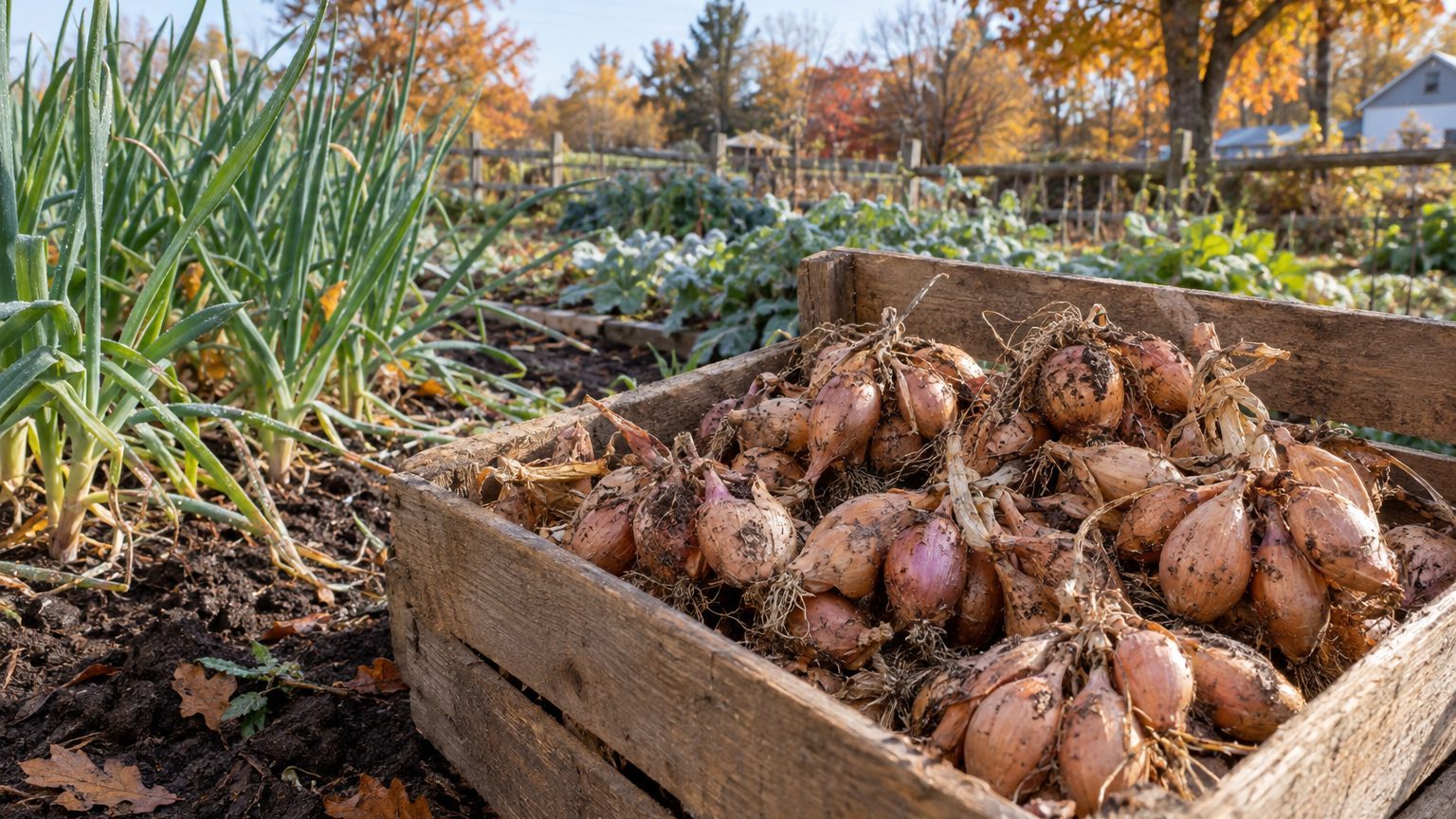

For most Maryland gardens, the best shallots are bulb-grown types planted in fall and harvested the following summer. Seed-grown shallots come second, and spring-planted bulbs are the weakest bet. The reason is timing: Maryland gives shallots a long cool window to root, then hands them a hot, humid summer. The variety you choose matters less than whether it fits that calendar.
The short answer for Maryland
Choose by type first and by name second. A fall-planted bulb shallot (a small bulb or “set” that multiplies into a cluster) suits Maryland best. It roots in autumn soil, sits through winter, and puts on its growth in spring before summer heat arrives. Seed-grown shallots can work if you start them indoors in winter and transplant early. Spring-planted bulbs are a fallback for gardeners who missed the fall window.
The numbers explain why. Using NOAA’s 1991-2020 Climate Normals, the last spring frost falls between April 3 and April 16, and the first fall frost between October 26 and November 5. Both ranges describe the 30-70% band of 32°F freeze probability. They are not guarantees. In any given year, the chance of a freeze on those dates sits somewhere between three in ten and seven in ten. The gap between the two bands is well over six months, which is generous for a crop that wants cool weather to establish and dry weather to finish.
Winter is rarely the problem. The mean daily minimum of the coldest month is 25.4°F at the Baltimore reference station. That is cold enough to stop top growth, but shallots are hardy bulbs and handle it without trouble. Heaving in freeze-thaw cycles and wet soil do more damage than the cold itself. I would call a bulb shallot in Maryland one of the safer winter crops you can plant.
| Type | When it goes in | What suits Maryland | Main risk |
|---|---|---|---|
| Fall-planted bulb shallots | Autumn, before the ground freezes | Roots in cool soil, bulks up in spring, ready before peak heat | Planting too early and getting soft, oversized tops |
| Spring-planted bulb shallots | As soon as soil can be worked | Workable where fall planting was missed | Short growth window before summer heat |
| Seed-grown shallots | Started indoors in winter, set out early spring | Cheap, and avoids carrying disease on bulbs | Needs a head start; slower to size up |
This page does not have Maryland variety trial results, so it will not rank named cultivars. If you want the full growing picture, Growing Shallots in Maryland covers soil, spacing, and harvest. For dates, When to Plant Shallots in Maryland goes further than this page does.
What will not work here
Late spring planting is the first thing to fail. A shallot planted in late April or May has only a few cool weeks before heat begins to push it toward ripening. The result is small, thin-necked bulbs that look like green onions with ambitions. Bulbs need cool weather to build leaf, and leaf is what feeds the bulb. Short on leaf, you get short on bulb.
Planting too early in fall fails in a quieter way. Maryland’s first fall frost does not arrive until October 26 to November 5, so autumn soil stays warm for weeks. A bulb set in warm September ground can send up several inches of green before winter. That growth is tender, burns back in hard freezes, and wastes energy the bulb needed. The better move is to wait for the soil to cool, so the bulb makes roots and holds its tops back.
Close spacing in a humid summer
Tight spacing is the mistake most specific to this climate. Packing shallots two or three inches apart looks efficient in March. By June, with a humid Maryland summer settling in, that same bed holds damp air around the stems and bulb shoulders. Fungal disease and rot follow. Six inches between bulbs, with rows spaced wide enough to let air move, is a better habit here. Mulch also needs a light hand: a thick, soggy layer that holds water against the bulbs does harm once the weather turns warm and wet.
Watering by schedule instead of by soil
Maryland gets stretches of dry summer weather, but a weekly watering routine can still backfire. Shallots want steady moisture while they size up in spring, then they want it to stop. Keep watering as the tops start to yellow and fall, and the bulbs stay wet when they should be curing. Wet bulbs store badly. Heavy clay and low spots that hold water through spring are a similar problem. If your bed stays soggy after rain, raise it or add compost before planting rather than hoping the shallots will cope.
One more trap: leaving harvested shallots to cure in a damp spot, or in direct hot sun. A dry, shaded, airy place gives the necks time to close. Skip that step in a rainy June and storage rot will show up by midsummer.
What changes across Maryland
Maryland is not one growing climate. The USDA Plant Hardiness Zone Map (2023, built on 1991-2020 normals) places the state across zones 5b to 8a, which is six half-zone steps. That system rests on one variable: the average annual extreme minimum temperature. So there is no single answer for the state, and the figures on this page that come from Baltimore describe Baltimore. Look up your own spot on the USDA map rather than guessing your zone from a neighbor’s.
Western Maryland, including Garrett and Allegany counties, is mountainous, and both frost dates run weeks later than the statewide bands shown above. The spring frost comes later and the fall frost sooner than in Baltimore. For a gardener there, the practical shifts are earlier fall planting so roots form before the ground freezes, a thicker mulch of straw after the ground has frozen, and a stronger case for planting in fall rather than spring. A spring planting in a cold, short season leaves very little room before summer.
The Eastern Shore runs milder. Frost arrives later in fall, so planting can wait longer, and spring warms earlier, which shortens the cool window the crop needs. Warmer soil in autumn makes the early-planting mistake more likely there. Sandy, well-drained ground helps with rot, but it dries quickly and needs attention to moisture while the bulbs are sizing up.
The middle of the state, around the Baltimore reference station, sits between these extremes, and it is where the dates in this article fit best. If your garden is in the mountains or on the Shore, treat the numbers here as a starting point and shift them by weeks, not days.
Where to check this for your own county
A state page like this one gives you a framework. A county recommendation beats it every time, and this page is the state one. Local extension offices see the same soils, the same frost pockets, and the same disease pressure you do.
Start with University of Maryland Extension. Two things are worth finding there. The first is a local planting calendar for alliums that matches your county, or the nearest one, since dates for Garrett County and for the Lower Shore can sit weeks apart. The second is a list of shallot or onion-family varieties that have been trialled near you, with notes on how they handled disease, storage, and the heat.
If the extension site has no shallot-specific page for your county, ask the county office directly. Extension staff and Master Gardener volunteers field these questions every fall, and they can tell you what local gardeners are planting and when they have been burned. Ask about drainage and rot problems in your soil type too, since that is where Maryland shallot crops tend to fail.
When extension advice and this page disagree, go with extension. The numbers here come from NOAA’s Baltimore normals and USDA’s zone map. They describe a long-term pattern, not your yard.
Checking this against your own garden
Your own observations beat every date printed here. Three are worth watching, and none needs equipment.
- Soil warmth by feel. In fall, push your hand a few inches into the bed. If the soil still feels warm like a sun-heated pot, hold off planting. Cool, even soil means roots will form without much top growth. A bed that stays warm longer than the neighbor’s tells you it is sheltered or sun-baked.
- First green shoots in late winter. Note the week the first shoots push through the mulch. Early emergence marks a mild pocket; late emergence marks a cold one. Across several years, this tells you more about your microclimate than a zone label does.
- Tops yellowing and falling over. When leaves begin to yellow and lean in early summer, the bulbs are finishing. If this happens early, your garden runs hot or dry. If it drags into wet weather, stop watering and lift the mulch so the bulbs can dry.
Write the dates down once a year. After two or three seasons, those notes will outrank any calendar, including the ones on this site.
Common questions
Can I grow shallots from seed in Maryland?
Yes. Start seed indoors in winter and set seedlings out in early spring. The trade-off is slower sizing than bulb shallots, which get a head start from fall roots. Seed-grown types avoid carrying disease on the bulb itself.
Should I plant shallots in fall or spring?
Fall is the better choice in most of Maryland, because it gives roots time to form in cool soil before winter. Spring works if you missed the window, but the bulbs have less time before summer heat. In the mountains, fall planting matters even more.
Will shallots survive a Maryland winter?
Generally, yes. The coldest month’s mean daily minimum is 25.4°F at the Baltimore reference station, and shallots are hardy bulbs. Mulch helps in the colder western counties, mainly to limit heaving from freeze and thaw.
Can I save my own bulbs to replant?
You can. Keep the firm, healthy bulbs from your best plants and discard any with soft spots, since rot can carry over. Store them cool and dry until planting, and replace your stock if disease shows up in the bed.