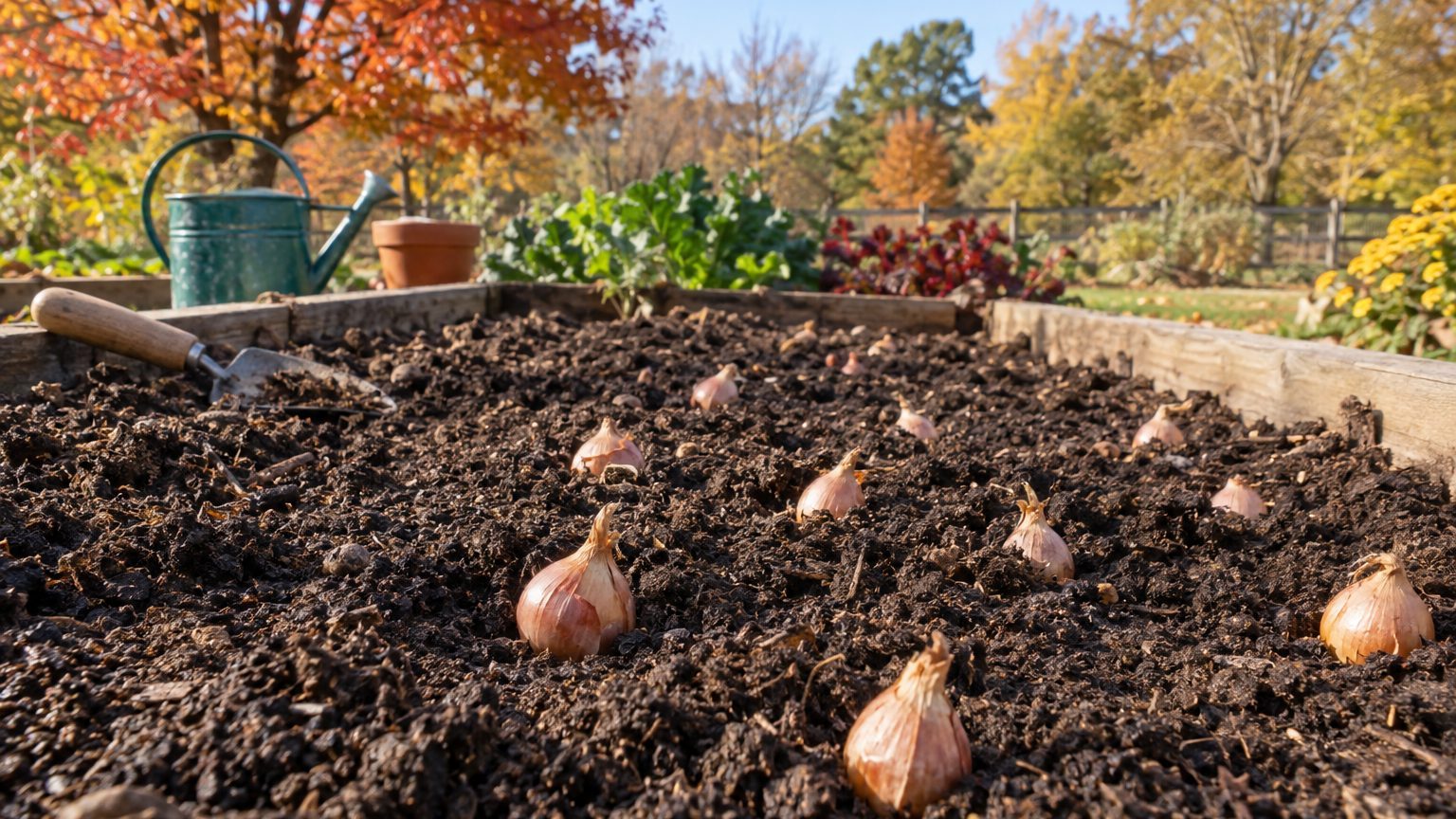

Fall is the main planting window for shallots in Michigan, with early spring as the fallback. Both windows hang on frost dates, and Michigan’s vary a lot from the southeast corner to the northern counties. The timing matters more than most gardeners expect. A bulb set out at the wrong moment either sprouts too early and gets burned by winter, or runs out of summer before it can size up.
The short answer for Michigan
Plant shallot bulbs in fall, once the first frost has arrived. MSU Extension’s Michigan Garden Calendar puts that at October 6 to October 21 for zone 6a. If fall gets away from you, plant in spring as soon as the soil can be worked, around the last frost: about April 30 in the Detroit area, and early to mid May across most of the Lower Peninsula.
| Marker | Date | Where it applies |
|---|---|---|
| First fall frost | October 6 to October 21 | Zone 6a (MSU Extension, Michigan Garden Calendar) |
| Last spring frost | Around April 30 | Detroit area (MSU Extension, Frost-Free Dates) |
| Last spring frost | Early to mid May | Most of the Lower Peninsula (MSU Extension, Frost-Free Dates) |
A frost date is a probability, not a deadline. It is built from decades of weather records and marks when a freeze typically stops (spring) or starts (fall). Some years a freeze lands after the spring date, and some years it arrives before the fall one. Treat the dates as the center of a range. They are not a guarantee that the garden is safe on the day after.
Why fall works comes down to roots. Bulbs planted after the first frost, in cooling soil, put down roots while the tops stay mostly quiet. They sit through winter, then restart as soon as spring warms, which gives them a head start over anything planted in April or May. For Detroit, NOAA’s 1991-2020 normals put the mean daily minimum of the coldest month at 19.2°F. That is an average of the nightly lows in the coldest month, not the record low, so individual nights run colder. A dormant bulb under mulch handles that. A leafy green shoot does not handle it nearly as well.
Spring planting trades that head start for convenience. It also puts the crop closer to the heat of summer, which has consequences covered in the next section. For the broader picture of how the crop grows from planting to curing, see Growing Shallots in Michigan.
What will not work here
Planting too early in fall is the most common failure. Set bulbs out in September, while soil is still warm and the first frost is weeks away, and they sprout green tops that have no business going into a Michigan winter. Tender top growth gets burned back, and the bulb has spent energy it needed for spring. Waiting for the October 6 to October 21 frost window in zone 6a is not caution for its own sake. It is the cue that the soil has cooled enough for roots without leaves.
Planting late in spring fails for a different reason. The Lower Peninsula’s last frost falls in early to mid May, and the first fall frost arrives from October 6 in zone 6a. Everything a spring-planted shallot does has to fit between those two markers. A bulb that goes in the ground in late May has lost weeks of cool-weather growth, and the slowest, longest-season types may not finish sizing up before fall. Plant them early or choose faster ones, which is a variety question handled in The Best Shallots to Grow in Michigan.
Bare ground over winter is another trap. Michigan winters swing above and below freezing, and repeated freezing and thawing can push shallow bulbs up out of the soil, a process called frost heave. Bulbs lifted that way dry out or freeze. A layer of straw or shredded leaves laid down after the ground starts to freeze keeps the soil temperature steady, and it is easy to pull back in spring.
Weekly watering, the habit that sinks gardeners in dry states, is not the usual Michigan problem. The risk here runs the other way. Humid summers and wet springs, plus the heavy clay common in parts of the southeast, mean bulbs spend long stretches in damp soil. Pack shallots too tightly and the foliage stays wet after every rain, which invites fungal disease and rot at the neck of the bulb. Crowded rows also dry down slowly at harvest, and a shallot that does not cure fully will not store.
What changes across Michigan
Michigan is not one garden. The USDA Plant Hardiness Zone Map (2023 edition, built on 1991-2020 normals) places the state in zones 4a through 6b. That is a wide spread, and it means there is no single planting date for the whole state. The system rests on one variable, the average annual extreme minimum temperature, so it tells you about winter cold and nothing about summer heat or season length.
Southern and lakeshore gardens
The Detroit area is the reference point here, with a last spring frost around April 30 and the zone 6a first-frost range of October 6 to October 21. Gardens in that part of the state sit at the warm end of the spread and get the longest runway for both fall and spring planting. Near the Great Lakes shorelines, the water slows the seasons at both ends. Spring warms later and fall cools later, so the fall window can open a little later than inland gardens at the same latitude.
Northern Lower Peninsula and the Upper Peninsula
Colder zones shift the whole calendar. The first fall frost arrives sooner, the ground freezes sooner, and spring thaws later. This page does not have frost dates for those areas, so it will not invent them. The direction of the shift is predictable: plant fall bulbs earlier in the season, before the ground locks up, and mulch more heavily. Spring planting waits on thaw, and that can push it well past the dates given for the Lower Peninsula.
Snow is the wild card. Where lake-effect snow piles up reliably, it insulates the soil better than any mulch. In open, windswept areas with little snow cover, the same air temperature does far more damage. Two neighbors in the same zone can see different results for this reason alone.
This page will not tell you which zone you are in, because the zone depends on your exact location. Look your address up on the USDA Plant Hardiness Zone Map, then adjust the calendar above toward the colder end if the map puts you in a lower number.
Where to check this for your own county
A county recommendation beats a state one. This page is the state one. It averages across a state that spans zones 4a to 6b, so it gives a sound starting point and cannot capture a particular county’s frost pockets, soil, or lake influence. For anything more exact, go to MSU Extension, Michigan’s land-grant extension service, which runs offices that serve each county.
Look for two things there. The first is a local planting calendar or frost-date table for your county, which will narrow the broad windows above. The second is a list of the varieties that have been trialled in your area. Trial results show which shallots actually sized up and stored well in local soil, and that is worth more than any generic list. If the county office can’t point to shallot trials specifically, ask about garlic or onion results, since the cold-hardiness and timing questions are similar.
Checking this against your own garden
Your own observations outrank every date on this page. Three things are worth watching, and none needs equipment.
First, soil warmth by feel. In fall, push a hand into the bed. If the soil feels cool and crumbly instead of warm, the roots-without-tops window is open. In spring, soil that crumbles in your fist and does not smear or stay in a wet clump is ready for planting. A bed that dries and warms early is a sheltered, sunny spot, and one that stays cold and soggy tells you to plant later or build it up.
Second, early bloomers. Crocuses, forsythia and similar spring plants respond to the same warming that tells shallots to grow. If they bloom earlier in your yard than in a neighbor’s across town, your microclimate is running ahead of the regional calendar, and the reverse holds too. Keep a rough note of the dates year to year and the pattern shows up fast.
Third, the first true leaves. For fall plantings, green shoots in November mean the bulbs went in too early or the fall was warm, and a light mulch over them is the fix. In spring, the date the shoots first appear shows how fast your bed wakes up. Shoots that arrive well ahead of the regional last-frost dates mark a warm microclimate, so protect them if a freeze is forecast.
Common questions
Can I plant shallots in spring in Michigan?
Yes. Plant as soon as the soil can be worked, around the last frost: about April 30 in the Detroit area, and early to mid May across most of the Lower Peninsula. Spring bulbs have less cool-weather growing time than fall ones, so earlier is better than later.
Is it too late once the first frost has passed?
Not by itself. The fall window opens around the first frost, which MSU Extension lists as October 6 to October 21 for zone 6a. What closes the window is the ground freezing too hard to plant, and that comes sooner in the north.
Will shallots survive a Michigan winter?
Dormant bulbs generally do, especially under mulch. For reference, Detroit’s coldest month has a mean daily minimum of 19.2°F (NOAA, 1991-2020), and that is an average, not a record. Colder zones within the state need heavier mulch.
Which shallots should I plant?
That depends on your season length and how early you can plant. The Best Shallots to Grow in Michigan covers the choices. For a county-specific answer, check which varieties your local extension office has trialled.