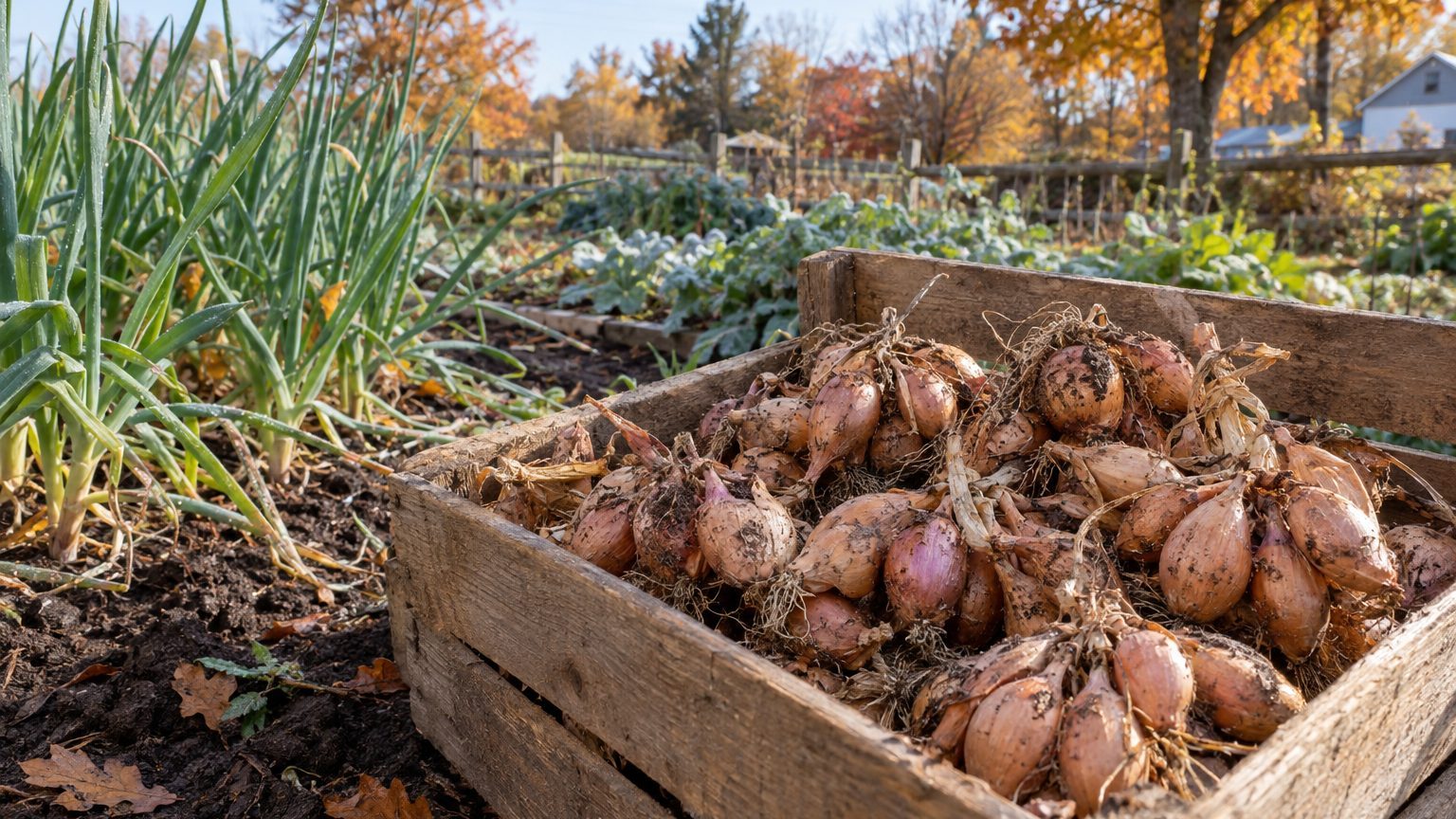

For most New York gardeners, the best shallots are hardy, multiplying types grown from small bulbs. Plant them in fall where winters are mild, and in early spring where the ground freezes hard and stays frozen. No single named variety wins statewide, because the state spans too many climates. This page sorts shallots by type, using verified numbers, and leaves brand-level picks to your county.
The short answer for New York
Choose bulb-grown, multiplying shallots over seed-grown ones, and favor types that mature early to midseason. Plant them in fall in the milder southern and coastal parts of the state, and in spring in the cold north. That decision by type matters more than any variety name.
The reasoning starts with the New York City numbers, which are the only reference this page has. Based on NOAA’s 1991-2020 Climate Normals for Central Park, the last spring frost falls between March 23 and April 3, and the first fall frost between November 14 and November 27. Those are not guaranteed dates. Each is the stretch where the odds of a 32°F freeze run between 30 and 70 percent. The coldest month there has a mean daily minimum of 27.9°F, which is cold enough to need a plan but mild for a bulb crop that is hardy by nature.
Central Park is a dense urban site, so treat these as New York City figures, not state-wide ones. Upstate and the Adirondacks freeze earlier in fall and later in spring. In the city, the long frost-free stretch between those dates gives even slower shallots time to size up. Farther north, it does not.
| Type | How it is grown | Fit in New York |
|---|---|---|
| Multiplying bulb type, fall planted | Small bulbs set in the ground before winter, harvested the next summer | Best bet downstate and in other mild areas; the city’s coldest-month minimum of 27.9°F is well within a hardy bulb’s range |
| Multiplying bulb type, spring planted | Same bulbs, set out as soon as the soil can be worked | Safer where winters are severe or the ground heaves |
| Seed-grown shallots | Started from seed, often indoors, then transplanted | Workable in a long season; a gamble in a short one |
| Large, slow-maturing types | Need the full season to finish and cure | Reasonable near the city; risky anywhere the season is clipped at both ends |
If you want the broader growing picture before narrowing to type, start with Growing Shallots in New York. For dates built around these frost figures, see When to Plant Shallots in New York.
What will not work here
Borrowing the New York City frost dates for a farm in the North Country is the first mistake, and the most common. The Central Park window of March 23 to April 3 describes a heat-island site on the coast. A garden hundreds of miles inland and far higher up thaws later. Plant by the city’s dates in that garden and the bulbs sit in cold, saturated soil.
Season length is the second failure point. The city has a generous stretch between its last spring freeze and first fall freeze. Shallots from seed, and the biggest slow-maturing bulb types, lean on every week of that stretch. In a colder part of New York, the season shrinks from both ends, and a late transplant may never finish bulbing before fall. The plants still look fine in August. Then the bulbs come up small and thick-necked and store poorly.
Winter is rarely what kills shallots here. With a coldest-month mean minimum of 27.9°F at the city reference station, fall-planted bulbs overwinter without drama downstate. The real risk is the opposite: planting too early, then watching a warm spell push green tops up in midwinter, only to have a hard freeze cut them back. Plant too soon and you spend the bulb’s energy before spring arrives. In zone 3b country, the fall-planting risk shifts again. Without a thick mulch, repeated freezing and thawing can lift bulbs out of the soil.
Moisture is where this page runs out of numbers. It has no verified rainfall or humidity figures for New York, so it will not pretend to know your summer. What it can say is general: shallots crowded into wet, still air hold moisture around their necks and rot. If your summers run damp, err toward wider spacing and a bed that drains. Your county extension can tell you what local rainfall and disease pressure look like.
Last, a less obvious failure: curing. Shallots lifted in a wet stretch and left in a closed garage never dry properly. Plan for a spot with moving air before you plant, not after the harvest is already sitting on a bench.
What changes across New York
New York has no single answer, because the state spans a wide range of USDA hardiness zones: 3b to 7b, according to the USDA Plant Hardiness Zone Map 2023, built on 1991-2020 normals. That is five numbered zones, from the Adirondack interior to the warmest coastal pockets. The system rests on one variable, the average annual extreme minimum temperature. It tells you about winter survival. It says nothing about season length, summer humidity or how wet your spring soil stays.
For a reader in the northern tier or at altitude, three shifts matter. First, lean toward spring planting, or toward late-fall planting under deep mulch, rather than an early autumn set that invites top growth. Second, pick earlier-maturing types, since the season has less room for slow ones. Third, treat seed-grown shallots as an experiment in a corner of the bed, not as the main crop.
For a reader in the southern part of the state or along the coast, the reverse holds. Fall planting is the stronger option, and the longer season lets you consider larger types. Even so, resist planting at the first cool day. The point of fall planting is root growth, not a head of green.
To find where you land, look at the USDA Plant Hardiness Zone Map and search by ZIP code. Do not guess from a neighbor’s garden or a state average. Two towns an hour apart can fall in different zones, and a hillside can sit a full zone below the valley next to it. Once you have your zone from the map, the planting-date logic in When to Plant Shallots in New York is easier to adjust.
Where to check this for your own county
The best local authority is Cornell Cooperative Extension, New York’s land-grant extension network, which runs through county offices. A county recommendation beats a state one, and this page is the state one. It gives you the decision by type and the reasoning, not a verdict for your soil.
When you reach your county’s page or office, look for two things. The first is a local planting calendar for onions, garlic or shallots, whichever the office publishes, with dates tied to your area’s frost pattern, not the Central Park figures used here. The second is a record of varieties trialled in your county: which types were grown, how they matured, and how they stored. A trial that ran in your climate is worth more than any national catalog description.
It also helps to ask questions directly. County offices often field gardening queries, and a short message about which shallot types do well locally, and whether fall or spring planting is standard, gets you a better answer than a general guide can give. Ask about bulb rot and storage too, since those problems vary by county with rainfall and soil.
One caution about what this page does not have: it holds no verified New York shallot-specific calendar from an extension service. Calendars from other states do exist, but they reflect other frost patterns and other crops, so do not substitute one. Use your own county’s material, and treat anything here as the starting frame.
Checking this against your own garden
Your own observations outrank every date on this page. Three are worth watching, and none needs equipment.
The first is soil warmth by feel. In early spring, dig a handful from the bed and squeeze it. If it is cold, clammy and clumps into a wet ball, it is too early to plant, and it tells you the spot drains slowly or shades late. If it crumbles and feels merely cool, the bed is ready. Compare a bed against a south-facing wall with one in a low corner, and you will see your microclimate in your hands.
The second is the first green shoots on fall-planted bulbs. If tops show well before the ground has frozen for good, or break the surface during a winter thaw, you planted early or your site runs warm. Plant a little later next year, or mulch more heavily. If shoots appear late, your site is cold, and spring sets may serve you better.
The third is how the tops behave in summer. When the green leaves begin to yellow and fall over, the bulbs are close to finished. Note the date. A yard where that happens early in the season is telling you something about its heat and drainage. A yard where tops stay green late is telling you the season is long enough, or the bulbs were planted late.
Write all three dates down for two seasons. After that, you have a calendar built for your own yard, which no state page can match. A single sheltered corner can behave differently from the rest of the same lot.
Common questions
Is there one best shallot variety for all of New York?
No. The state spans USDA zones 3b to 7b, so the best choice depends on where you garden. The decision by type (multiplying bulbs, fall or spring planted, earlier or slower maturing) travels better than any single variety name. Your county extension can tell you which named varieties have been trialled nearby.
Should I plant shallots in fall or spring in New York?
Fall planting suits milder areas, such as the city and its surroundings, where the coldest-month mean minimum is 27.9°F. Spring planting is safer in the colder north and at altitude, or where frost heaves are common. Mulch matters in either case.
Can I grow shallots from seed in New York?
Yes, but it is the riskier route. Seed-grown shallots need a long enough season to size up and cure. That is more realistic downstate than upstate. Bulb sets are the dependable option for most gardeners.
Will shallots survive a New York winter?
Generally, yes, since shallots are hardy bulbs. At the New York City reference station, the coldest month averages a daily minimum of 27.9°F, which poses little problem. In the coldest zones, a deep mulch protects against freeze-thaw heaving, and spring planting avoids the issue entirely.