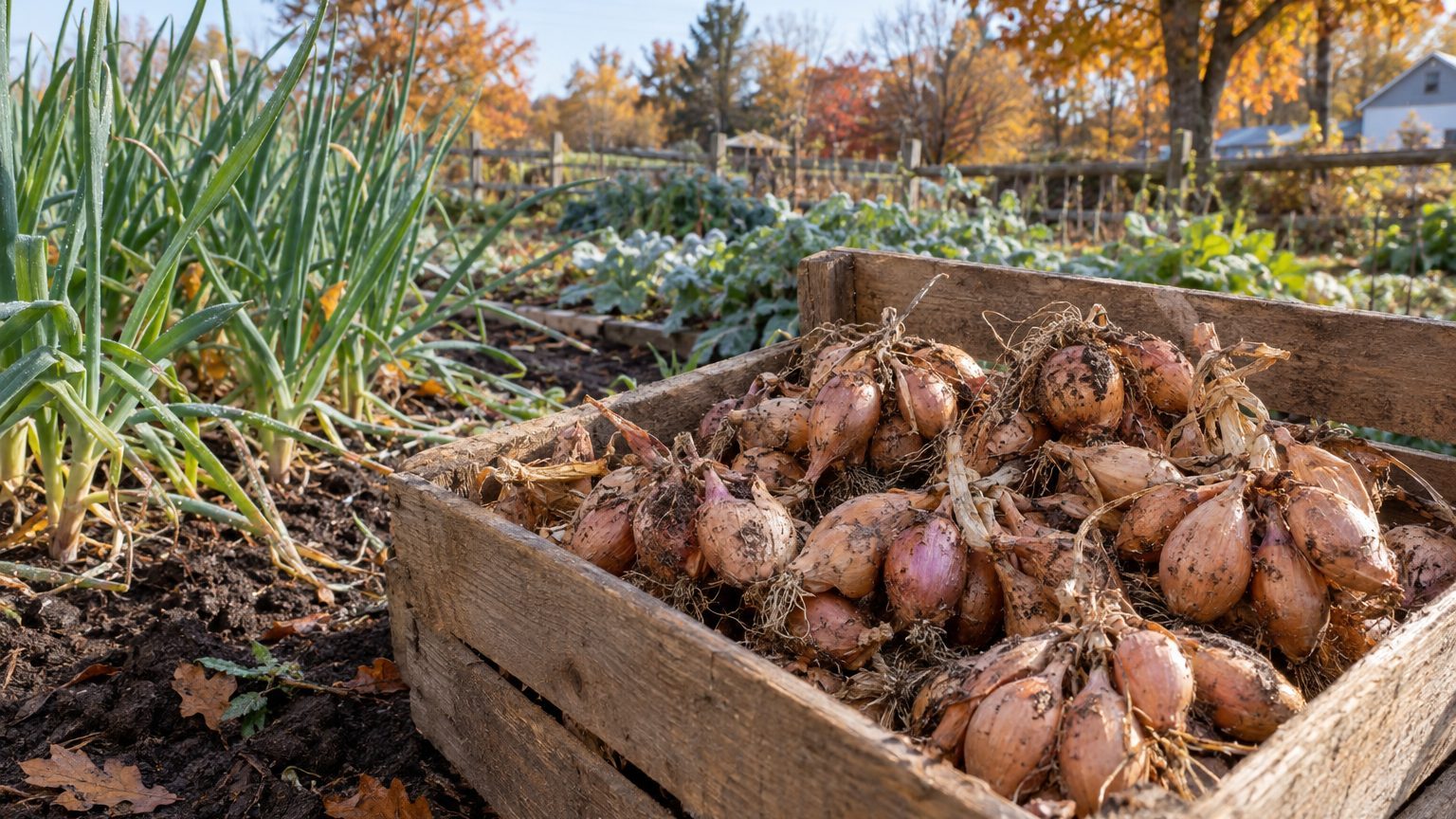

The best shallots for Mississippi are multiplier types grown from bulbs, planted in fall and harvested in late spring or early summer, before the worst heat and humidity settle in. Seed-grown shallots come second. Slow-maturing, long-storage types bred for cool northern summers are the risky buy. Mississippi’s winters are mild enough that cold is rarely the problem. The long, wet growing season is.
The short answer for Mississippi
Pick fast, disease-tolerant multiplier shallots, buy them as bulbs, and plant them in fall. That is the decision by type. It comes from two numbers: how mild winter is and how little of the year is truly frost-free.
Start with the cold. At the Jackson reference station, the mean daily minimum of the coldest month is 36.6°F, according to NOAA’s 1991-2020 Climate Normals. Shallots shrug that off. Winter hardiness is not what separates a good variety from a bad one here, so you can stop shopping for “extra hardy” and start shopping for “finishes early and resists rot.”
Now the calendar. In the same NOAA normals, the last spring freeze (32°F) falls between March 6 and March 22. Those dates are a probability, not a promise: they mark the band where the odds of another 32°F freeze run between 30 and 70 percent. The first fall freeze falls between November 7 and November 22, on the same measure. These are airport figures for the reference city. Suburban and rural gardens usually see the last spring frost one to two weeks later and the first fall frost one to two weeks earlier, and more so at elevation.
How the types stack up
A fall-planted bulb gets the cool months to build roots and foliage, then bulbs up in spring. A spring-planted one is racing the heat. Here is how the main options compare for Mississippi.
| Type | How it is grown | Fit for Mississippi |
|---|---|---|
| Multiplier shallots from bulbs | Planted in fall, harvested late spring to early summer | Best choice. Uses the mild winter and finishes before peak heat |
| Seed-grown shallots | Started from seed, transplanted | Workable. Cheaper, but needs earlier starts and closer attention |
| Long-storage, cool-climate types | Usually spring-planted in the North | Risky. Slow maturity runs into humid, rot-prone weather |
For dates and timing within that fall window, the When to Plant Shallots in Mississippi page goes deeper. The broader picture lives in Growing Shallots in Mississippi.
What will not work here
Spring planting of a slow variety is the classic failure. Ground that is workable in March is often wet, and a shallot planted then needs months to size up. The calendar says why: the last freeze can come as late as March 22 at the reference station, later in many yards, so many gardeners wait. By the time bulbs are swelling, the weather is warm and humid. Bulbs finishing in those conditions are prime targets for rot and fungal disease.
Waiting for the last frost is also unnecessary. With a coldest-month mean minimum of 36.6°F, an established shallot handles a late freeze without trouble. Holding off planting because of a March frost date costs you growing time you cannot get back. (A very early fall planting in warm soil has its own risk: too much leafy growth before winter. Follow the calendar page rather than the first cool morning.)
Close spacing is the next casualty. Tight rows that work in a dry Western garden trap moisture in Mississippi’s humid air. Foliage stays wet longer, and diseases that thrive in damp, still conditions get an easy start. Give each bulb real room, favor raised beds or well-drained rows, and avoid heavy mulch pushed up against the necks of the plants as spring warms.
Overhead watering on a schedule is a quieter mistake. Rainfall in much of the state can do the job through winter and spring, so a weekly soak on top of it just keeps the soil and leaves wet. Water by need, check the soil with your finger, and skip the sprinkler once the bulbs start to size up.
Curing and storage trip up even good harvests. A bumper crop pulled during a wet spell and left to dry in an enclosed, humid shed can rot before you cook with it. Pull bulbs when the tops fall over and yellow, then cure them in an airy, shaded spot with good airflow. This is also why the long-storage varieties built for cold cellars disappoint here: their main selling point is keeping through months of dry cold, and a Mississippi kitchen or garage will not give them that.
Finally, do not read the frost dates as a season guarantee. They describe a reference city. A rural garden a hundred miles north can run a week or two later in spring and earlier in fall, which shortens the window for any variety you plant late.
What changes across Mississippi
The USDA Plant Hardiness Zone Map (2023, built on 1991-2020 normals) puts Mississippi at 7b to 9a. That is a spread of several half-zones, so there is no single answer for the state. The system rests on one variable only, the average annual extreme minimum temperature, so it tells you about winter lows and nothing about humidity, summer heat, or disease pressure.
In practice, a gardener in the northern part of the state faces a colder winter and a later spring than the Jackson reference figures suggest. Expect the last freeze to run later, and pad your spring expectations accordingly. A reader at higher elevation, even in modest hills, should shift the same way. Bulbs planted in fall will still establish, but growth in late winter may lag, and harvest may come a little later than the reference timing.
Toward the Gulf Coast, the pull goes the other direction. Winters are milder, and the real concern is how early the humid heat arrives. Fall-planted shallots there have an even stronger case for early-finishing varieties, and rot control matters more than cold protection.
Which zone applies to your address is something this page will not tell you. Look it up on the USDA Plant Hardiness Zone Map by ZIP code, then treat the zone as a rough guide to winter cold, not as a planting date. The Jackson dates above are a middle reference. Your own place may be earlier or later by a couple of weeks in either direction.
Where to check this for your own county
Your best next stop is Mississippi State University Extension, the state’s land-grant extension service. County offices work with local growers and see what actually performs in your soil and climate.
Two things are worth hunting for. The first is a local planting calendar for onions and shallots, or the closest match: bulb onions, garlic, and other alliums are often covered together. The second is any list of varieties that have been trialed in your county or a neighboring one. A variety that did well in a trial a few counties away, in similar soil and rainfall, is worth more than a catalog description written for a different region.
If you cannot find shallot-specific guidance, ask the county office directly. Extension staff and local Master Gardener volunteers can often tell you which allium types have done well nearby, what disease problems have shown up in recent seasons, and how local soil drainage tends to behave.
A county recommendation beats a state one, plainly. This page is the state one. It rests on one reference city, a state-wide hardiness range, and general reasoning about heat, humidity, and season length. It is a sound starting point, not a substitute for advice tuned to your own county’s rainfall, soil, and frost pockets. Where the two disagree, trust the county.
Checking this against your own garden
Every date on this page is an average, and your garden is not average. Three observations will tell you more than any chart.
- Soil warmth by feel. Squeeze a handful of soil from planting depth. If it crumbles and feels cool rather than cold or soggy, it is workable. A bed that stays cold and wet long after neighbors’ beds have dried out is telling you it drains slowly, and that is where bulbs rot first.
- The first green shoots. Note when planted bulbs push up their first true leaves. Early, steady emergence means your spot is warm and sheltered. Slow emergence points to a cooler, shadier, or lower patch, so plan a later harvest there.
- Tops yellowing and falling over. This is the signal that a bulb is finishing. Write down the date each year. If it comes earlier than expected, your yard runs warm and you should favor the fastest varieties. If it comes late, you have more margin, but watch the weather for wet spells at harvest.
Keep a simple notebook. After two seasons, your own entries will outrank the frost dates above, and they will tell you whether to nudge your fall planting earlier or later than the calendar page suggests.
Common questions
Can shallots survive a Mississippi winter?
Yes. The mean daily minimum of the coldest month at the Jackson reference station is 36.6°F, and the state is mapped at 7b to 9a on the USDA 2023 map. Shallots tolerate that without difficulty. The harder question is surviving the wet, warm spring.
Should I grow shallots from seed or from bulbs?
Bulbs are the more dependable route in Mississippi, since fall planting lets them use the mild winter and finish before peak heat. Seed-grown shallots work too and cost less, but they need earlier starts and more attention.
Can I plant shallots in spring instead?
You can, but the odds are worse. The last freeze at the reference city falls between March 6 and March 22, and many gardens see it later. Spring-planted bulbs then mature into heat and humidity, which favors rot. The planting calendar page covers the better window.
Are the frost dates on this page right for my yard?
They are for the Jackson reference station, not your yard. Rural and suburban gardens usually see the last spring frost one to two weeks later and the first fall frost one to two weeks earlier, and more so at elevation. Check with your county extension office for local figures.