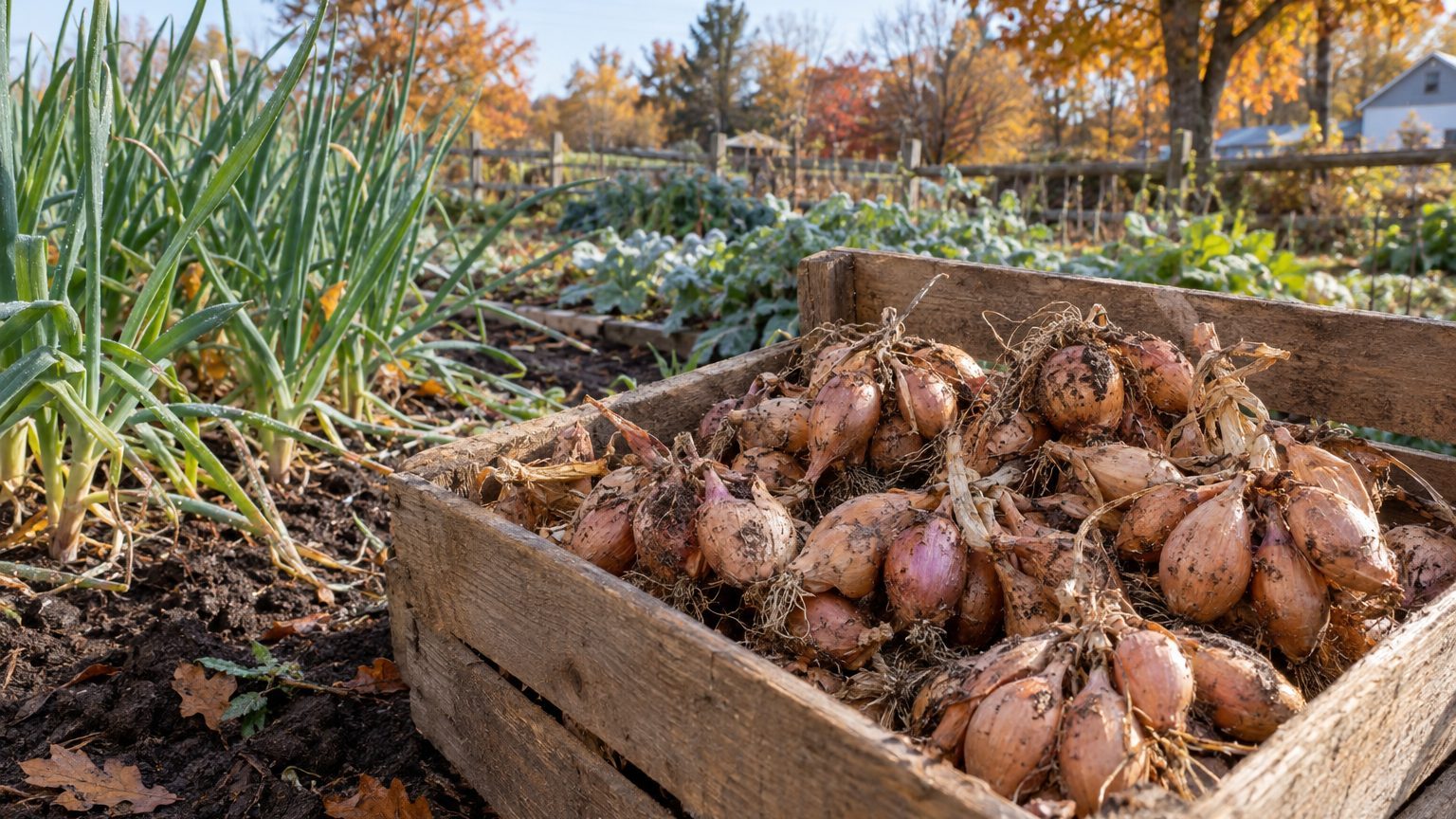

For most New Hampshire gardens, the best shallots are cold-hardy, long-storing bulb types planted in fall under mulch. Spring-planted sets or indoor-started seed types are the backup in the colder north and at elevation. Variety names matter less here than the type you pick. The season is long enough for most shallots, but short enough to punish the slowest ones, and winter decides more than summer does.
The short answer for New Hampshire
Start with the numbers. At the reference weather station (an airport), NOAA’s 1991-2020 normals put the last spring frost between April 16 and April 27, and the first fall frost between October 13 and October 26. Those dates are a probability, not a promise: they mark the band where the chance of a 32°F freeze sits between 30% and 70%. They describe one airport, not the whole state. Suburban and rural gardens usually see the last spring frost later and the first fall frost earlier, often by one to two weeks, and more at elevation.
Winter is the other number. The mean daily minimum of the coldest month, at the Manchester reference station, is 17.1°F. That is an average overnight low, not the record cold, but it tells you a fall-planted shallot will spend months in frozen or freeze-thaw soil. Shallots are tough enough for that if the bulb is established and mulched. What kills them is bare, heaving ground.
Season length rewards the middle of the field. Shallots need a few months of growing weather and a dry spell to cure, and the window between the April frosts and the October ones gives them both. So the decision comes down to type:
| Type | Best fit in New Hampshire | Main risk |
|---|---|---|
| Bulb-grown, fall-planted | Southern and lower-elevation gardens; earliest harvest, largest bulbs | Frost heave on bare soil |
| Bulb-grown, spring-planted | Northern, high-elevation or exposed sites | Smaller bulbs if planting slips late |
| Seed-grown, started indoors | Gardeners who want cheap, disease-free stock | Needs early indoor sowing and a full season |
Within bulb types, favor varieties sold as good keepers. Widely sold names such as French Red and Dutch Yellow are common starting points, and seed-grown cultivars such as Conservor and Ambition exist for the seed route. This page does not have New Hampshire variety trial results, so treat those as examples of types, not endorsements. Exact dates are on the When to Plant Shallots in New Hampshire page, and the broader picture is in Growing Shallots in New Hampshire.
What will not work here
Late planting fails first. A bulb set out in fall needs time to root before the ground locks up. In a northern or high-elevation garden, where the first fall frost can arrive a week or two ahead of the Oct 13 to Oct 26 band, that rooting window closes sooner than the airport figures suggest. A bulb that goes in just before a hard freeze sits shallow and loose, and a January thaw can push it right out of the soil.
Bare ground fails too. With a coldest-month mean minimum of 17.1°F, the soil here does not simply freeze and stay frozen. It cycles. Without snow cover, a few inches of straw or shredded leaves is the difference between a bulb that stays put and one that ends up lying on top of the bed in March. Fall-planted shallots with no mulch are the most common loss in cold-winter states, and New Hampshire is no exception.
The slowest shallots struggle on the short side of the season. A seed-grown type sown outdoors in May may never size up before the first fall frost, which could land as early as mid-October in a rural garden, or earlier up north. Seed types work only when you start them indoors well ahead and transplant as soon as the soil can be worked. Direct-seeding them is a bet this season length does not pay.
Then there is curing. Shallots finish in summer and need dry, airy conditions to cure for storage. A late-maturing variety in a wet stretch will be ready when the weather is least cooperative, and a bulb that cures badly rots in storage by midwinter. This page does not have rainfall or humidity figures for the state, so I will not put a number on it. But New England summers can turn damp, and tight spacing traps moisture around the necks. Give each bulb the room the packet suggests and lean toward an earlier-maturing type if your garden stays wet.
Heat, by contrast, is not the problem. Nothing in this page’s facts points to a summer hot enough to stress shallots, so you need not shop for heat tolerance. Spend that attention on winter survival and on how early your fall frost really comes.
What changes across New Hampshire
There is no single answer for the state. The USDA Plant Hardiness Zone Map (2023, built on 1991-2020 normals) spans zones 3b to 6a here. That is a wide range for one small state, and it reflects real differences: the southern valleys and the coast sit at the warmer end, while the White Mountains and the North Country sit at the cold end. The USDA system rests on one variable, the average annual extreme minimum temperature, so it tells you about winter survival, not about growing-season length.
For a reader in the north or at altitude, three shifts matter. First, lean toward spring planting, or fall planting only with deep mulch and very early timing. Second, expect a later last spring frost and an earlier first fall frost than the April 16 to April 27 and October 13 to October 26 reference bands, by a week or two and sometimes more. Third, pick earlier-maturing types so the bulbs finish and cure before fall weather turns.
In the warmer south, the airport figures are closer to your reality, though still not exact, and fall planting is the better default. You have the room to choose long-storing varieties and let them size up over the longest stretch of the growing season.
Which zone is yours? I will not guess. Zone lines run through towns and even across hillsides, so look up your own location on the USDA Plant Hardiness Zone Map by ZIP code. If you are near a boundary, treat yourself as the colder zone for overwintering decisions.
Where to check this for your own county
A county recommendation beats a state one, and this page is the state one. The figures above come from a single reference station and a state-wide zone range, which is a long way from the conditions in your own beds. The place to close that gap is University of New Hampshire Cooperative Extension, the state’s land-grant extension service.
Two things are worth looking for there. The first is a local planting calendar for onions, garlic or shallots, ideally broken out by region or county, so the dates reflect your frost pattern and not an airport’s. The second is any variety trial results: which shallot, garlic or onion types have actually been grown and evaluated in New Hampshire conditions, and how they stored. This page does not have a New Hampshire shallot calendar or trial list to quote, so I am not going to invent one.
If the extension site has no shallot-specific material, the guidance for garlic and for bulb onions is the next best thing. Fall-planted garlic follows a very similar rhythm of rooting, mulching and spring regrowth, and the extension’s county offices can often tell you how local gardeners have fared. A short call or email to the nearest office is worth the effort, and many offer Master Gardener help lines that field exactly this kind of question.
Checking this against your own garden
Your own observations outrank every date here. Three are worth watching, and none need equipment.
Soil feel in spring. Grab a handful from the bed. If it crumbles when you squeeze it and does not form a sodden ball, it is workable. A bed that reaches that point two weeks before your neighbor’s is warmer and drains better, and a bed that stays soggy is one where spacing and early-maturing varieties matter most.
The first green shoots. On fall-planted shallots, note the day green tips push through the mulch. A garden where they appear early is a sheltered, sunny one. Late emergence points to a cold pocket or a heavy mulch layer that is holding the soil cold. Write the date down each year, because three years of notes beats any state chart.
When the tops fall over. As summer ends, the green leaves yellow and flop. That is your cue that bulbs are nearly ready to lift and cure. If it happens in a wet spell, harvest on the first dry day and cure in an airy, shaded spot.
Common questions
Should I plant shallots in fall or spring in New Hampshire?
Fall planting gives earlier, larger bulbs in southern and lower-elevation gardens if you mulch well. In the north or at elevation, spring planting is the safer choice because winter heave and a short rooting window are bigger risks.
Are seed-grown shallots a good idea here?
They can be, but only if you start them indoors early and transplant on time. Sowing seed straight into the ground leaves too little season before the October frost bands.
Do I need a specific “New Hampshire” variety?
No such label exists on this page’s facts. Look for cold-hardy, good-storing types and check University of New Hampshire Cooperative Extension for local trial results.
How much earlier does frost arrive in a rural garden?
The reference figures come from an airport station. Rural and suburban gardens typically see the last spring frost one to two weeks later and the first fall frost one to two weeks earlier, and more at elevation. For the full picture, see Growing Shallots in New Hampshire.