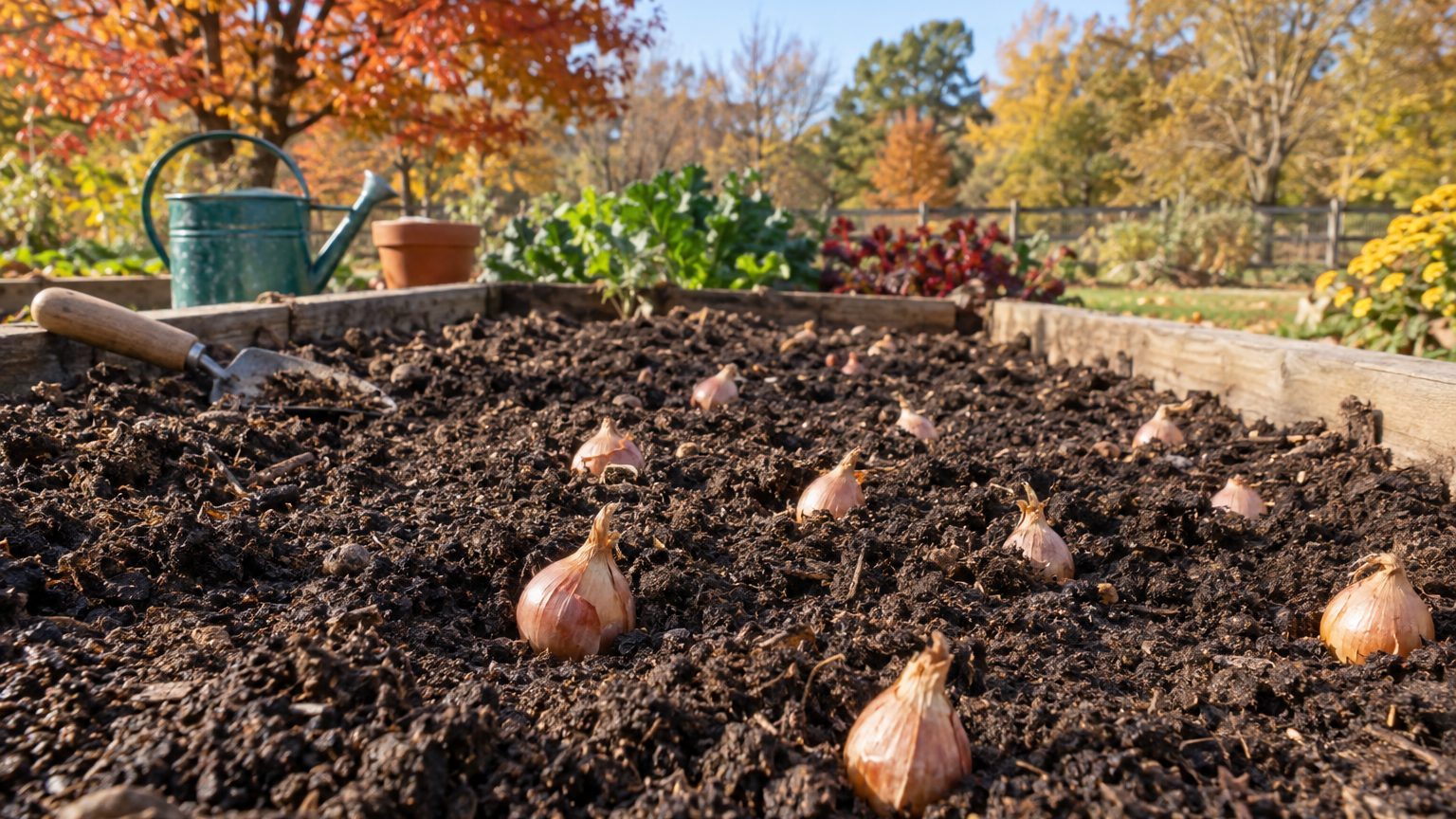

Plant shallots in Oklahoma in fall, in the weeks before the first hard freeze, or in late winter as soon as the soil can be worked. Both windows hang on freeze dates from the Oklahoma City reference station: the last spring freeze falls between March 28 and April 10, and the first fall freeze between October 29 and November 8. Your county will differ, and this page shows how to adjust.
The short answer for Oklahoma
Those dates are not deadlines. They are the stretch when the chance of a 32°F freeze sits between 30% and 70%, according to the NOAA NCEI U.S. Climate Normals for 1991-2020. Before the spring band opens, a freeze is more likely than not. After it closes, a freeze gets unlikely. The fall band works the same way in reverse. Nobody can promise you a specific date, only odds.
| Marker | Oklahoma City reference station |
|---|---|
| Last spring 32°F freeze (30-70% probability band) | March 28 to April 10 |
| First fall 32°F freeze (30-70% probability band) | October 29 to November 8 |
| Mean daily minimum, coldest month | 27.0°F |
Shallots are a cool-season allium, and a light freeze does not bother a dormant set or a young green shoot. So the spring freeze band is not the gate you wait for. The ground opening up is. In Oklahoma that usually happens before the band does, which means the spring planting window starts ahead of the last-freeze dates, not after them. Waiting until April 10 to be “safe” spends cool weeks the plant would have used to build leaves.
Fall planting hangs on the other band. Sets need time to root before the ground turns cold, so plan to have them in during the weeks leading up to the October 29 to November 8 window. The coldest month at this station has a mean daily minimum of 27.0°F, so nights below freezing are routine in midwinter. That is average cold, not the record low. It is enough that fall-planted shallots should be treated as winter plants: set firmly, mulched, and left alone.
Which window should you pick? Fall planting gives the crop a head start, and many gardeners prefer it for that reason. Spring planting is the fallback if fall slipped past you, and it is fine if you accept that it has less cool time before summer. For the full picture of growing from set to harvest, see Growing Shallots in Oklahoma. Remember that all of these dates describe one airport. They are the reference-city figures, not a state-wide guarantee.
What will not work here
Waiting for the last freeze is the first thing that fails. If you hold off until the April 10 end of the band, you have pushed planting toward the months when Oklahoma warms quickly. Shallots that start leafing out late have less time to size up before heat tells the plant to wrap up. The result is small, tight bulbs and a crop that matures all at once and unimpressively.
Planting in fall too early fails differently. Sets put in while the weather is still warm can send up a lot of top growth before the October 29 to November 8 band arrives. That tender growth is what gets knocked back, and a plant that has spent itself on leaves in October has less to give in spring. Aim for the cooling-down weeks, not the last warm ones.
Treating the airport dates as your dates
The frost figures come from an airport weather station. Suburban and rural gardens typically see the last spring freeze later, and the first fall freeze earlier, often by one to two weeks. Take the reference window and move it: your spring freeze band may stretch deeper into April, and your fall band may start in mid-October. A gardener who plants on the airport schedule in an open rural lot can find young fall plantings facing a freeze they were not ready for. The effect grows with elevation.
Weekly watering and tight spacing
Oklahoma’s rainfall swings widely from the humid east toward the drier west. A single watering routine will not suit both. In the drier western counties, a once-a-week soak can leave a shallow-rooted bulb crop stressed between waterings, and mulch matters more than the schedule. In the wetter east, crowded sets hold moisture around the bases and invite rot. Give each bulb room for air to move.
Choice of variety matters too. A slow, long-season type running into early heat is the mismatch you want to avoid, and The Best Shallots to Grow in Oklahoma covers which types fit. This page does not have county summer-heat figures, so it will not claim a specific number of hot days to avoid. The principle holds anyway: shallots need their cool growing time, and Oklahoma ends it sooner than most gardeners expect.
What changes across Oklahoma
The USDA Plant Hardiness Zone Map (2023, built on 1991-2020 normals) places Oklahoma in zones 6a to 8a. That is a spread of several zones, each tied to one variable: the average annual extreme minimum temperature. There is no single zone for the state, so there is no single planting date. Three zone steps between the coldest and warmest parts of Oklahoma is a big gap for a crop that is timed to freezes.
Generally, the colder zones sit toward the north and at higher elevation, including the Panhandle. There, the last spring freeze arrives later and the first fall freeze comes sooner than the Oklahoma City band. Gardeners in those areas should push spring planting later and finish fall planting earlier, which shortens both windows. Fall-planted shallots in the coldest areas benefit from a thicker mulch layer, because the winter minimums are lower than the 27.0°F average at the reference station.
The warmer end, toward the south and southeast, runs the other way. Spring freezes end earlier, fall freezes come later, and the fall planting window stretches out. The risk there is not the cold but the speed of spring warming. Early planting matters more, since the cool stretch closes faster.
Which zone are you in? This page cannot tell you, and it will not guess. Look up your own location on the USDA Plant Hardiness Zone Map and use your result to decide how far to shift the reference dates. A gardener in the northwest corner and one in the far southeast are working with different calendars, even though both are planting shallots in Oklahoma.
Where to check this for your own county
The best source for your own dates is Oklahoma State University Extension, the state’s land-grant extension service. It has county offices and local horticulture staff, which a statewide article cannot match. Ask for two things: the local planting calendar for onions and other alliums, and the varieties that have been trialled in your county.
The calendar tells you when gardeners near you actually get shallots in the ground, based on local freeze records rather than one airport. The variety information tells you which types have been grown there and done well. A bulb that performs in one part of the state may sulk in another, and trial results settle that argument better than catalog descriptions.
A county recommendation beats a state one. This page is the state one, built around the Oklahoma City reference station and a zone range that covers three steps. It is a starting frame, not a verdict for your yard. If the extension office gives a different date from the one here, follow the extension office.
Be careful when searching online, too. Planting calendars for lawns and other crops exist, and they are tied to other states and other species. A calendar written for a different region or a different plant is not a shallot calendar for Oklahoma. Look for Oklahoma sources that name the crop.
Checking this against your own garden
Your own observations outrank every date above, and three of them cost nothing.
- Soil warmth by feel. Push a hand into the bed in late winter. If the soil crumbles and feels cool, not cold and sticky, it is workable. A bed that warms early, like one against a south wall, tells you your spring window opens before your neighbor’s shaded one.
- The first flush of male flowers. Trees that flower early, such as maples, signal that the ground and air are shifting. If they bloom well ahead of the calendar in your yard, you have a warm pocket. If they lag, you have a cold one, and your planting should lag with them.
- The first true leaves. On fall plantings, watch how fast green shoots appear. Fast, tall growth before the fall freeze band means you planted too early or your site is warm. Slow, low growth means the opposite.
Write down what you see each year next to the date. After a few seasons, your notes will be a better calendar than any statewide table.
Common questions
Can I plant shallots in spring in Oklahoma?
Yes. Plant as soon as the soil can be worked, which usually comes before the March 28 to April 10 last-freeze band at the Oklahoma City reference station. Shallots tolerate light freezes. Spring planting leaves less cool time before heat arrives, so do not delay it.
Do the frost dates on this page apply to my county?
Not exactly. They come from one airport station and describe the 30-70% probability band of a 32°F freeze. Suburban and rural gardens often see later spring freezes and earlier fall freezes, by one to two weeks, and more at elevation.
What does zone 6a to 8a mean for planting?
It means the state’s winter minimums vary a lot. The USDA map is based on average annual extreme minimum temperature, so colder northern and high-elevation areas should shift their dates and mulch more. Use the map to find your own zone.
Where do I find a planting calendar for my county?
Contact Oklahoma State University Extension through its county office. Ask for the local calendar for onions and shallots and for the varieties trialled in your county.