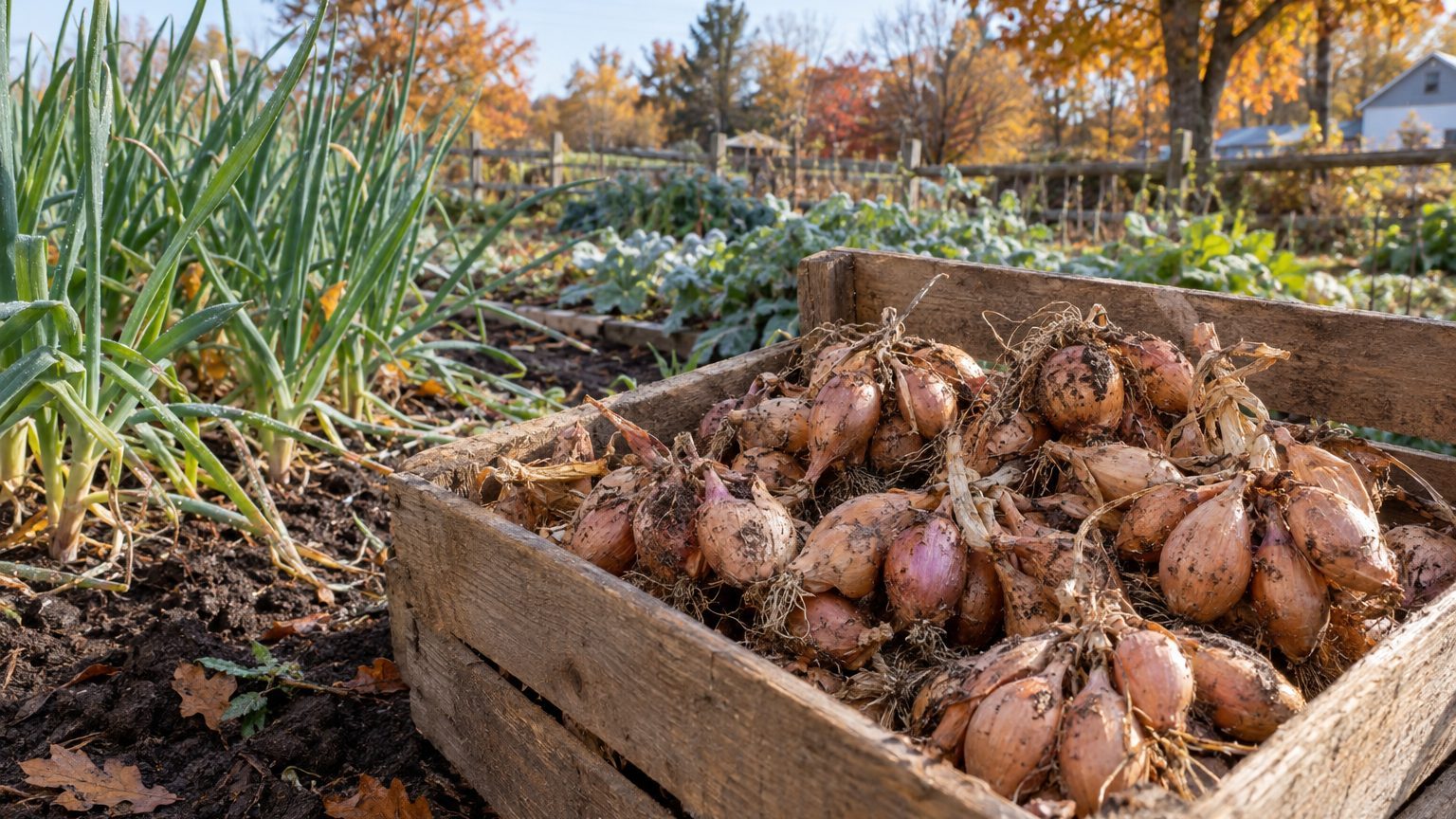

For most of western Oregon, the best shallots are multiplier types planted as bulbs in fall, with seed-grown shallots as a spring alternative. High-desert gardens need faster, spring-planted types. No single named variety wins across a state that spans USDA hardiness zones 4a to 9b. Type, planting season and the length of your freeze-free stretch decide the outcome.
The short answer for Oregon
Pick by type: fall-planted multiplier shallots for the milder valleys west of the Cascades, spring-planted multipliers or quick seed-grown types for central and eastern Oregon. The reasoning starts with a pair of dates from NOAA’s 1991-2020 climate normals for Portland, the reference station for this page. The last spring frost falls between March 6 and March 21, and the first fall frost between November 11 and November 27.
Those dates are probabilities, not promises. Each marks the stretch where the chance of a 32°F freeze sits in the 30 to 70 percent band. Before March 6, a freeze is still more likely than not to be behind you only in the loosest sense. After March 21, it becomes unlikely but not impossible. Treat them as the fuzzy edges of a season that runs well past seven months in the Portland area.
The second number matters even more for shallots. The mean daily minimum of Portland’s coldest month is 36.2°F, which means the average winter night there stays above freezing. Shallots are hardy bulbs, so winter cold is not what limits them on the west side. The real limits are wet soil in winter and a spring that stays damp longer than you would like.
Multiplier shallots: the default west of the Cascades
A multiplier shallot is grown from a bulb, which splits into a cluster of new bulbs by the following summer. Planted in fall, it settles roots into mild, moist soil through winter and puts its energy into bulb size once days lengthen. That rhythm fits the Willamette Valley and similar lowland areas well. The long gap between the early-spring and late-fall frost windows gives a fall-planted crop all the time it needs, and harvest typically lands in summer when the tops fall over and the dry weather helps with curing.
For exact timing, the When to Plant Shallots in Oregon page works through the planting window. For the broader crop guide, see Growing Shallots in Oregon.
Seed-grown shallots: a spring option
Seed-grown shallots are started indoors or in a protected spot in late winter and set out in spring. They give you one bulb per plant rather than a cluster, and they let you skip the cost of buying bulbs. They also take a full season, so they suit gardeners with room in the calendar. In the western valleys they are fine. In colder, shorter-season parts of the state, they need an early start and a close watch on the calendar.
What will not work here
The page does not have frost dates for central or eastern Oregon. The Portland window above does not apply there, and borrowing it is the first mistake. Those high-desert areas have a far shorter growing season, so any shallot that needs a long run to size up is a gamble. Slow, late-maturing types started outdoors in May can run out of season before the bulbs have swelled.
On the west side, the failures are wetter. Planting too early in fall is one. With a coldest-month mean minimum of 36.2°F, winters in the Portland area are mild enough that plants do not shut down completely. Shallots put in during a warm September can send up a lot of top growth before winter, and that tender foliage gets chewed up by cold snaps and slugs. A planting after soils have cooled roots well and leaves less to lose.
Heavy, poorly drained ground is the next trap. Much of the Willamette Valley sits on clay that holds water through a wet winter, and a bulb sitting in cold standing water rots. Raised beds or ridged rows solve it more reliably than any variety choice. If you cannot improve drainage, a spring planting of sets will often do better than a fall one.
Tight spacing also backfires in wet springs. Crowded shallots keep their leaves damp longer after rain, and damp foliage is where fungal problems like downy mildew take hold. Give each bulb room for air to move through the rows, even if it means a smaller harvest per square foot.
Then comes the dry summer. West of the Cascades, rain is scarce from July through much of September, and shallots have shallow roots. Relying on rain after June fails. Yet watering on a rigid weekly schedule fails in a different way: once the tops begin to fall over, extra water keeps the bulbs from curing and invites rot in storage. Water steadily while bulbs size up, then ease off as the tops yellow. In the high desert, where summers are drier still, shallow roots call for lighter, more frequent irrigation rather than an occasional deep soak.
What changes across Oregon
Oregon’s USDA hardiness zones run from 4a to 9b. That is a spread of six full zones, one of the wider ranges in the country, so there is no single answer for the state. The USDA system rests on one variable only, the average annual extreme minimum temperature, and the 2023 map uses 1991-2020 data. It says how cold a place gets at its worst. It says nothing about summer heat, spring rainfall or how long the soil stays frozen.
The Portland reference numbers sit in the milder part of that range. Gardens in the northern tier of the state, in the Cascade foothills, and at higher elevations in central and eastern Oregon sit closer to the colder end. If that describes you, shift in three ways. Plant later in fall, or switch to spring planting, so bulbs do not wake early and get hit. Mulch fall plantings more heavily to buffer frozen ground and heaving. And favor faster-maturing types, since your season is shorter than the Portland dates suggest.
Gardeners on the coast and in the southern valleys face other differences again. A coastal garden can be mild in winter but cool and damp through spring, which raises disease pressure. A southern valley can be hotter and drier in summer than the Willamette Valley. Zone alone will not capture either.
Do not guess your own zone from a neighbor’s or from this page. Look it up on the USDA Plant Hardiness Zone Map using your ZIP code, then read the result as a cold-hardiness number and nothing more.
Where to check this for your own county
The best next stop is Oregon State University Extension, the state’s land-grant extension service. It has county offices and a Master Gardener network that answer questions from local gardeners, and it is the source most likely to know how a variety behaves in your valley rather than on average across the state.
Look for two things. The first is a local planting calendar for alliums, meaning onions, garlic and shallots, with dates written for your county or region rather than the state as a whole. The second is any record of which varieties have been trialled nearby. A variety that has been grown side by side with others in your climate tells you far more than a catalog description does.
It is also worth asking your county office about disease and pest issues that are common locally, such as which fungal problems show up in wet springs and whether there are known trouble spots in your soil type. Many offices will run a soil test or point you to a lab.
A county recommendation beats a state one, and this page is the state one. The Portland frost numbers here are a single reference point in a state with high desert, coastline, mountains and several different valleys. Use what you read here to decide which type of shallot to try, then let your county office tighten the dates and narrow the varieties.
Checking this against your own garden
Your own observations outrank every date on this page. Three things are worth watching, and none of them needs equipment.
First, feel the soil. In fall, push your hand into the bed. If it still feels warm and the soil crumbles easily, it is too early for fall planting and you risk top growth that winter will punish. If it is cool and workable but not soggy, the timing is right. In spring, soil that clumps into a wet ball in your fist is too wet to plant. That tells you about drainage as well as timing, and a bed that stays soggy long after its neighbors dry is a candidate for raising.
Second, watch for the first green shoots after planting. A bed where shoots appear within a few weeks has soil warm enough for root growth. One where nothing shows for a long time may be colder or wetter than the rest of your yard, a pattern worth noting from year to year. A low corner that is always late is a pocket where cold air and water collect.
Third, track when the tops start to yellow and fall over in summer. That is the plant’s own signal that bulbs have finished sizing up and should be allowed to dry down. If yours turn weeks ahead of what you expected, your garden runs hot and dry, and a shaded or better-watered spot may help next year. If they stay green and lush late, the site is cooler or wetter than average, and you will want to space wider and cure more carefully.
Write down those three observations each year. Within a couple of seasons they will tell you more about your microclimate than any regional table.
Common questions
What type of shallot is best for western Oregon?
Fall-planted multiplier shallots are the usual choice. They use the mild, moist winter to root and then bulb up in the long days of spring and early summer. Pair them with well-drained soil, because wet winters are a bigger threat than cold.
Can I grow shallots in eastern Oregon?
Yes, but with adjustments. The high desert has a much shorter growing season than the Portland reference numbers suggest, so choose faster types, plant in spring or late enough in fall to avoid early top growth, and mulch well. This page does not have local frost dates for those areas, so check them with your county office.
Do I need to plant different shallots in the Willamette Valley than on the coast?
The type can be the same. The difference is in management. Coastal gardens tend to be cool and damp through spring, so spacing and airflow matter more, and drainage is critical. Valley gardens are drier in summer, so steady irrigation as bulbs size up matters more.
Is Oregon’s winter too cold for fall-planted shallots?
In the Portland area, no. The mean daily minimum of the coldest month is 36.2°F, so the average night stays above freezing, though individual nights can still frost. In colder zones and at elevation, fall plantings need heavier mulch or a switch to spring planting.