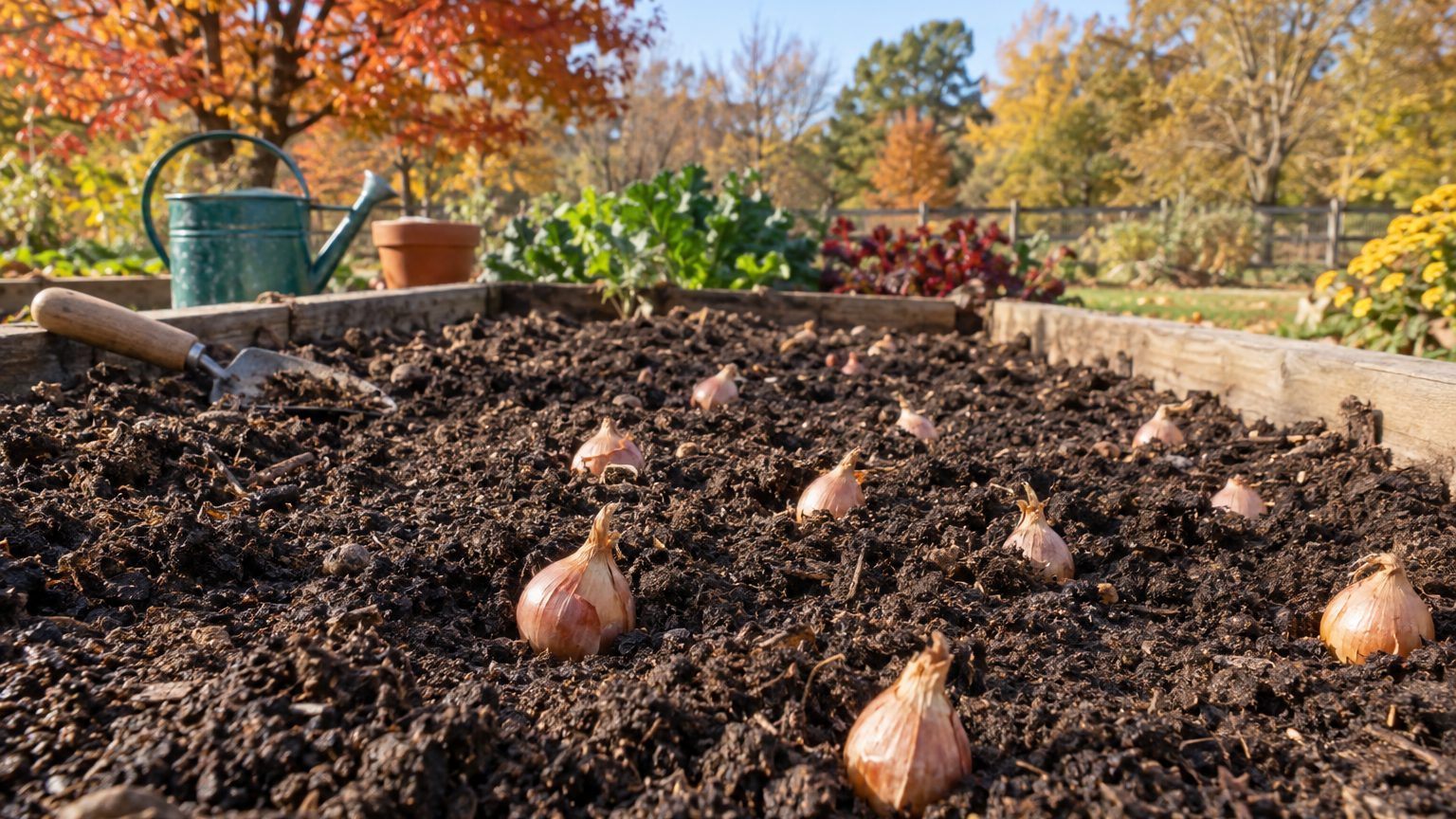

For the Portland area and the Willamette Valley, plant shallots in fall, ahead of the first freeze, or in early spring as soon as the soil can be worked. The dates below come from Portland weather records and do not apply to central or eastern Oregon. Those high desert gardens run on a far shorter season, and this page has no verified planting dates for them.
The short answer for Oregon
Fall planting works best in western Oregon, and it is open right now (it is early October). NOAA’s 1991-2020 climate normals for Portland put the first fall frost between November 11 and November 27. That window is a probability, not a calendar date. It marks the stretch when the chance of a 32°F freeze on a given day runs from 30 to 70 percent. Some years the first freeze arrives earlier, some years later. Planting about five weeks before the window opens gives sets time to root before the ground cools.
Spring planting anchors to the other end of winter. Portland’s last spring frost falls between March 6 and March 21, using the same 32°F freeze probabilities and the same 30 to 70 percent band. Again, that is the span in which a late freeze is still a coin flip, not a guarantee that frost is over on the 21st. Shallot sets tolerate cool soil, so there is no reason to wait for the last frost to pass. Most gardeners plant as soon as the bed is workable and not soggy.
| Planting season | Portland frost window (NOAA 1991-2020) | How to use it |
|---|---|---|
| Fall | First fall frost: November 11 to November 27 | Get sets in the ground ahead of the window’s start |
| Spring | Last spring frost: March 6 to March 21 | Plant when the soil is workable, around or before this window |
Why does the winter not scare shallots off? The mean daily minimum of Portland’s coldest month is 36.2°F. That is the average overnight low in the coldest stretch of the year, and it sits above freezing. Hard freezes happen in the valley, but a typical winter night does not drop below 32°F, so overwintering is realistic for a hardy allium. The trade-off is that fall-planted shallots keep growing a bit of green top through a mild winter, which is normal and no reason to panic.
For the full picture of growing them, from soil prep to harvest, see Growing Shallots in Oregon. Variety choice shifts with your season length, and The Best Shallots to Grow in Oregon covers that side.
What will not work here
Copying the Portland dates across the whole state. Portland sits west of the Cascades, and the NOAA caution attached to these dates says it plainly: central and eastern Oregon are high desert with a far shorter season. A gardener east of the mountains who plants on a Portland schedule in November is betting on a mild fall that the desert does not reliably deliver. Bulbs set that late may not root before the ground freezes hard, and sets that are only partly anchored can get pushed around by freeze and thaw cycles.
The Portland figures also fail anyone who reads the frost window as a deadline. A 16-day window (March 6 to March 21) is not a safe date. Planting a shallot set the day after March 21 is not wrong, but treating March 21 as the day frost ends is. In a 30 to 70 percent band, a late freeze remains likely enough to matter for tender transplants, such as seedlings started from seed. Dormant sets shrug it off. Seedlings do not.
Slow, long-season shallots are the second casualty in a short-season garden. Where the first fall freeze comes early and the last spring freeze comes late, there are fewer days to bulb up. A variety that wants a long, steady stretch of growth can be caught with fat green tops and small bulbs when cold returns. That is a high-desert problem. In the Willamette Valley, with a freeze-free stretch that runs from late March into November, the same variety has room.
Wet ground is the last thing that fails in the west. This page does not have a verified rainfall figure for Oregon, so no number is offered here. But the general risk is well known to valley gardeners: a bulb sitting in cold, saturated clay through winter is a rot candidate. Raised rows or a loose, well-drained bed help, and crowding sets tightly makes damp-weather disease harder to avoid. Fall planting in the valley is a good call, but only in soil that sheds water.
The mistake that costs the most
Planting too early in fall is a quiet one. Shallots set out in warm September soil can grow top-heavy before winter and then struggle. Counting back from the November 11 edge of the frost window, not forward from the first cool morning, keeps the timing honest.
What changes across Oregon
Oregon has no single answer, and the hardiness numbers show it. The USDA Plant Hardiness Zone Map (2023 edition, built on 1991-2020 normals) spans zones 4a to 9b across the state. That is a gap of ten half-zones, which is enormous. The USDA system rests on one variable, the average annual extreme minimum temperature, so it tells you how cold the worst nights get, not how long the growing season runs.
The Portland frost dates on this page therefore describe a reference city, not the state. Other parts of Oregon differ, in some cases by months. A gardener at altitude, in the Cascades foothills, or anywhere in the high desert should expect a later spring planting date and an earlier fall deadline than the ones above. How much later or earlier is not something this page can say, because it does not hold those frost dates. Do not invent them by adding a week to Portland’s.
Shifts run in predictable directions. Higher elevation and a more northern or inland position push spring planting later and make fall planting riskier. Mild, low, west-side sites keep the window wide. If you live somewhere colder, the spring option becomes the safer default, because it skips the winter exposure entirely.
One thing this page will not do is tell you which zone you are in. Zones can change within a few miles, and even within one yard, depending on slope and cold-air pooling. Look up your own location on the USDA Plant Hardiness Zone Map and read your zone from there. Then ask whether the average extreme low matters for the crop. For shallots in the valley it usually matters less than the frost dates do.
Where to check this for your own county
Oregon State University Extension is the place to go next. It is Oregon’s land-grant extension service, and it has offices and staff who work with gardeners by county. What you want from it is specific: a local planting calendar, and any allium or garlic and onion-family variety trials run near you. Those trials matter because a shallot that performs well in a Willamette Valley trial plot tells you little about a bed in the Klamath Basin.
When you search the site, look for county pages and vegetable planting guides first, then for variety trial reports. Ask your county office directly what planting dates it recommends for shallots and garlic, since the two are usually timed alike. Extension staff also tend to know the local pest and soil problems, such as which fields run wet in winter, which this page cannot cover.
A county recommendation beats a state one, and this page is the state one. It rests on a single Portland weather station, and it describes a probability band, not a promise. Where the extension office’s local date and the dates above disagree, trust the extension office. It has watched your area’s seasons for decades, and a statewide article written from one reference city cannot match that.
One note on sources: the extension calendars on file for this page are lawn-care calendars from another state, and they have no bearing on shallots, so they are left out. If a shallot-specific calendar exists for your county, Oregon State Extension is where it will be.
Checking this against your own garden
Your own observations outrank every date above. Three things are worth watching, and none needs a gadget.
- Soil warmth by feel. In spring, squeeze a handful of soil from a few inches down. If it crumbles and is cool, not cold and sticky, it is workable. If it clumps into a wet ball, wait. Sets in that soil sit and rot. If your bed gets to crumbly earlier than a neighbor’s, you have a warm, well-drained microclimate.
- First green shoots. In fall, check a few weeks after planting. Sprouting tells you the sets rooted and the soil was warm enough. If the tops are tall by midwinter, you planted early or your site runs mild.
- The neighborhood’s early bloomers. When local forsythia or flowering plum opens in spring, your soil is waking up. A bed that blooms a week behind the neighbor’s, say on a north slope or in a frost pocket, should plant later.
Write the dates down. Two seasons of notes on your own plot will tell you more than a frost table built from a station miles away.
Common questions
Can I plant shallots in Oregon in October?
In the Portland area and the Willamette Valley, yes. The first fall frost window for Portland starts November 11, so early October leaves several weeks for rooting. Gardeners east of the Cascades should check their local frost dates first, because the season there is far shorter.
Is spring or fall planting better?
Both work in western Oregon, and the page has no trial data to name a winner. Fall planting uses the mild winter, with the 36.2°F mean daily minimum of Portland’s coldest month sitting above freezing. Spring planting avoids winter wet and cold altogether, which suits colder or higher sites.
Do I have to wait until the last frost in spring?
No. Portland’s last spring frost falls between March 6 and March 21, but that is a 30 to 70 percent freeze probability band, not a safe date. Sets can go in when the soil is workable. Frost-sensitive seedlings are the plants that need to wait.
Do these dates work for eastern Oregon?
No. They come from a Portland station, and central and eastern Oregon are high desert with a much shorter season. Check your county with Oregon State University Extension, since this page has no verified dates for those areas.
The 4a to 9b spread also means two Oregon gardeners can read the same zone-based advice and need opposite planting seasons.