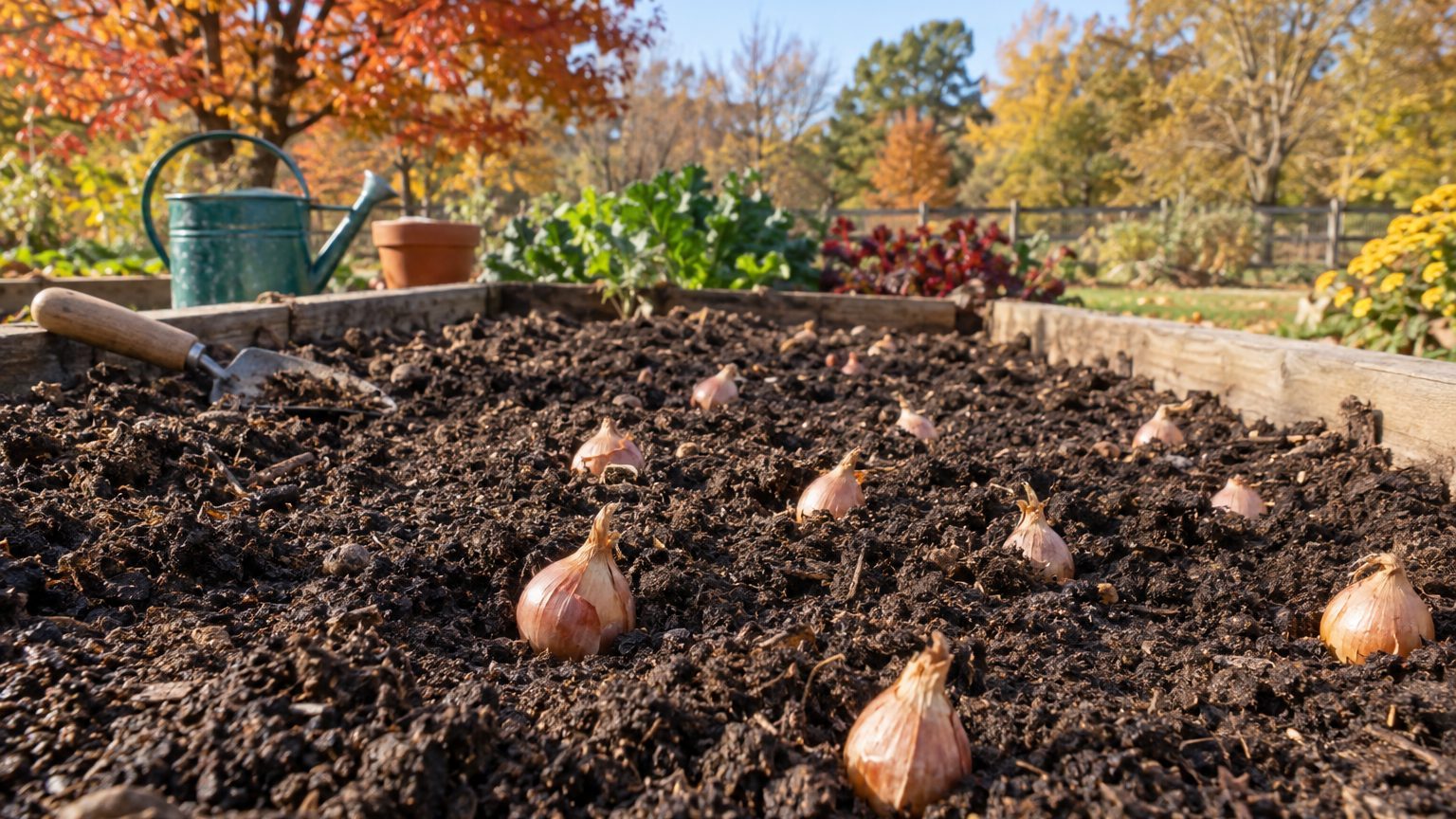

Shallots go into Rhode Island ground twice a year: in fall, around the first frost, or in early spring, as soon as the soil can be worked. Fall planting usually wins, because the bulbs root over winter and take off in March. The dates below come from one airport weather station in Providence, so they describe a reference city, not your yard. Expect to shift them by a week or two.
The short answer for Rhode Island
Plant fall shallots around October 24 to November 3, the first-fall-frost band for the reference city, and spring shallots in early April, near the April 7 to April 17 last-frost band. Fall gives bigger bulbs. Spring works if you missed the window or the ground was frozen solid.
What those frost dates actually measure
Both bands come from NOAA’s 1991-2020 U.S. Climate Normals, and they are probabilities of a 32°F freeze, not promises. The stretch from April 7 to April 17 is where the odds of a freeze fall between 30 and 70 percent. Frost after April 17 is still possible. The same goes for October 24 to November 3 in fall: that is the band where a first freeze goes from unlikely to likely, not a date the garden gets switched off.
One caution matters more than the dates themselves. The figures come from an airport station. Suburban and rural gardens typically see the last spring frost later and the first fall frost earlier than an airport does, often by one to two weeks, and more at elevation. If you garden outside the city, read the spring band as running later and the fall band as arriving sooner.
The two windows side by side
| Planting window | Reference-city frost band | How to use it |
|---|---|---|
| Fall | First fall frost: October 24 to November 3 | Plant close to this band in town, and a bit sooner inland or on higher ground. Mulch after planting. |
| Spring | Last spring frost: April 7 to April 17 | Plant as soon as the soil crumbles and is no longer soggy. Shallots tolerate light frost, so you need not wait for the band to pass. |
Winter cold is not the obstacle. The mean daily minimum of the coldest month in Providence is 22.1°F (a monthly average of the nightly lows, not a record low). A mulched, rooted shallot handles that. The bigger threat to a fall planting is the freeze-thaw cycling that pushes bulbs up out of the ground, which mulch also helps with. For the varieties that suit each window, see The Best Shallots to Grow in Rhode Island, and for the full growing picture, Growing Shallots in Rhode Island.
What will not work here
Season length is not Rhode Island’s problem. The gap between the spring and fall frost bands is long by northern standards, so slow shallots do not get cut off the way they would farther north. What fails here is timing against heat, moisture and freeze-thaw.
Planting too early in fall
A warm October can fool you. If bulbs go in while the soil is still mild and the frost band is weeks away, they throw up green tops before winter. That growth is tender, burns back in the first hard freezes, and spends energy the bulb needed. Aim for the frost band, not for the first cool weekend you feel like gardening. Inland, where frost arrives sooner than at the airport, that band moves earlier, so you move with it.
Planting too late in spring
Shallots want a stretch of cool weather to build leaves before the days lengthen and summer heat arrives. Rhode Island summers are humid, and a bulb started in May has far less time to size up than one started in early April. Late-planted shallots tend to finish small and ripen when the weather is muggy, which makes curing harder. Do not hold off until after the last-frost band has fully passed. Light frost does not hurt them.
Working wet ground and crowding the rows
Early spring soil in much of the state stays cold and sodden, especially in heavy ground. Digging it while it is wet leaves clods that dry into bricks. Squeeze a handful: if it forms a slick ball, wait. Close spacing is the other quiet failure. Coastal humidity and fog keep foliage damp, and tight rows hold that moisture in. The fungal diseases that follow can take out a planting just as it bulbs up. Give plants room for air to move, and favor a spot that gets morning sun to dry the leaves.
Finally, there is the mistake of treating airport dates as your own. A low, shaded corner of an inland yard can behave like a different town from the shoreline reference city.
What changes across Rhode Island
The state is small, but it does not have one answer. The USDA Plant Hardiness Zone Map (2023 edition, built on 1991-2020 normals) places Rhode Island in zones 6a to 7b. That is four half-zone steps inside one tiny state. The system rests on one variable only, the average annual extreme minimum temperature, so it says nothing directly about frost dates or humidity. It is a rough guide to how cold the winter gets, not a planting schedule.
If you garden inland or on higher ground
The northwest corner and higher hills are the cold end of that range. Shift your fall planting earlier, since frost comes sooner than the airport figures suggest, and expect spring ground to thaw and dry out later. A week or two of slip in each direction, as the caution on the frost data warns, is a sensible starting assumption. Mulch matters more here, because winter swings are sharper and bulbs have less margin.
If you garden near the coast
Gardens near salt water generally sit toward the milder end of the range, with the ocean softening the coldest nights. That favors fall planting held a little later. It also means more humidity and slower drying of foliage, which is where the spacing and airflow advice earns its keep. Coastal gardeners should worry less about hard freezes and more about wet soil in spring and leaf disease in summer.
I will not tell you which zone you are in, because I cannot see your address. Enter your ZIP code on the USDA Plant Hardiness Zone Map and read it from there, then compare it to a neighbor a few miles inland or toward the shore. The difference between the two tells you which way to nudge every date on this page.
Where to check this for your own county
Rhode Island has five counties, and a gardener in one can run a week or more ahead of a gardener in another. The place to settle it is University of Rhode Island Cooperative Extension, the state’s land-grant extension service. This page gives you the state-level picture from one reference station. A county recommendation beats it every time, and this is the state one.
What to look for there
Two things are worth hunting for. The first is a local planting calendar for alliums, ideally one that names fall and spring planting windows for shallots, garlic and onions. The second is any list of varieties trialled in your county or nearby, since a variety that sulked in one county’s wet clay may have done fine in another’s sandy loam. This page does not have a Rhode Island extension shallot calendar to cite, so I am not going to invent one. If the extension site lacks a shallot-specific page, an onion or garlic calendar is the next best guide, because the planting logic is close, though you should label it as an approximation in your own notes.
Questions to bring
If you can reach an extension educator or a local gardening program, bring specifics: your town, whether the site is low or high, whether it floods or stays wet in April, and what you planted last year. Ask what the typical last spring freeze looks like where you live, not at the airport. Their answer, built on local records and local trials, should override the Providence band whenever the two disagree.
Checking this against your own garden
Dates on a page are a starting guess. What you see in your own yard outranks them. Three observations will do more than any calendar, and none needs equipment you are unlikely to own.
Three things to watch
- Soil warmth by feel. Push your hand into the bed in early spring. Cold, clingy, heavy soil means wait. Soil that crumbles and feels merely cool is ready. A bed that passes this test a week before your neighbor’s is telling you it drains well or sits in sun.
- The first flush of early flowers. Watch the early bloomers around you, such as red maples and forsythia. Their timing is a folk signal, not science, but if yours open well before or after those in the next town, your microclimate runs warm or cold relative to the reference city.
- The first true leaves. For fall plantings, see when green shoots appear in spring, and note whether the tips got burned. Early growth in your bed, or in a neighbor’s chives or garlic, shows whether your site wakes up early or late.
Keep a few lines in a notebook each year: the day you planted, the day shoots broke the surface, the last hard freeze you noticed. After two or three seasons you will have a calendar that fits your lot better than any state page, this one included.
Common questions
Is fall or spring better for planting shallots in Rhode Island?
Fall usually gives bigger bulbs, because roots form over winter and growth starts early in spring. Spring planting is a fine fallback, as long as you get bulbs in during early April rather than May, before humid summer heat shortens the growing time.
How late can I plant shallots in fall?
The reference-city first fall frost lands between October 24 and November 3, and planting near that band is the target. Bulbs need a little time to root before the ground locks up, so inland or elevated gardens should plant sooner. If the ground is still workable after the band, a late planting with heavy mulch can still succeed, though it is a gamble.
Will shallots survive a Rhode Island winter?
Generally yes. The mean daily minimum of the coldest month in Providence is 22.1°F, which established bulbs handle, especially under mulch. The main winter risk is frost heave from repeated freezing and thawing, which pushes bulbs toward the surface.
Can I use the Providence dates if I live in the northwest part of the state?
Use them as a starting point, then adjust. Gardens away from the airport typically see the last spring frost later and the first fall frost earlier, often by one to two weeks, and more at elevation. Plant earlier in fall and later in spring than the airport figures, and confirm with your county’s extension office.