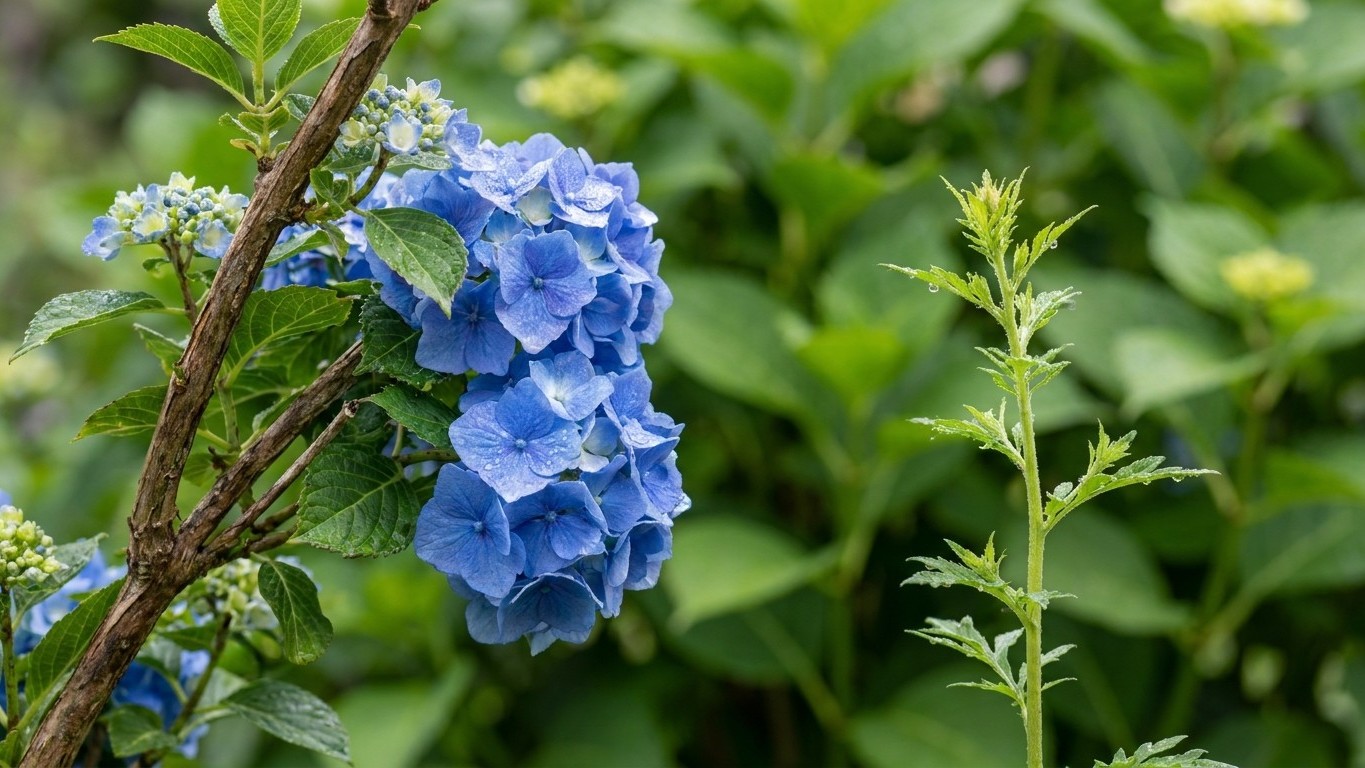

Hydrangeas turn pink when the roots can’t take up aluminum, and they turn blue when they can. Soil acidity controls that, along with phosphorus and the plant itself. Only bigleaf (Hydrangea macrophylla) and mountain (H. serrata) types change color. To shift pink toward blue, you lower the soil pH and keep phosphorus modest. It takes a full season, sometimes two, and the timing in Connecticut follows the frost calendar.
What this comes down to in Connecticut

The color work runs between the last spring freeze and the first fall freeze, which at Bridgeport (the reference station for the numbers here) fall April 2 to April 12 and October 28 to November 10, based on NOAA NCEI 1991-2020 Climate Normals. Bridgeport sits on Long Island Sound and is the mildest corner of the state, so inland and northwest gardens freeze earlier in fall and later in spring. Between those windows the roots are active, and that’s when blue is made or lost.
The chemistry is simple once you see it. Bigleaf hydrangea sepals contain a pigment that reads pink-red on its own and shifts blue when it binds with aluminum. Most Connecticut soils hold plenty of aluminum. The question is whether it dissolves. In acidic soil it does, and the plant drinks it up. As the soil approaches neutral, aluminum locks into forms the roots can’t use, and the same plant produces pink flowers.
The pH rule of thumb
Gardeners usually work from three bands. They’re a guide, not a guarantee, because cultivars vary in how strongly they respond.
| Soil pH (rough guide) | Typical flower color | What’s happening |
|---|---|---|
| Around 5.5 or lower | Blue | Aluminum dissolves and the roots take it up |
| Roughly 5.5 to 6.5 | Purple, or blue and pink on one plant | Partial uptake, so results are unpredictable |
| Around 6.5 and higher | Pink | Aluminum is locked up in the soil |
Here is the surprise for a lot of homeowners. Much of Connecticut’s soil is naturally on the acidic side, so a pink hydrangea often points to something you did, not something the landscape did. Lime spread on a nearby lawn is the classic culprit. A concrete foundation does it too, because lime leaches out of the concrete and nudges the soil beside the house toward alkaline. Hydrangeas are often planted exactly there.
Phosphorus is the second lever
Phosphorus matters because it ties up aluminum inside the plant. Many lawn and all-purpose fertilizers carry a generous middle number on the bag. A hydrangea bed that shares a fertilizer routine with the lawn can drift pink even when the pH looks fine. Low-phosphorus fertilizer, or none at all, helps blue along. It’s also why a soil test beats a guess.
Not every hydrangea is on the table. Panicle types and smooth hydrangeas (the white mopheads and cone-shaped blooms) stay white or cream-to-pink on their own schedule, and oakleaf hydrangeas don’t respond either. If your plant isn’t a bigleaf or mountain type, no amount of aluminum sulfate will help. The growing hydrangeas in Connecticut guide covers how to tell the groups apart.
Working it out for your own garden
A fixed recipe fails the first time you move, change fertilizers or hit an odd year. A method holds up. It has four steps: measure, change, wait, check.
Measure first. Take soil samples from the root zone, a few inches deep and at the plant’s drip line, then send them to a lab (the UConn soil lab is the usual route in this state). You want the pH and a phosphorus reading. If the pH already sits near 5.5 and the plant is pink, aluminum availability isn’t your problem, and the cause is more likely phosphorus or a cultivar that leans pink.
Pick the right amendment for the timeline. Garden sulfur works slowly, since soil microbes have to convert it, so it belongs in the ground months before you want results. Aluminum sulfate acts faster, which makes it the spring tool, but it’s harsh. Too heavy a hand can burn roots, and it can push aluminum into the plant at levels that stress it. Follow the label rate and water it in, applying it to moist soil and never to a plant already wilting from drought.
Here is the calendar arithmetic. Count forward from the fall freeze window. If your garden sits near the coast, the first freeze lands October 28 to November 10, so test the soil in the weeks after that and work in sulfur while the ground is still workable. Sulfur has the whole cold season to react. Inland or in the northwest hills, the freeze comes earlier, so the testing and sulfur window opens earlier too. Then count forward again from the spring window. At Bridgeport the last freeze falls April 2 to April 12, so aluminum sulfate goes on once growth is clearly under way and the ground has thawed, not on the first mild March afternoon. A second dose a few weeks later fits the same logic.
Wait a full season. Flower buds for the coming summer were formed the previous growing season, but the color is set largely by what the plant absorbs as the flowers develop. In practice, a plant treated this spring may give you purple this summer and clean blue the next. Don’t conclude the method failed after three weeks.
Check and keep it up. Retest the soil the following spring, after the frost window has passed. Soils drift back toward their natural pH, especially where concrete, hard water or limed lawn runs alongside, so blue is something you maintain every year, not something you finish once. If you’d rather not fight the chemistry, a container with acidic potting mix gives you total control, and you can move it for winter. Overwintering is its own topic, covered in Protecting Hydrangeas Through a Connecticut Winter.
What changes across the state
Connecticut is small, but its soils and temperatures aren’t uniform. The USDA Plant Hardiness Zone Map (based on the average annual extreme minimum temperature) places the state anywhere from zone 6a to 7b, and that spread alone tells you the coast and the northwest corner live very different winters.
Along the shore, spring arrives sooner and fall lingers, so the Bridgeport windows are the most generous you’ll find. Move inland and uphill and the freeze dates tighten on both ends. In the Litchfield Hills, the growing season for roots is shorter, which compresses your sulfur and aluminum sulfate schedule. Treatments in cold soil do little, so if the ground stays chilly later into spring, you start later.
Bedrock matters as much as temperature. Much of the state’s soil sits on acidic glacial till over granite and schist, which is why blue comes easily in many yards. But pockets of limestone and marble underlie parts of the northwest, and soil there can run sweeter, with hard, alkaline water to match. A gardener in one of those valleys may fight pink harder than someone ten miles away on acidic upland ground. Coastal yards bring their own wrinkle, since older neighborhoods often have fill, crushed shell or heavy lime history from decades of lawn care.
The practical lesson is to treat your own yard as the unit of measurement. Two neighbors on the same street can have different pH values because one poured a patio last decade and the other didn’t. The state numbers give you a season shape, and your soil test gives you the dose.
The mistakes this state punishes

The first is treating a plant that can’t change. A white panicle or an oakleaf hydrangea will absorb aluminum sulfate and respond with burned roots, not blue flowers. Confirm the species before spending a dollar.
Second, applying anything on a warm-spell impulse. Connecticut can deliver a stretch of mild days in late winter, then dip back below freezing. Soil that’s still cold is biologically sluggish, and an early dose can wash away before roots wake up. Wait for the frost window to pass, and check the ground, not the calendar alone.
Third, the lawn. Lime is a routine recommendation for turf across the state, and it migrates. A spreader pass near a bed can quietly undo a year of acidifying. Keep lime and high-phosphorus lawn fertilizer well clear of the hydrangea root zone, and check the foundation side of the bed, where lime leaches from the concrete.
Fourth, overdoing it. More aluminum sulfate does not mean bluer flowers past a point, and burned roots mean a weak plant going into winter. The same goes for chasing color late in the season. Heavy feeding in the fall can push soft growth just before the first freeze at October 28 to November 10 on the coast, earlier inland.
Last, pruning away the work. Bigleaf types often set flower buds on old wood, so a hard cut in the wrong season removes the blooms you were trying to turn blue. The timing is spelled out in When to Prune Hydrangeas in Connecticut.
Checking this against your county
The Bridgeport numbers are a starting point, not an instruction for every town. Your county’s University of Connecticut Extension office can point you to soil testing, explain your local soil type and tell you how your area’s frost dates differ from the coastal figures. Their hydrangea guidance for the state is the next stop for anything this page doesn’t cover.
Common questions
Why is my hydrangea pink when my soil is acidic?
Phosphorus is the usual suspect, since it binds aluminum inside the plant. A cultivar that leans pink and lime from concrete or lawn care near the roots are the other common causes. Test for pH and phosphorus before changing anything.
How long does it take to turn a pink hydrangea blue?
Expect a full growing season for partial results and often two for solid blue. Soil sulfur reacts slowly, and flower color depends on what the plant takes up as blooms develop, not on a single treatment.
Can I turn a blue hydrangea back to pink?
Yes, by raising the soil pH toward neutral, usually with garden lime, and by using a higher-phosphorus fertilizer. It’s easier in a container than in the ground, and the same slow timeline applies.
Do white hydrangeas change color?
No. White varieties stay white regardless of soil chemistry, and panicle, smooth and oakleaf hydrangeas don’t respond to aluminum the way bigleaf and mountain types do.