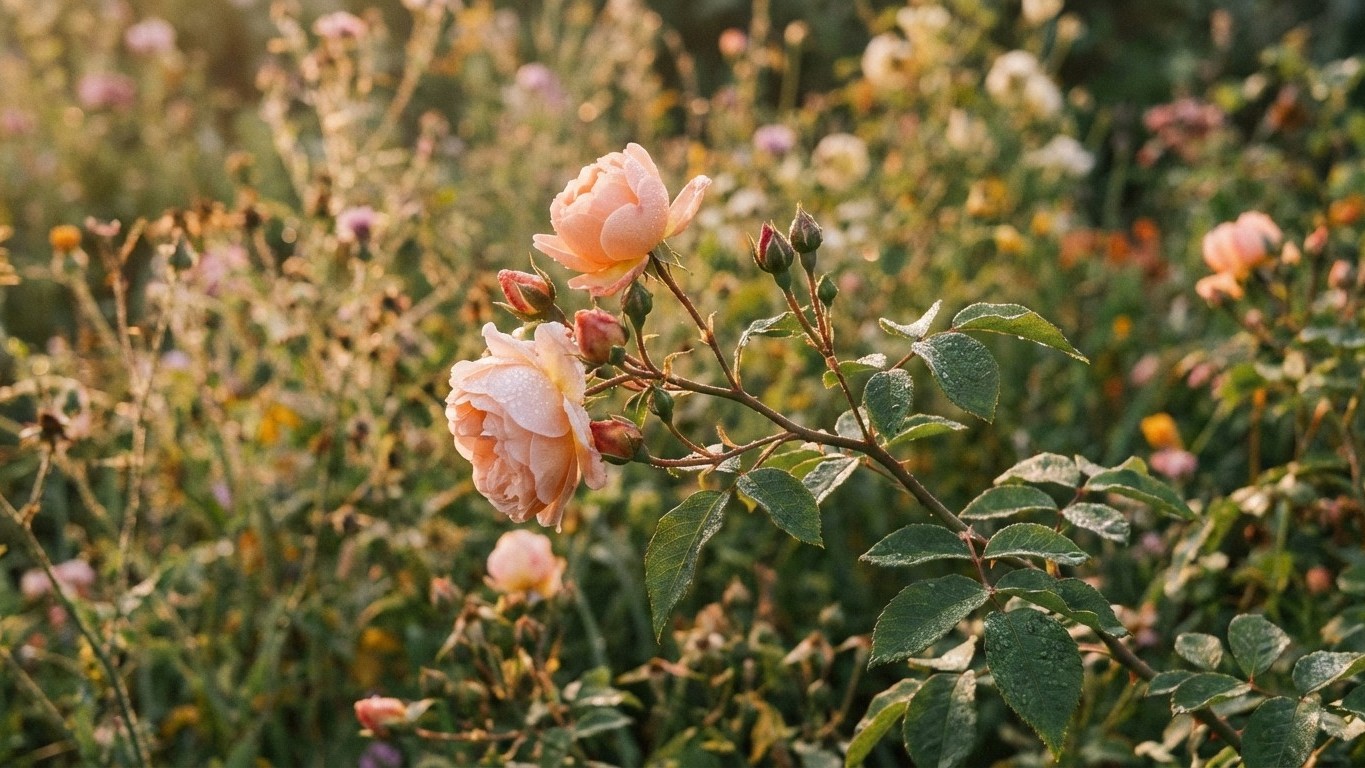

Hardy shrub roses grow in the Northwest Territories, and once established they ask for little. Around Yellowknife the average frost-free season is 115 days, which puts planting in early June and the first fall frost near September 18. That is plenty of time to root a rose and not enough to coddle a tender one. Choose own-root, cold-hardy types bred in Canada, plant after the last frost, and let winter do the culling.
When to plant Roses in Northwest Territories

The window around Yellowknife
The reference point is Yellowknife A, the Environment and Climate Change Canada station whose 1981-2010 normals put the average last spring frost on May 25. “Average” is doing a lot of work in that sentence. It is the midpoint of a window, so in one year out of two the last frost falls later. Treat May 25 as a safe planting date and you will lose tender new growth in roughly half of all springs.
A better habit is to wait a week to ten days past it. Potted roses go out in the first days of June, with mid-June as the fallback in a slow year. Dormant bare-root plants can go in as soon as the ground is workable, but the first leaves they push are just as frost-tender, so keep a row cover or an upturned bucket handy for the first few weeks.
One station is not a territory. Northern and upland districts, Inuvik among them, run weeks behind Yellowknife, and your own yard may sit in a cold pocket or on a warm south slope. Also note that these Canadian normals cover 1981-2010, while US figures on this site (such as those in the Growing Roses in Colorado: Planting Dates, Varieties and Local Pests guide) cover 1991-2020. Do not compare the two dates line for line.
Starting seed indoors
Most people buy a potted plant, and that is the sensible route. Seed is an option for species roses and some hardy types, but it is slow, and seed from named hybrids will not come true. Rose seed needs a cold, moist rest first, commonly 8 to 12 weeks in a refrigerator, before it germinates, and it germinates unevenly.
Count back from the planting date. Say you want seedlings in the ground on June 1. Hardening off takes 7 to 10 days, so it starts around May 22. Seedlings need about 7 weeks of growth under lights before that, which means sowing near April 13. Add 12 weeks of chilling ahead of sowing and the seeds go into the refrigerator in mid-January. Shift your own transplant date and every other date moves with it.
Hardening off and transplanting
Set plants outside in shade for a few hours, then lengthen the time and add direct sun over 7 to 10 days. Bring them in if a freezing night is forecast. Transplant on a cloudy afternoon at the same depth they grew in the pot, water well, and keep the first week gentle with a row cover. Spring wind in open northern yards desiccates leaf buds faster than the cold does.
Soil and site preparation
Roses want at least six hours of direct sun, and in the north that is rarely the problem, since June days are very long. The real site question is wind. A spot with a fence, a shed wall or a spruce windbreak at a respectful distance gives shelter and holds drifting snow over the crown, which is the best winter insulation you will ever get for free. Keep roses out of the root zone of mature trees, where they lose both light and water.
Drainage matters more than fertility. Dig a hole about 12 inches deep, fill it with water, let it drain, then fill it again. If the second fill is still standing after several hours, build a raised bed or choose another spot. Roses tolerate cold well and wet feet badly, and a cold, soggy root zone in spring is where the weakest plants give out. Many northern gardeners build raised beds with imported topsoil because native ground can be thin, rocky or sandy. That is a practical fix, not a failure.
Aim for loose, loamy soil that is slightly acidic to neutral, with a pH around 6.0 to 7.0. Local soil varies too much to quote a typical profile, so a soil test is worth the small effort (see Local help below). Work 2 to 3 inches of compost into the top foot of the bed. If you can, do it the fall before, so the material settles and the bed thaws and warms faster in spring. If not, do it as soon as the soil can be worked, at least a couple of weeks ahead of planting.
Laying black plastic over the prepared bed for two weeks before planting warms the soil noticeably, which gets roots moving sooner. Spacing depends on the type: about 3 to 4 feet between shrub roses and large rugosas, 2 to 3 feet for compact types. Climbers want a trellis or fence about 6 inches off the plant’s base so air can move behind them.
Varieties that suit Northwest Territories
Season length is the smaller worry here, because a rose is a perennial and does not need to “finish” in one summer. What decides success is winter survival, so put cold hardiness first. Look for plants on their own roots, so that if the top dies back to the snow line the shoot that regrows is still the variety you bought. A grafted rose that freezes to the ground regrows as whatever the rootstock was, often a different, lesser plant.
The second trait is bloom habit. Once-blooming roses flower on old wood, so winter dieback means no flowers that year. Repeat-blooming types that flower on new wood keep giving you something even after a hard winter. Third is disease resistance, since a short season leaves little time to recover from leaf spot. Fourth is the ability to harden its wood early in fall.
Canadian breeding programs have produced several series aimed at exactly these conditions, the Explorer and Parkland groups, along with rugosa types. The ones below are widely sold in Canada. None is promised to thrive everywhere in the territory, and I am not claiming any institution endorses them. Treat them as sensible starting points, and buy from a nursery that can tell you the plant is own-root.
| Variety | Type | Good for |
|---|---|---|
| Hansa | Rugosa shrub | Fragrance, tough foliage, hips for fall color |
| Therese Bugnet | Rugosa hybrid shrub | Tall informal hedge, fragrant repeat bloom |
| Morden Blush | Parkland shrub | Compact size, pale pink repeat blooms |
| Winnipeg Parks | Parkland shrub | Small beds, bright red flowers over a long stretch |
| William Baffin | Explorer climber | Fences and trellises, vigorous growth, good disease resistance |
| John Cabot | Explorer climber | Large arching canes, deep pink flowers |
Skip hybrid teas and most floribundas. They are bred for long summers and mild winters, and in this climate they demand mounding, wrapping and luck. For a ground-level look at what grows wild, the prickly rose, Rosa acicularis, is native across northern boreal country, a useful reminder that the genus can handle this climate.
What to plant alongside
Good rose neighbors do one of four jobs: shade the roots, draw beneficial insects, cover bare ground, or keep their own roots out of the way. Sweet alyssum and low-growing annuals like it are the easiest wins. Their tiny flowers attract hoverflies and lacewings, whose larvae eat aphids, and the evidence for flowering strips feeding aphid predators is reasonably solid. They are also cheap and tolerate a short season.
Perennial companions suit a bed you will not rework every year. Catmint, hardy geraniums, yarrow and daylilies are tough, flower alongside roses and cover bare soil so weeds have less room. Keep them a foot or so back from the base of the rose so the cane crown gets air. Chives and other alliums are frequently recommended because their smell is said to confuse aphids. That has anecdotal support and little controlled evidence, so grow them because they are pretty and edible, not as pest control.
Marigolds are another claimed protector, and the claim is shaky. Their documented benefit is against certain soil nematodes, not aphids or cutworms. Garlic sprays have the same thin evidence.
What to avoid is more clear-cut. Do not plant a rose where another rose has just died or been removed, since replant problems build in the soil. Keep roses out from under conifer drip lines, where needle litter acidifies the soil and roots compete hard. And separate them from brassica and radish beds. Root maggot flies are drawn to those crops, and a rose mixed in gets no benefit from the neighborhood.
Watering, feeding and support
Water deeply and less often. About an inch of water a week, delivered in one or two long soakings, pushes roots down. Light daily sprinkles keep them near the surface, where they dry out in wind and sun. Water at the base in the morning so leaves dry quickly, which cuts down on fungal leaf spots. In the first season, check new plants every few days, because a young root system cannot reach far for moisture.
Mulch with 2 to 3 inches of shredded bark, leaves or compost, but wait until the soil has warmed in June. Mulch put down on cold ground slows warming. Keep it a couple of inches off the canes. In fall, after the ground has started to freeze, add more mulch or a mound of soil about 8 to 12 inches over the crown as insurance for the buds that sit lowest.
Feed lightly. Compost at planting is enough for the first year. After that, use a balanced rose or all-purpose fertilizer at leaf-out and a second dose in early July. Stop by mid-July. Late nitrogen pushes soft growth that will not harden before frost, and unhardened wood is the first to die in winter. Rugosas in particular do poorly when overfed.
Support is mostly a matter for climbers: tie canes loosely to a trellis, fanned horizontally where possible, since horizontal canes make more flowering shoots. Prune in spring, once buds swell and you can see what is alive. Cut dead wood back to green, white-centered tissue. Hardy shrub roses often die back to the snow line and recover, so be patient before declaring a plant dead, and give it until late June. Suckers on own-root plants are simply more rose, and rugosas spread by them on purpose. On grafted plants, suckers from below the bud union are rootstock and should be cut cleanly at their origin.
Common problems

Blossom end rot and fruit cracking belong to other crops. A rose in the north fails in more specific ways. The most common is winter dieback: canes brown, brittle and dry in spring. Scratch the bark with a fingernail. Green means alive, brown means cut to the next live bud. If the whole plant stays dead above the snow line, a grafted rose has probably lost its top and the shoots coming up are rootstock.
Yellowing leaves with green veins point to iron chlorosis, usually a pH or waterlogging issue, not a nutrient shortage. A plant that grows leaves but never blooms is typically too shaded, overfed with nitrogen, or a once-bloomer that lost its old wood over winter. Leaf curling can come from aphids, drought or herbicide drift from a neighbor’s lawn.
On pests, the only list with documented backing is from UAF Cooperative Extension in Alaska, since no Canadian province or territory publishes an equivalent home-garden list. The biology crosses the border, but the calendar does not always. Check with the territory’s agriculture office to identify what you actually have, and do not take this list as proof that anything else is absent from the NWT.
- Aphids: clusters on tender shoot tips and buds, with sticky residue and curled new leaves. A hard spray of water and a few days of repeats usually reset things.
- Cutworms: a young plant cut off at soil level overnight. A collar of cardboard or a cut can pushed into the soil protects newly set plants.
- Root maggots: mostly a problem for brassicas and radishes, but a wilting plant with chewed roots deserves a look. Keep these crops away from roses.
- Slugs: ragged holes in leaves and fresh growth, worst in damp, mulched beds. Trap them with boards or beer traps.
- Spruce beetle: a spruce pest, not a rose pest. Mention it because roses are often planted near spruce, and a dying tree changes light and wind.
Powdery mildew and black spot are well-known rose diseases elsewhere. A cool, dry northern summer reduces them, and spacing, morning watering and resistant varieties handle most of the rest.
Ripening before the frost comes back
For a rose, the question is not whether fruit ripens but whether wood hardens and, if you want them, hips color up. Both run against the same clock. Yellowknife averages 115 frost-free days, with the average first fall frost on September 18. Plant on June 1 and roughly 109 days remain until that mean date. Because it is a mean, half of years it comes earlier, so build in a margin of one or two weeks.
Hips are the fall fruit of repeat-blooming and species roses, and rugosas are the showiest. They need roughly two months or a little more after pollination to color. Subtract 60 days from September 18 and you land on about July 20, the last flower that could finish. Add the safety margin and aim for flowers open by early July. Blooms opening after that give you color in the garden but no hips. Gardeners who want hips should stop deadheading rugosas by midsummer.
Wood hardening follows a similar rule. Stop nitrogen by mid-July, ease off watering in late August, and leave late flowers in place so the plant slows. A rose planted late in June has less time to root before freeze-up, so extend the season where you can: start the plant in a pot indoors, add a low tunnel or row cover in spring and fall, and lay black plastic ahead of planting.
To redo this for your yard, take your local last spring frost, add a week, count to your first fall frost, and subtract the 60 days hips need. Your own date will differ from Yellowknife’s.
Harvest and end of season
Cut flowers in the morning, just as the bud begins to open, with a sharp knife above a five-leaflet leaf. Plunge stems into water right away. Fragrant rugosa petals can be gathered for tea or jam, and the best ones come from unsprayed plants.
Hips are best picked after they turn fully orange or red and just soften to the touch. Some gardeners wait for a light frost, which sweetens the flesh. Split them, scoop out the seeds and the irritating hairs inside, then dry or cook the flesh into syrup or jelly. Dried hips keep in an airtight jar for months. They are rich in vitamin C, though cooking and drying lower it.
As the first fall frost approaches, around September 18 in an average Yellowknife year, which means earlier in half of years, stop fertilizing and deadheading entirely so the plant reads the shift toward dormancy. After the ground begins to freeze, usually well into October, mound soil or mulch over the crown. Leave the canes uncut until spring, because snow caught in them adds insulation. Tie tall canes together loosely to avoid wind whip, and wrap climbers’ canes only where they are exposed.
Local help
The territory’s agriculture office, part of the Government of the Northwest Territories’ Industry, Tourism and Investment agriculture services, is the place to ask about district-level frost dates, soil testing and pest identification. For the broader picture, see the How to Grow Roses: The Complete Guide, the Northwest Territories guides, and, for a colder climate again, Growing Roses in Nunavut: Planting Dates, Varieties and Local Pests.
Common questions
When is the safest time to plant a rose in Yellowknife?
Early June. The average last frost is May 25 at the Yellowknife A station, and half of years it falls later, so waiting a week to ten days is a cheap safeguard. Northern and higher districts run weeks behind.
Can I grow hybrid tea roses in the Northwest Territories?
You can try, but expect heavy winter protection and frequent losses. Own-root, cold-hardy shrub roses, such as rugosas and Canadian-bred Explorer or Parkland types, are far more reliable.
Do I need to protect roses over winter?
Yes, lightly. Mound soil or mulch over the crown after the ground starts to freeze, and rely on snow cover for the rest. Hardy own-root roses that die back to the snow line usually regrow from the base.
Which pests should I watch for?
Aphids, cutworms, root maggots and slugs are on the UAF Cooperative Extension list for neighboring Alaska. No Canadian equivalent exists for home gardens, so ask your territorial agriculture office to identify problems you cannot name.
Can I start roses from seed?
Yes, for species and some hardy types, but plan on 8 to 12 weeks of cold stratification, then several more weeks of growth indoors. Start in mid-January to transplant in early June, and expect named hybrids not to come true.