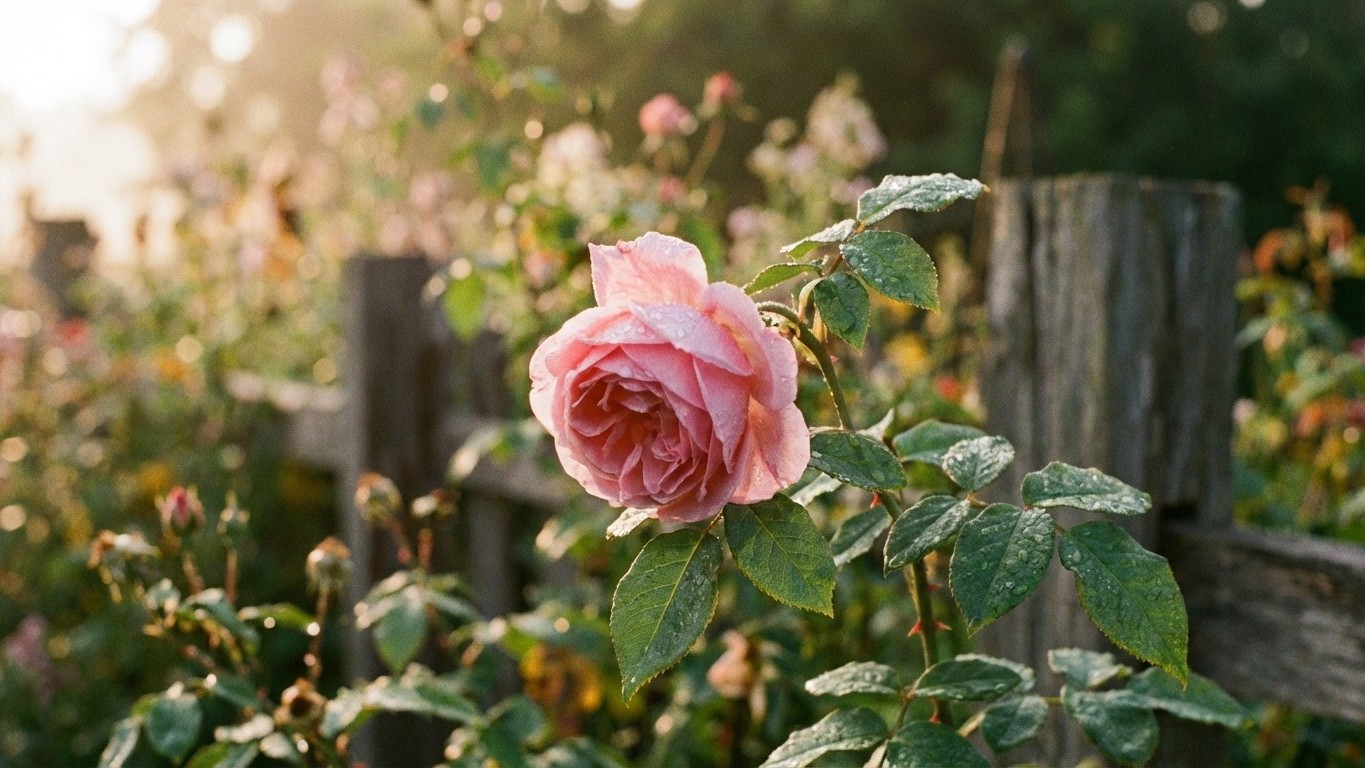

Plant container roses in Nova Scotia from mid-May, and set dormant bare-root roses as soon as the soil thaws in April. Choose hardy shrub types, rugosas and Canadian-bred Explorer roses above all. Halifax’s airport averages 163 frost-free days, and inland districts get fewer. That is plenty for flowers and hips. Winter cold, salt wind and humid-weather leaf disease are the real tests. For the wider picture, see How to Grow Roses: The Complete Guide and our other Nova Scotia guides.
When to plant Roses in Nova Scotia

Halifax is the reference city. Environment and Climate Change Canada’s 1981-2010 climate normals for Halifax Stanfield International Airport give an average last spring frost of May 7 and an average first fall frost of October 18. Both are mean dates. In one year out of two, the last frost falls after May 7. Treat it as the middle of a window, not a safe date. Northern and higher-elevation districts run weeks behind Halifax. Canadian normals also cover 1981-2010, while the US figures in our Minnesota and Connecticut rose guides cover 1991-2020, so don’t compare dates across the border too literally.
Bare-root and container roses
Dormant bare-root roses shrug off cold. Plant them the week the soil is workable, which around Halifax usually means April and further north means May. Soak the roots in a bucket of water for a few hours first.
Container roses arrive already leafed out, and their new growth is tender. Wait until the May 7 midpoint has passed, and mid-May is a sensible target near the coast. Keep a bedsheet or frost cloth handy for a late cold night. Inland, add a week or two.
Starting roses from seed
Seed makes sense only for species roses, such as rugosa or Virginia rose. Named cultivars don’t come true from seed. Rose seed needs cold, moist stratification, commonly about 12 weeks in the refrigerator, before it will germinate.
Count back from a transplant date of May 21, two weeks past the Halifax mean:
- Hardening off takes 7 to 10 days, so start around May 11.
- Seedlings need about 8 weeks of indoor growth, so sow or pot up around March 26.
- Stratification takes about 12 weeks, so the seed goes into the fridge around January 1.
Hardening off means a sheltered, shaded spot for an hour or two, lengthened a little each day. Wind and direct sun scorch soft leaves faster than a cold night does. Seed-grown roses often skip flowering in year one, so plan on year two.
Soil and site preparation
Roses want six or more hours of direct sun. Morning sun matters most in a maritime climate, because it dries the dew off leaves before black spot can take hold. Open ground with air moving through beats a sheltered corner against a fence. Rugosas tolerate salt spray and wind. Hybrid teas do not.
Drainage decides more rose failures than fertility does. Dig a hole about a foot deep, fill it with water, and let it drain. Fill it again. If water is still standing hours later, build a raised bed or choose another spot. A loam that holds moisture but drains freely is the target. Heavy clay needs coarse compost worked in over a wide area, not just a planting hole. Sand needs organic matter to hold water. Aim for slightly acidic soil, and send a sample for testing instead of guessing.
The work starts weeks before the roses arrive. In April, strip sod from the bed and turn it. Spread 2 to 3 inches of finished compost and fork it in at least a few weeks before planting. Skip fresh manure, which can burn new roots. Mark the spacing now, so you aren’t improvising with a rose in one hand and a shovel in the other.
Spacing depends on the type:
- Hybrid teas and compact shrubs: 2 to 3 feet apart.
- Larger shrub roses: 3 to 4 feet apart.
- Rugosas: 4 to 6 feet apart, since they sucker and spread.
- Climbers: 6 to 8 feet apart, with a trellis or wall in place before planting.
On planting day, dig the hole twice as wide as the root mass. On grafted roses in cold climates, set the graft union about 2 inches below the soil surface. Water deeply, then mulch.
Varieties that suit Nova Scotia
Winter survival comes first, because a rose that dies back to the snow line every year never reaches its potential. Next comes disease resistance, since humid air and foggy mornings invite black spot and mildew. Then bloom habit. Repeat-flowering roses give color through September. Once-bloomers give one heavy flush and often better hips. The 163-day season at Halifax is long enough for any of these to flower. Inland growers with shorter seasons should favor early, vigorous types.
Own-root roses, grown on their own roots, regrow true from the base after a harsh winter. Grafted roses may regrow from the rootstock instead, giving you a different plant than you bought.
| Variety | Type | Good for | Watch for |
|---|---|---|---|
| Hansa | Rugosa shrub | Fragrance, big hips, wind and salt tolerance | Spreads by suckers |
| Therese Bugnet | Hybrid rugosa | Hardiness, repeat bloom, fragrance | Open, leggy habit |
| William Baffin | Explorer climber | Cold hardiness, disease resistance, large size | Needs room and a strong support |
| John Cabot | Explorer climber | Hardy climbing color on fences | Tie canes regularly |
| Knock Out series | Shrub rose | Repeat bloom, low-fuss disease resistance | Tip dieback after hard winters |
Hybrid teas and many floribundas are the fussiest choice. They flower beautifully but usually need mounding or wrapping each winter. They also tend to be the first to show black spot in a damp summer. If you want one for the fragrance, tuck it somewhere sunny and protected, and put the hardy shrubs in the exposed spots.
Species roses deserve a look too. Virginia rose and rugosas grow in Atlantic Canada’s coastal landscapes, take little care, and feed birds with their hips. Whatever you buy, check the nursery tag for hardiness and the actual growing habit, not just the photograph.
What to plant alongside
Good companions for roses do their work above and below the surface. Catmint is the classic. It covers the bare lower stems that many roses develop, draws pollinators, and tolerates the same sun. Lavender gets planted with roses constantly, but it wants sharp drainage and lean soil, while roses want richer, moister ground. In a wet maritime summer the lavender usually loses. Give it a raised edge or a separate bed.
Low ground covers such as creeping thyme or sweet alyssum shade the soil and reduce weed pressure, provided you keep them a hand’s width from the crown. Clematis works with climbers, using a rose as a ladder, though both want mulched, cool roots and a watchful eye on feeding.
Garlic, chives and onions get praised as aphid deterrents. The evidence is thin. Gardeners report fewer aphids, but there is little controlled research, so plant them because you like them, not as pest control. French marigolds have better support for suppressing certain root nematodes in soil, but that is not the same as protecting a rose from leaf pests.
Keep other roses from crowding each other. Overlapping foliage traps humidity, and black spot moves leaf to leaf. Keep roses out of the root zones of large trees, which will out-compete them for water. Never plant a new rose in the exact spot where an old one just died, since replant problems can linger in the soil. Lilies, which carry their own pest on the University of Maine list below (lily leaf beetle), make poor neighbors for a bed you want to keep spray-free.
Watering, feeding and support
Roses want about an inch of water a week, delivered slowly at the base. One deep soak beats three light sprinklings, because it pushes roots down where the soil stays cooler. Water in the morning, and keep the hose off the leaves. Wet foliage overnight is how black spot gets started.
Spread 2 to 3 inches of shredded bark or compost over the root zone after the soil has warmed in late spring. It holds moisture, suppresses weeds and moderates temperature swings. Keep it a couple of inches off the canes, since mulch piled against the crown holds moisture there.
Feed when new growth emerges in spring, then again after the first flush of bloom, using a balanced rose fertilizer or compost with a slow-release source. Then stop. Cut off feeding around mid-August in Halifax, roughly eight to ten weeks before the October 18 mean frost, and sooner inland. Late nitrogen pushes soft growth that winter will kill. Wood that has hardened off survives. Soft wood does not.
Prune in spring, when the buds swell and you can see which canes survived. Cut dead or blackened wood back to green, remove crossing stems, and make each cut just above an outward-facing bud. Don’t prune hard in fall. Climbers and ramblers bloom more when long canes are tied close to horizontal, not straight up. Most shrub roses need no staking.
Grafted roses send up suckers from the rootstock. Their leaves often look different, usually with seven leaflets instead of five, and they grow from below the graft. Trace them back to the root and tear them off cleanly. Cutting them at ground level just encourages more. Rugosas, grown on their own roots, will sucker by nature, and those shoots are simply new plants.
Common problems

Black spot is the signature rose complaint in damp climates. It shows as black, fringed-edge spots on leaves, which then yellow and drop. It spreads in splashing water and wet foliage, so morning watering, spacing and resistant varieties help most. Rake up and discard fallen leaves in autumn. Powdery mildew shows as a white dusting on young leaves and buds, usually in warm days and cool nights with poor air movement. Prune for airflow and avoid crowding.
Yellowing leaves with green veins can point to a nutrient problem tied to soil pH, not a disease. A soil test answers that. Cane dieback after winter looks like brown, shriveled stems. Prune to healthy green wood and wait. If the rose regrows from the base, it still has life. Poor bloom usually traces to too little sun, too much nitrogen, or a late hard pruning. Neat semicircles cut from leaf edges are from leafcutter bees, and they do no real harm.
Insect pests and the source of the list
The biology crosses the border, but the calendar doesn’t always. It names ten pests: browntail moth, cabbage maggot, Colorado potato beetle, emerald ash borer, lily leaf beetle, seedcorn maggot, spotted wing drosophila, squash vine borer, striped cucumber beetle and winter moth.
Most of those target vegetables, lilies or trees. The two most relevant to roses are browntail moth and winter moth, both defoliating caterpillars that feed on a range of woody plants. Browntail caterpillars carry hairs that can cause a painful rash, so wear gloves and long sleeves and don’t brush against webbing. Look for chewed buds and leaves in spring, and photograph anything unfamiliar.
Aphids, the common rose pest anywhere, can usually be knocked off with a hard spray of water. Take unidentified insects to your provincial agriculture office before reaching for a spray.
Will Roses Finish Before the First Frost?
Two things need to finish before cold arrives: the canes and the hips. Canes must harden into woody, brown stems. Hips must color and soften. Both come down to the same arithmetic.
Start with the 163 frost-free days at Halifax. Plant a container rose on May 21, 14 days past the May 7 mean, and that leaves 149 days before October 18. A healthy container rose commonly flowers within six to eight weeks (42 to 56 days) of planting. That puts first bloom in early to mid-July and leaves roughly 93 to 107 days of flowering. A rose that flowers in June usually has hips coloring within two or three months, so rugosas and other once-bloomers finish comfortably.
What does not finish? Bare-root roses planted in July, tender hybrid teas whose canes are still green and soft at frost, and seed-grown roses that haven’t reached flowering size. They survive in the ground, but they won’t do much before winter.
A few things buy extra weeks. Start with larger container plants. Plant against a south-facing wall, where the soil warms sooner. Use frost cloth on cold spring and fall nights, and keep feeding on schedule so growth hardens on time. Black plastic is not a rose tool. It overheats roots.
As an example, if your last frost runs two weeks later and your first frost two weeks earlier than Halifax, you have 135 days, not 163.
Cutting Flowers, Hips and End-of-Season Care
Cut flowers in the morning, when stems are full of water, when buds are half open. Cut just above a leaf with five leaflets, and plunge stems straight into cool water. Flowers don’t ripen off the plant, so cut at the stage you want.
Hips are the true harvest. Pick them when fully colored and slightly soft, usually after the first light frosts sweeten them. Split them and scrape out the seeds and irritating hairs before making tea or jam. Dry at low heat or freeze for storage. Hips ripen a little further indoors, but the flavor is best from the plant.
Stop deadheading by September so the plant can set hips and slow down. Rake and discard diseased leaves. The October 18 mean at Halifax means half of years run later, so don’t rush the final steps. Wait until plants are dormant and the ground begins to chill, then mound 10 to 12 inches of soil or compost around the base of grafted roses. Mounding earlier invites voles. Climbers can be wrapped in burlap. Stage the material now, so it’s ready when the cold arrives.
Local help
For district-level frost dates, plant and insect identification, and advice on where to send a soil sample, contact the Nova Scotia Department of Agriculture. Conditions vary from the Atlantic coast to the Annapolis Valley to the highlands, so local advice will sharpen every date.
Common questions
When should I plant roses in Nova Scotia?
Plant dormant bare-root roses as soon as the soil is workable, usually April near Halifax. Plant container roses from about mid-May, after the May 7 mean last frost has passed. Allow a week or two more inland or at higher elevations.
Which roses are hardiest here?
Rugosas such as Hansa and Therese Bugnet, and Canadian-bred Explorer roses such as William Baffin and John Cabot, are the usual starting points. Hybrid teas can work but typically need winter protection.
Do I need to protect roses over winter?
Hardy shrub roses often need little. Grafted roses and hybrid teas benefit from 10 to 12 inches of soil or compost mounded over the base after the plants go dormant. Wait until then, because early mounding invites voles.
How do I prevent black spot in a humid climate?
Choose resistant varieties, give plants space and morning sun, water at the base in the morning, and discard fallen leaves in autumn. Sprays are a backup, not the foundation.
Which pests should I watch for?
The University of Maine Cooperative Extension lists browntail moth and winter moth among the region’s documented pests, and both feed on woody plants. Take unfamiliar insects to your provincial agriculture office for identification.