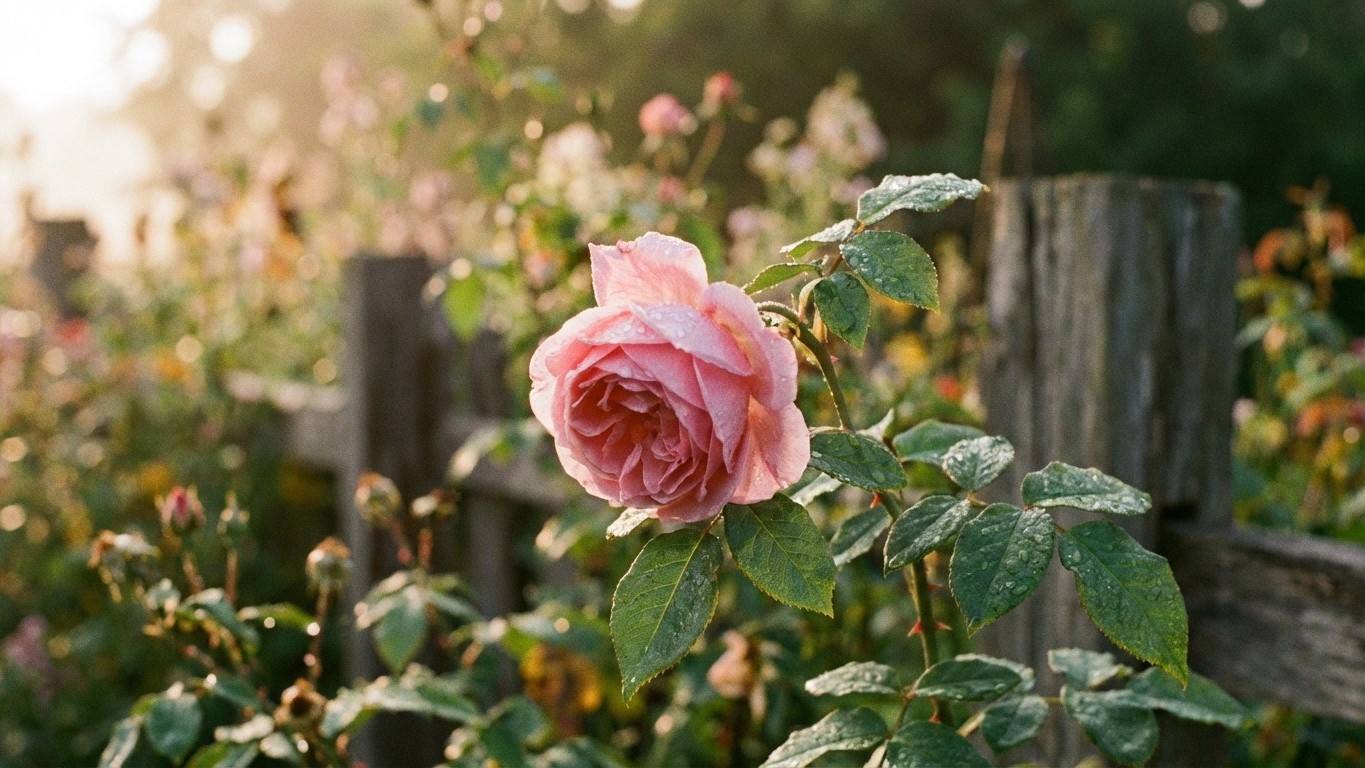

In Connecticut, bare-root roses go into the ground from mid-April through early May in most of the state, while potted, actively growing plants can follow through June. Coastal towns along Long Island Sound thaw earliest; inland and northwestern counties trail by two weeks or more. Site selection, soil pH, and a short list of pests, Japanese beetle chief among them, decide whether a rose bed thrives through a humid New England summer or limps along covered in black spot.
When to plant Roses in Connecticut
NOAA’s 1991-2020 Climate Normals put the last spring frost at the Bridgeport station between April 2 and April 12. That’s a coastal, Long Island Sound-moderated reading, the mildest corner of the state. Gardeners in the Litchfield Hills, the Quiet Corner, or anywhere well inland should expect that date to land later, sometimes considerably later, since Bridgeport’s harbor effect buffers it from the frost swings that hit higher elevations and valleys away from the water.
Roses don’t follow the same calendar as tomatoes or peppers. Bare-root roses are dormant when you buy them, so they tolerate cold soil and even a light frost after planting. That means you can put bare-root stock in the ground two to three weeks before your local last-frost date, as soon as the soil is workable and no longer waterlogged from snowmelt. Trying to dig a planting hole in saturated clay in late March does more harm than waiting a week or two for it to drain.
Container-grown roses, the kind sold already leafed out at garden centers, are a different story. They’ve been growing in a protected greenhouse and haven’t hardened off to outdoor swings. Wait until after your local last-frost window closes, then give them seven to ten days of hardening off: a few hours outside in a sheltered, part-shade spot the first day, gradually building to full sun and a full day outdoors before the roots go into open ground. Skipping this step is the most common reason a healthy-looking nursery rose sulks or drops leaves the first week after transplant.
Starting roses from seed
Very few home gardeners start roses from seed, since named varieties don’t come true and germination is slow and uneven. If you’re working with species rose hips you collected yourself, the seed needs cold stratification, typically ten to twelve weeks in a moist medium in the refrigerator, before it will germinate at all. Counting back from an April 2-12 last-frost date, that means starting the stratification process in late December to have seedlings ready to pot up and grow on indoors for eight weeks before hardening off and moving them outside.
Fall planting as an alternative
Roses also go into the ground successfully in fall, and many Connecticut growers prefer it because the plant spends the cool months building roots instead of pushing top growth. NOAA’s normals put the first fall frost at the same Bridgeport station between October 28 and November 10, again with the same coastal caveat: inland gardens see frost earlier. Aim to have roses planted at least six weeks ahead of your local first-frost date so roots can establish before the ground freezes.
Soil and site preparation
Roses want at least six hours of direct sun, and morning sun matters more than most gardeners realize, since it dries dew off the foliage quickly and cuts down on the fungal problems that thrive in lingering leaf moisture. A spot that gets blasted by afternoon sun but sits shaded and damp in the morning is a worse choice than one with the pattern reversed.
Soil texture should lean toward loam, not heavy clay and not fast-draining sand. Clay holds water around the crown and invites root rot; straight sand drains so fast that roses need constant watering to keep up. Dig a test hole a foot deep, fill it with water, and check it an hour later. If water is still standing, the site needs raised beds or heavy organic amendment before anything goes in.
Work compost or well-rotted manure into the bed two to three weeks before planting, not the same day, to let it start breaking down and avoid burning young roots with concentrated organic matter. Roses prefer a slightly acidic soil, roughly pH 6.0 to 6.5, which happens to suit much of Connecticut’s naturally acidic soil reasonably well, though a soil test remains the only way to know your actual number rather than assume it.
Spacing depends on the type. Hybrid teas and floribundas generally want two to three feet between plants; shrub and rugosa types, which spread wider, need three to four feet; climbers need a permanent structure in place before the roots go down, not added as an afterthought once canes are six feet long. Crowded roses trap humidity between plants, which is exactly the condition black spot and powdery mildew need to spread from one bush to the next.
Varieties that suit Connecticut
Connecticut’s growing season is long enough for repeat-blooming roses to flower from June into fall, but summer humidity is the real filter. Fungal disease resistance matters more here than in a dry climate, and winter hardiness matters more than in the mid-Atlantic. A variety bred for a dry Western state or a mild Southern one often struggles here regardless of how it performs on paper.
Own-root roses, grown on their own roots rather than grafted onto a different rootstock, tend to recover better from a hard Connecticut winter. If a grafted rose’s top growth dies back to the snow line, what regrows above the graft is often the rootstock variety, not the rose you bought. That single fact steers many local gardeners toward own-root stock for anything planted outside the most sheltered microclimates.
Rugosa roses are worth naming for their toughness: dense, wrinkled foliage that resists black spot better than most hybrid teas, strong cold tolerance, and a habit that works as an informal hedge as easily as a specimen plant. Modern shrub roses bred specifically for disease resistance and repeat bloom, sold under various breeding programs, trade some of that hedge-like toughness for more continuous flowering. Climbing roses bred for own-root growth and cold hardiness, such as older Bourbon types, handle Connecticut winters with less dieback than tender climbing hybrid teas. English-style shrub roses offer fuller, old-fashioned blooms but generally need more spraying to stay ahead of fungal disease in a humid summer.
| Type | Disease resistance | Cold tolerance | Best use |
|---|---|---|---|
| Rugosa shrub roses | High, tough foliage resists black spot | Very good | Hedges, low-maintenance beds |
| Modern disease-resistant shrub roses | Bred specifically for it, generally strong | Good | Repeat-blooming borders |
| Own-root climbers (older Bourbon types) | Moderate | Good, recovers from dieback | Trellises, fences |
| English-style shrub roses | Variable, often needs spraying | Moderate | Cutting gardens, formal beds |
| Hybrid tea roses | Lower, prone to black spot | Weaker, often needs winter protection | Cut flowers where extra care is possible |
No single variety is right for every yard, and no extension office publishes a ranked list of “best” roses for Connecticut. What’s worth checking before buying is whether the tag or catalog description mentions disease resistance and hardiness zone explicitly, since Connecticut spans roughly zone 5b to 7a depending on location.
What to plant alongside
Alliums, garlic and chives among them, are one of the few companion pairings with a plausible mechanism behind them: their strong sulfur compounds may mask the scent roses give off that attracts aphids, and gardeners who interplant them do commonly report fewer aphid clusters. It’s not a guarantee, but it’s a low-cost addition that also brings early pollinators.
Catmint and lavender planted at the base of rose bushes serve a real, observable purpose: they draw in pollinators and beneficial insects like hoverflies and lacewings, both of which prey on aphids, while their airy growth habit doesn’t compete heavily for the same root zone. Low, spreading groundcovers such as creeping thyme do something similar and also shade the soil surface, cutting down on weed pressure without crowding the rose’s own roots.
Marigolds get credited with repelling nearly every garden pest at once, and that reputation outruns the evidence. Their real, documented effect is suppressing certain soil nematodes over a full growing season of dense planting, which matters more for vegetable beds than for an established rose. Treat marigolds near roses as a decorative border, not a pest control plan.
Skip planting roses close to other heavy feeders competing for the same nutrients and water, dense evergreen hedges that block airflow, or black walnut trees, whose roots release a compound toxic to many other plants. Tight, crowded plantings around the base of a rose bush are also the fastest way to trap the humid, still air that fungal disease depends on.
Watering, feeding and support
Roses want deep, infrequent watering rather than a light daily sprinkle. About an inch to an inch and a half of water a week, delivered at the base rather than overhead, keeps roots growing down instead of staying shallow near the surface where they dry out fast in a summer dry spell. Morning watering matters here too: wet foliage that dries by midday sees far less fungal disease than foliage still damp at dusk.
A two to three inch layer of mulch, pulled back slightly from the crown itself, holds soil moisture, moderates summer soil temperature, and slows weed germination. Reapply as it breaks down over the season rather than assuming one spring application lasts through October.
Feed after the last frost has passed and new growth starts, then again after the first flush of bloom finishes, using a balanced or rose-specific fertilizer. Stop feeding by mid-August in Connecticut. Nitrogen applied later than that pushes soft new growth that won’t have time to harden off before the first fall frost, and that tender growth is what dies back hardest over winter.
Climbing roses need their support structure in place before, not after, canes get long enough to sprawl. Tie new growth loosely to a trellis or fence as it extends rather than waiting until it’s already tangled. Prune in early spring, just as buds swell, removing dead or crossing canes and cutting back to an outward-facing bud to open the center of the plant to airflow. On grafted roses, watch the base for suckers growing from below the graft union; these come from the rootstock, not your named variety, and should be cut off at the point where they emerge from the root rather than sheared at soil level.
Common problems
Black spot is the fungal disease most Connecticut rose growers eventually meet: circular black spots ringed with yellow on lower leaves first, spreading upward, with affected leaves dropping early. It thrives in exactly the humid, still-air conditions common to a New England summer. Rake up and destroy fallen infected leaves rather than composting them, since the fungus overwinters in that debris and reinfects the plant the following spring.
Powdery mildew shows up as a gray-white dusty coating on new leaves and buds, often when days are warm and nights are cool and humid, a pattern Connecticut sees regularly in early summer and again in fall. Improving airflow through pruning and spacing does more long-term good than any single spray.
Botrytis blight attacks buds and open blooms directly, turning petal edges brown and mushy, especially after a stretch of wet weather. Deadhead and remove affected blooms promptly rather than letting them sit on the plant.
Rose rosette, a virus spread by a microscopic mite, causes a distinctive and unmistakable symptom: clusters of tight, distorted red growth, excessive thorniness, and witches’-broom-like clumps of stems. There’s no cure. Infected plants should be dug out, roots and all, and discarded, not composted, since the disease spreads to nearby roses.
Winter dieback, canes that come out of dormancy black and brittle at the tips, is common on hybrid teas and other less-hardy types after a harsh Connecticut winter. Prune back to living, green wood in spring rather than assuming the whole cane is lost.
Pests that actually show up in Connecticut
UConn Extension’s Home and Garden Education Center lists the pests that give Connecticut gardeners the most trouble, and a handful of those genuinely target roses.
Japanese beetle is the one every rose grower in the state eventually deals with. Adults emerge the first week of July and remain active for two to three months, feeding on rose foliage and blooms until leaves look skeletonized, reduced to a lace of veins, and petals are chewed to shreds. Hand-picking beetles into a jar of soapy water in the early morning, when they’re sluggish, works better than most sprays, and it avoids killing the pollinators visiting the same blooms. Beetle traps should go at the far edge of the yard, never near the rose bed itself, since the pheromone lure draws in more beetles than it catches.
Four-lined plant bug shows up in late spring and early summer, leaving small, round, sunken brown spots scattered across rose leaves where it’s fed with piercing mouthparts. The damage looks alarming but rarely threatens an established plant’s health. Insecticidal soap applied directly to nymphs when they’re first spotted is the most effective response, since adults are fast-moving and harder to hit.
Brown marmorated stink bug feeds on rose buds and soft new growth later in the season, causing distorted or discolored buds that may fail to open properly. It’s a shield-shaped, mottled brown insect that’s easy to identify once you’ve seen one. Hand removal, dropping them into soapy water, is the most practical home-garden control, since they’re resistant to many casual spray treatments.
Cutworms are a spring problem, active at the soil line where they sever young canes and new shoots overnight, often leaving a plant looking chewed off cleanly at ground level with no visible culprit the next morning. A simple cardboard or metal collar pushed an inch into the soil around new plantings blocks them effectively.
Harvest and end of season
Cut roses for a vase in the early morning, when stems are full of water and the day’s heat hasn’t yet stressed the bloom. Cut at an angle just above an outward-facing five-leaflet leaf, which encourages the next flush of growth to head outward rather than into the center of the plant. Deadheading spent blooms throughout summer keeps repeat-flowering varieties producing new buds instead of putting energy into forming hips.
Toward the end of the season, stop deadheading on repeat bloomers and let the last round of flowers form hips instead. Those hips signal the plant to shift toward dormancy, and on many shrub and rugosa types they add fall and winter color and feed birds through the colder months.
NOAA’s 1991-2020 normals put the first fall frost at the Bridgeport station between October 28 and November 10, with inland Connecticut typically seeing it earlier. Once that first frost has passed and the plant is fully dormant, it’s the right time to add winter protection: mounding several inches of soil or mulch over the base of grafted roses to insulate the graft union, and wrapping or caging less-hardy varieties if your site is especially exposed. Doing this too early, before real dormancy, traps warmth and moisture against the crown and can cause more rot than it prevents.
Local help
Frost dates and pest pressure both shift by town and even by elevation within Connecticut, so the numbers here are a starting point, not a guarantee for your specific yard. For county-level planting dates, soil testing, and current pest alerts, contact your local office through UConn Extension.
Common questions
When is the safest time to plant roses in Connecticut?
Bare-root roses can go in two to three weeks before your local last-frost date, which falls between April 2 and April 12 near the coast and later inland. Container roses should wait until after that frost date passes and they’ve been hardened off.
Do roses need winter protection in Connecticut?
Less-hardy grafted varieties, especially hybrid teas, benefit from mounded soil or mulch over the graft union after the first fall frost. Rugosa and other cold-hardy shrub roses generally get through Connecticut winters with little or no extra protection.
Which rose types resist disease best in a humid Connecticut summer?
Rugosa roses and modern shrub roses bred specifically for disease resistance tend to handle black spot and powdery mildew pressure better than hybrid teas or many English-style varieties, which often need a regular spray schedule to stay clean.
Can roses grow in part shade?
Most roses need at least six hours of direct sun to bloom well and to dry off quickly enough to resist fungal disease. Fewer hours usually means fewer flowers and more mildew, even on otherwise resistant varieties.
When should roses be pruned?
Prune in early spring, right as buds begin to swell, rather than in fall. Fall pruning can stimulate new growth that won’t harden off before the first frost, leaving it vulnerable to winter dieback.